




★★
“The little engine that couldn’t.”
 Stacey Anderson (Sturman) is an agent for the CIA. When an operation in Tunis goes bad, she is blamed, and the intelligence which was supposed to have been collected – a complete list of Russian assets – goes missing. Stacey is disavowed by the organization, and dumped out, with a new identity. Five years later, she’s a saleswoman for a PR company, and her boyfriend, Ken (Haymes) has just proposed, when Stacey’s old life comes back to haunt her. An assault on her workplace shows that someone clearly believes she knows more about the list than she admitted. She is forced on the run, with Ken, while she tries to figure out whether it’s the Russians, or a rogue faction within her former employers. Fortunately, this wasn’t entirely a surprise, and Stacey is quite well-prepared. Less expected: having to take her new fiance along with her.
The script here is actually quite good, with a number of twists and turns I did not see coming, particularly at the end. However, this is one of the cases where a film has aspirations which are massively beyond what it is capable of delivering. This is clear from the get-go, when the drone strike which almost kills our heroine in Tunis, is depicted with really bad digital effects. Unfortunately, that sets the tone for what is to follow, with the production unable to deliver a convincing version of the explosions, gun-battles or blood squibs necessary to the plot. Even some of the rooms appear to have been done with green-screen work which fails to convince. The non-digital stuff is nothing to write home about either, and the makers perhaps should have gone with a stunt woman for the lead. Sturman gives it her all, bless her heart, but considering the frequent need for physicality in the role, it’s a character which really needs somebody like Amy Johnson or Zara Phythian.
The pacing also seems to lag badly in the middle. The opening set-up is, for all its flaws, put together quite effectively (though do the CIA really have formal “disavowal” speeches?”), and as mentioned, the ending delivered some sharp twists in regard to Stacey, not the least being her background. In between those though, it didn’t seem to know what to do with itself. This is the kind of movie that I really wanted to like, since it seemed a project made with some passion, rather than a by-the-numbers studio product. However, there is only so far that passion and heart can take you. The technical aspects – such as audio in some sequences which sounds like it was recorded underwater – are a very significant distraction from its entertainment value. It may have worked better if they had cut their cloth to fit their resources; sitting on the shelf next to far more polished productions, the comparisons are obvious and not to this movie’s benefit.
Dir: Stephen Lambert
Star: Alex Sturman, Clayton Haymes, David Chattam, Shirley Dalmas
a.k.a. Patriot: A Nation at War

 The town of Calvert has had a long association with the dark arts, going back to the founding families in the early 19th century, many of whom were involved in a coven. Now, four of their descendants, led by Ronnie (Cipolla), are seeking to unleash the power of the “goddess witch” Ashura, which has been bound for centuries. They need a fifth to complete the necessary rituals, and their first potential recruit doesn’t quite work out, shall we say, after things get a bit… stabby. However, a quick seeking spell points them in the direction of history student Sophie (Gordon, who also wrote the script).
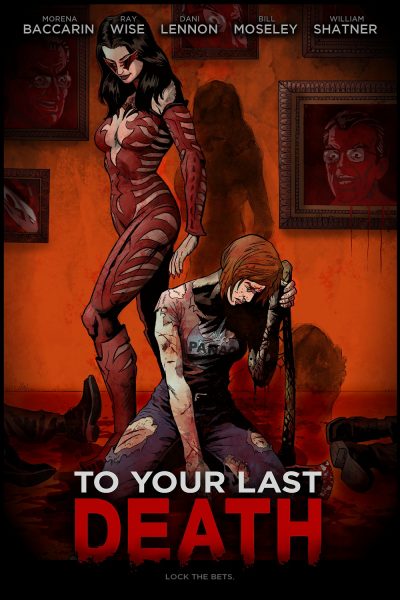 Miriam DeKalb (Lennon) and the rest of her siblings are estranged from their arms dealer father, Cyrus (Wise), after their exposure of his dysfunctional nature ended his political career. Which is why it’s a surprise when they are all invited to his company’s headquarters. It doesn’t end well, with most of them murdered. and Miriam – found at the scene with an ax – tagged as their killer. However, she gets a second chance when visited in hospital by a mysterious figure called the Gamesmaster (Baccarin), who makes Miriam an offer. She’ll get to go back in time 24 hours, knowing what she does now. Will she be able to do better? For the GM runs an event on the astral plane (or somewhere), in which entities bet on the outcome of humans given a second chance at a pivotal moment, and Miriam is her latest subject. So can she change the outcome?
 The blurb I read, which got my attention, compared this to Queen of the South, and the debt is rather too obvious, with the novel falling short of the TV series. Layla Navarro has grown up as part of the Culiacan cartel in Mexico, and when its leader, her uncle “El Patrón” is captured by authorities, she has to step into the breach. However, there are a number of factions within the cartel who are unimpressed at the thought of being led by a woman, and have their own plans. When she discovers that one of the leading members, Don Guillermo Muñoz, is trafficking in young girls, she vows not to let it stand. But before she can take action, the plane she’s on is forced to land in the Mexican jungle. Along with Clay, her loyal Canadian pot-dealer ally, Layla has to avoid those seeking to finish the job, and strike back at Guillermo.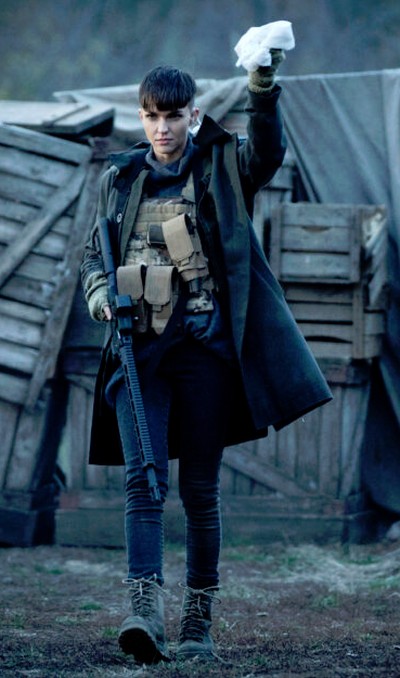
 For the first, perhaps, three-quarters, this feels almost more like a Lifetime Original Movie. Then, at the end… Hoo-boy. But let’s not get ahead of ourselves, shall we? It begins with Nina (Orlan), seeking to escape a fraught life in Russia, for her and her young daughter, Dasha (Pimenova). Through an online dating service, she meets Karl Frederick (Bernsen), and they eventually move to America to be with him. While he’s an older gentleman, initially they seem to have struck it lucky, for he’s a rich, retired surgeon, who owns a massive estate in the country. In fact, you could say it seems almost too good to be true…



 This opens and closes with footage and photographs of the real Michelle Payne, who is the subject of the film. Part of me wonders if that documentary approach might have proved a more successful one, rather than the parade of sports drama cliches we get here. Admittedly, quite a lot of them are based in fact. Payne was the first woman to ride to victory in the Melbourne Cup – that’s Australia’s premier horse-race, roughly equivalent in prestige to the Kentucky Derby or Grand National in the US or UK respectively. This alone, is quite an achievement. But she did so as one of ten brothers and sisters, who largely had to bring themselves up after their mother died when Michelle was only six months old. Her father was a horse trainer, and no fewer than