




★★
“This is at least better than Transmorphers.”
 I have a lot of time for The Asylum. I met head honcho David Michael Latt back in 2002, when Sharknado was not even a twinkle in his eye, and have been following the studio’s rise to pop-culture icon ever since. They’re best known for their “mockbusters”, designed to cash in on bigger-budget title – including the sublimely-titled Snakes on a Train, which didn’t really have much in common with Samuel L. Jackson’s opus – and also cheesy monster movies, typically involving over-sized or over-aggressive species. This doesn’t fall into either category, and to be honest, isn’t one of their more successful efforts. While obviously not intended to be taken entirely seriously, based simply on a title which had me looking over my shoulder before clicking it on Netflx, it isn’t self-aware enough to succeed as a knowing parody. Nor is it competent enough to stand on its own merits.
The heroines are four – yes – Asian school girls, whose illicit evening out in a nightclub is derailed when they are drugged and raped. After the police are unable to take any action, one of them subsequently commits suicide, and the other three decide to locate and take revenge on the perpetrators, working their way up the chain of supply. Naturally, this requires them to go undercover at a strip-club. It’s not long before the dead bodies are piling up, and the police, led by a dogged detective (Johnson) with a personal interest in the case, are closing in on the perpetrators. Nor is the douche who runs the market in unconscious jailbait happy at their actions, and kidnaps the trio, locking them up in a basement cage where they will be perpetually on-call to service his customers.
There are a couple of directions this could have taken, but the unwillingness to commit to a specific mode of operation – parody or serious? – leaves it coming off as half-hearted and a pale imitation of genuine Japanese imports like Hard Revenge Milly. One moment it’s acknowledging its silliness e.g. the strip-club MC’s dead-pan announcement that as well as Asian School Girl night, it’s also Plushies and Furries, the next, it has a rape scene that is genuinely unpleasant. It’s clear they aren’t “real” school girls – Scarlet is more tattooed and pierced than your typical merchant seaman – but Aotaki, as the fiery Hannah, is the only one to deliver a performance that makes you believe, yes, they could be capable of slicing off dicks. The rest of the cast lack the necessary intensity to sell the concept, and while I can look past the obvious flaws in plot logic, this certainly falls into the category of a film which fails to live up to its poster.
Dir: Lawrence Silverstein
Star: Sam Aotaki, Catherine Kim, Minnie Scarlet, Andray Johnson









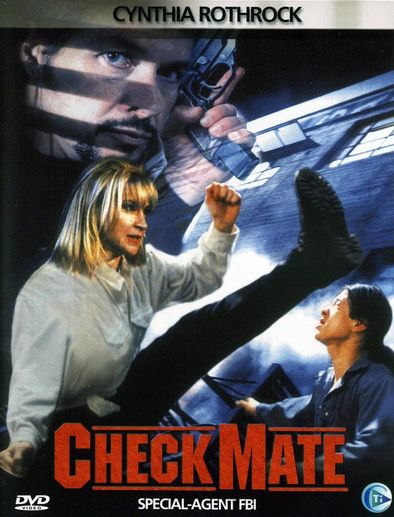

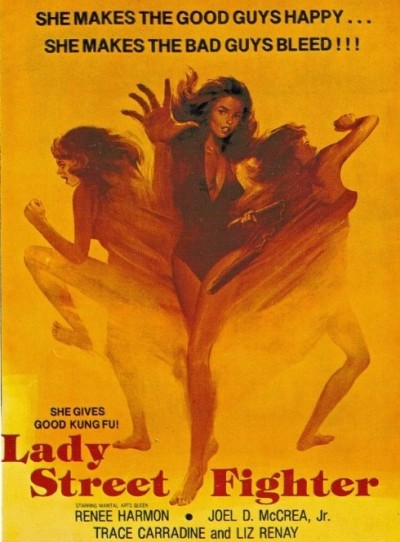 Let me start off by repeating myself, in case you missed it, because I want to be absolutely clear on these points. This is legitimately terrible. This is among the worst films I’ve ever seen. And I speak as someone with over 25 years of watching really bad films. That half-star is solely for amusement to be gathered from how bad this is, because there are basically no redeeming features here at all, and I speak as someone who will tolerate almost any pile of shit with an action heroine in it. This movie is largely responsible for the addition of the word “almost” to the previous sentence, despite being mercifully brief at a mere 72 minutes in length. The half-star is simply because I did reach the end without gnawing a limb off to escape. I think I deserve some kind of Internet prize for that.
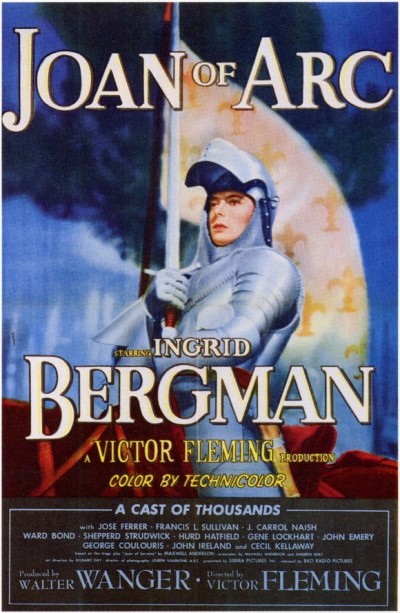 This film’s origins as a stage play are painfully apparent, and you can also see why the distributor’s felt it needed to have 45 minutes cut out before it could be released, as frankly, it’s a bit of a bore. The battle to recapture Orleans is the only action of note here, even though that represented the start of the Maid’s campaign to restore France to its proper ruler (Ferrer), rather than the end. After that, this more or less skips forward to his coronation, then Joan’s capture, spending the rest of the movie – and there’s a lot of it – going through the trial, and the railroading of the heroine into, first throwing herself on the church’s mercy, then recanting her recantation and returning to wearing men’s clothes, thereby sealing her fate. There’s not much here which you won’t have seen before, if you’ve seen any of the other versions of the story, touching the usual bases from Joan’s revelations that she’s going to be the saviour of France, through her trip to see the Dauphin, and so on. It does downplay the “voices” aspect, especially early on, perhaps a wise move since it’s difficult to depict, without making her seem like a religious fruitcake.
 What? Gina Carano in another action flick? Why was I not informed of this? After all, Haywire was an undeniably impressive entry in the genre, featuring some of the crunchiest mayhem seen in a while. Throw in that this was directed by Stockwell, who directed the hidden gem, Cat Run, and my interest was thoroughly piqued. Sadly, this isn’t up to the level of either, though certainly has its moments. Carano plays Ava Grant, an ex-junkie who met her other half, Derek (Gigandet) at a Narcotics Anonymous meeting, but whose murky past is clearly far beyond that of her husband. Ava’s father brought her up tough, and able to protect herself, basing her life on mantras such as, “Survivors have scars. Losers have funerals.” We see, in flashback, that she was an apt student.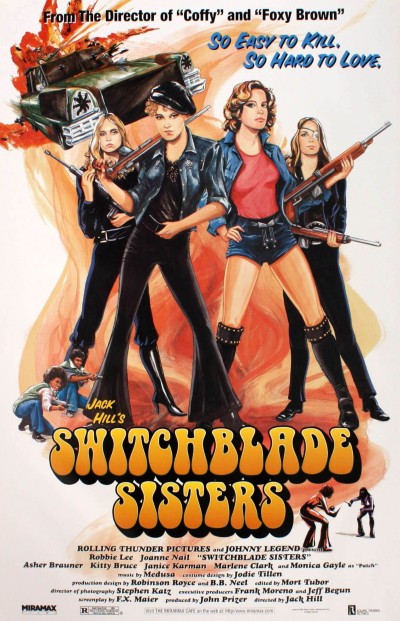
 The briskly-moving piece of seventies trash is much beloved by Quentin Tarantino, and I have to agree with him about its merits. While some elements haven’t stood the test of time well, in other ways, it’s well ahead of its era, and there is, literally, never a dull moment here. Initially, the teenage girl gang are the Dagger Debs, a somewhat subservient bunch to their male counterparts, the Silver Daggers, and their leader, Dominic (Brauner). He’s paired up with the Debs’ #1, Lace (Lee), but has eyes for new girl Maggie (Nail), who is soon impressing Lace with her street smarts and toughness.
 There’s something almost theatrical about this, because virtually the entire film takes place in a single location, the downscale home of Lorna (Gershon), who has just knocked her husband Dale (Kilmer) out with a frying-pan, after discovering he was apparently involved in a bank robbery which netted $100,000. She has now called over her best friend, local barmaid Tiny (Giddish), to try and decide what to do next, with the first step being to find the loot, which Lorna is convinced Dale has hidden somewhere in their home. However, the local sheriff (Liotta) is also sniffing around, being fully aware of Dale’s fondness for armed robbery in his younger days. It’s not long before the dead bodies are piling up, requiring alternative uses to be found for the turkey carver and industrial-strength blender. And that’s just the start of the unpleasantness.