★★★★½
“Run Sandra Run”
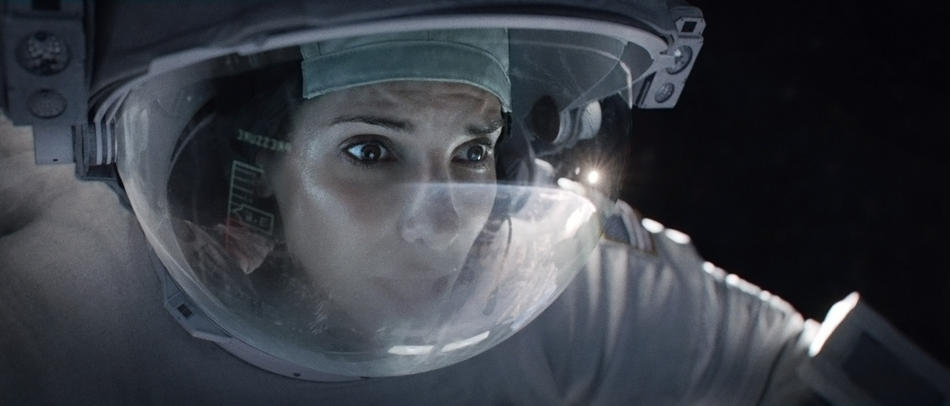
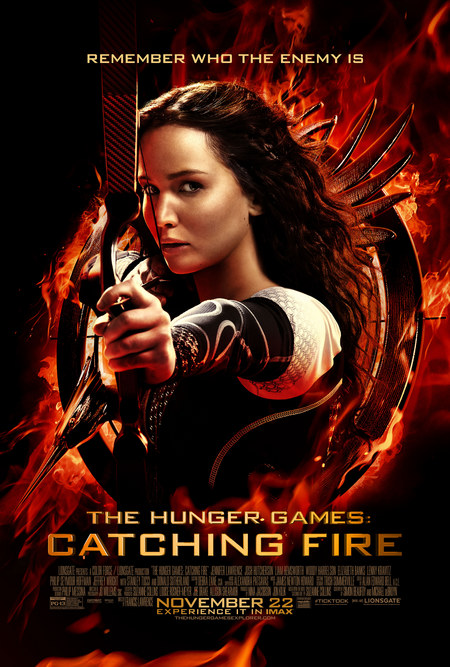
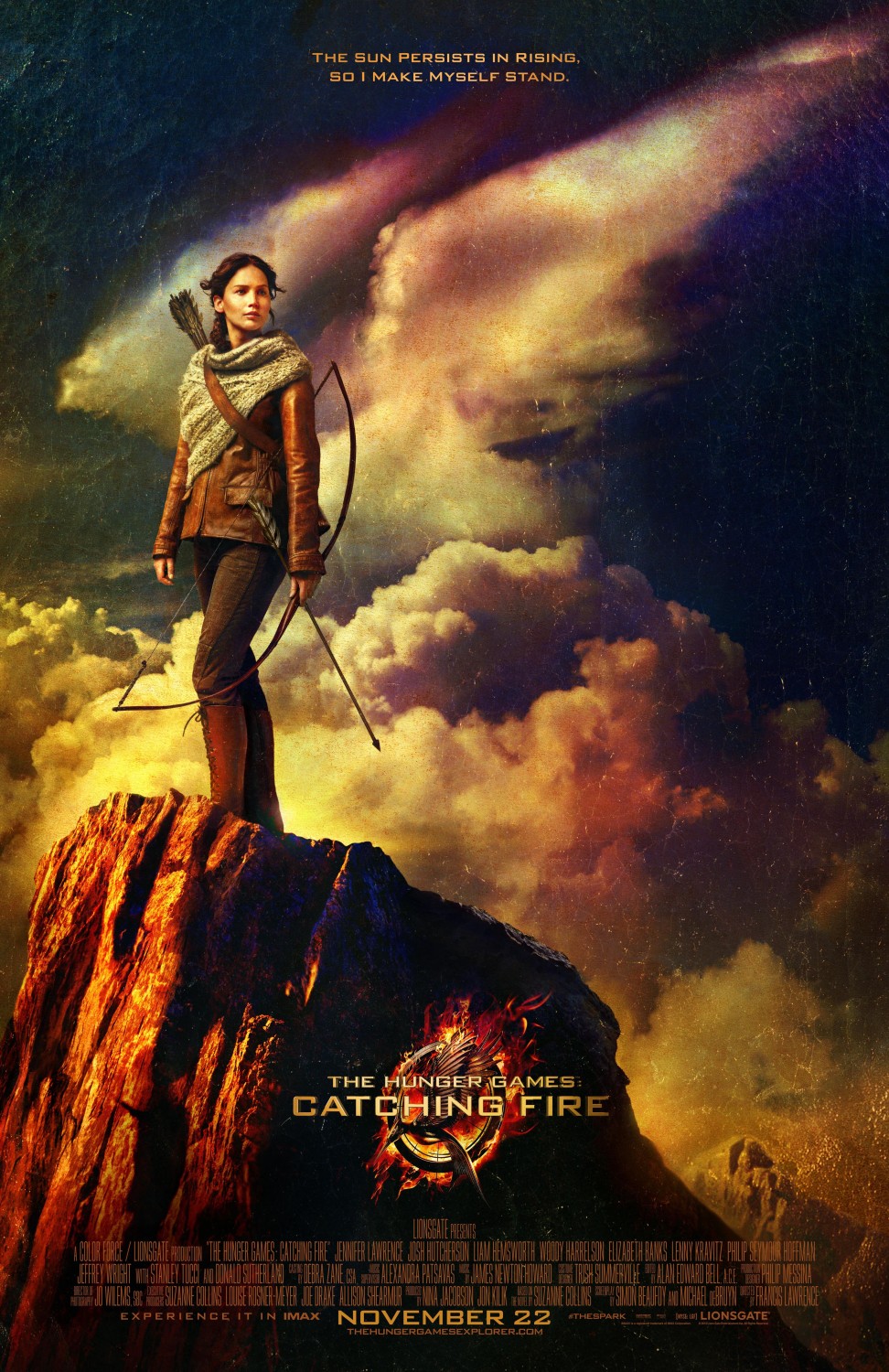
 2013 was perhaps a landmark for women in action films. with the top slot at the American box-office going to Jennifer Lawrence in Catching Fire. But also present in the top five was this, which kicked Katniss’s arse for critical acclaim, snaring 10 Oscar nominations to Fire’s… Well, none at all, actually. That’s probably a little starker contrast than is accurate – they are respectively 97% and 90% Fresh at Rotten Tomatoes – but it is interesting to compare the two films and their approach. In Gravity, the sex of the lead character simply isn’t very relevant: you could switch it to being a man, and you wouldn’t need to change much, not even the name – Ryan Stone. I’d be unsurprised if told that, like Salt, this was originally written for a male lead. Indeed, it also fails the infamous Bechdel Test of feminism, passing none of its three criteria – though this says more about Bechdel’s uselessness than Gravity, I feel (Run Lola Run also goes 0-for-3, and it’s not the last thing it has in common, as we’ll see).
But Gravity certainly deserves coverage here, every bit as much as Alien – another film where the gender of the hero is largely irrelevant. Admittedly, in some ways, it’s the very antithesis of what we now associate with “action film”, most obviously with an average shot length claimed in a number of places to be about 45 seconds. I’m not sure the math on that quite works out, and it’s certainly boosted by its amazing opening shot, which runs well over 10 minutes. But in an era where the dreaded “MTV-style” of editing has hampered many a genre entry e.g. a number in the Resident Evil franchise, this is truly a breath of fresh air, with Cuarón happy to let things unfold in front of us, rather than jazz things up with frenetic and pointless cutting, that doesn’t generate tension and excitement less than confusion. Of course, that’s Cuarón’s style: his previous (and excellent) Children of Men had a couple of similarly spectacular long shots.
Stone (Bullock) is a mission specialist, whose debut flight into space is to carry out maintenance on the Hubble. She’s on a spacewalk with shuttle commander, Matt Kowalski (Clooney), when a devastating storm of debris strafes them, knocking out their comms with Earth and leaving Stone tumbling through space. Though Kowalski, with the aid of his jet-pack, brings her back, the shuttle is toast, and there’s no option but to head for the International Space Station, hoping it will provide a safe haven and means of returning to Earth, before both Stone’s air hits empty, and the debris completes another orbit and blasts them once more. However, before getting inside [SPOILER], they get hung up on deployed parachute cords from a module attached to the ISS, and Kowalski cuts himself loose, drifting off in to space. This saves Stone from immediate threat, but she’s now utterly alone and [END SPOILER] facing an escalating series of predicaments, requiring her to dig deep into her inner resources, both mental and physical.
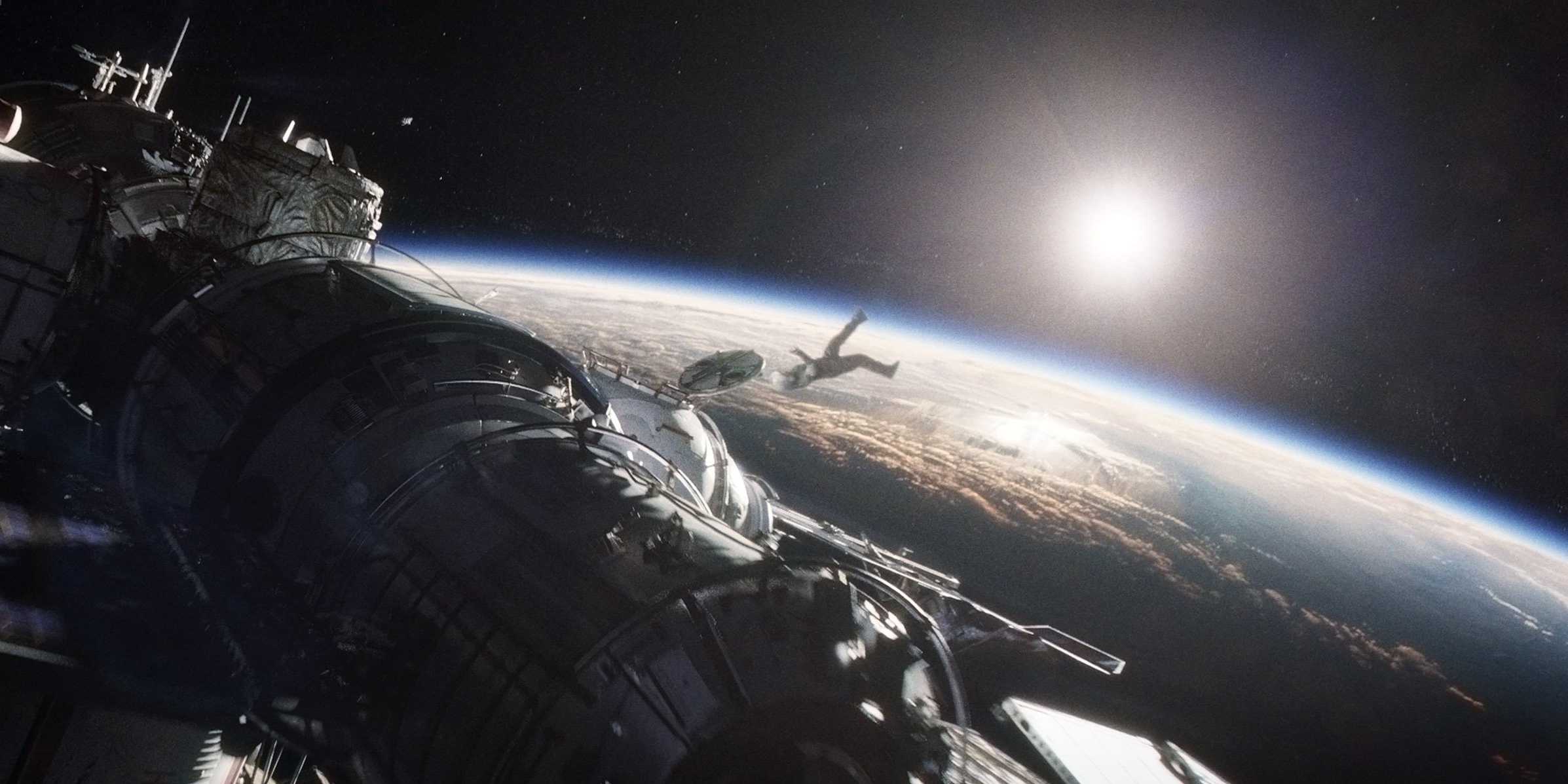 More than once, I found myself holding my breath, as the heroine fought against the implacable foe of a brutal, unforgiving environment. That’s the first element this has in parallel with Lola, which also had no human adversary. There, it was time which was the enemy, and that’s an aspect here too, with every 90 minutes bringing a new barrage of destruction. But the main thing this has in common is the heroine’s initial dependence on a paternal figure (her true father in Lola) for rescue from their difficult situation. It’s only when that support is removed, and she is thrown back to surviving entirely on her own merits, that the film blossoms fully. For the first 30 minutes, this is little more than space opera heroics, with Clooney being Clooney and some eye-rolling clichés: Kowalski is on his last mission, and another member of the crew has a picture of his family taped to his spacesuit. Yeah, that’ll end well. Still, extremely nice visuals – stunning, to the point this is one of those rare films I will buy on BluRay – are enough to get us through to the last hour, which is basically woman vs. space, and is absolutely compelling.
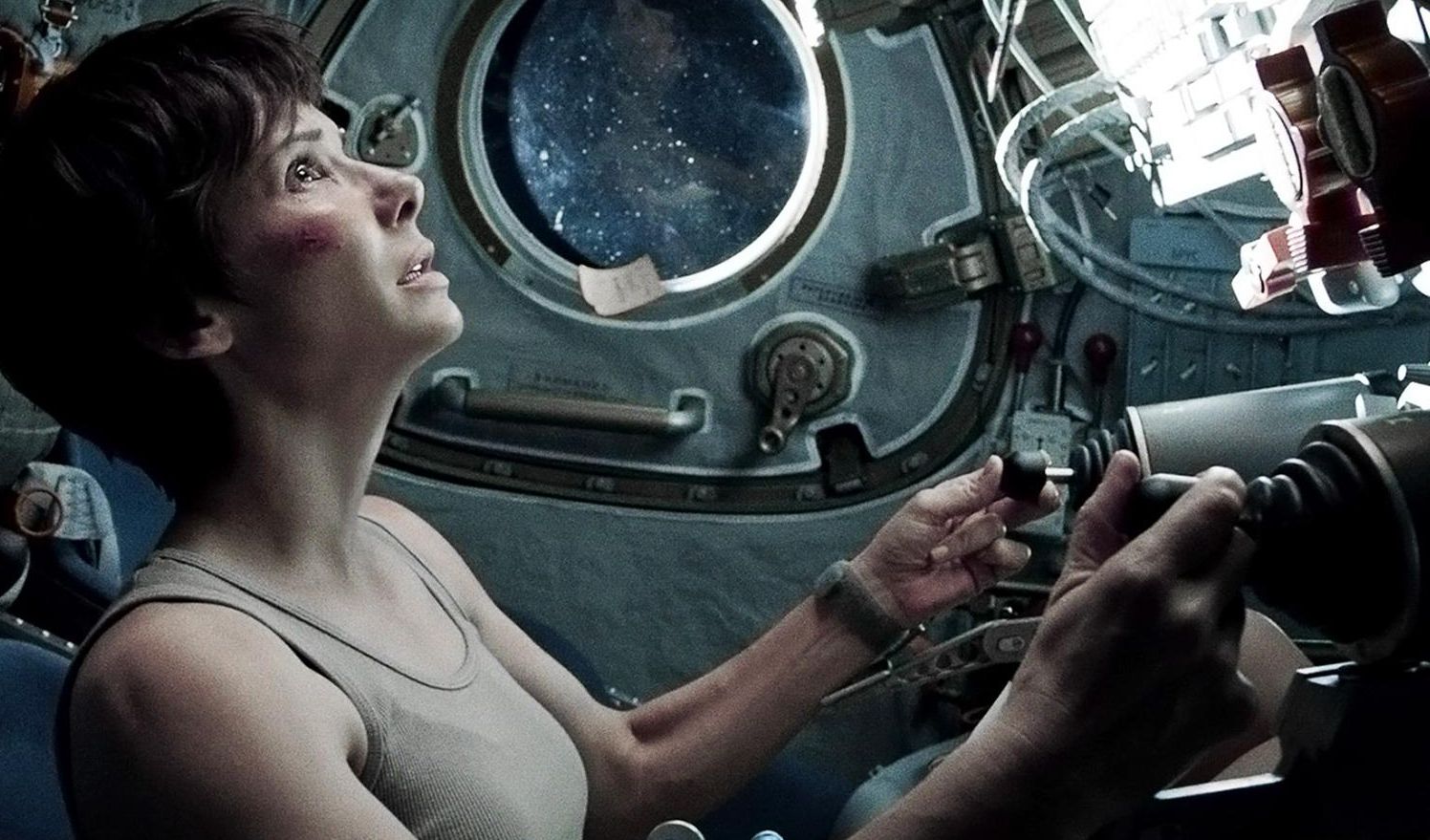
B-movie critic Joe-Bob Briggs once declared, “The first rule of great drive-in movie-making: Anyone can die at any moment.” By this metric, Gravity is a great drive-in movie, because Ryan’s survival is, often literally, dangling by a slim thread. Whether she’s bouncing around like an interstellar crash-test dummy, running out of oxygen, or bailing out of a space-station on fire, the peril is right there, and it’s Stone finding ways to deal with it that help make her one of the best heroines in mainstream cinema of the past few years. Cuarón, mercifully, doesn’t give her a romantic interested, no boyfriend or even a child back on Earth as motivation for survival: she explicitly says at one point, “No one will mourn for me. No one will pray for my soul.” And it doesn’t matter. Indeed, that’s a big part of her transformative journey, going from someone who relies on others, uncertain of her own abilities, to being completely self-assured and single-minded. She wants nothing but to live – not for a man, or her offspring, just for herself.
Her final words are a simple, “Thank you”: it’s not clear to whom they’re addressed, since it has been made clear, Stone isn’t religious. Perhaps it’s gratitude for her rebirth: I suspect it’s no coincidence that there are scenes and shots here, which appear consciously to echo a caterpillar emerging from a cocoon, or a turtle struggling out of the egg. Bullock’s performance is beautifully understated, which is exactly as needed for the scenario – what’s the point in hysterics when there’s no-one around to see them? – and over the course of the film, she goes from a somewhat annoying, dependent second banana, to someone in whom you are fully invested. With her survival highly uncertain, right until the final frame (hey, cameo appearance by Arizona’s own Lake Powell!), I’m not certain how much repeat viewing this might have. It’s possible knowing the outcome may degrade the tension which is certainly one of the film’s strongest suits. However, even discounting that, there’s an awful lot here to like and appreciate, Cuarón has likely become one of those few directors whose name alone is enough to get me to watch, but everyone involved here deserves enormous praise for their work in crafting a memorable piece of cinema.
Dir: Alfonso Cuarón
Star: Sandra Bullock, George Clooney


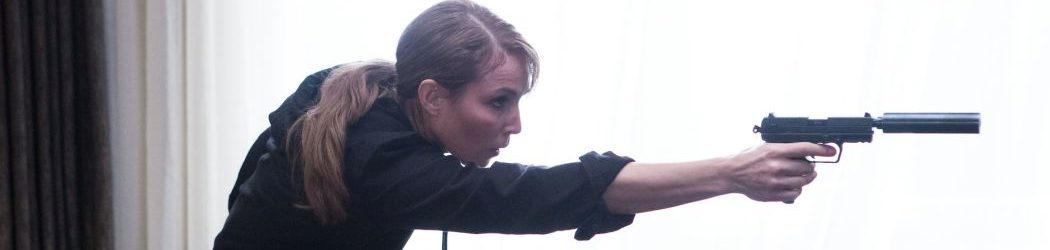

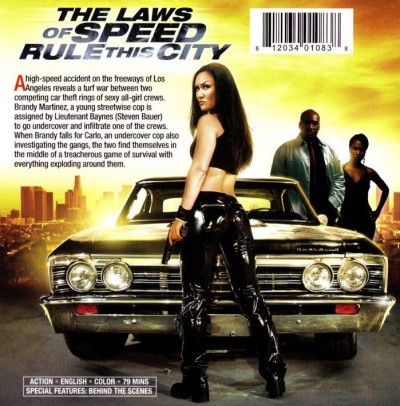 After a freeway chase ends in a fatal crash, a policewoman (Lizette) goes undercover to infiltrate the warring gangs of car thieves responsible. As “Baby” Martinez, she helps Eve (Lethridge) evade capture by an irate car-owner and, as a result, is recruited to join the all-female group of which Eve is a part, operating under the protection of Mama (Olivia Brown). However, Eve has a past to contend with, having defected from the gang led by Knight (Parker) – and worse still, taken his classic car with her. Unknown to her, the trunk holds a stash of drugs, whose loss leaves Knight feeling the heat from those in the criminal food chain above him. As a result, he’s prepared to go to any lengths to recover his property.

 And it didn’t take long for the fatal blow. The series was an American version of the popular Argentine crime drama Mujeres Asesinas, which had already been successfully transplanted to other Latin American countries. This edition was originally only given a trial run of sorts, with eight episodes bought, and scheduled after New Year as a mid-season replacement for another deceased ABC series. However, after miserable ratings for the first two episodes, the network cut the order to six shows, a mere ten days after the series premiere. Unaware of this, it caused us some confusion when we turned on #6, which was suddenly now #8, with the sixth and seventh having been reduced in their entirety, to “Previously, on Killer Women…”