




★★★
“Wait Until After Dark”
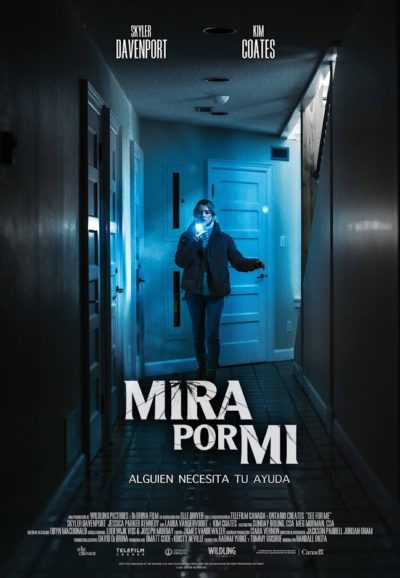 Yeah, as the above might suggest, this owes a rather large debt to Wait Until Dark, with its central theme of an attractive, blind protagonist threatened by home invaders. It is not the first to have gone down that road (see also In Darkness), and I must say, the concepts here are considerably more contrived. However, the film does just about enough to sell them, to make for an entertaining end product. The heroine Sophie (Davenport) was a promising skier until a degenerative eye condition ended her career, leaving her almost totally blind. Now, she’s rather grumpy, frequently berating her mother (Brown), and picking up occasional house-sitting gigs, engaging in small-scale larceny against her employers to fatten the paycheck.
Her latest such position turns unpleasant when a trio of thugs, under the direction of Rico (Coates), enter the house, seeking a large stash of cash hidden behind a panel. They are as surprised by Sophie’s presence, as she is by theirs. You’d think this would be a quick, one-sided struggle. But Sophie has an ally, in the form of the titular app. It connects her with a seeing helper, typically for assistance with humdrum daily tasks, and the helper in this case is former army member Kelly (Kennedy). Between her military training and fondness for first-person shooters, she knows a thing or two about creeping stealthily around a house, and taking out enemy targets – skills she’s happy to use to assist Sophie.
What’s at least somewhat interesting, is that Davenport is legally blind. This seems an ongoing trend. While it makes sense, considering Hollywood’s recent obsession with “authenticity” in things like gender identity, I’m always reminded of the famous story about Dustin Hoffman and Lawrence Olivier from Marathon Man – “Why don’t you just try acting?” It’s also notable that she’s not your typical heroine. Indeed, she arguably borders on the unlikable, between her abrasive attitude and petty thievery. Though some other reviews I’ve read suggest that severely weakens the film, I can’t say I minded too much. My bigger concern was a plot that teetered almost forever on the edge of implausibility, e.g. the way Sophie’s phone battery went from 20% to zero in a couple of minutes. While there was nothing utterly outrageous, all these micro-implausibilities added up over the course of proceedings.
Within those constraints the film still had some successes. The best sequence probably had a police officer show up, with Sophie trying desperately to get the cop to go away. This screwed the tension level up considerably, with the officer insisting there was more going on than Sophie would admit. Thereafter, it does degenerate somewhat into lots of creeping around dark corridors. Or, at least, the level of dark corridors movies tend to have, which are just enough well-lit for a camera, and thus the audience. If the ending abandons the film’s titular concept, and probably provides the cherry of implausibility, the cake as a whole remains adequately edible.
Dir: Randall Okita
Star: Skyler Davenport, Jessica Parker Kennedy, Kim Coates, Natalie Brown
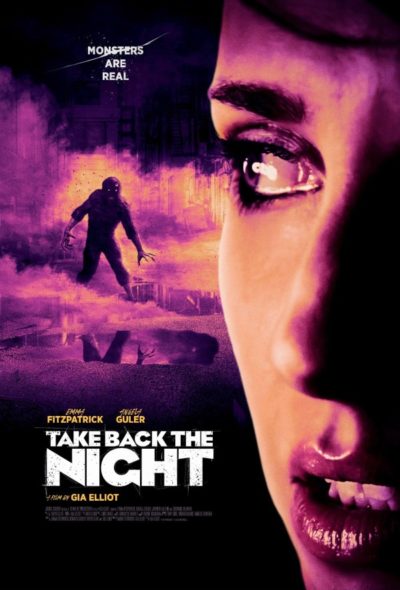 This is not exactly subtle in terms of its messaging, or the underling metaphor. But to be honest, I kinda respect that. I’d probably rather know what I’m in for, from the get-go, rather than experiencing a film which thinks it’s going to be “clever”, and pull a bait and switch. Here, even the title makes it obvious enough. The ‘monster’ here is sexual violence, and should you somehow make it through the film oblivious to that, you’ll get a set of crisis helplines before the end-credits role. However, it manages to do its job without becoming misanthropic, largely by having very few male speaking characters, and is adequately entertaining on its own merits, not letting the movie drown in the message.
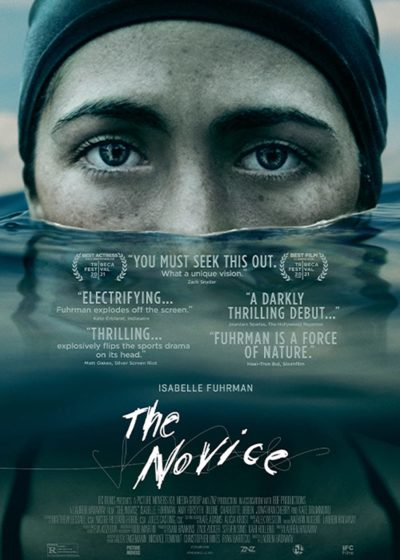 Rowing is not a pastime to which I’ve ever given much thought. It’s the backdrop for this, and is based (to some extent) on writer-director Hadaway’s experiences of the sport at college. Her cinematic background is in sound editing, where she worked on films such as The Hateful Eight and – probably of most relevance here – Whiplash. The latter was a study of obsession in the pursuit of talent, and is echoed in the story here.
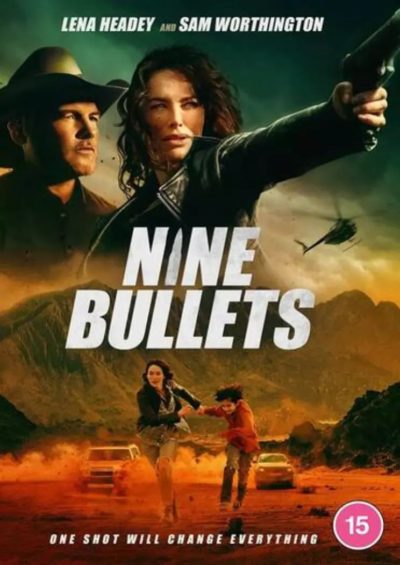 While this is not an “official” remake of Gloria, it’s so damn close that I have no problem considering it as one. Writer/director Gaston seems to have… um, a bit of a track record in this area, shall we say. She previously appeared here by directing
 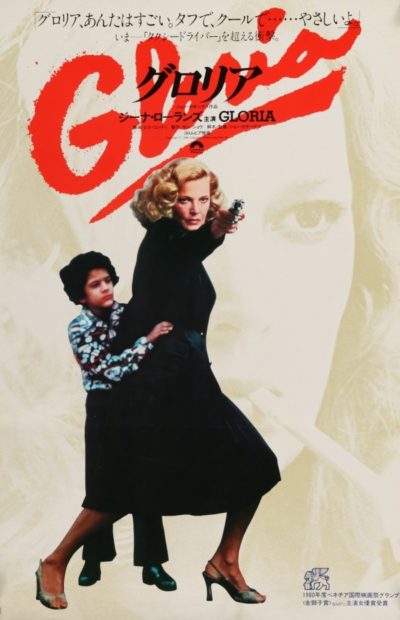 Yeah, I’ll confess to having Laura Branigan’s eighties hit running through my head on repeat almost the entire movie, even if its lyrics can only be tangentially tied to it. What also struck me is how strong of an influence this was on Luc Besson’s Leon, especially at the beginning. I mean: a criminal gang takes out an entire family in a New York tenement, except for one child, as punishment for the father having tried to steal from them. That survivor takes refuge with a very reluctant neighbour with mob ties, who then has to protect the child as they move about the city. There’s even a scene where one of the gang fires his gun at a nosy resident.
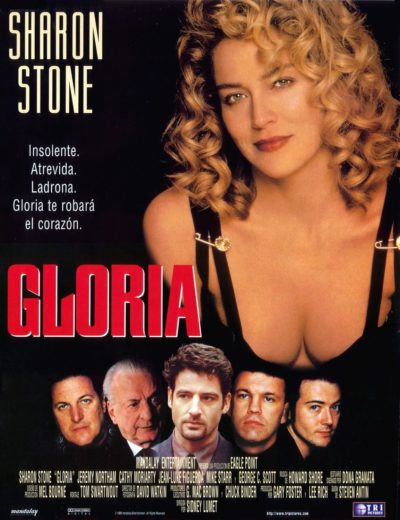 Nineteen years after the original, four-time Oscar nominated director Lumet opted to remake Cassavetes’s movie. Though by some accounts, it was more a case of him wanting to work, rather than being particularly attracted to the project. If the results are anything to go by, he should have stayed at home. For the film was a bomb, and leading lady Stone received a Razzie nomination for her efforts. I wouldn’t have said she was that bad, though she’s clearly not at the same level as Gina Rowlands in the original. It does also address some of what I felt were its’ predecessor’s weaknesses. However, it tones down the central character, and this helps lead to what you’d be hard-pressed to argue is other than an inferior product overall.
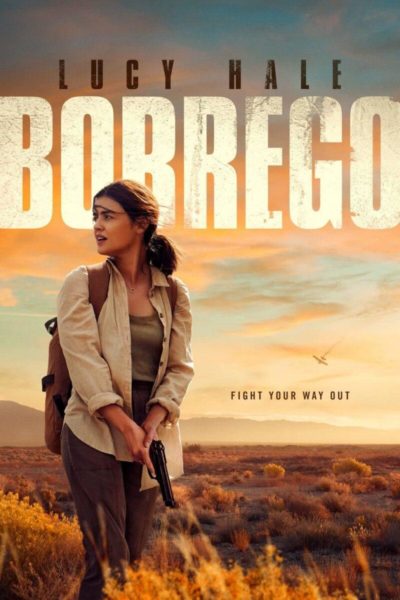 Sorry, couldn’t resist it. For the recent string of suboptimal Netflix movies continues with this tedious bit of work, which feels like the first journey across the South Californian desert filmed in real time. It begins with Ellie (Hale), a botanist carrying out a survey near the Mexican border. She meets a teenage girl, Alex (Trujillo), who is skipping school and the two have an awkward conversation. I initially thought its stilted nature was intended to tell us something about the two characters, but nope. All the conversations here are awkward. Writer-director Harris just has no ear for dialogue, which may explain why so much of this is people wandering about instead.
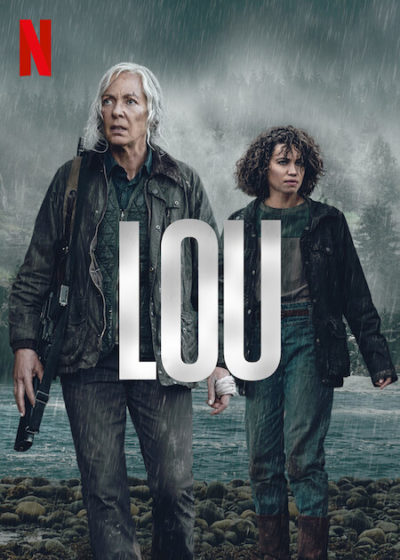 A Netflix original movie, the first thing to say is: thankfully, this is not as bad as
 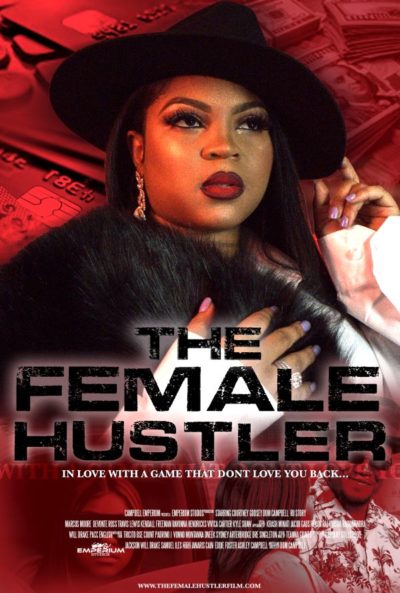 This is another one in the apparently endless series of low-budget urban movies, which focus on crime in the black community. Though this does actually have a couple of wrinkles which make it stand out, if not quite enough to make it a success for a wider audience outside its community. Columbus, Ohio is the setting, where Princess (Godsey) is struggling to make ends meet. She’s relying on handouts from her dodgy brother, Dae Dae, to make rent, and also wants to get her best friend away from her pimp. Opportunity comes knocking, in the shape of an Uber driver, Omar (Campbell), who brings her on board in his business, which he tells her has almost unlimited upside and growth potential.
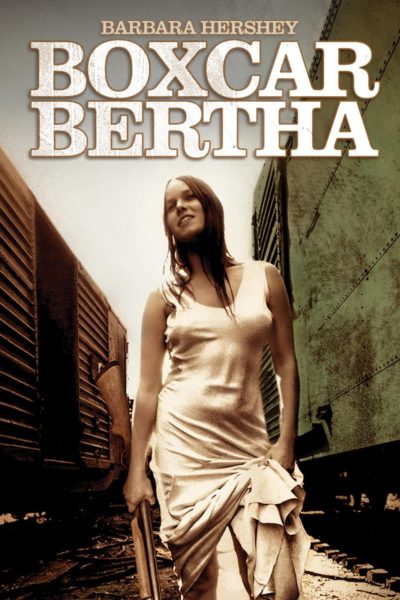 After the success of Bloody Mama, producer Roger Corman wanted to follow up with another film depicting lawlessness in the Depression. He found his source material in Sister of the Road, supposedly the autobiography of a thirties drifter called Boxcar Bertha. No such one person actually existed: it was assembled by the author, Dr. Ben L. Reitman, from multiple characters he met while helping women in trouble in Chicago (a fictionalized version of the doctor may appear in the movie). Corman hired the then almost unknown Martin Scorsese, who was directing his first commercial film; its predecessor, Who’s That Knocking at My Door, grossed only $16,085. Scorsese was given a schedule of 24 days and a budget of $600,000.