




★★★
“Russian about.”
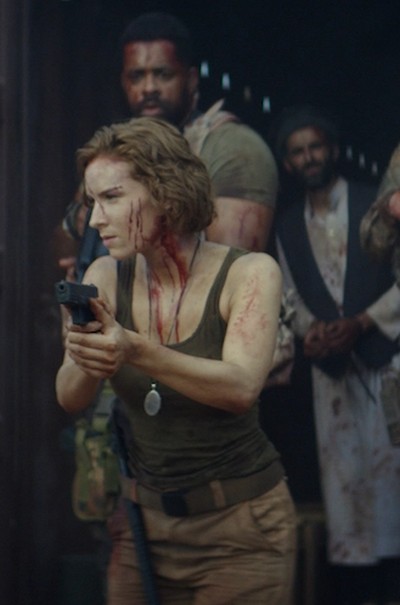 There is a tendency for directors married to actresses to make them action heroines. This perhaps started with Renny Harlin and Geena Davis, but the most famous example is probably Paul W.S. Anderson and Milla Jovovich (she was previously married to Luc Besson too). It seems that Marshall and Kirk may be heading that way, with her starring in his last two movies. First there was witch-pic The Reckoning, and now this, which blends elements from a number of genre films. Not the least of which are Marshall’s own Dog Soldiers and The Descent. However, you can also throw in Predator, Aliens and perhaps even Starship Troopers. The result is, obviously, derivative as hell – yet I can’t deny, I enjoyed it.
Pilot Capt. Kate Sinclair (Kirk) is shot down in hostile Afghani territory. While being pursued by insurgents, she stumbles across and takes refuge an abandoned underground base left over from the Soviet occupation in the eighties. What’s inside turns out to be very aggressive and unpleasant, and Sinclair barely escapes with her life. She finds refuge in a nearby allied base commanded by Major Roy Finch (Bamber), and her tales of Soviet engineered monstrosities meet with understandable scepticism. Until night falls, and the creatures emerge from their laur and go on the offensive. The next day, Capt. Sinclair and the survivors decide they need to go back to the Russian base and plant enough C4 to reduce it and its inhabitants to their constituent atoms.
The last Marshall film we covered here was Doomsday back in 2008. Since then he has honed his skills more in television; of particular note, a couple of episodes from Game of Thrones, including the spectacular “Blackwater”. He seems to have put the experience to good use here, with a fine eye for the fight sequences between the soldiers and the creatures. There are a lot of practical effects, and the Resident Evil franchise is another clear influence. I do wish the creatures’ talents had been further illustrated: for instance there’s one point where Sinclair is grabbed by a monster’s multiple tongues. I kept expecting this feature to return later; it never does.
There are, unfortunately, too many holes for this to be a classic, with a heroine whose behaviour falls short of logical, or even making sense. I get the “no man left behind” thing, but dragging all your comrades back into danger, in order to rescue one person, is very different from going in alone (as Ripley does, to rescue Newt, at the end of Aliens). Some of the accents here are flat-out terrible: Bamber’s Southern drawl is the worst – were there no actual actors available from South of the Mason-Dixon line? – but Ockenden’s Welsh isn’t convincing either. I’m also impressed by the way Sinclair’s hair and make-up remain pristine through the entire movie, regardless of what grubby underground trench she has had to crawl through: I guess being the director’s wife has its benefits… As an entertaining B-movie though, I’ve no complaints, and if this couple want to continue down the Anderson/Jovovich road in future, I’ll be fine with that.
Dir: Neil Marshall
Star: Charlotte Kirk, Jonathan Howard, Jamie Bamber, Leon Ockenden
 The latest stop in our ongoing tour of female-driven urban crime movies brings us to the nation’s capital in Washington, where the police are celebrating just having taken down a leading light in the city’s organized crime industry. Now, they set their sights on a new target: the gang led by Racine Robinson (Vaughan) and her two daughters, Kat (Crosby) and Candy (Bethea). These might prove a tougher nut to crack, since the Robinson crew have a harsh, zero tolerance policy to anyone who messes with them in the slightest, yet also gathered local support during the coronavirus pandemic. Indeed, Racine is so popular in the neighbourhood, a run for political office is not out of the question. However, she has rivals, who have more than a passing interest in seeing her taken out of the picture – albeit for very different reasons, in order to make room for them to rise up.
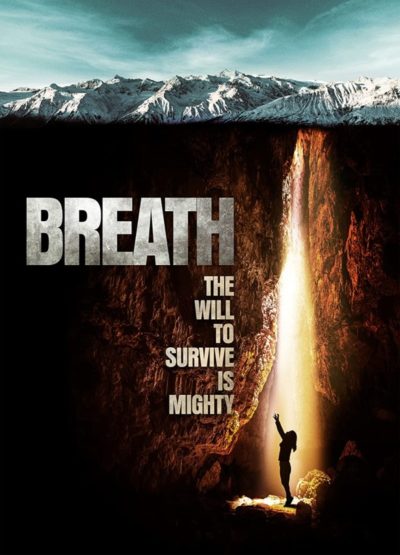 Lara Winslet (Daigh) is a vulcanologist, who is on the side of a mountain in Italy, taking samples, when the ground gives way beneath her, and she falls into an underground pit, damaging her leg in the process. Help isn’t going to come, so with limited resources (not to mention a count of functioning limbs that stops at three), she is going to need to cope with the situation on its own, and figure a way out of what could easily become a fatal scenario. Meanwhile, on the outside, her father (Cosmo) is becoming increasingly frantic. This is erhaps because if Lara doesn’t come back, he’s going to be stuck permanently with her kid (Di Mauro). That would be my reaction, anyway…
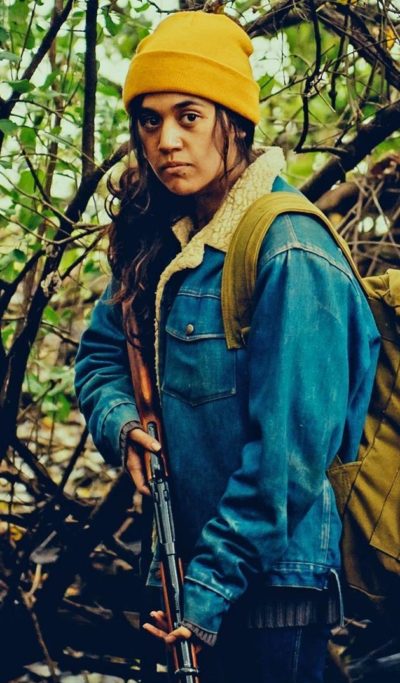 Margo Crane (DelaCerna) has been brought up by her native American father, since her mother walked out on them several years ago. Under his guidance, they have become self-sufficient, and Margo has become a crack shot. However, her creepy uncle ends up having sex with the teenager, an incident for which she gets blamed, ruining her life. She resolves to apply her shooting skills on him, only for the resulting incident to become a tragedy. Margo strikes out on her own up the Stark river, in search of her absent mother. Doing so, she meets a variety of people, then has to try and reconnect with a woman who now has her own life, one not necessarily helped by the unexpected arrival of a teenager.
 This is briskly entertaining, and feels like a female version of Blade, with an extra good-girl vampire as a bonus. Yet it’s definitely best not to pause and think about some aspects, because the story will likely fall apart under close scrutiny. Matters are complicated by a flashback-heavy structure, on occasion multiple levels deep, and an apparent desire to overstuff proceedings, at the expense of some elements. That said, it hangs together and is entertaining, mostly thanks to a likeable pair of lead performances. There is a decent quantity of hand-to-hand action, even if some of it does leave a little bit to be desired on the quality front.
 This documentary is about the field of women in aviation, combining archive footage with interviews, covering the range from those who aspire to fly (giving their Lego aircraft lady pilots!) to those who have been into space, fought combat missions in the Middle East or dodged death in aerobatic displays. There’s not any particular structure to proceedings, choosing instead to bounce around between its topics and subjects. This helps keep things fresh, yet at the cost of any narrative beyond, I guess, “Women can do anything men can”? Which, to be fair, deserves saying in the aviation field particularly: how much strength is needed to handle a joystick?
 It’s interesting to look at the film’s IMDb page, and contrast the reviews, where there’s nothing less than an 8/10, with the rating, where 73% of votes are a 1/10. One “review” was actually a rant about other reviews which appear to have been removed? Something odd there. There’s no doubt, the film is not so much tackling a contentious topic, as driving head-first into it at 80 mph. Even the title (obviously inspired by the Public Enemy LP of the same name) is an incendiary one, guaranteed to raise the hackles of many – and, to be honest, not without reason, because of the assumptions it makes. It’s a shame, since the film is at least slightly more nuanced than the title makes it seem.
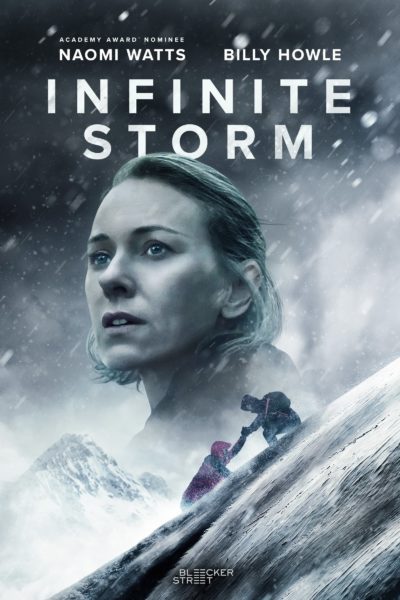 The “based on a true story” label covers a broad range of cinematic outcomes. However, a general rule of thumb is, the closer a movie stays to the facts, the less interesting the result will be. On that basis, I suspect this is a true and accurate deduction of the life of Pam Bales, and one particular incident therein. Because it’s largely lacking in excitement, and worse, seems to know it. Unless you have a fondness for watching someone trudge uphill for 30 minutes, then downhill for another sixty, I’d recommend giving this a pass. Despite some attractive scenery (Slovenia standing in for New Hampshire), there’s not enough to generate the necessary amount of drama or tension.
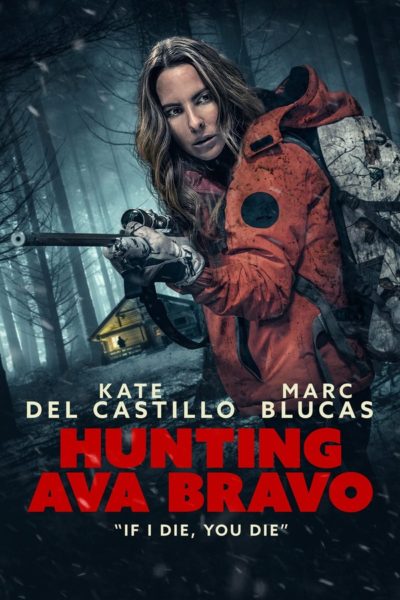 I do admire a film which does not hang about, and this certainly qualifies. We begin with Ava Bravo (del Castillo) removing a hood to find herself in a very remote, snowbound mountain cabin. A cassette player nearby has a message. She has been abducted by Buddy King (Blucas), a millionaire with a fondness for kidnapping trauma survivors and hunting them through the wilderness. There’s a snowmobile parked five miles North, if she can make it across the winter terrain there. To make it fairer, Buddy has only three bullets for his gun. Oh, and he’s going to be coming up from the basement in ten seconds. Safe to say, this is the kind of start that grabbed my attention.