




½
“Knucks sucks.”
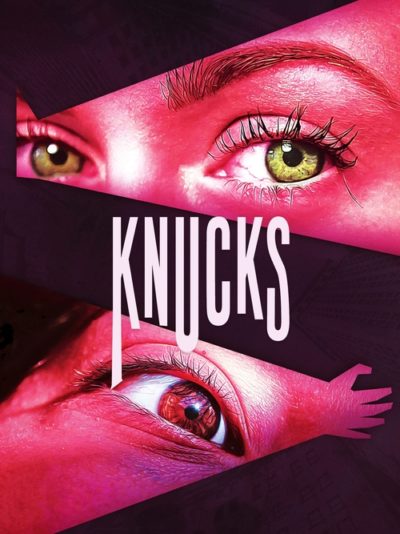 I’m tempted to leave my review at that. But there’s a famous quote by critic Roger Ebert, going off on Bruce Willis flop, North: “I hated this movie. Hated hated hated hated hated this movie. Hated it. Hated every simpering stupid vacant audience-insulting moment of it. Hated the sensibility that thought anyone would like it. Hated the implied insult to the audience by its belief that anyone would be entertained by it.” I was always impressed, and hoped one day to find a film capable of producing a similar reaction. This is… close. It is, let’s be clear, utterly terrible, with almost no redeeming qualities. Yet it’s either not bad enough, or more likely, too bad to generate such a reaction. That would be giving it more power and credit than this deserves.
Why are we here? This is less an existential question than a desire to explain why I’m writing a review. It’s because of this synopsis: “Two women attempt to come up after beating their drug dealer to death.” That was good enough to get it on my radar. However, within a couple of minutes, it was clear I had made a terrible mistake, and was about to be in for the longest 66 minutes of my life. Here’s another quote, from the BBFC, explaining the 15 rating: “There are scenes in which a child is abducted by two men, but it is not clear what their intentions are.” The two words “not clear” are the best way to summarize the misbegotten art-wank which I endured, substituting pointless video manipulation for plot, characterization or any positive aspects.
It’s as if the makers had obtained a list of all the elements I despise most about pretentious movies, and had treated it as a request list. Random colour filters. Check. Strobe effects. Check. Shitty heavy metal soundtrack. Check. Obtuse dialogue. Check. Scenes unfolding in murky near-darkness. Check. Shaky, hand-held, extreme close-up camerawork. Check, check and, in no uncertain terms, check. The basic plot, and I use the word in its loosest way, is mostly ripped off from True Romance, with heroines and sisters Kathleen (Leidy) and Taylor (Harlan) attempting to sell a bagful of drugs obtained from the dead dealer, to someone who looks like a Kid Rock impersonator.
But this doesn’t really show up until the final fifteen minutes. Until then, we get meaningless flashbacks to their abusive childhood (of course!), in which their film-maker father seems to be involved in porn and snuff. I am not exaggerating when I say either of these would likely be more entertaining. Things come to a head, when the original owner of the drugs shows up, burbles threateningly for a bit, before keeling over. It ends in much the same way as the previous hour has unfolded: an incoherent mess. I was genuinely relieved by the short running-time, though if it had been much longer, it might well have been a rare cinematic “did not finish.” The terminally slow end credit crawl was easily the best thing about this. Largely because it indicated the end was mercifully nigh.
Dir: Gage Maynard
Star: Dasha Leidy, Hedley Harlan, Mindy Robinson, Alan Bagh
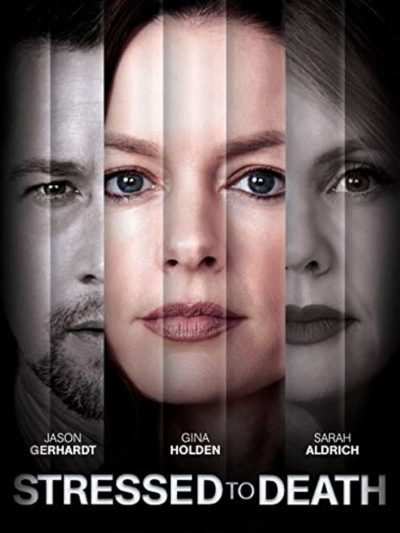 The concept here is intriguing. It’s just the execution – and the script in particular – which is bad. A robbery at a convenience store ends in the death of David, the husband to Victoria Garrett (Aldrich). She blames the paramedic on the scene, former soldier Maggie Hart (Holden), for the loss of her spouse, though the incident hits Maggie equally hard. She quits her job, raising daughter Jane (Blackwell) with her husband, commercial real-estate agent, Jason (Gerhardt). But Victoria hasn’t moved on – in probably the film’s most memorably loopy elements, she feeds her husband’s ashes to a pot-plant she calls David, to which she chats. She’s also clearly a believer in that saying about revenge being served cold.
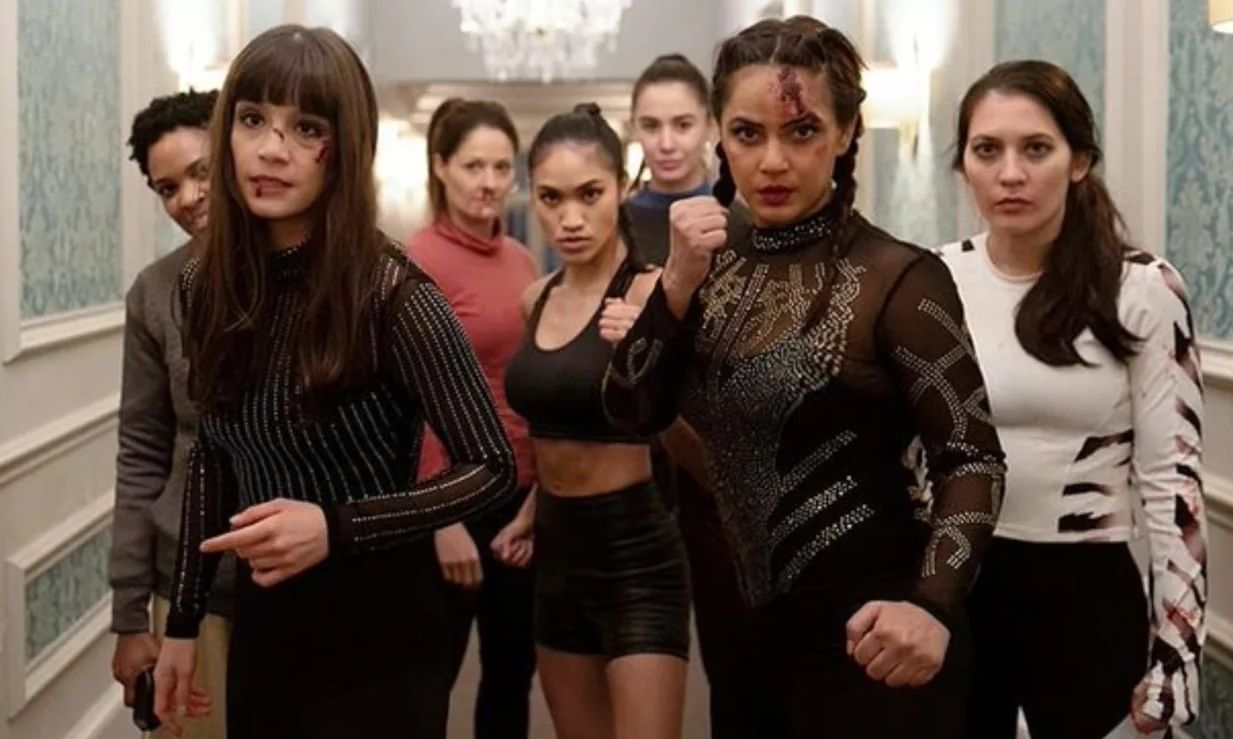 Madison isn’t without an action pedigree, having directed rather good short,
 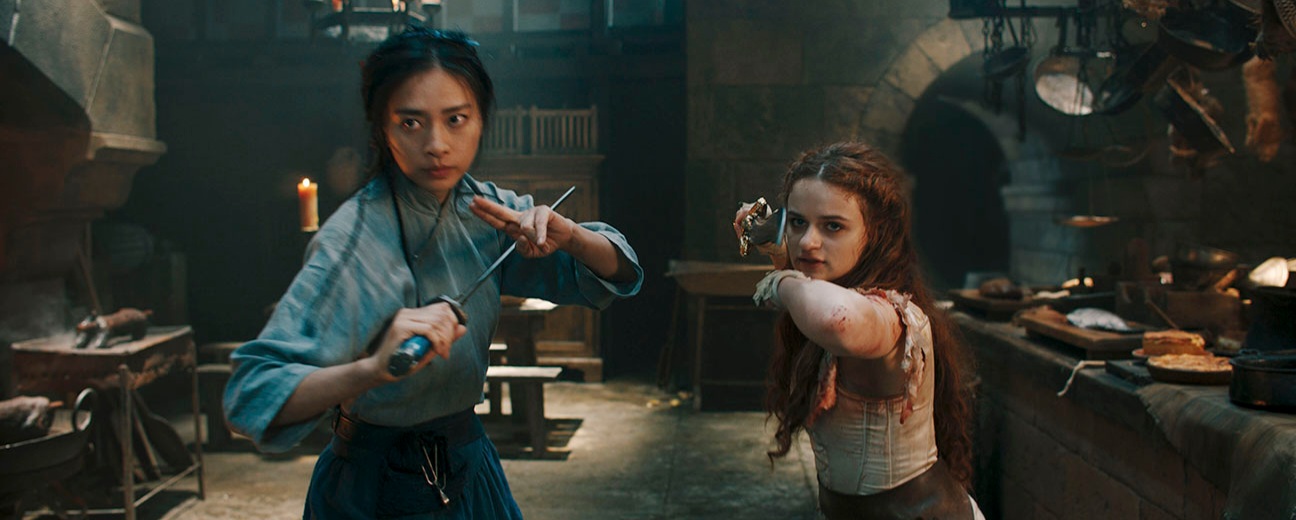 ★★★★
★★★★ Well, this was a surprise. I was not expecting too much, this being a movie released straight to Hulu or Disney+ (depending on your territory), and starring someone best known for rom-com franchise, The Kissing Booth. Actually, scratch the “too” from that sentence. I went in on the basis that I was contractually obliged to watch it, as the guy running this site. I say this, so you’ll understand how unexpected it is to be writing this: it’s the best action-heroine film of the year so far. This is just thoroughly entertaining, and as the tag-line above suggests, is as close as I’ve ever seen to a genuine, female version of the greatest action movie of all-time.
  This reaches its height in a glorious, extended sequence, with the Princess battling her way down the tower’s staircase. It feels as if it’s 20 minutes long, such is the energy contained in it. There’s even a beautiful moment of tension releasing humour, part of a running gag involving one of Julian’s minions who is too fat for all the stairs he’s ordered to climb. Nothing thereafter, including the inevitable fight against her wannabe husband, quite reaches the same heights. Glover is good value as Julian, staying just this side of a pantomime villain. As Die Hard shows, having a memorable antagonist is an important element. He’s not quite Alan Rickman – though who is? And I do have to question some of Julian’s decisions.
 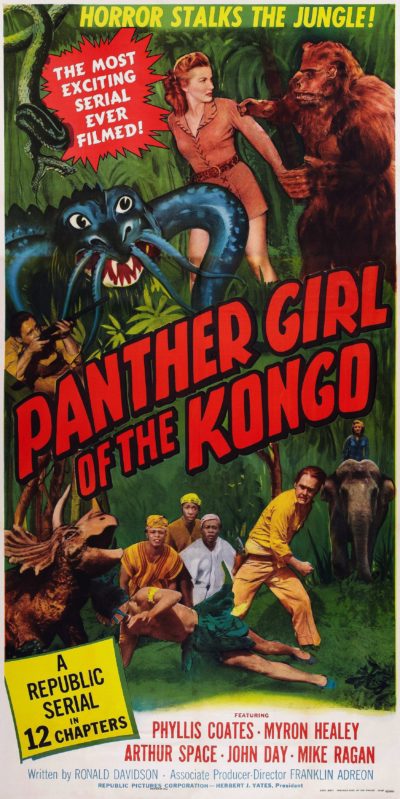 This was the second-to-last of Republic’s sixty-six serials and, to be honest, it shows. Having watched
 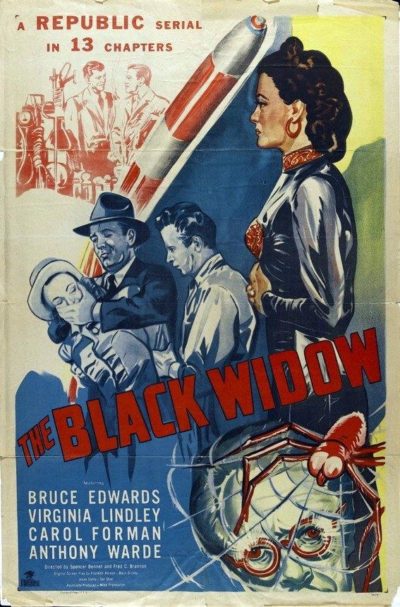 This is something of a fringe entry, and illustrates a few of the issues with Hollywood of the time. In particular, a severe reluctance to let female characters act with genuine independence. We see this on both side of the story here. The title character is Sombra (Forman), a vaguely Asiatic woman who is engaged in a plot to steal nuclear secrets from the United States. To this end, she has been trying to bribe acquaintances of a notable scientist, but the trail of spider-envenomed corpses resulting from their refusal to help has brought her to the attention of the Daily Clarion and its ace girl reporter, Joyce Winters (Lindley). Which would be fine, if the women were allowed to go head-to-head on their own terms, in the same way as
 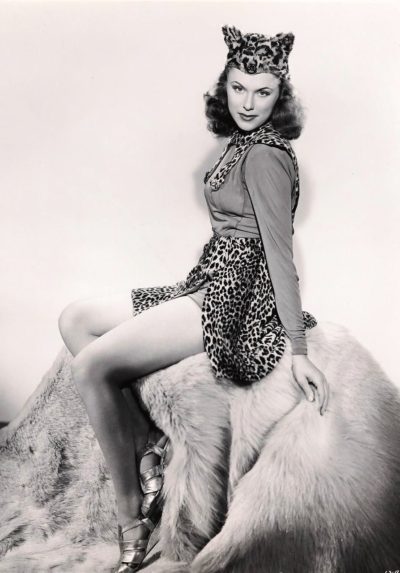 As mentioned, we’re in South America, where two competing oil companies are seeking to establish their territory. The Inter Ocean Oil Company are the current occupants, and have been working in association with the indigenous population, under their white queen (Stirling), known as the Tiger Woman. But if they don’t strike oil soon, their franchise will expire. A predatory, far less friendly (but unnamed) company, is standing by, to make sure that doesn’t happen, allowing them to take over. But Inter Ocean has sent top troubleshooter, Allen Saunders (Rock Lane), to work with the Tiger Queen and block their enemy’s attempts. Those get more desperate as the deadline approaches and Inter Ocean appear to be succeeding. Complicating matters is the Tiger Queen’s original identity as missing heiress, Rita Arnold, something her enemies want to use to their advantage.
 After
After 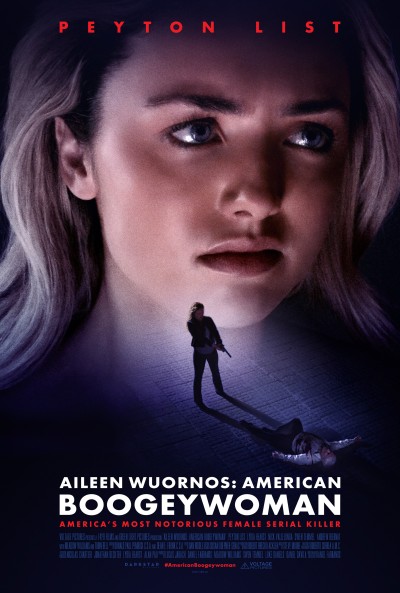 Almost twenty years after her execution, Aileen Wuornos remains a cultural icon. A very rare example of a genuine female serial killer, she was killed by lethal injection in 2002, after being convicted of six murders, and confessing to a seventh. The following year, Charlize Theron won an Oscar for her portrayal of Wuornos in
 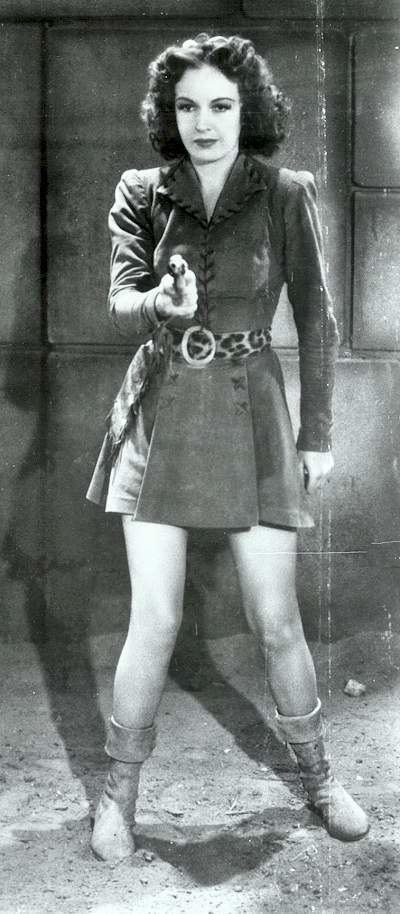 This is nominally based on Edgar Rice Burroughs’s 1932 novel of the same name, also known as The Land of Hidden Men. Though there’s very little beyond the title in common. The book was set in Cambodia, and told the story of explorer Gordon King, who finds a civilization which has been lost for a thousand years. This… isn’t. It is instead the story of Nyoka Meredith (Gifford), the daughter of a doctor working with the Masamba tribe in the middle of Africa. “Nyoka” is Swahili for snake, and she seems to spend most of her free time swinging through the forest on vines.