




★★★★
“Parks and Illegal Recreation.”
 For six months or so, our morning routine involved the consumption of an episode of Parks and Recreation with breakfast. Our favourite character on the show was Ron Swanson, but not far behind was April Ludgate, played by Aubrey Plaza. She was the mistress of deadpan misanthropy, delivering lines like “I’m just gonna live under a bridge and ask people riddles before they cross.” We’ve not seen her in much since the show ended, but the concept of April Ludgate, career criminal, was too delicious to pass up. So here we are, yet I must admit, Plaza is almost good enough to make us forget April. Well, except for one roll of the eyes, which was vintage Ludgate.
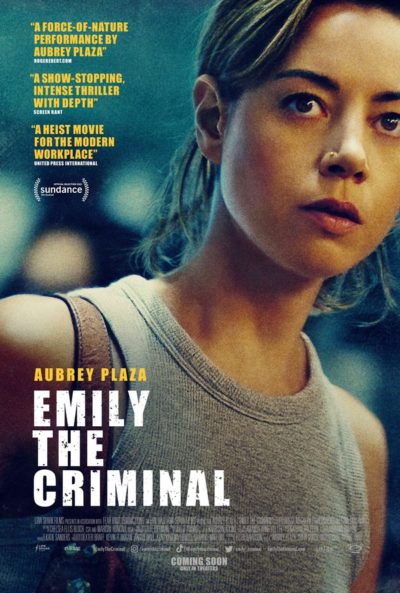 She plays Emily, a young woman saddled with an inescapable pit of student loans, for a basically useless qualification, and an unfortunate felony relegating her to food delivery work. A chance encounter brings her into contact with Youcef (Rossi). She earns $200 for making a fraudulent credit-card transaction on his behalf, and is offered the chance to earn ten times that, for a larger, riskier purchase. With regular employment clearly not the solution, Emily embraces her new, illegal career, working with Youcef, much to the disdain of his Lebanese brothers. As their infighting escalates, Youcef decides to cut and run, only to be beaten to the punch. Emily won’t stand for that: “You’re a bad influence,” says Youcef, as he and Emily prepare to rob his brother. He’s not wrong.
On one level, Emily’s situation is a result of her poor choices. Running up eighty grand in debt for an art degree and committing felonious assault are both decisions she made, of her own free will. These have consequences. Yet I increasingly found myself rooting for Emily, and her refusal to be ground down by the unfairness of life, or those seeking to exploit her – both in the legal and illegal employment sectors. She possesses undeniable smarts, and a righteous anger at the undeserved success of those she sees around her. Her wants are not excessive, and her crimes are… if hardly victimless, non-violent. At least, if you don’t count those who try to take advantage of her. For Emily wields a mean stun-gun.
If the world won’t give Emily a chance, playing by their rules, she’ll simply make up her own rules. She’s not willing to conform just to become society’s victim, and in this, weirdly, it has elements in common with urban flicks like The Bag Girls. There’s also no sense of honour among thieves, though the authorities and police in this movie are notable by their complete absence. Certainly, the threat of arrest is never a consideration for Emily, or at least, doesn’t alter her trajectory. The ending is ambivalent, to put it mildly: crime appears to pay, though it seems Emily may be addicted to the adrenaline high as much as the ill-gotten gains. While the morality here may be questionable, Plaza’s performance still makes it more than worthwhile.
Dir: John Patton Ford
Star: Aubrey Plaza, Theo Rossi, Megalyn Echikunwoke, Gina Gershon
 Giving your film a title like this is basically asking for trouble. It gives snarky critics an extremely easy weapon to wield against the movie. That’s especially so when it’s a low-budget effort, made with considerably more heart than skill. It’s not without merit, especially in the photography. It is crisp and does a good job of capturing some beautiful Montana scenery – there’s a reason the state is nicknamed Big Sky Country – and the rodeo action. The problems are in a script which never met a cliché it didn’t like, and performances that do little or nothing to elevate the material.
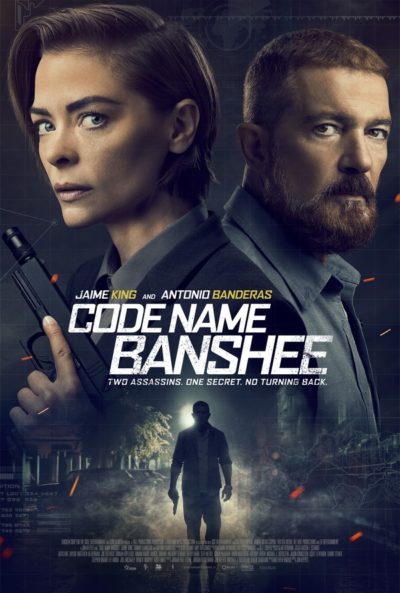 This seemed considerably better in the trailer, which makes it look like quite an action-packed extravaganza. The reality is much less interesting, with a murky and confusing plot, and what action there is, is often filmed in a murky and confusing way. It begins with an agent, code name Banshee (King), quitting the government agency for which she works. The handoff of an asset went wrong: one of the colleagues involved was her father, who vanished entirely. The other was Caleb (Banderas), who went off the grid thereafter. Five years later, Banshee is a private assassin, but her latest job is interrupted by Greene (Flanagan), who wants her to give up Caleb’s location.
  A disease sweeps the planet, killing billions. The only ones with any hope of surviving in the outside world are the young, a small number of whom appear to have a natural immunity. Five years on, and Ellie is one of the few to have endured, scraping for a life among the leftovers of civilization. But she and the other survivors are the targets for the Stalkers: roaming groups of biohazard-suit clad hunters in white vans. They seek to capture the immune, for use in a project to develop a vaccine that can allow the elite to come out of their safe havens. While trying to avoid them, she encounters Quinn (Smith), another survivor with a wealth of knowledge, and a hard-edged approach to life. Initially, Quinn wants nothing to do with Ellie, though eventually realizes two heads can sometimes be better than one, in the never ending struggle to stay alive and free.
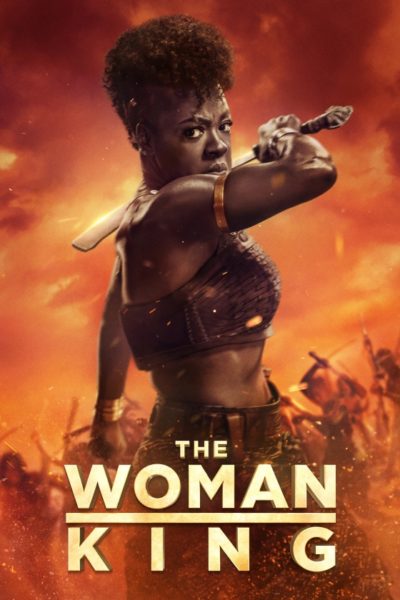 The above – though expressed rather more bluntly! – was Chris’s reaction to the opening scene, in which Nanisca (Davis) leads her female troops, the Agojie, in the ambush of slavers from the neighbouring Oyo tribe. The Oyo are rivals to the Kingdom of Dahomey, under King Ghezo (John Boyega), who relies on Nanisca and the Agojie to protect his territory, and it’s getting closer to all-out war. The Agojie get a new recruit, Nawi (Mbedu), whose father drops her off at the palace gate, because of her refusal to accept an arranged marriage. Nawi turns out to have a very close connection to Nanisca, but also ends up captured by the Oyo and needs to escape before being sold to Brazilian slavers.
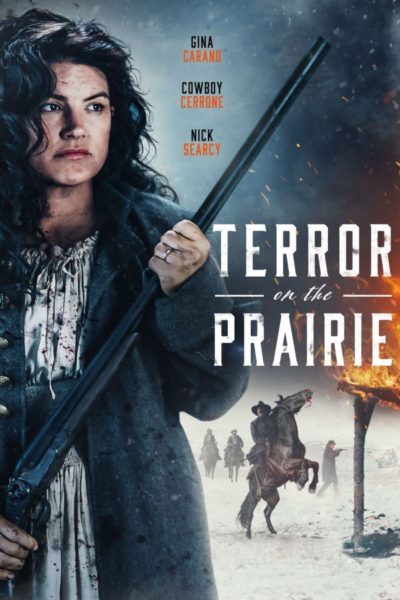 I keep hoping Carano will deliver an action film reaching the quality of her debut,
  Joan is always a figure who has the potential to be co-opted into other times and locations. Recently, we reviewed
 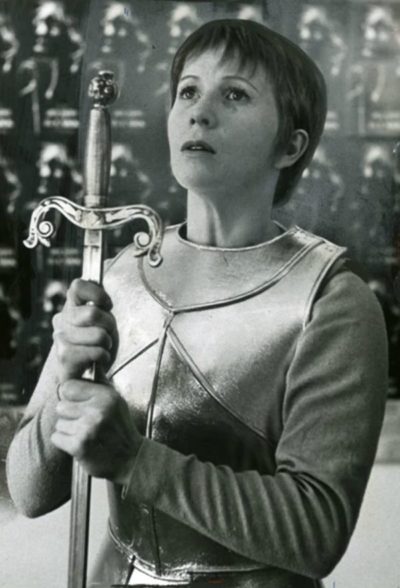 This was originally a French play, L’Alouette, written by Jean Anouilh in 1952. Three years later, a translated version was brought to Broadway, where it ran for 226 performances from November 1955 until June 1956. Julie Harris played Joan, and there was quite a star-studded cast behind her, including Boris Karloff as Bishop Cauchon, Christopher Plummer and Theodore Bikel. It was critically acclaimed, Harris winning that year’s Tony Award as Best Leading Actress, and Karloff being nominated as Best Leading Actor. The following February, a TV adaptation was screened in the United, though wasn’t the first or the last such. In November 1956, the BBC screened their version, with Hazel Penwarden as Joan, and a supporting cast including Michael Caine. Additionally, 1958 saw an Australian version, though it seems notable only for having Olivia Newton-John’s father in the cast.
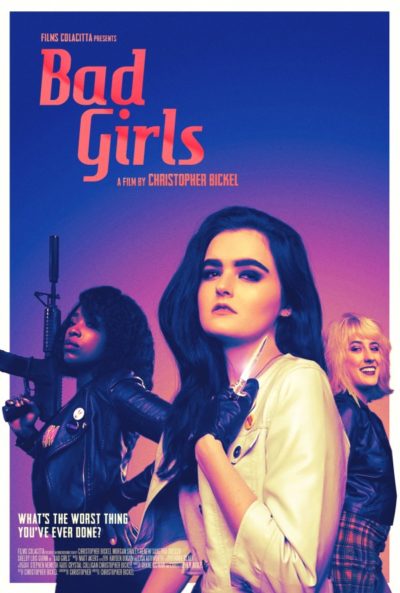 I didn’t realize until this started, it was by the director of the (non-GWG)
 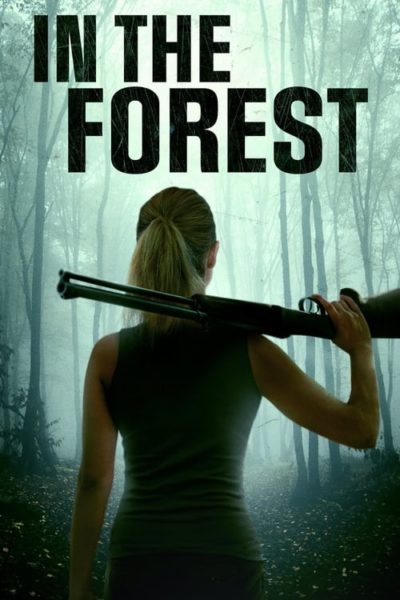 Three generations of a family take a trip into the woods in their mobile home. There’s grandfather Stan (Ward), his somewhat neurotic daughter Helen (Ayer), whose life has been falling apart around her, and Helen’s teenage daughter, Emily (Spruell), for whom a weekend in a forest with old people is