




★½
“Die, please.”
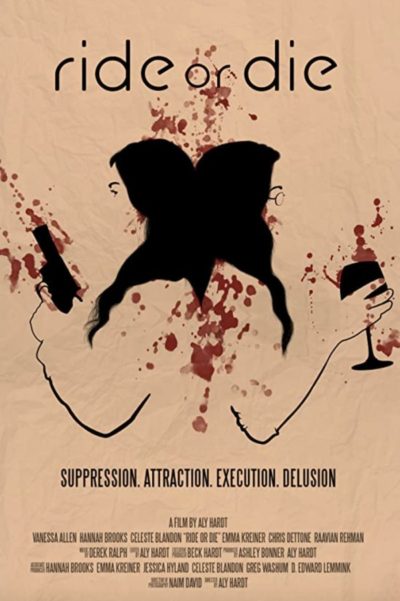 This is not to be confused with the rather higher profile i.e. it’s available on Netflix, Japanese film with the same title, made the same year, and covering a not dissimilar theme. Both are about a woman who is prepared to commit murder, in order to save their best friend from an abusive relationship. However, after the killing in question, the films take divergent paths. The Japflix version becomes a road-trip movie, with the killer and her friend going on the run. This, however, focuses heavily on the killer, whose already fragile mental state falls apart completely, after she discovers that things weren’t quite as she had been led to believe. It’s not her first time at the homicide rodeo either.
For that to work, it needs to have a convincing relationship at its core, and this fails miserably on that level. Ashley (Allen) may be willing to do anything for Mandy (Brooks), but we are never shown why this might be the case: just told it, and expected to accept this at face-value. It’s less credible than the BFFs in Jennifer’s Body, and that is a low bar indeed. It doesn’t help that Brooks is, to put it bluntly, one of the worst actresses I’ve seen given a major role in a movie for a very long time. Yet she’s not ever the worst in this movie: that goes to the “grandmother” who recites her lines from off-screen. My granny would have delivered them with greater conviction, and she has been dead for approaching forty years.
Allen is, at least relatively, watchable, with a smokey voice which makes her resemble a young version of Yancy Butler. The film did manage to hold my attention for about 20 minutes. This began with Ash shooting the abusive boyfriend (Rehman) in the face, and having to deal with an unexpected witness (Blundon), and runs through the revelation that upends Ashley’s worldview. However, the movie singularly fails to do anything significant with it, and all the hallucinatory nonsense thereafter, with Ash being visited by her victims, was completely unable to re-ignite my interest. There is zero development, and too many strands are painstakingly set up, only to go nowhere, e.g. the nosy waitress, another performance which it would be kind to call thoroughly wretched.
The complete lack of any official interest in the killing spree is understandable, the budget clearly not stretching to any forces in authority. Yet this does not excuse the second half degenerating into dull scenes of Ashley driving around, mindless chit-chat or PG-rated lesbian canoodling with more people who can’t emote their way out of a moist paper-bag. In (marginal) defense, they are not helped by a number of scenes apparently being re-dubbed in post, or a musical score that doesn’t so much complement the on-screen action, as compete vigorously with it for attention. It’s a race to the bottom there, and neither aspect gets out of here alive.
Dir: Aly Hardt
Star: Vanessa Allen, Hannah Brooks, Celeste Blandon, Raavian Rehman

 You know you’re in for a slice of stinky, nineties action cheese from the opening sequence. Undercover cop Jesse (Holden) has just taken down a sleazy yuppie drug-dealer, and a homeless woman tells her, “You know what you are, sweetie? You’re ballistic!” We probably need to explain why the film is titled that way, because there’s really not an enormous amount of great action here to justify it. Jesse is your typical, no-nonsense cop, who has just transferred from homicide to the Urban Crime Taskforce, where she is meeting resistance from her new colleagues. She is also trying to help her father (Roundtree), a former cop now doing 20 years after being framed with kilos of coke.
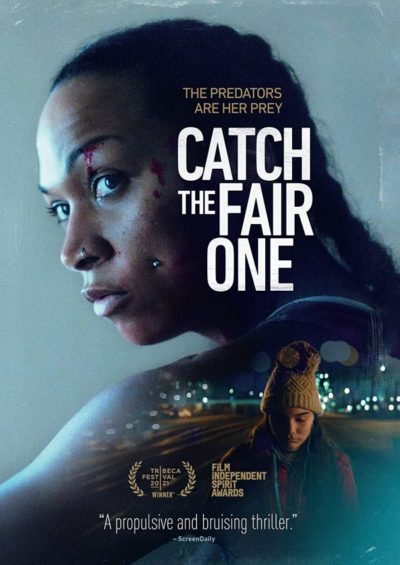 Quite often, in films featuring women who are supposed to be boxers, they simply do not look the part. Safe to say, this is not an issue here. That is apparent from the opening scene, in which Kaylee (Reis) is preparing for a fight. As she warms up with her trainer, the speed and power of her punches is clear, and not cinematic trickery. It’s unsurprising, since Reis is, at time of writing. the current WBA, WBO and IBO light-welterweight world champion. It’s just a shame this movie chooses not to make more use of her undoubted talents in the combat field, and is a tad too earnest to be value as entertainment.
 Daphne Wool (Varela) has finally had enough of her abusive husband, so has killed him, chopping up the corpse and keeping it in a storage locker. Which actually is a good thing, because it turns out he was wanted by the Mob, and there was a price on his head. For their “help” in carrying out the hit, Daphne and pal Tony Steele (Cappello) are rewarded, but things go further. Daphne becomes a full-time assassin for the gangsters, learning to kill with everything from a paper-clip up, while Tony acts as her facilitator. However, they quickly become a liability to the organization, and are given a “poison pill” contract, being sent to kill weapons inventor Vincent McCabe.
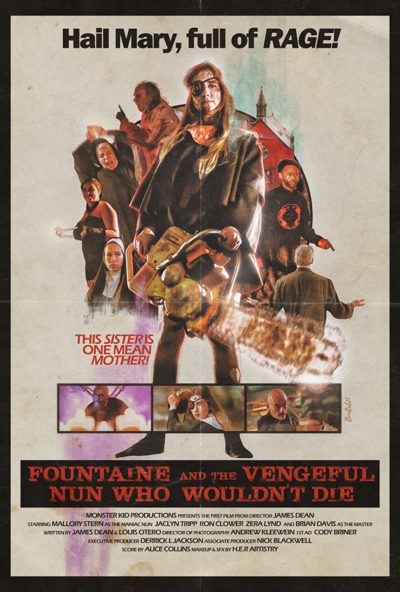 You will probably understand why the title more or less rocketed to the top of my watch-list, especially when accompanied by the poster (right). Naturally, it was almost inevitable that it could not possibly live up to either: the question was mostly, how far short it would fall. The answer is, “a fair bit, yet not irredeemably so,” even if the first half if considerably duller than I wanted. Indeed, it’s also rather confusing, in terms of what’s going on. As well as I can piece things together, Mary (Stern) is a nun who gets sent to an asylum after losing her sister, though it turns out to be less a mental-care facility than you’d expect.
 I think it’s safe to say you’ll probably be able to decide within a few minutes, whether or not this is your cup of tea. The opening scene is set in a strip-club where the next act on the main stage is dressed as a nun. After a couple of minutes, she pulls out an unfeasibly large weapon from under her clerical garb, and guns down the mobsters present, in gory fashion. Thereafter, you can expect more of the same, along with extremely savage jabs at organized religion. Catholicism is the main target, but Judaism and Hinduism get their share of jabs: for example, Gandhi is a martial arts teacher. Or there’s a Yiddish hitman, Viper Goldstein (Lavallee), who practices the art of “Jew Jitsu”. If you just roll your eyes at that, this is likely not for you. However, if you roll your eyes and also laugh, then you, like me, may be the intended target audience.
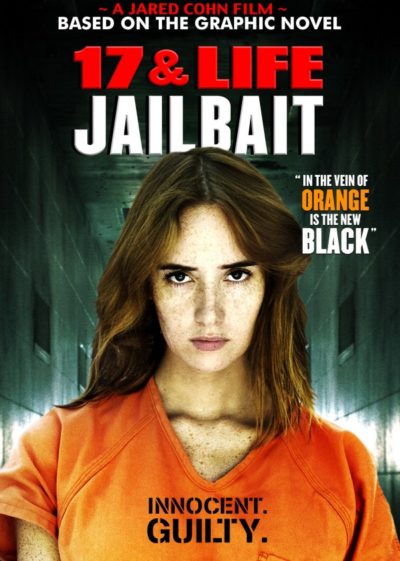 Of all the scathing reviews this has accumulated on Letterboxd.com, I think my favorite is the one which starts, “Obviously written by someone who knows absolutely nothing about the penal system.” Yes, seriously. I strongly suspect things like this were written by people who know absolutely nothing about women-in-prison films, and who inexplicably managed to overlook the title of the damn movie in their expectations. Me, I had initially overlooked this, believing it to be just a retitling of the same director’s
 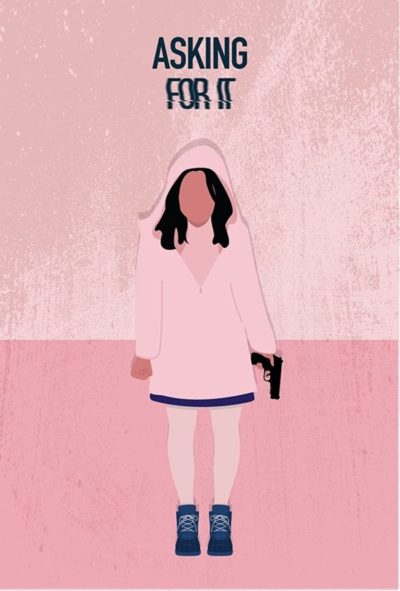 Not to be confused with the 2021 rape-revenge film of the same name (which I’ll get round to reviewing down the pipe), this is somewhat lighter in tone, though there’s a case to be made that this clashes terribly with the subject matter. Jenny (Hsu) is a journalist, working under Cheryl (Garofalo),and her work has brought her to the attention of an online stalker, who sends her increasingly disturbed and disturbing emails. When the harassment begins to move from the cyberworld into the real one, and the authorities fail even to reach the level of disinterest, Jenny teams up with room-mate Lisa (Morales), to hunt down the perpetrator and bring him to justice themselves.
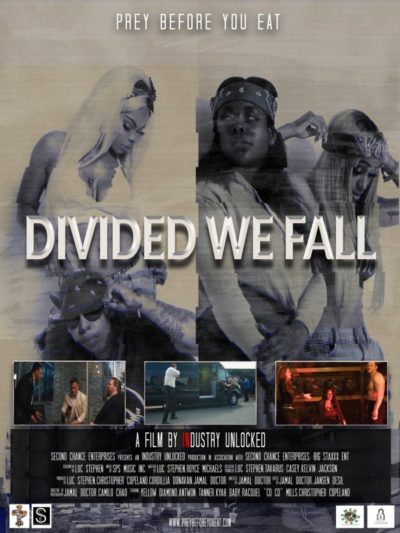 We begin with the usual disclaimer for films of this kind: middle-aged white guys like me are not the target audience. However, I think it’s fair to say that concepts like story-telling and character development are not limited to any particular race, colour or creed, so I still feel equipped to offer an opinion on these aspects. Though, actually, what felt like it worked best here was its strong sense of place. I’ve never been to the projects in Jamaica, New York (though Chris grew up elsewhere in the same borough of Queens). But the film does a good job of showing you that environment; it certainly works better than the (largely token) efforts to convince you some scenes take place in Miami, or even Moscow.