



★★
“DEI Hard.”
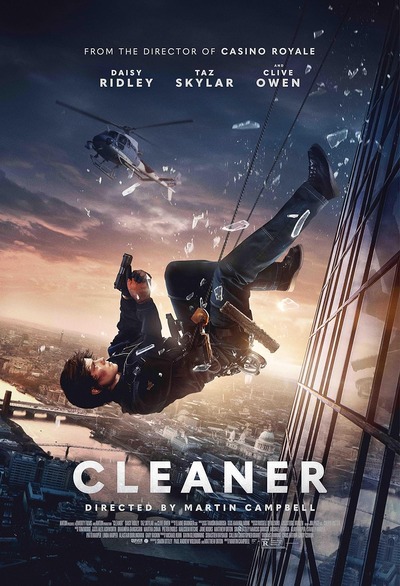 Director Campbell recently appeared here with the entertaining Dirty Angels, and I was hoping for more of the same here. Sadly, I came away disappointed. There are a couple of reasons for this. Firstly, Daisy Ridley is not Eva Green. That’s OK. After all, only Eva Green is Eva Green. But it’s still an issue. A bigger problem though, is likely the unashamed way thus is a knockoff of a certain Bruce Willis movie, and Daisy Ridley is not Bruce Willis either. Here, she plays Joey Locke, a former soldier now working as a window-cleaner in a skyscraper owned by Evil Corporation Inc. They’re actually called something else, but I’ve already forgotten what, in the two hours since.
She also has to care for an autistic brother, Michael (Tuck), who is alternately utterly useless and a wiz with computers, depending on what the script needs at that moment. She ends up having to take him to work, and – what are the odds? – it’s the very same evening a group of eco-terrorists under Marcus Blake (Owen) and his lunatic sidekick, Noah (Skylar). will storm the building. Their intention is to blow the lid off Evil, Inc’s dirty little secrets. In the nasty little corners of the Internet where Luigi Mangione is a hero, they’re probably the good guys. It’s all fashionably murky, but another demerit: Skylar isn’t anywhere close to Alan Rickman. Owen might have worked, but for reasons, he’s not the main bad guy.
The film is, at least, considerably shorter than its inspiration. Although it feels this was obtained by removing most of the stuff which made Die Hard such fun. Instead, Joey is left dangling outside the building for too long, exchanging vaguely sisterly dialogue with the police inspector on the ground. It’s painfully notable that the competent people in this film are, almost without exception, wonen. In the middle act especially, it feels very much like the script was not so much written (by three human beings, apparently), as constructed by a Democratic focus group, circa September 2024. Occupy Wall Street! Climate change! Disability representation! Vote Kamala! Sorry, dunno how that slipped in. By the time we get to Joey actually kicking terrorist butt, I was largely checked out.
There are some positives. The relationship between Joey and Michael is sweet, and kudos to the film for casting a genuinely autistic actor. Campbell also has enough of a track record in action, he could do this sort of thing in his sleep. Though, except for the opening scene, a flashback to twenty years earlier, there is rarely a sense Joey is genuinely dangling hundreds of feet off the ground [contrast Fall]. Ridley does enough with her part to suggest she may have a decent future in the action genre. She’ll need to pick better scripts, however, and the same goes for Campbell. Dirty Angels had its flaws, to be sure. It was still several notches more entertaining than this.
Dir: Martin Campbell
Star: Daisy Ridley, Taz Skylar, Matthew Tuck, Clive Owen
 Going off the Wikipedia article about Rose Dugdale, I can’t help feeling this could have been more epic than it was. I mean, a former debutante who, “As an IRA member, took part in the theft of paintings worth IR£8 million, a bomb attack on a Royal Ulster Constabulary station using a hijacked helicopter, and developed a rocket launcher” which used – I kid you not – packets of biscuits to absorb the recoil. There’s so much there, it feels a shame the movie focuses almost entirely on the art theft. This was carried out in 1974, raiding a stately home in rural Ireland (fun fact: the house was used as a location in
  This was my favourite new television show of 2024, and might have been my pick overall. It’s a very strong mix of action and drama, with a fabulous cast of characters. I think I might have to go back to the first season of
 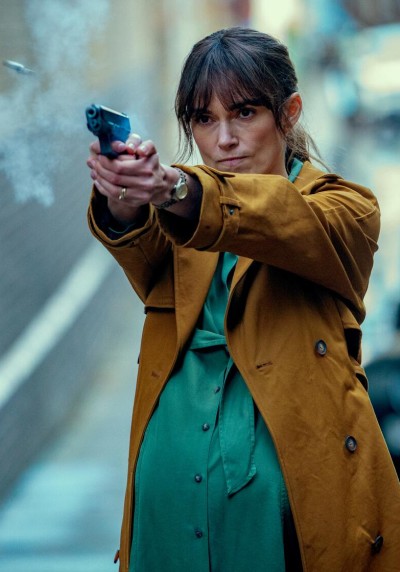 Reed calls in her top assassin, Sam (Whishaw), to protect Helen, fearing she might also be targeted. He has a history with Helen, dating back to before the birth of her children with Wallace. Things spiral out of control, involving the suspicious death of the Chinese ambassador, his missing daughter, a previous hit Sam botched, and Helen’s relentless pursuit of revenge, while trying to keep her family life intact. It’s a lot of balls to keep in the air, but the script does a fine job of avoiding confusion, with the wrap-up proving particularly admirable in its clarity. While I’ve read complaints about it being implausible, I have definitely seen worse. There’s room for both this, and more grounded spy shows like Slow Horses.
 Marshall has been involved in our genre back to 1998, when he wrote
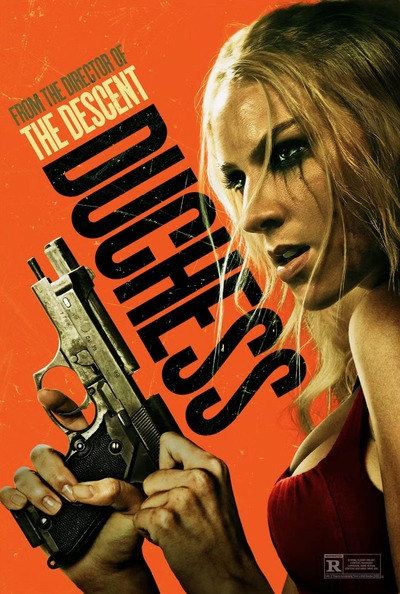
 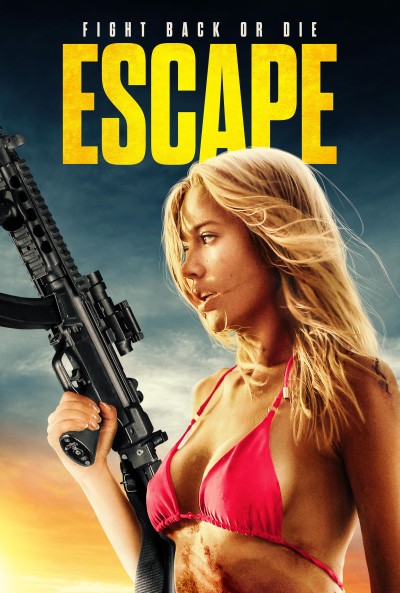 This feels almost like a throwback to the silent era, and ‘white slave’ films with titles like Traffic in Souls, combined with a significant fear of ‘the other’. As such, it’s both painfully simplistic, and endlessly fascinating in the layers of interpretation which can be read into it, should you be so inclined. On the most basic level, it’s your everyday tale of “good” girls, kidnapped for sale to the highest bidder, who need to fight to retain their modesty and virtue. [Though let the record show, at no point is there any bikini-wearing wielding of automatic weapons, despite what the poster clearly wants you to think. The heroines here prefer weapons of the blunt and/or pointy variety]
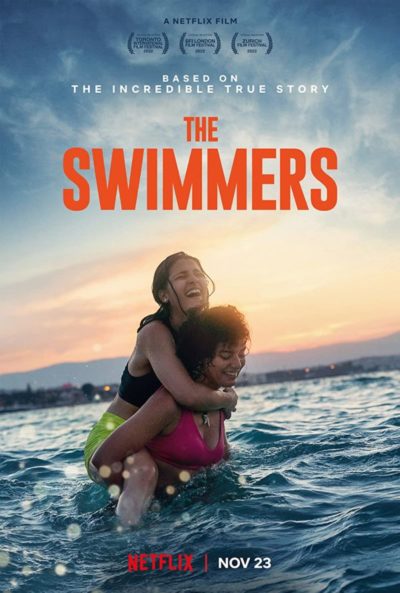 This is the story of Syrian sisters Yusra Mardini and her sister Sarah, played by real-life sisters Nathalie and Manal Issa. Growing up, they were trained by their father, a professional swimmer himself, and had the goal of reaching the Olympics for their country. The (still ongoing) Syrian Civil War led to the sisters leaving their homeland, and this is mostly the story of their journey, through Turkey, across the Mediterranean in a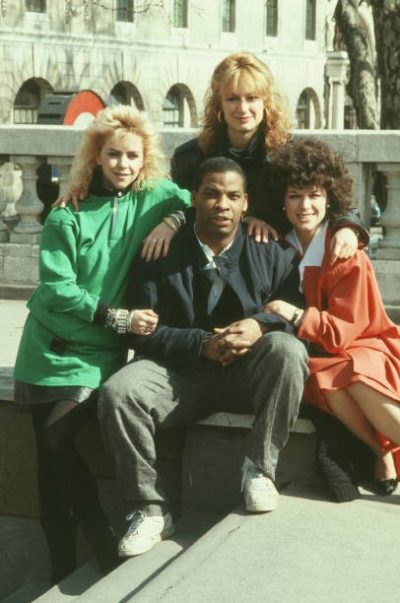
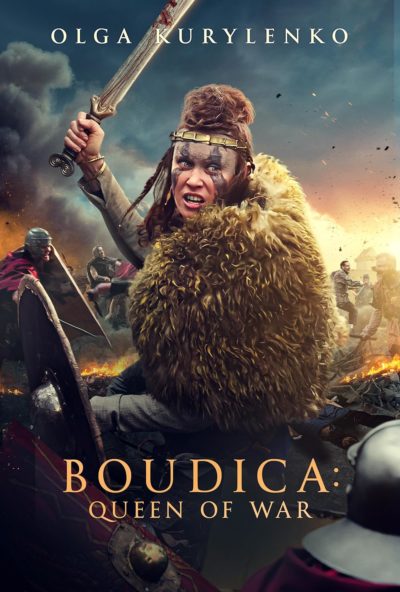 The latest take on one of Britain’s greatest historical heroines has come in for a fair bit of critical flak. But I really did not think it was all that bad. Sure, it plays fast and loose with historical accuracy (Christianity wasn’t a thing in Britain at the time). However, we’re dealing with someone about whom there is very little reliable record. Why not throw in chunks of the Arthurian mythos, if it might make for a more interesting end product? The usual basics are there. Queen of the Iceni Boudica (Kurylenko) loses her husband (Standen), and subsequently falls foul of the occupying Roman Empire. She raises an army, leads a rebellion, kicks Roman butt for a while, but eventually goes down, fighting. That’s the Cliff Notes version.
  Zombies and jail aren’t quite as new an idea as you might think. The Walking Dead had a major arc which took place at a prison, the facility’s fences now more useful for keeping things out than in. And back in 2005, The Asylum released the (surprisingly decent)
 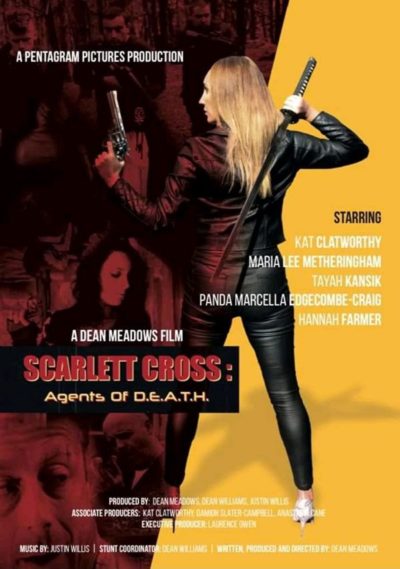 To be honest, I enjoyed this a good bit more than the rating above would indicate – probably another star or so. But I have a particular tolerance for cinema with rough edges, which I know not everyone will share. This is such an entity. I can’t really recommend it, since most people won’t be able to get past the micro-budget anesthetics, which the film rarely bothers even to try and hide. But I could appreciate the obvious passion that went into this. Put it this way, if I had twenty quid with which to make a movie, it could end up looking something like this. Probably not with such a kick-ass poster though.