



Literary rating: ★★
Kick-butt quotient: ½
 I suspect the issue here is partly my own expectations. When I read a memoir of somebody who spent more than three decades working for the Central Intelligence Agency, I was half-expecting a life somewhere between Salt and Atomic Blonde (ok, the latter was technically MI-5, but the concept remains valid). This is… not that. It is, of course, perfectly understandable that real life would not be as exciting as a Hollywood film. But given how long the author worked there, I would have expected more entertaining, amusing or even interesting anecdotes. The peak is probably right at the end, with her struggles to pass a lie-detector test when she tried to go back into the Company after 9/11.
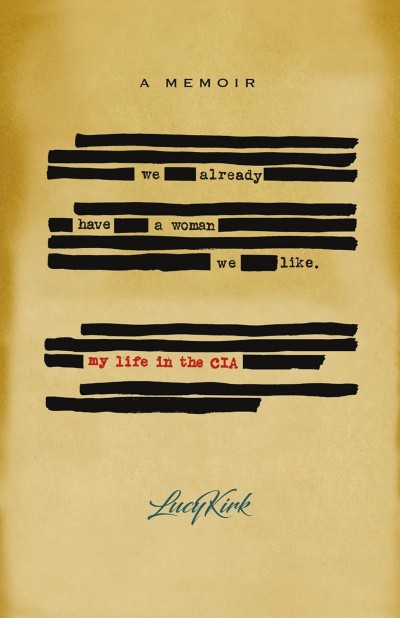
It is an an eye-opener, in a couple of ways. Firstly, I kinda thought the CIA simply were not allowed to operate on American soil – that was the territory of the FBI. But based on this book, it appears that’s not the case, with Kirk being based domestically for a number of positions. These mostly involve gathering intelligence from friendly American assets who had foreign connections, and seem to involve being up-front about this being on behalf of the CIA. However, it’s hard to be sure, because a lot of specifics are omitted. This isn’t the author’s fault: an introductory note says, “As a retired CIA employee, I am obligated to present any writing I do to the Prepublication Classification Review Board… Places I served and lengths of time are notably absent per PCRB guidelines.”
This means you’re left with no real sense of place and time, whether she’s serving at home or abroad, and the specific details of what she was working on, are also very limited. In lieu of that you get a lot of complaints about chauvinism and flat-out sexism in the profession. What can I say? It was the sixties. I’m not sure what she thought life would be like, but a degree from Wellesley College might perhaps create certain, unrealistic expectations of life in the outside world. Some of her criticisms do appear justified: there’s no real reason why women couldn’t operate as case officers, just as well as men. But there’s a certain point beyond which I found myself rolling my eyes and quietly mouthing, “We get it”. I mean, she stayed there for thirty years. How bad could it be?
The other thing I took away is how banal and humdrum most intelligence work is – in sharp contrast to every depiction of it in fictional books, movies and television shows. It feels as if Kirk spent more time fighting with bureaucracy than Communism. In this way, it’s no different from any other big business, with the bosses at the top severely disconnected from those on the front lines. I certainly will admit to having learned things here. Those things, however, are just not particularly interesting. I’ll be sticking with the fiction, thank you very much.
Author: Lucy Kirk
Publisher: BookBaby, available through Amazon, both as a paperback and an e-book
Stand-alone memoir