This shouldn’t be confused with the BBC series of the same name announced last year. This is very definitely American, another in the ongoing series of urban crime movies which seem to pop up, with some regularity on the likes of Tubi. I keep watching them, in the hope they’ll be good, but am usually disappointed, mostly due to cheap-jack production values and repetitive story-lines. This is at least watchable in the former department, though is definitely marked down for a startlingly abrupt “To be continued” ending. I hate cliff-hangers in books: they do not work any better on movies, and this isn’t exactly Dune Part One, shall we say. Not least because it runs only 75 minutes, including end-credits.
It’s the story of Dee (Pinckney), who comes out of jail with a grudge, and sets about trying to take over the drug trade in the city where she lives (I think it’s Philadelphia). The first obstacle standing in her way is CJ (Whitehurst); after she succeeds in facing him down, he hires an assassin to take her out. But the assassin is not a fan of CJ’s, so looks to switch sides and play for Dee. In her corner, she also has her cousin, Stephanie (Hicks), and a select group of other women with appropriate skills. The one of most note is Stasha Fields, also known as Star (Feindt), a dirty cop who is looking to make it on her own terms.
These make for an interesting set of characters. The film’s main problem is not doing nearly enough with them. Considering how short this runs, there is an awful lot of sitting around, talking about doing things, and not nearly enough actual doing of these things. Outside of the opening scene, in which Dee goes to confront CJ in his apartment, I’m hard-pushed to think of more than a couple of other significant moments of action. Although someone does get shot towards the end, it’s in a non-lethal manner, which is something of a surprise in this genre, since it usually can be depended on for a significant body-count. Here: not so much. There’s even preciously little dealing of the dope.
You’re therefore left largely to rely on the drama for interest, and that’s a bit of a mixed bag. As mentioned, there does seem to have been some thought put into the personnel. Pinckney and Feindt at least can reach convincing on some occasions, while director Deniro – and I’m wagering that is probably not his real name – knows the value of silence, rather than burying every scene in rap music, another staple of the field. In the end though, we reach the closing caption, without having moved an adequate distance from where we were after the first scene. We know a lot more people, to be sure. But to what extent do we know them? Maybe we’ll find out in Dope Girls 2. Maybe I can be bothered to watch it.
Dir: Black Deniro Star: Kenisha Pinckney, Eva Lin Feindt, Joaquin Whitehurst, Taria Hicks
★½
“Do you know what the definition of insanity is?”
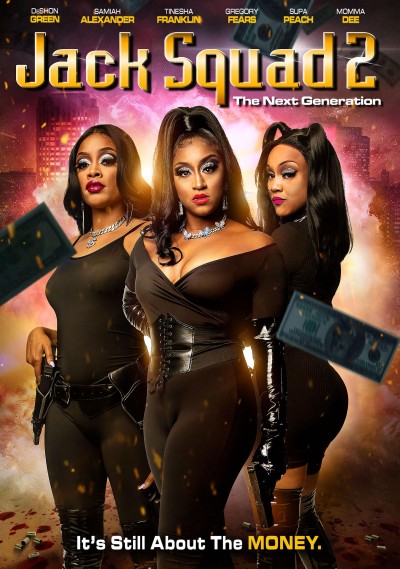
This is a question posed by the bad guy (Fears) towards the end of this, and of course, he provides the usual explanation in response: “It’s doing the same thing, expecting different results.” After watching this, I would choose to adjust it slightly. A valid definition of insanity is making the same movie, and expecting different results. Because it is, more or less, what Rankins has done here: it’s a remake of his own movie from fourteen years ago, Jack Squad. Now, there’s something to be said for that. I mean, Cecil B. DeMille did The Ten Commandants twice, while directors from Hitchcock to Michael Haneke have remade their own films.
The difference is, they were kinda busy. For instance, Hitchcock directed twenty-five features between his two versions of The Man Who Knew Too Much. Since the original Jack Squad in 2009, Rankins has made just one feature: Angry Kelly in 2014. Did he not manage to come up with more than one original idea in a decade and a half? And that count is presuming Angry Kelly is not about a man who is annoyed because he was drugged and robbed by a trio of women. I’ve not seen it, I can’t say. Here, we get a little variation at the start, where the original Jack Squad get hunted down, and a bit at the end, where there’s dissension in the ranks over hidden money.
In the middle though? It’s a blatant re-make. Three young women decide to make money by drugging and robbing men. This goes wrong, when one of the targets is a courier for a violent drug boss, carrying a large sum of cash. They make the ill-advised decision to hold onto the money, a choice which brings them into the crosshairs of its real owner. If anything, we have even less going on this time. It’s a good half-hour before the new trio, of Cassie (Green), Nikki (Alexander) and Cam (Lynn) put their scheme into action. I guess there is at least some altruism, the goal – at least initially, before the designer shopping kicks in – being to cover the medical bills run up by one of the trio’s mother.
The overwhelming sense of deja vu here is what knocks the overall rating here down below the original. I mean, the three characters feel almost like bad photocopies of their predecessors. There’s one who has qualms about the whole concept, while another refuses to give it up at any cost. It’s likely a little more technically competent, though at basically two hours long, is still painfully over-long. There’s a weird subplot where one of the women has a mentally challenged brother, who wants to be a baseball pitcher. This does eventually show relevance, though the way it does, might have you wishing they hadn’t bothered. If we don’t get Jack Squad 3 until 2037, I am completely fine with that.
Not to be mixed up with Furie, The Furies or even Furies – the last of which also showed up on Netflix recently. Confusion seems almost inevitable (and I’m not helping, by largely recycling the tagline for Furie). However, those three are all films – two Vietnamese, one Australian – while this is an eight episode TV series from France. It begins with Lyna Guerrab (El Arabi) living a fairly idyllic, and certainly well-heeled life, with no bigger issue than whether or not to marry her cop boyfriend Elie (Nadeau). Things get upended in no uncertain fashion, when her accountant father is assassinated. Turns out, he kept the books for certain criminal organizations, and someone wanted him very dead.
Lyna vows to find whoever was responsible for her father’s demise, and make them responsible. That opens up a whole can of worms, as she has to venture into the domain of the Parisian criminal underworld, which is far more expansive and influential than expected. To a degree, it feels like the system shown in the John Wick franchise, with six crime families, working in different areas, e.g. prostitution, robbery, etc. who govern things and make sure nobody does anything that would upset their highly lucrative apple-cart. As their collective enforcer is a woman, Selma (Fois), known as the Fury, a hereditary position, passed down the matriarchal line, and she has the skills to keep everyone else in line.
Or does she? Because as Lyna enters the game, it becomes apparent that someone is out to disturb the balance of the system. Coming under the Fury’s patronage, as a possible successor, may not be enough to save her from the war which is becoming increasingly inevitable. As well as John Wick, there are quite a few elements here which feel inspired by Luc Besson in one way or another: the world-weary assassin who takes on a feisty young apprentice, for example, could be straight out of Leon. The fight scenes are well-crafted, slick and hard-hitting: I vaguely recall action director Jude Poyer as part of the Eastern Heroes crew in London, back in the nineties, so nice to see him kicking professional ass.
It does sometimes feel too over-stuffed, trying to juggle too many threads and characters. The script solution to any problem seems to be, throw in another subplot. The makers also deserve a demerit for ending on a horrendous cliffhanger. The streaming service have made no announcement regarding a second series: the show seems to have done reasonably well, but Netflix gonna Netflix. If that doesn’t happen, you should whack off a full star, since the way it ends is definitely not satisfying. But there does remain a good deal here to admire. I particularly liked the performance of Foïs, who brings a lot of nuance to a character that initially seems one-dimensional. The extended duration allows her to develop, though all told, it might have been better as a two-hour self-contained Besson flick.
Creators: Cedric Nicolas-Troyan, Jean-Yves Arnaud, Yoann Legave Star: Lina El Arabi, Marina Foïs, Mathieu Kassovitz, Jeremy Nadeau
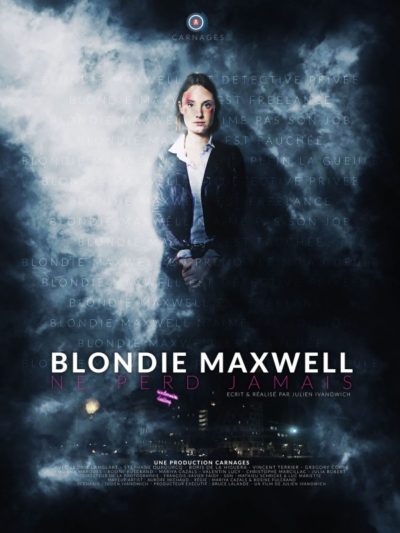
This French film takes place a little way into the future, though society has undergone radical changes. Law enforcement is now privatized, with investigations contracted out to private investigators, who have to balance their costs in order to turn a profit on the cases they accept. One such PI is Blondie Maxwell (Langlart) – and to get the obvious out of the way first, no, she is not blonde It’s mentioned once, but never explained. She is currently on the trail of the terrorist Boloch, who has been mounting a campaign against Chronos Industry, the all-encompassing tech company, which is invested in almost every area of everyday life. The reward would go a long way to solving her perilous financial situation.
She gets a case to investigate the murder of an escort. It seems an open-and-shut case with the evidence squarely pointing at a journalist. However, something doesn’t sit right with Blondie, and the more she picks at the crime, the more it seems a set-up job. Even her getting the case seems suspicious, since authorities know she doesn’t have the resources to investigate it properly. The journalist claims the victim was actually his source, who was going to blow the lid of Chronos, not least a “dark” area of their network where murder for hire is bought and sold. Is he telling the truth, and what does this have to do with Boloch and his campaign?
As the tag-line above implies, this bears a significant resemblance to Stephen Spielberg’s Minority Report, with its tale of law and order run by technology. which someone on the inside gradually comes to realize isn’t as idyllic as it seems. This is rather less nuanced. At one point, a colleague of Blondie says, “Our job is to make the world safer. If that means sacrificing a little liberty, it works for me. It works for us all. It’s a choice we make as a society.” However, it’s clear Ivanowich’s sympathies are more aligned with Benjamin Franklin. This is very much a pre-liberty screed, though credit for being at least somewhat ahead of the curve with its concerns about artificial intelligence, an issue of increasing scrutiny in 2023.
Unlike Minority Report, it doesn’t have the budget to create a fully-fledged future society. This one looks like ours in almost every way, just with a few added bits of gadgetry, such as displays embedded into contact lenses. Maxwell’s main trait is her dogged determination to find out the truth, regardless of the personal cost, and she makes for an admirable heroine. As played by Langlart, she’s down to earth, though there were points where it seemed like the script had all but forgotten about Blondie. Either Ivanowich fell too much in love with the setting. or the story might have benefited from fewer characters and a sharper focus. Definitely not terrible though, and a good example of what can be done with imagination instead of budget.
Dir: Julien Ivanowich Star: Léonie Langlart, Stéphane Dufourcq, Vincent Terrier, Boris de la Higuera
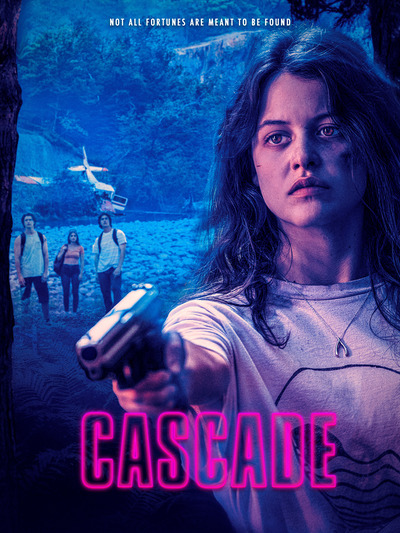
It’s kinda interesting to compare this to Mercy Falls. Both concern an ill-fated trip into a scenic wilderness – all trees and waterfalls – by a group of friends, which goes increasingly off the rails. The main difference is, in Mercy, the call was coming from inside the house, as it were. Here, the threat is definitely external. The target is four friends, just finished high school and about to enter the world at large. Jesse (Oulette) will work as a mechanic; his girlfriend Alex (Waisglass) wants to leave their small town and go to college, but hasn’t plucked up the courage to tell Jesse yet. Making matters more complex, her father is part of the Dark Saints, a biker gang and generally criminal enterprise.
This matters, because the Dark Saints just lost a shipment of drugs, the plane carrying it having crashed in a remote region of a nearby national park. Their minions are on the hunt for it, but – what are the odds? – Alex and her friends are first to stumble across it. A discussion ensues about what to do, but it’s all rendered moot after they cross paths with the minions. Before you can say, “implausible plot line,” Jesse has broken his leg and he, plus another of the quartet, pregnant pal Em (Laflamme-Snow) have been captured by the bad guys. It’s up to Alex to figure out what to do, as the only member of the group left able to operate freely.
Which is fortunate, since she’s also the smartest of the people wandering in the woods, and it’s not even close. Let’s just say, pond life would likely rate second or third place among these people, and I’m including both the hikers and the minions in those rankings. Seeing her mental wheels spinning as she out-thinks and outmanoeuvres her enemies is one of the few pleasures this offers. But it’s like watching a grand master playing chess against a pigeon. The only genuine and credible threat is her Dad and the Dark Saints, and they don’t show up until the very end of proceedings. With Alex’s witless friends, dumb and/or unlikable, the ones in peril, the stakes here aren’t enough to engage the viewer either.
I will say, the film does look half-decent, with Diego Guijarro’s cinematography popping nicely off the screen, and the Canadian backdrop is scenic. But too often, the film pulls its punches, whether it’s a character leaping off the waterfalls, depicted with them simply vanishing out of sight, or a pivotal car crash in which it appears no vehicles were actually harmed. This might as well be a TVM, with only the potty-mouths of some inhabitants meriting more than a PG rating. It’s all blandly innocuous, and despite Waisglass’s best efforts, it never gels. Things like Em’s pregnancy, for instance, feel like an afterthought, which goes nowhere and seems like nothing more than a cheap ploy to get audience sympathy. Memo to the film-makers: it didn’t work.
Dir: Egidio Coccimiglio Star: Sara Waisglass, Joel Oulette, Sadie Laflamme-Snow
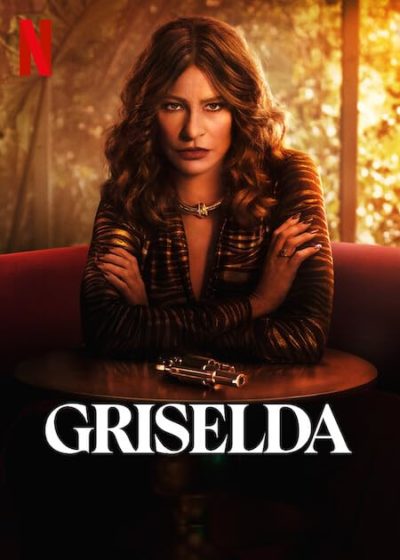
This is far from the first time we’ve covered films, series or documentaries about Griselda Blanco, the drug boss who ruled Miami with a lead fist in the eighties. There was Colombia narconovela La Viuda Negra. Lifetime TVM CocaineGodmother, starring the not exactly Colombian, Catherine Zeta-Jones. And there was factual retelling, Queen of Cocaine. Now, we get the highest-profile version, made by Netflix and starring probably Colombia’s best-known actress. Albeit best-known for her role in long-running sitcom, Modern Family. We saw her here previously in the underwhelming Hot Pursuit, but this is a very different kettle of fish. Concern was understandable. Would she be up to the dramatic lifting required for such a heavy and complex role?
Yes. That’s the short answer. She does a fine job of depicting a character whose defining trait, in this rendition, is single-minded determination. It’s an aspect apparent from the start, where she flees her abusive husband in Medellin. Griselda arrives in Miami with her three kids, and little more than the clothes on her back. Oh, and the kilo of top-shelf cocaine, swiped from her spouse. Through sheer refusal to take no for an answer, she finds a buyer and convinces him to give her a shot [she meets him in Miami’s Mutiny club – Chris was actually a member there back in the day!]. When he stiffs her, she reels in a Colombian supplier, convinces him to front her 100 kilos, then creates her own market and network of dealers.
It’s kinda inspiring, weirdly. Early on, the series can be seen a twisted version of the American dream, where an immigrant can come to America, pull themselves up by their bootstraps, and anyone can achieve success if they work hard. The reality is, Blanco didn’t arrive in Miami seeking asylum from domestic abuse, but fleeing increased law-enforcement heat for drug trafficking in New York. Not exactly what Vergara described the show as, depicting “How beyond all odds, a poor uneducated woman from Colombia managed to create a massive, multi-billion dollar empire in a male-dominated industry, in a country that was not her own.” You go, #girlboss! #slay!
Often literally. For her chosen profession here is thoroughly illegal, and the hard work involves ordering brutal violence against your rivals and enemies. This might be a cause for concern. But who are we to quibble? The makers have said they didn’t want to make a hero(ine) out of her. Neither did Brian de Palma, and yet, you can buy Scarface T-shirts. The market decides for you, and the way it depicts the violence for which Blanco is responsible seems more like an attempt at plausible deniability. It’s the usual double standard of Hollywood: making disapproving noises, while also depicting Griselda strutting glamourously out of the Mutiny, blood spattered on her cheek from a recent victim.
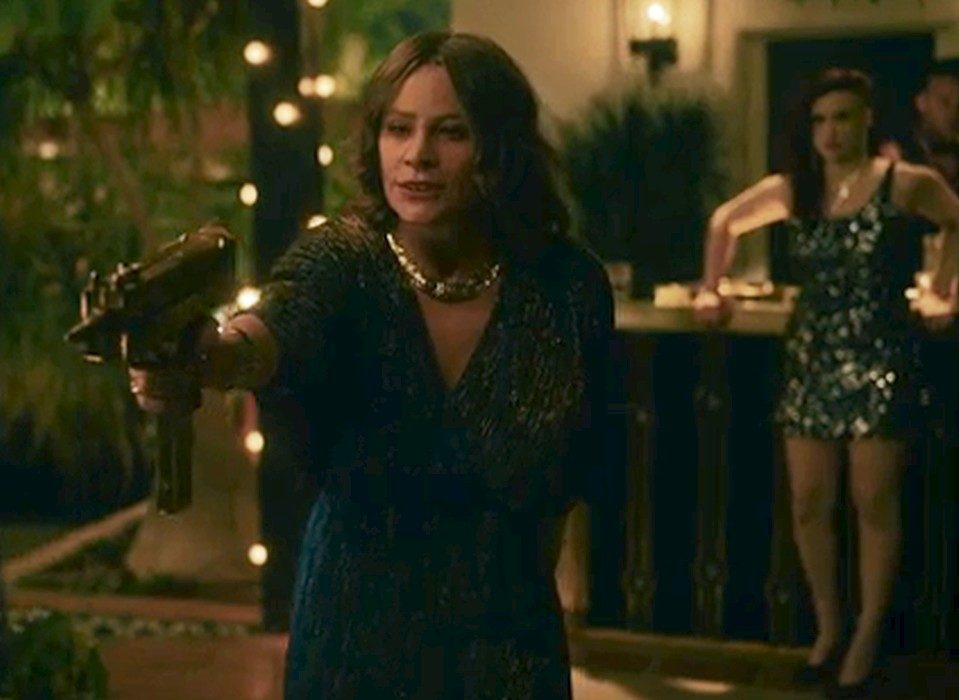
Griselda has a strict zero-tolerance for anyone who thinks she is a soft mark because she’s a woman. Especially in the early part of her career, was quite willing to wield a baseball bat or gun to that end. Later on… well, she had people for that sort of thing. But as we head into the second half, things get progressively darker. Griselda starts to become paranoid, suspecting the people around her – an attitude not helped by her taste for smoking crack. She believes there’s an informant in her circle, and takes brutal action against those who she thinksit might be. Things peak at a birthday party for Dario (Guerra), her third husband. It ends in Griselda letting loose with her gold-plated MAC-10 (top).
The irony is, there’s no informant: just good police work. For on the other side of the law, the series gives us June Hawkins (Martinez, bottom), intelligence analyst and detective in the local police force. She was also a real person, one who played a significant role in the pursuit and capture of Griselda, being one of the first to realize a woman had taken over the drug trade in Miami. I suspect her role was likely inflated somewhat, in order to act as a counterpoint to her target: co-creator Doug Miro admitted about the character, “There’s a fair amount of artistic license.” That applies to the whole series, though I’m not inclined to complain.
It is a fairly straightforward rise-and-fall, charting first Griselda’s path up to the top, when she was earning $80 million per month. This is followed by the slow but likely inevitable collapse, as her business rivals and law enforcement catch up with her. We know how the story eventually ends – in a pool of blood outside a Medellin butcher’s shop. The series doesn’t bother going all the way to the end. It finishes with Blanco released from jail, sitting on the beach. But it’s not a happy ending, having just been told that she has lost almost everything for which she worked: three of her four sons have been murdered. Conventional morality wins out in the end.
In terms of production value, this is definitely several slices above the other efforts, even if Los Angeles stood in entirely for Miami (the latter no longer resembling what it was at the time). Of particular note is the make-up work on Vergara. It must have been a challenge, because events unfold over a significant number of years: your lead is, obviously, more or less fixed at a point in time. Initially, there’s little of note, but it gradually builds up, in a way that’s so subtle you might not notice. Until, by the end, you suddenly realize the character no longer looks like the actress. Though still rather prettier than the real Griselda.
I highly doubt this will end up being the final or even the definitive version of the Griselda Blanco story. The last surviving son, Michael Corleone, filed suit against Netflix, and reports indicate he has his own version of the family story he would like to tell. For now, however, this is the best adaptation of her life. If obviously skewed towards a questionable message of feminist “empowerment” which the makers wanted to send, Vargas’s strong performance holds the strands together and makes for a captivating experience.
Dir: Andrés Baiz Star: Sofía Vergara, Alberto Guerra, Martin Rodriguez, Juliana Aidén Martinez
Danielle Ryan’s quest for a movie worthy of her talents meets another swing and a miss. I guess you have to give credit to this one: it is at least trying to go in a different direction, making the Mexican cartel the good guys. For as well as their… less salubrious activities, they’re shipping pharmaceuticals into the US, and undercutting Big Pharma, by selling them to the needy at lower prices. #SoBrave Needless to say, this can’t stand, so word comes down to FBI supervisor Connoll (Sergei), who puts agent Jaylynne Jackson (Baird) on the case. Except, you wonder how much he wants to help, since she is an alcoholic burnout, with PTSD resulting from her stint in the military.
The target is Holly McCord (Ryan), who might also be a vet – to be honest, my attention kinda lapsed. She is trucking the imported drugs to the distribution hub in Las Vegas, using her souped-up vehicle. But only because it gives her access to the medicine her sick son needs. Her contact, Renzo Romeo (Haapaniemi) was initially unconvinced, but McCord’s ability to get the job done showed him she isn’t just a girl – a point the film practically belabours. That, however, can’t stop Holly from getting ensnared deeper in the crime web, as Jaylynne closes in, both ends threatening to destroy everything Holly cares about. Which is basically her son, so she decides to make a break for the border with him and Renzo.
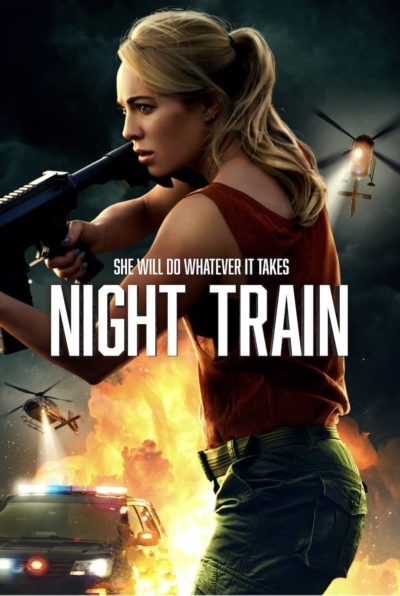
I’ll take misleading posters for $400, please, Alex. I am fairly sure – despite the attention thing mentioned above – that Holly never picks up a gun at any point, even during the final face-off with Jaylynne. Indeed, in terms of action, this is considerably more subdued than you’d expect. I was thinking there would at least be some hot car chases here, and the movie largely fails to deliver on that front either. It’s more of a thriller than an action film, and doesn’t work particularly well as that. If it had kept to the battle between noble criminal and ignoble cop, it might have worked, since both characters are interesting – even if Jaylynne would, in reality, have been tossed out of the FBI.
However, the film throws too much extraneous stuff in there which is either not needed, or plain bad writing. I mean, if you have to use a sick child as maternal motivation, that’s simply lazy. We also get Holly’s relationship with her father, Jaylynne’s PTSD, the creepy attraction the Las Vegas head has for Holly, etc. etc. When the two women finally meet in the desert, the battle-hardened FBI agent ends up falling to her knees and weeping, then letting Holly go, after a stern lecture from the smuggler. No, really. The words,”Who writes this crap?” may have passed my lips at that point. Some day, Ryan (and, indeed, Baird) will hopefully find a script that matches her abilities. Today is not that day.
Dir: Shane Stanley Star: Danielle C. Ryan, Diora Baird, Paul Haapaniemi, Ivan Sergei
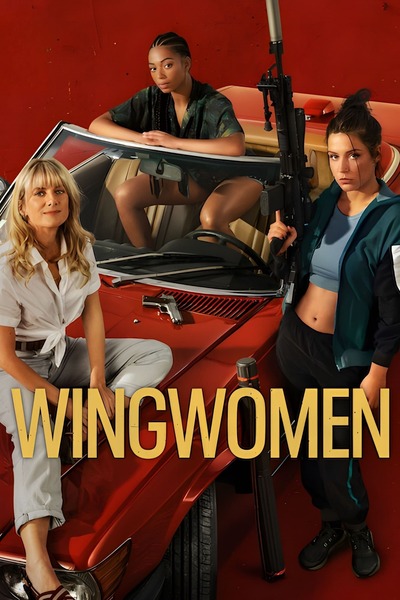
Netflix describes this as “Charlie’s Angels meets Lupin, with a dash of Killing Eve.” Um. About that… While I haven’t seen Lupin, I can confidently state any similarity to the others is tangential at best. For example, the only thing this really has in connection with Charlie’s Angels, is that there’s three of them. But here, it’s more like 2.25, since the third member is largely useless. It’s almost entirely the story of Carole (Laurent) and Alex (Exarchopoulos), two thieves who work for the enigmatic Marraine (Adjani). But Carole has discovered she’s pregnant and wants out of the business. Marraine is not happy, but agrees, providing Carole does that hoariest of film clichés: One Last Job.
This involves stealing a piece of art from a church, and they ordered to bring a getaway driver on board. She is Sam (Bresch), and is entirely pointless. Carole does the actual thieving, and Alex is a crack shot. But Sam? I can only presume she’s there to fulfill some kind of diversity quota. Because she has no talent past driving, and at no point in the movie subsequently is a quick getaway required. The same goes for other elements. There’s a John Wick-like thread where Alex’s bunny is killed. But the film forgets all about it for an hour, before suddenly remembering. Only to dispose of it in a scene, that seems to exist more so Carole and Sam can do a spot of flamenco.
Laurent has been here before, albeit a while ago. Back in 2011, we reviewed Requiem pour une Tueuse, in which she played an assassin who goes on… [all together!] ONE LAST MISSION! So it’s ironic to see her now directing a movie based around the same trope. It is very focused on the Alex/Carole dynamic, and that might be where the Killing Eve comparisons come from. But there’s nothing remotely adversarial about things here. It is nicely handled, the pair possessing the easy dynamic that only results from long familiarity and comfort with each other. However, this arguably sits closer to Thelma & Louise than anything, and certainly is more intense than you’d find on the male side of the genre.
To be honest, Laurent seems to prefer this aspect to the action. For instance, she cuts from the meat of a fight between Alex and an assassin, to (presumably!) his tarpaulin wrapped corpse being dropped into the ocean. The stuff which is present, is not especially memorable. Even the art heist turns into more of a comedy of errors, as the target has become the location of a movie shoot. While there are some cool ideas – the stunningly well-disguised hideout in the middle of a forest being one – this feels like a relationship drama disguised as an action movie. It’s especially so at the end, when it almost topples over into hysteria. Give me an Alex solo film instead, and I would probably have been more interested and entertained.
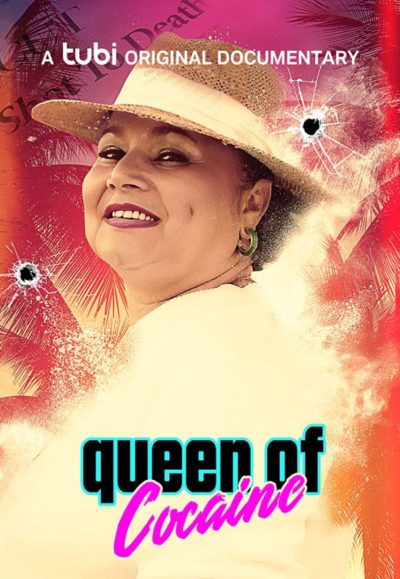
We’ve written about Griselda Blanco before. In particular, we reviewed telenovela La Viuda Negra, which was loosely based on her life and compared it to the facts. We also covered Cocaine Godmother, in which Catherine Zeta-Jones took on the role of Blanco in a bio-more-or-less-pic. She remains a fascinating character, so you won’t be surprised that when I heard about a new documentary concerning her life, it went straight to near the top of my watch-list. I was a little concerned, since it came out as a “Tubi Original”. I’ve been burned by some of these before, and so was expecting a lurid, shallow TMZ-style expose which played fast and loose with the truth.
To my pleasant surprise, that’s not the case at all. Obviously, there’s a certain allure here, but it doesn’t needlessly glamourize or condemn its subject, and instead manages to do a good job of painting both sides, and depicting Griselda as a surprisingly complex character. This is particularly clear at the end, when her youngest son – named, amusingly, Michael Corleone – says of his mother, “Yes, it’s a legacy of violence. But she was a woman that had to become savage in a world that wasn’t made for her.” Then Detective Diaz, who headed the Miami task force charged with bringing her down, counters, “We have this bitch from hell who decides she wants to be meaner and more powerful than anybody else… Violence. Arrogance. Greed. That is her legacy.” Take your pick!
It covers Blanco’s entire career, from growing up poor in Cartagena, through her (illegal) emigration into America, where she got into the drug business, and built an empire which brought her a fortune estimated (likely conservatively) in hundreds of millions of dollars. With this came enemies on both sides of the law, but Blanco almost seemed to feel she was invulnerable, and continued acting with impunity, until first the authorities and then her foes, eventually caught up with her. They’ve got some very good interview subjects, with Michael in particular standing out. His description of how he witnessed his father being gunned down on a Colombian street is chilling.
Cops, journalists and even other criminals also chip in, and it’s edited skilfully together to tell a complex story with clarity. Another interesting character I’m going to have to look into is Jemeker Thompson-Hairston, the “Queen of crack” who served time alongside Blanco in federal prison. One of the key players in the eighties crack epidemic, she’s now an evangelist, and came over as very well-spoken and thoughtful. I do have to say, something about narrator Elena Hurst’s voice kinda grated on me. Perhaps it was the way she’d apparently adopt an outrageous Spanish accent, any time she said the subject’s name: “Greez-hel-dahh”. Overall though, this manages to be both informative and entertaining, even if it is perhaps helped by having a story it would be difficult to screw up.
Dir: Victoria Duley Star: Michael Corleone Blanco, Bob Palombo, Raul Diaz, Dr. Amy Shlosberg
Dear lord, this is a chore. From an opening conversation which unfolds mainly in quotes from Gone With the Wind, Scarface and other, better movies, it was painfully obvious for what writer-director Patrick is aiming. This is supposed to be a Guy Ritchie-esque caper, in which a parade of quirky characters from the underworld jostle for possession of… something. Hilarity will surely ensue, as they trade foul-mouthed banter, get into and out of sticky situations and generally act in an amusingly inept manner. Except, hilarity most definitely does not ensue. I don’t think I broke into a smile once, with the whole concept being dead on arrival. Malta does look quite nice as a holiday destination though.
The heroine is agent Aureille Fleming (Coduri), though quite who she is an agent of, or why she is involved, never becomes particularly clear. The objects in question are some high denomination bearer bonds, and the film feels obligated to open with a caption explaining what these are. They have been stolen by a man known as The Priest, who flees from Ireland to Malta, and heavily-pregnant crime boss Alice (Spencer-Longhurst) wants them back. Everyone half-competent apparently being otherwise engaged, she sends hapless brother Rory (Robinson) and her husband Casper to the Mediterranean to retrieve them. Fleming – and, yes, it IS a painfully obvious 007 reference – is there to stop the bonds from falling into Alice’s hands, because… I don’t know. Maybe it was explained. I just don’t care.
At times this feels more like a fancy dress party than a film. People dressed up as nuns. People dressed up as clowns. People dressed as priests. This probably isn’t surprising, considering that it feels like Patrick is cosplaying as a film-maker. There’s little or no evidence to indicate he knows how to construct a coherent or interesting narrative. Instead, he proceeds by simply dropping in scenes which, I gueaa, are supposed to be “amusing”, without rhyme or reason. I called Aureille the heroine above, though there’s precious little to make her so. I presumed she is supposed to be the “good guy”, because there are no other credible candidates for that role, so she earns it by default.
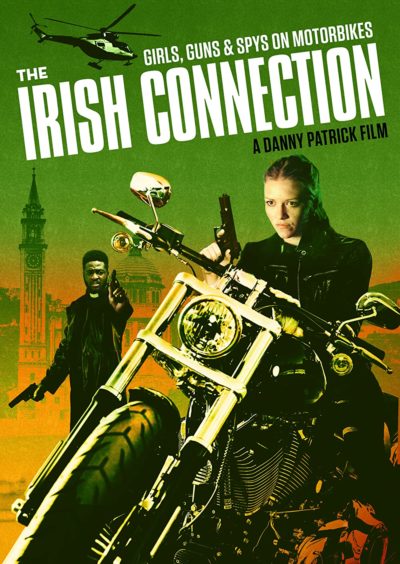
I might have forgiven this had the action been up to a decent level. However, the cover is blatantly lying to us about this as well. I do not recall any moment at which she was on a motor-cycle, let alone wielding a gun. Admittedly, it’s possible my attention had wavered to such a degree I didn’t notice. I’m not sure I remember anyone being shot, and must have blinked and missed the helicopter. She throws a few lacklustre punches, and that’s close to the sum total of the action. A genuinely feeble excuse, it would not surprise me if this had been a tax write-off exercise. It’s the only way I can realistically explain the painful level on which this operates.
Dir: Danny Patrick Star: Rosa Coduri, Flora Spencer-Longhurst, Jack Bence, Shane Robinson




 This shouldn’t be confused with the BBC series of the same name announced last year. This is very definitely American, another in the ongoing series of urban crime movies which seem to pop up, with some regularity on the likes of Tubi. I keep watching them, in the hope they’ll be good, but am usually disappointed, mostly due to cheap-jack production values and repetitive story-lines. This is at least watchable in the former department, though is definitely marked down for a startlingly abrupt “To be continued” ending. I hate cliff-hangers in books: they do not work any better on movies, and this isn’t exactly Dune Part One, shall we say. Not least because it runs only 75 minutes, including end-credits.
 This is a question posed by the bad guy (Fears) towards the end of this, and of course, he provides the usual explanation in response: “It’s doing the same thing, expecting different results.” After watching this, I would choose to adjust it slightly. A valid definition of insanity is making the same movie, and expecting different results. Because it is, more or less, what Rankins has done here: it’s a remake of his own movie from fourteen years ago,
  Not to be mixed up with
  This French film takes place a little way into the future, though society has undergone radical changes. Law enforcement is now privatized, with investigations contracted out to private investigators, who have to balance their costs in order to turn a profit on the cases they accept. One such PI is Blondie Maxwell (Langlart) – and to get the obvious out of the way first, no, she is
  It’s kinda interesting to compare this to
  ★★★★
★★★★ This is far from the first time we’ve covered films, series or documentaries about Griselda Blanco, the drug boss who ruled Miami with a lead fist in the eighties. There was Colombia narconovela
  It’s kinda inspiring, weirdly. Early on, the series can be seen a twisted version of the American dream, where an immigrant can come to America, pull themselves up by their bootstraps, and anyone can achieve success if they work hard. The reality is, Blanco didn’t arrive in Miami seeking asylum from domestic abuse, but fleeing increased law-enforcement heat for drug trafficking in New York. Not exactly what Vergara
  In terms of production value, this is definitely several slices above the other efforts, even if Los Angeles stood in entirely for Miami (the latter no longer resembling what it was at the time). Of particular note is the make-up work on Vergara. It must have been a challenge, because events unfold over a significant number of years: your lead is, obviously, more or less fixed at a point in time. Initially, there’s little of note, but it gradually builds up, in a way that’s so subtle you might not notice. Until, by the end, you suddenly realize the character no longer looks like the actress. Though still rather prettier than the real Griselda.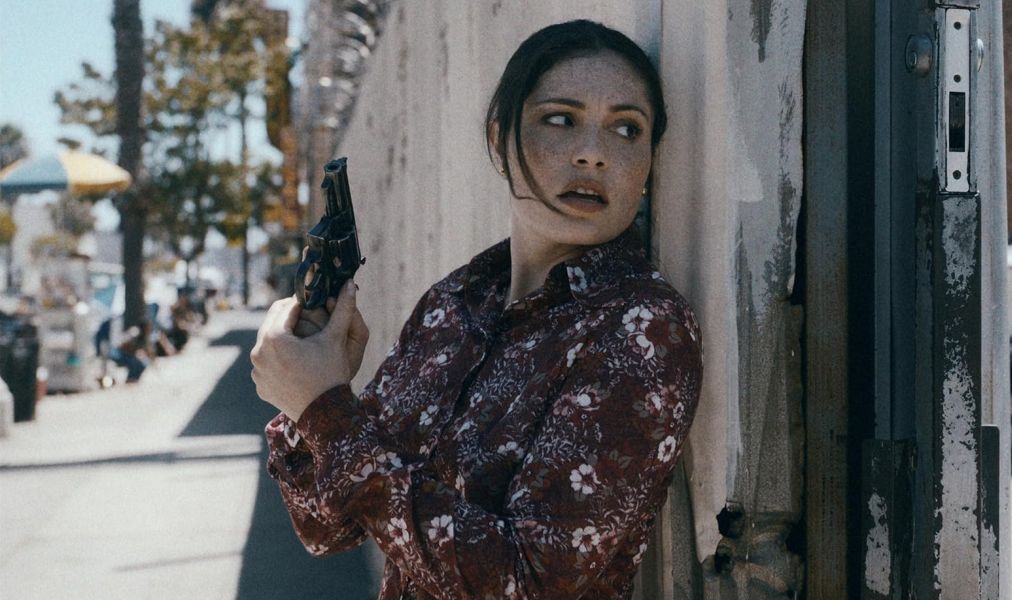
 Danielle Ryan’s quest for a movie worthy of her talents meets another swing and a miss. I guess you have to give credit to this one: it is at least trying to go in a different direction, making the Mexican cartel the
  Netflix describes this as “Charlie’s Angels meets Lupin, with a dash of Killing Eve.” Um. About that… While I haven’t seen Lupin, I can confidently state any similarity to the others is tangential at best. For example, the only thing this really has in connection with Charlie’s Angels, is that there’s three of them. But here, it’s more like 2.25, since the third member is largely useless. It’s almost entirely the story of Carole (Laurent) and Alex (Exarchopoulos), two thieves who work for the enigmatic Marraine (Adjani). But Carole has discovered she’s pregnant and wants out of the business. Marraine is not happy, but agrees, providing Carole does that hoariest of film clichés: One Last Job.
 To my pleasant surprise, that’s not the case at all. Obviously, there’s a certain allure here, but it doesn’t needlessly glamourize or condemn its subject, and instead manages to do a good job of painting both sides, and depicting Griselda as a surprisingly complex character. This is particularly clear at the end, when her youngest son – named, amusingly, Michael Corleone – says of his mother, “Yes, it’s a legacy of violence. But she was a woman that had to become savage in a world that wasn’t made for her.” Then Detective Diaz, who headed the Miami task force charged with bringing her down, counters, “We have this bitch from hell who decides she wants to be meaner and more powerful than anybody else… Violence. Arrogance. Greed.
  At times this feels more like a fancy dress party than a film. People dressed up as nuns. People dressed up as clowns. People dressed as priests. This probably isn’t surprising, considering that it feels like Patrick is cosplaying as a film-maker. There’s little or no evidence to indicate he knows how to construct a coherent or interesting narrative. Instead, he proceeds by simply dropping in scenes which, I gueaa, are supposed to be “amusing”, without rhyme or reason. I called Aureille the heroine above, though there’s precious little to make her so. I presumed she is supposed to be the “good guy”, because there are no other credible candidates for that role, so she earns it by default.