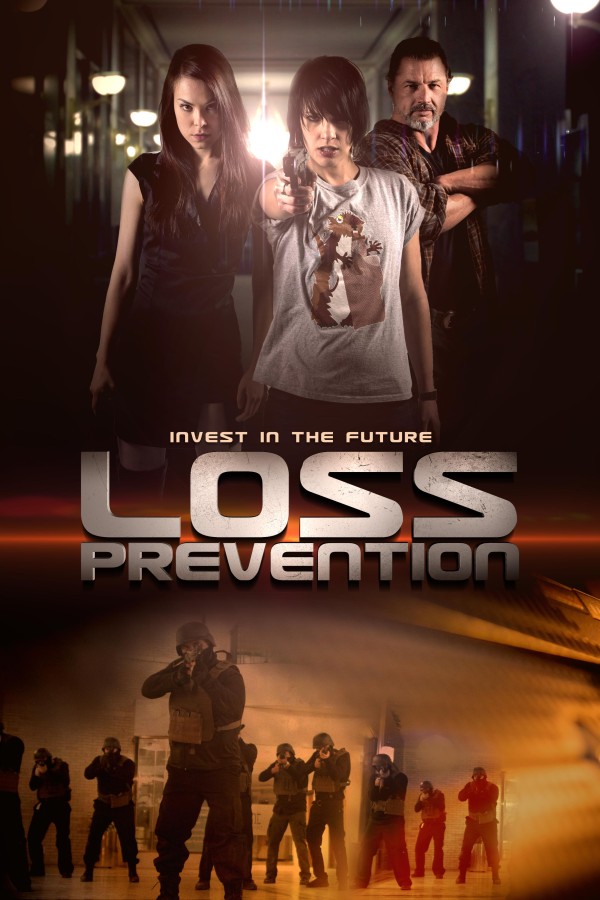

★½
“Copy of a copy of a copy.”
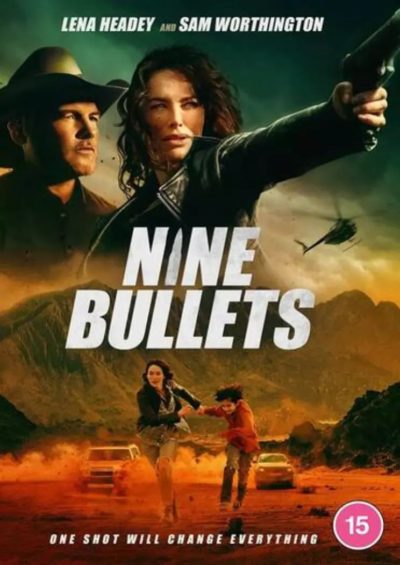 While this is not an “official” remake of Gloria, it’s so damn close that I have no problem considering it as one. Writer/director Gaston seems to have… um, a bit of a track record in this area, shall we say. She previously appeared here by directing Beyond the City Limits, a film with such a strong resemblance to Set It Off, that it was released on DVD as Rip It Off. Some might call that a particularly appropriate title, and here, she once again seems to be sailing quite close to a lawsuit. It was purely by coincidence we watched this, the weekend after seeing the two versions of Gloria, and Chris took only a few minutes to call it out.
It’s definitely the worst of the three, and I write that as a fan of Lena Headey. She has done sterling work in things such as Game of Thrones and Gunpowder Milkshake, among others, so to see her in this mess is almost tragic. I almost can’t be bothered to provide a recap – a link to my Gloria review would suffice – yet here we go. A man is caught stealing money from organized crime, so he and his whole family are liquidated, except for young son, Sam (Vazquez). He escapes with an iPad that’s crucial to the mob’s operation, and is rescued by neighbour Gypsy (Headey). They go on the run from the henchmen seeking to recover the iPad, and Sam gradually breaks down Gypsy’s chilly facade, despite her ties to the criminals, being an old flame of its boss, Jack (Worthington).
Ouch. But… but… Sam has a dog! And Gypsy is a retiring burlesque dancer, now writing an autobiography! It’s totes different! No. No, it isn’t. Especially since neither of these are significant. The only relevance of the latter seems to be to allow Headey to show that she still looks pretty good in her late forties (pasties, please: this isn’t some cheap exploitation vehicle). Meanwhile, Sam manages the genuinely impressive feat of managing, somehow, to be more annoying than the kid in the original, burbling on in a child genius way about his booming cryptocurrency portfolio. Yeah, that aged like milk.
Despite Headey’s best efforts, there’s no aspect here which wasn’t done better in both the original, and the remake starring Sharon Stone. Even the new stuff falls flat, such as a weird and almost irrelevant subplot where they steal an already stolen car with a hooker (Anthony) in the back seat. None of the relationships are convincing, and the only moment that has any intensity does not involve any of the main characters. It occurs after Gypsy drops off the dog at the cabin belong to friend Lacy, played by veteran actress Barbara Hershey, who demonstrates an admirably no-nonsense approach to their pursuers. Please, do not even get me started on the finale, where Gypsy literally turns out to be bulletproof. When a film leaves you thinking, “Who came up with this shit?”, it’s never a good sign.
Dir: Gigi Gaston
Star: Lena Headey, Dean Scott Vazquez, Sam Worthington, La La Anthony
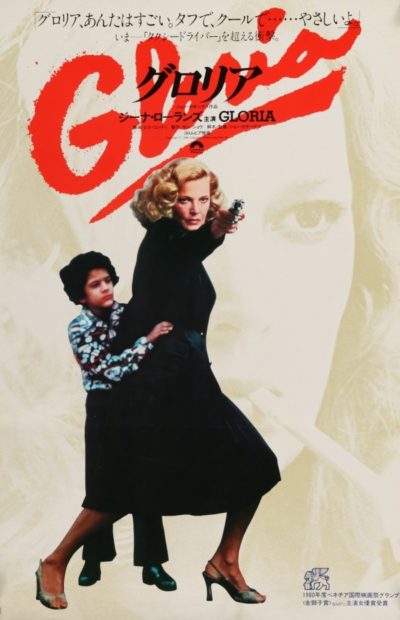 Yeah, I’ll confess to having Laura Branigan’s eighties hit running through my head on repeat almost the entire movie, even if its lyrics can only be tangentially tied to it. What also struck me is how strong of an influence this was on Luc Besson’s Leon, especially at the beginning. I mean: a criminal gang takes out an entire family in a New York tenement, except for one child, as punishment for the father having tried to steal from them. That survivor takes refuge with a very reluctant neighbour with mob ties, who then has to protect the child as they move about the city. There’s even a scene where one of the gang fires his gun at a nosy resident.
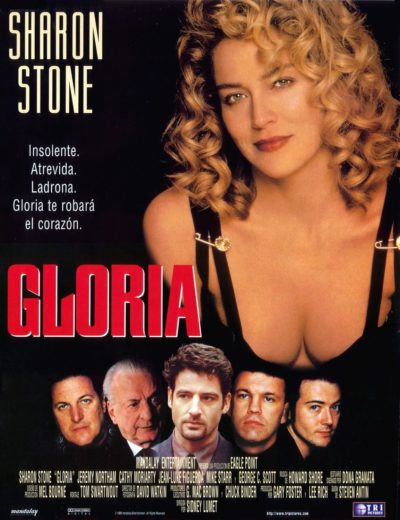 Nineteen years after the original, four-time Oscar nominated director Lumet opted to remake Cassavetes’s movie. Though by some accounts, it was more a case of him wanting to work, rather than being particularly attracted to the project. If the results are anything to go by, he should have stayed at home. For the film was a bomb, and leading lady Stone received a Razzie nomination for her efforts. I wouldn’t have said she was that bad, though she’s clearly not at the same level as Gina Rowlands in the original. It does also address some of what I felt were its’ predecessor’s weaknesses. However, it tones down the central character, and this helps lead to what you’d be hard-pressed to argue is other than an inferior product overall.
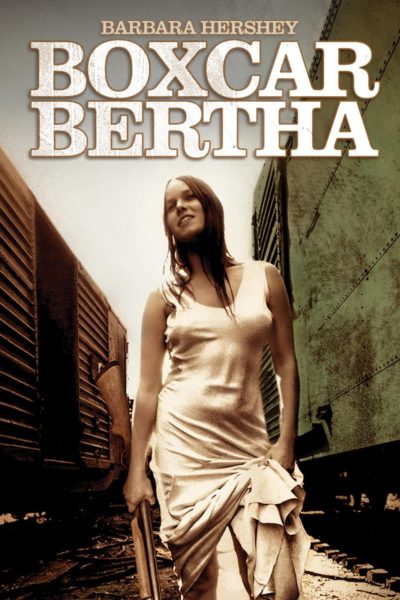 After the success of Bloody Mama, producer Roger Corman wanted to follow up with another film depicting lawlessness in the Depression. He found his source material in Sister of the Road, supposedly the autobiography of a thirties drifter called Boxcar Bertha. No such one person actually existed: it was assembled by the author, Dr. Ben L. Reitman, from multiple characters he met while helping women in trouble in Chicago (a fictionalized version of the doctor may appear in the movie). Corman hired the then almost unknown Martin Scorsese, who was directing his first commercial film; its predecessor, Who’s That Knocking at My Door, grossed only $16,085. Scorsese was given a schedule of 24 days and a budget of $600,000.
 I guess, at its heart, this is the story of two mothers. There’s Jo (Campbell-Hughes), an anaesthetist who has been struck off the medical register, for reasons that are left murky. She’s now practicing her healing arts on the underground market, from patching up dubious stabbing victims, to carrying out unlicensed abortions. Jo lost her daughter to meningitis, and has split from her husband. Then there’s Bernadette (Brady), a wealthy but no less murky character. Her daughter is dying, and in desperate need of a transplant. To that end, Bernadette has kidnapped a young woman, Aine (McNulty), with the intention of using her as an unwilling organ donor, and needs Jo’s help for the operation. But when Aine – who would be about the age of Jo’s daughter had she lived – escapes and hides in the back of the physician’s car, Jo is left with a series of difficult decisions.
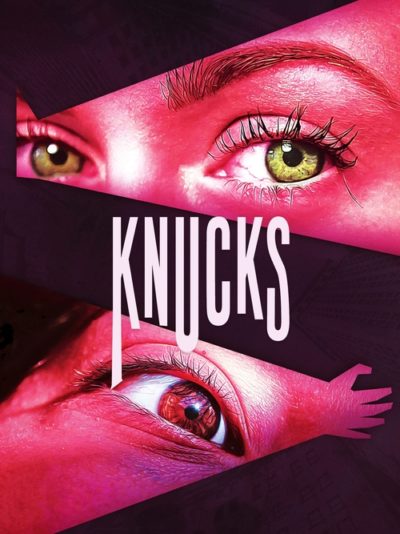 I’m tempted to leave my review at that. But there’s a famous quote by critic Roger Ebert, going off on Bruce Willis flop, North: “I hated this movie. Hated hated hated hated hated this movie. Hated it. Hated every simpering stupid vacant audience-insulting moment of it. Hated the sensibility that thought anyone would like it. Hated the implied insult to the audience by its belief that anyone would be entertained by it.” I was always impressed, and hoped one day to find a film capable of producing a similar reaction. This is… close. It is, let’s be clear, utterly terrible, with almost no redeeming qualities. Yet it’s either not bad enough, or more likely, too bad to generate such a reaction. That would be giving it more power and credit than this deserves.
 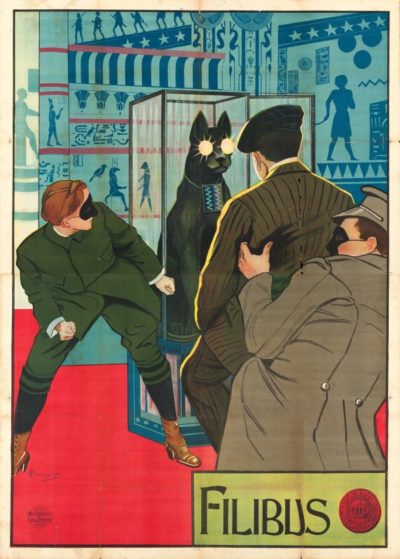 Ladies and gentlemen, we appear to have a new record holder for the earliest action heroine feature film. Dating from all the way back in 1915, and thus pipping
  The above odd combination is actually a fairly accurate assessment of what you have here. It’s a Yakuza action-thriller… but rather than being set in Tokyo or Osaka, is relocated to the Brazillian city of Sao Paolo. As an introductory credit helpfully informs us, this has the largest Japanese population of any city outside Japan. The story concerns two separate people’s quests for their pasts, which (to absolutely no-one’s surprise) turn out to be intertwined. One of these is Akemi (MASUMI), who as a young child was the sole survivor of a 1999 massacre of her Yakuza family back in Japan, was subsequently spirited away by allies and is now living in Brazil. The other is Shiro (Rhys-Meyers), an amnesiac who wakes up in hospital with no clue as to how he got there or his identity, except for a Japanese sword.
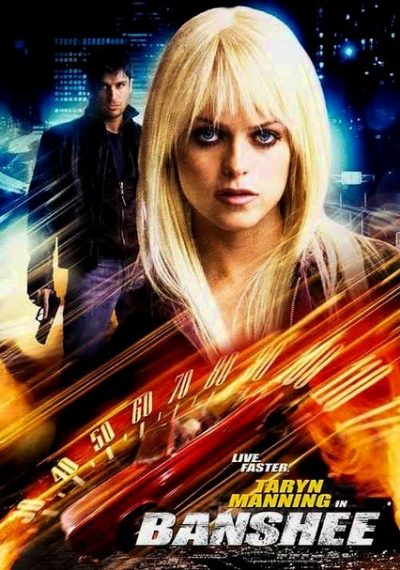 This one is slightly unusual among action-heroine films, in that it was both written and directed by women: Kirsten Elms and Kari Skogland respectively. Unfortunately, it’s not exactly an advert for their gender; after a brisk start, it falls apart, and becomes a ridiculously implausible movie, in a completely different genre from where it started. That’s a real pity, because where it started, had a lot more potential than where it ends up. It begins with Sage Rion (Manning), a young but highly-talented thief, taking a bet with her partner, as to who can boost a classic car quickest. She picks a 1966 Dodge Challenger, but inadvertently leaves her ID at the scene of the crime.