




★★★★
“Luc Besson’s Greatest Hits”

 Before getting to the film, we probably have to address the elephant in the room: the rape accusations against Luc Besson. Though police investigations have finished, with the allegations unproven, they definitely have damaged Besson’s reputation. While in Europe, the basic rule remains “Innocent until proven guilty”, in Hollywood a mere accusation in a newspaper headline or online can potentially destroy a man’s career these days. And while some people are guilty of the crimes of which they were accused, I personally strongly doubt that the small, overweight, apparently introverted Frenchman is a serial rapist.
Honestly, if I go by what I heard about countless actors and directors working in Hollywood today, I probably wouldn’t be able to watch any movie. The logical thing for me is to separate a creator and what you know about them (or perhaps, think you know) from their work. Beethoven is said to have been a terrible, unsympathetic misogynist but his music is great. Klaus Kinski was one of the most controversial actors of the 20th century, with a reputation for unpleasantness at best; yet there is no doubt of his acting genius that shines through almost any movie he made in his life.
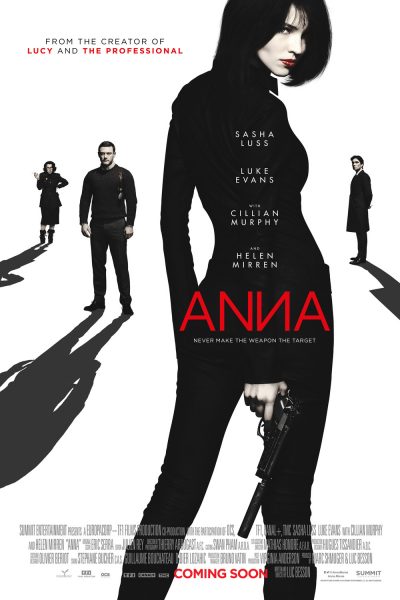
Right now though, a whiff of suspicion, and you are already dead to Hollywood. Besson might be slightly safer, as he is not part of the business there, and lives in Europe. But I wonder if the allegations may have led to some kind of semi-sabotage by his distributor in the US. For hardly any cinemagoer seemed to have known about his new movie, Anna. Even though I was told the film got some TV spots on cable channels and a trailer in cinemas, it seemed marketing was seriously toned down, and the movie rushed out of cinemas shortly after release.
[Note from Jim. I can confirm this. We were on holiday in Scotland when it came out. By the time we returned to Arizona and got over the jet-lag, it was basically gone. Anna opened in 2,114 screens. Three weeks later, it was on… 92. I still haven’t seen it, which is why I was glad Dieter stepped in with a review]
There seems almost to be some kind of unspoken agreement just to bury this movie quietly. Heck, even here in Germany the film wasn’t advertised apart, from the online trailer. I definitely didn’t see a trailer for it at the cinema, or big posters for it anywhere. If I had not consciously looked out for this movie, due to being a fan of Luc Bessons work over the last 36 years, I probably wouldn’t even have known about it.
But to put things in a more objective perspective: over his entire career Besson has had only two real successes in the US: One was Leon (1994), which made Jean Reno a big star and started the career of Nathalie Portman; the other was Lucy (2014), the break-through film for Scarlett Johannson, now the highest-paid actress in Hollywood. Heck, even now-loved cult movie The Fifth Element (1997) (originally supposed to be a two-parter!) was considered a flop in America at the time of release. What has always been Besson’s bread and butter is the rest of the world. Though in the beginning he had some detractors in his own country for a style which was seen as “Americanized” and “not really French enough”.
Nevertheless, it seems kind of strange when looking at the box-office numbers of Besson’s movies in the last few years. Lucy was an international success, that in the US alone made $126 million, while Anna closed with takings of under $8 million. It’s easy to create conspiracy theories looking at these numbers. But in between came Valerian and the City of the 1000 Planets (2017). Despite being the most expensive European movie ever, with a budget of about $178 million, took a disappointing $41 million in the US (though made its costs back in the rest of the world). And yes, some of his movies never were commercial successes – regardless of their quality – such as Adele Blanc-Sec (2010), The Lady (2011) or the sequels to his Arthur and the Invisibles animated movie.
Why do I mention all of the above? I guess, because I think that Anna may be a turning point in Besson’s career – perhaps more than you may think. Valerian seemed to have cost his French Eurocorp studio money, despite pre-sales and – according to Besson – only a small financial investment by Eurocorp itself. It seems that about two-thirds of the company are now in the hands of foreign investors, and they don’t want Besson to continue in the chairman’s seat of his own company. With Valerian under-performing, and Anna a theatrical flop despite a modest budget (reportedly around $35 million), we could be looking at the last big movie of Luc Besson.
Sure, he has always shown that he can make effective and very good movies with small budgets such as his debut movie, The Last Battle (1983) or Angel-A (2005). Indeed, maybe the quality of his movies increases, as his budget decreases. But the big question is if the 60-year old director really wants to start again from the ground up, especially given his age. He’s not the youthful punk he started as. In Europe (or at least France) he is what Spielberg might have been in mid-90s Hollywood. But then Spielberg grew up and matured; can Besson do that? Does he even want to? I also think you can compare him with contemporary James Cameron, a famous director who now mostly has others direct his productions. Certainly, I don’t think Besson has to prove anything to anyone, anymore.
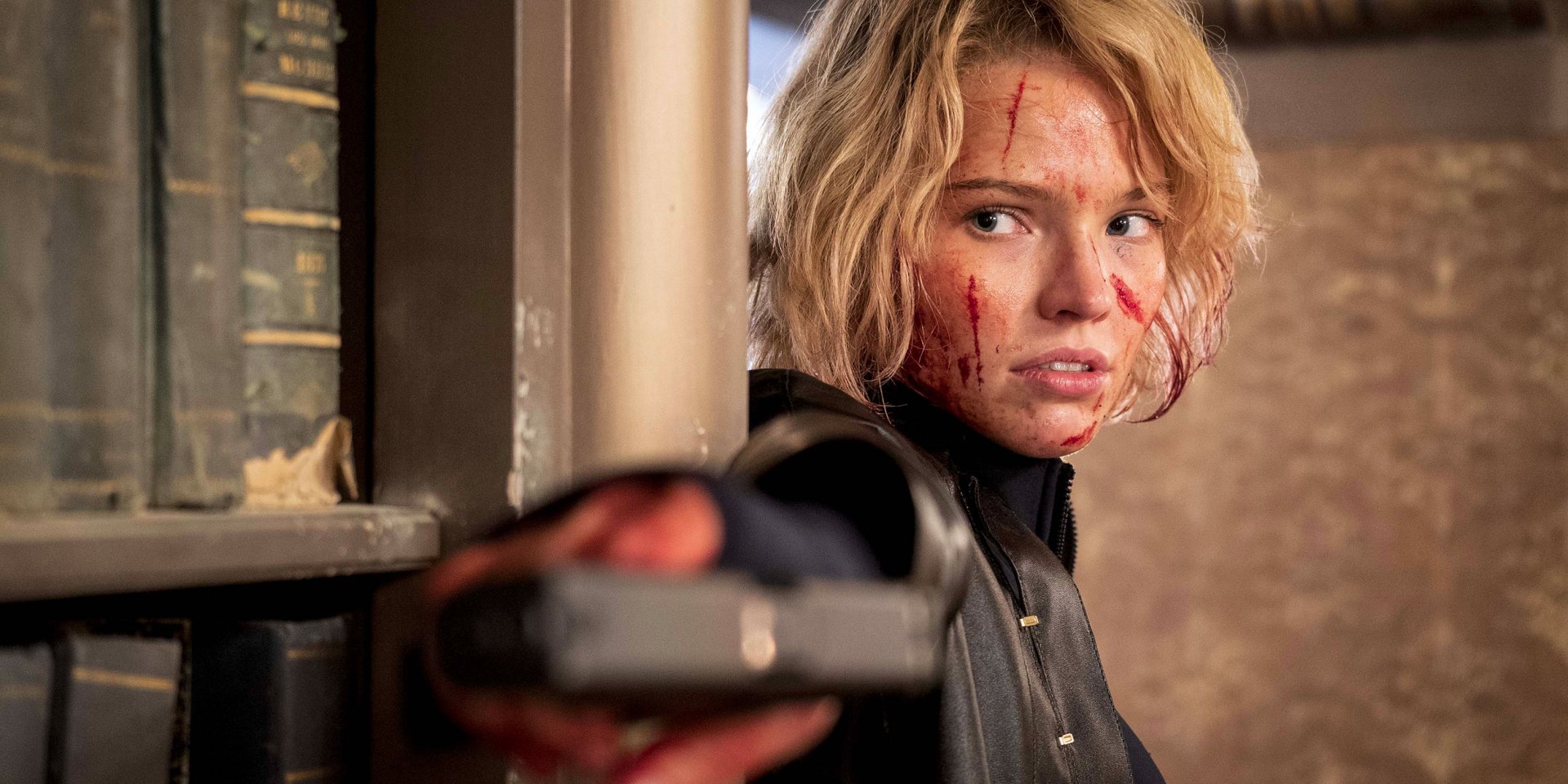
With all that said, how is Anna? Answer: surprisingly good. I went into this movie not expecting much at all (going from the quasi non-existent marketing). Yes, it’s true, it’s not one of the “greats” of Besson, and he also doesn’t re-invent the genre wheel with this. If you have seen his classic Nikita (1990) which has been exploited by Hollywood ad infinitum, and her spiritual successors Atomic Blonde (2017) and Red Sparrow (2018), you know the story. And knowing these kind of movies, you’ll be familiar with a story arc, you can figure out from the very beginning.
But then, I don’t hear anyone complaining about the 1000th Marvel movie following the same paths of its superhero predecessors. In the end, the question is how the cook combines the ingredients to bake his cake. And this cake tastes good – but definitely not great. While the DNA of Nikita is everywhere, it never reaches the fine and poetic quality of that movie. It feels like a modernized remake, with Besson obviously having seen Sparrow and Blonde too, and saying to himself: “I can do better!”
And I think, subjectively, he mainly succeeds. Red Sparrow was a very heavy, slow-burning spy movie without what I would really call action scenes. Atomic Blonde had impressive action choreography, which Besson definitely tried to top here – up to the individual viewer, whether or not he succeeded. But Blonde also had, at least for me, a strange, difficult to figure-out ending, and characters which were all cool, to the point of emotionless. My feeling is that Besson took the best elements of all these movies – the intrigue of Sparrow; the action of Blonde – and combined it with his own style.
What I always notice when watching one of his movies, is that Besson can be an incredibly visual director if he wants. He knows how to do great mise-en-scéne, how to give his movies a lot of kinetic energy. The scenes are not too long, but also not so short you can’t invest yourself into them emotionally. He inserts moments of genuinely funny humor and sometimes almost kitschy emotional scenes, that are a component of his own unique style – and, unfortunately, usually not to be found in American action movies. And when he gets playful, the editing and the music of his “house composer”, Eric Serra (Nikita, Leon, The Fifth Element, and many others), join each other in a perfect marriage that’s just incredible fun to watch.
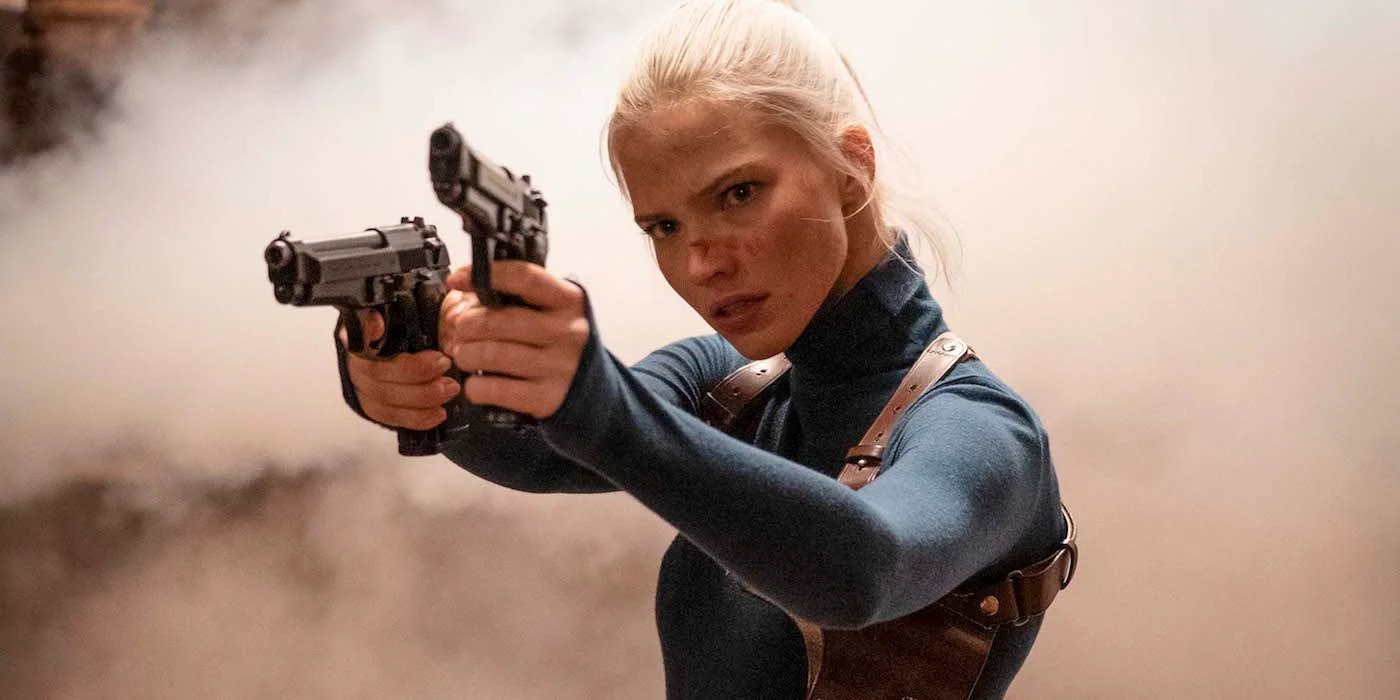 Do I sound too enthusiastic? I don’t think so. Besson is an excellent director. This doesn’t exclude him from creating flawed movies or average scripts; yet even his failures are – at least for me – still more satisfying and interesting than an average “successful” conveyor-belt Hollywood movie. He is an almost classic storyteller, telling his very own stories, depending on what he focuses his current interest on in the moment. One quality I think I haven’t seen mentioned anywhere, is his ability to lead actors. All of the performances here, including Evans, Murphy and Mirren are very good. But the one that really impressed me is supermodel-turned-actress Sasha Luss, who previously played a smaller role as an alien in Valerian.
She’s not perfect: Luss playing a poor Moscow-wife selling “matroshkas” on the market, can’t disguise what a beauty she is. Compare that to Anne Parillaud’s ugly punk-girl-duckling in Nikita who only turns into a beautiful swan later in the movie. Still, Luss comes across as very charismatic, believable as a model (not a stretch!) and seductress, as well as a murderous killer for the KGB. Honestly, I was really impressed: for me, she gives a better performance than the enigmatic but also somewhat bland Jennifer Lawrence in Red Sparrow.
But then a talent of Besson is being able to insert some “emotionality” into his characters. This adds just enough to make them appear more believable than many similar characters in Hollywood movies. Here, he even manages to make Helen Mirren’s role, playing a cold-hearted merciless KGB trainer and mentor of Anna, comparable to Lotte Lenya in From Russia with Love and Charlotte Rampling in Red Sparrow, into an oddly likable character.
What seemed a problem for some cinema-goers was the non-linear storytelling of the movie. The film jumps a couple of years ahead, a few months back, another year forward and so on, allowing it to surprise the audience with some unexpected revelations. I personally had no problems with that – but some people don’t like to use their brains at all when watching a movie. Their loss. :) Where I’d say Besson fails is in what I call the “model photo shooting scenes”. Here, he overdoes it so much, to the point you wonder if he intended to make a satire about haute couture. These scenes come across as exaggerated and almost cringe-worthy. Fortunately, they don’t occupy too much of the film’s running-time.
The basic story is of a trained secret agent who works for one side, becomes a double agent, then is essentially only working to get back their personal liberty, and isn’t a new one. This plot goes back at least as far as Triple Cross (1966), a WWII-spy movie from Bond director Terence Young, with Christopher Plummer, Romy Schneider, Gert Fröbe and many others. The comparisons to Nikita really write themselves. There are many similarities to the movie that, 29 years ago, more or less signified Besson’s breakthrough out of arthouse cineaste circles. Despite this, they are different, probably due to a different contemporary zeitgeist, which made the movie an interesting viewing experience for me.
Gone is the girl who never had a choice, as Anna originally applied to work for the KGB by herself – though ends in a situation where she can’t quit. This makes for a different dynamic to Parillaud in Nikita, although I also don’t really buy the emotional and psychological interest in being a killer for the state here. Nikita was a desperate girl, slowly breaking apart through having to follow the orders of her handler while wanting a normal life with her boyfriend. Anna comes across as a hard professional: she is not just Nikita but also “Victor, nettoyeur” in one person, andcomes off as remarkably cold-blooded.
 In one scene, a not unsympathetic, shy Russian who is an illegal arms trader confesses his love for her; she kills him in the moment she has the relevant information. Then there is that scene in a restaurant, which makes the similar scene in Nikita look like a Disney movie in comparison. Anna leaves a room full of bloody corpses behind her; the word “overkill” sprang immediately into my mind! A normal “relationship” with her girlfriend seems possible; but Anna hardly seems to care for her, since said friend is mainly a cover. At the same time she has passionate sex with Evans and Murphy, and calls them her family. But is this just another deception? You never know if she cares for anyone at all, or if she is just manipulating everyone around her emotionally and sexually, for use later in her intricate plan.
That may be the weakest point in Anna’s character. She is just bigger than life, out-fighting, out-manipulating, out-smarting and out-sexing anyone. Somehow, Nikita seemed much more grounded in reality, and more believable because of that human character. Anna is purely professional, always ahead of the game, even when you think: “Well, now she is done!” You wonder why she needs all these complicated components of her plan, when she seems quite capable off killing off half an army of KGB-employees [And you definitely don’t want to play chess with her!]
Other aspects: It’s nice to have actual Russians speaking real Russian in a movie. I had a hard time when watching Red Sparrow with all these Hollywood actors speaking English with Russian accents. It just sounded fake. The solution here is much better: You have Russian actors speaking Russian, maybe the main actors say a thing or two in Russian, then you change to the “normal” language. I didn’t feel that it broke the illusion, since it was well enough established that the characters were Russian. Kudos also to Alexander Petrov, who plays Anna’s original Russian criminal “boy-friend”, Piotr, an especially unsympathetic human being. It’s an important and effective role, letting the film establish a feeling of reality before it shifts into the more fantastic spy genre we know and love. John le Carré it ain’t!
Some production credits stood out for me. Shanna Besson, one of Luc’s daughters did the stills photography for the movie, and his wife Virginie Besson-Silla seems to have been involved in some capacity. Responsible for the car stunts is David Julienne, who has worked for some Besson productions already in the past. I suspect he is related to Remy Julienne, the famous driver responsible for all the great car chases in the Bond movies of the 80s and also some Jean-Paul Belmondo films. [There was a major issue between Remy and Europacorp, after a stunt went wrong during the filming of Taxi 2] As mentioned, the music of Eric Serra, is as remarkable as ever, and I had a big smile on my face when in one specific scene he directly referenced a melody from his own Nikita soundtrack. I notice and appreciate little things like that.
Visually the film is – as can be expected from a Besson movie – stunning and top-notch. There are some beautiful shots of cities and once again Besson reminds us why people love Paris so much. Unlike so many modern secret agent and action movies, Anna leaves you with a real sense Besson and crew jetted around half the world to capture as many beautiful images as possible for this movie. The end titles included thank-yous to the cities of Moscow, Belgrade, Guadalupe, Milan and – of course – the studios of Paris.
Unfortunately, Anna is a commercial flop right now. Sure, the film is less than subtle, and Nikita stays unchallenged as a genre icon. We might have seen this kind of story a bit too often recently – and probably will again next year when Marvel’s Black Widow comes out. But among the modern entries in the genre, it is easily one of the best. Besson doesn’t quite reach the quality of his formative years as a director, and I doubt he ever will. But as typical genre fare, even if exaggerated in the depiction of its female main character, this is solid entertainment, and should be enjoyed as such.
I just hope this isn’t Besson’s last movie, since he is still better than most of those trying to walk in his footsteps. We’ll see!
Dir: Luc Besson
Star: Sasha Luss, Luke Evans, Cillian Murphy, Helen Mirren
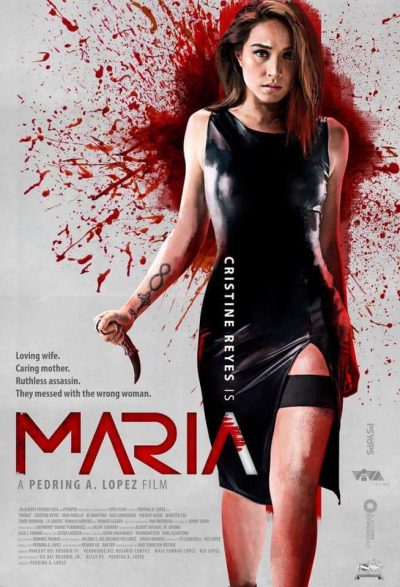 Proof that a lack of originality is not necessarily a bar to being an entertaining movie, this pulls together elements from all over the place, but probably most notably, The Long Kiss Goodnight and John Wick. You have the “former assassin now leading an idyllic family life, until her past catches up with her” of the former. And the “Oh, they’re surely not going to kill tha… Hoo-boy. The hero/ine is going to be VERY angry with them” of the latter, among other elements.
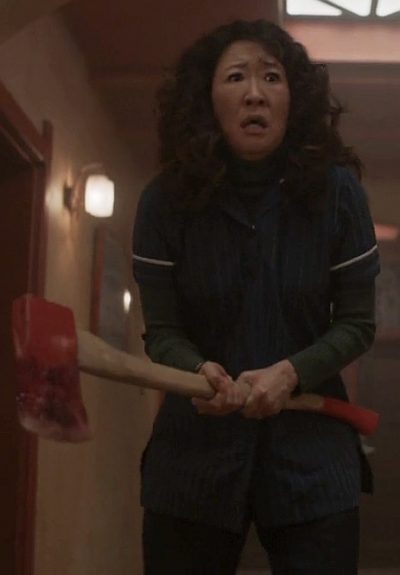 [Warning: this piece will contain significant spoilers for the show. READ ON AT YOUR OWN RISK!] It was always going to be difficult, if not impossible, for the second series of Killing Eve to match the brilliance of the first. That had ended with mousy MI-5 desk jockey Eve (Oh) stabbing ruthless assassin Villanelle (Connor), as they lay on a bed – platonically, but you could cut the sexual tension with a knife. Where would things go from there? The answer, unfortunately, is nowhere particularly much, except for some thoroughly unconvincing plot twists, such as Villanelle going to work for MI-5. Hello? Did everyone forget her cold-blooded murders of agents Bill Pargrave and Frank Haleton in season one? Let’s just pretend she’s one of us, and send her off on a mission without so much as a background check, m’kay?
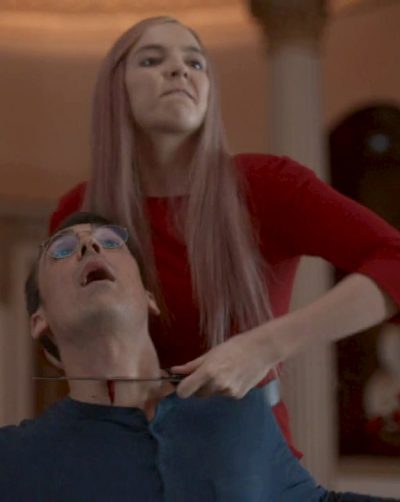 After becoming an under-the-radar hit the first time, the second set of episodes seems to have left a lot of people unsatisfied, for a variety of reason. And the ratings reflect this. Having managed the almost unprecedented feat of increasing almost every week the first time round, this season saw fewer viewers for every part after the debut, than the equivalent in series one. Maybe renewing it the day after that opening episode was a mistake? The final scene of this series ends in a mirror image of its predecessor, Villanelle shooting Eve in a fit of pique after she responds to Villanelle’s declaration of love with “You don’t know what that is,” and walks away. Of course, the renewal and critical acclaim basically make it certain Eve isn’t dead. So it’s less a case of “What will happen?”, than “What cheat will the writers use to get out of the corner into which they’ve painted themselves?” I’m going with a bullet-proof vest.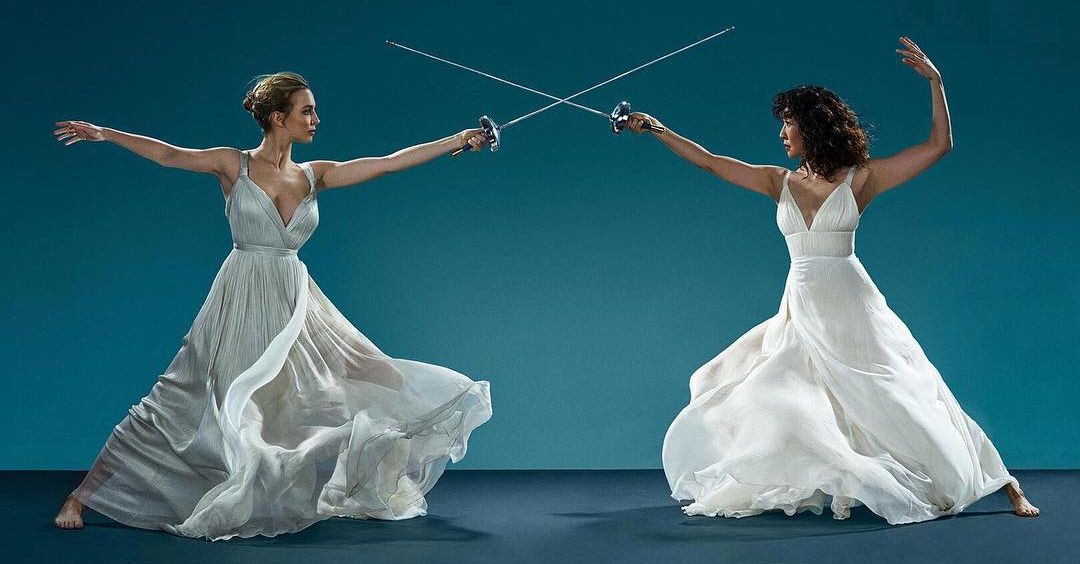
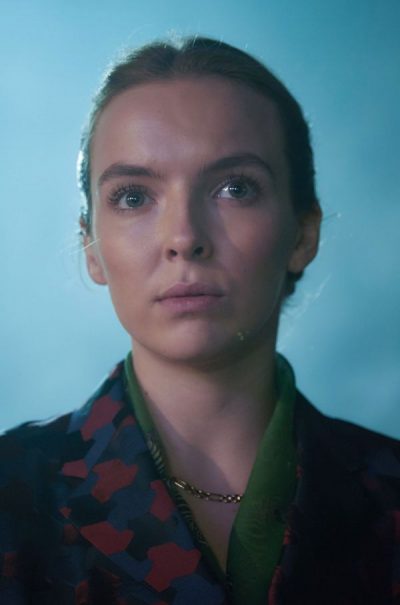 Villanelle
 Eve Polastri
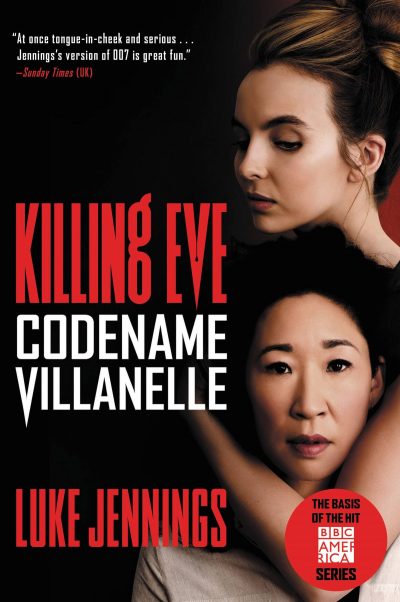 Eve vs. Villanelle
 Definitely a mixed bag in this independent work about an assassin on the run from her employers after she botches a contract. Seay is thoroughly compelling as Set, proving that less can sometimes be more when it comes to dialogue. She’s a woman of few words, yet the strength of her emotions still comes through in her performance. I think it’s the eyes. Unfortunately, the makers appear not to have had enough confidence to let her silence stand on its own. Instead, they fill the gap with the inane burblings of Samuel (Laballe), a young man who sees Seay, and decides she’s a battered woman in need of rescue. He quickly discovers that isn’t the case, as she ends up rescuing him from one of the killers sent on her trail. However, his sister Dana (Cné) is unimpressed with her brother’s new friend, and turns Set in to her boss, Karlton (Brown).
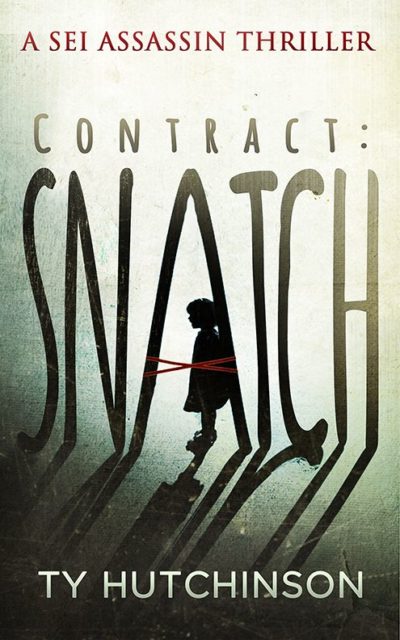 Sei is a former assassin, who quit the industry after getting pregnant, then having her daughter stillborn. She has taken up a quiet life in the Belgian countryside, when she’s brought out of retirement by a shocking offer she received over the deep web. Her prospective employer says Sei’s daughter is not dead, and offers information in exchange for carrying out a job: breaking another assassin, the notorious Black Wolf, out of the Turkish prison where he is being held. After confirming with the doctor who was present that the claim of her daughter’s survival is true, Sei accepts the mission. However, it turns out she was set up as a patsy, and finds herself also incarcerated in conditions which seem not have improved much since Midnight Express.
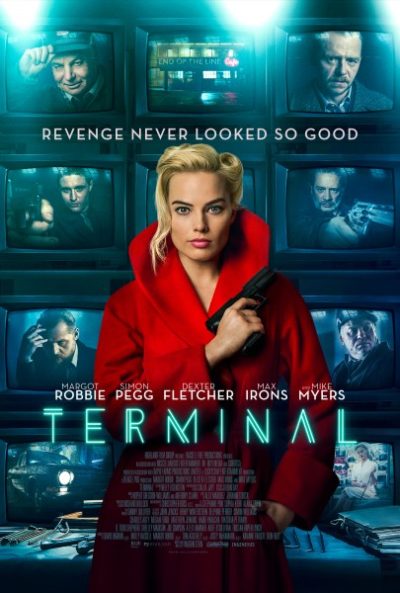 Oozing with a unique visual style that’s like a brutalist cross between Blade Runner and Alice in Wonderland, this focuses on a battle for business between assassins. Annie (Robbie) – or, maybe, she’s called Bonnie – wants to take over the murderous commissions of the mysterious Mr. Franklin. He agrees, only if she takes out the current incumbents, Vince (Fletcher) and his apprentice, Alfred (Irons). Simultaneously, while working as a waitress in an all-night diner at a railway station, she meets Bill (Pegg), a terminally-ill English teacher, who enters her establishment while waiting for a train in front of which to throw himself.
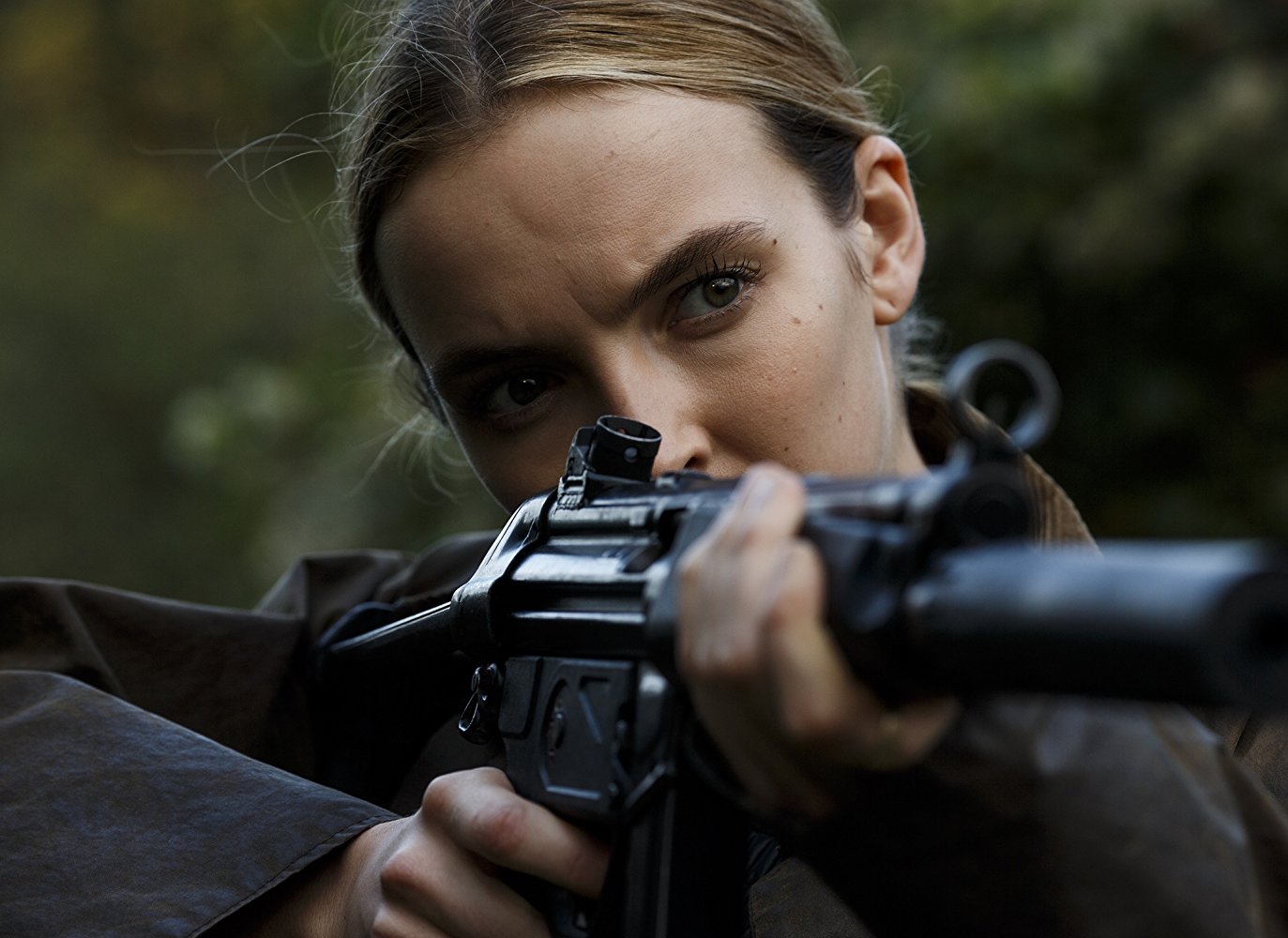 ★★★★
★★★★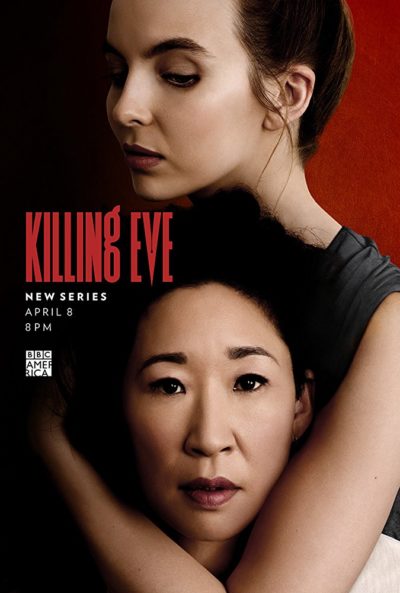 The show is defiantly messy in terms of its characters, who manage both to embody the stereotypes of the dogged law-enforcement official and the slick, femme fatale, while also subverting them. From the viewpoint of this site, Oksana is likely the more interesting. As a high concept, imagine a female version of Dexter: charming and affable on the surface, yet extraordinary lethal – and capable of flicking that switch in a moment. The difference is, Villanelle has chosen not to control and direct her “dark passenger” so much as embrace them fully, and is given the chance to do so by the profession into which she is recruited. It also allows her to indulge her fondness for haute couture.
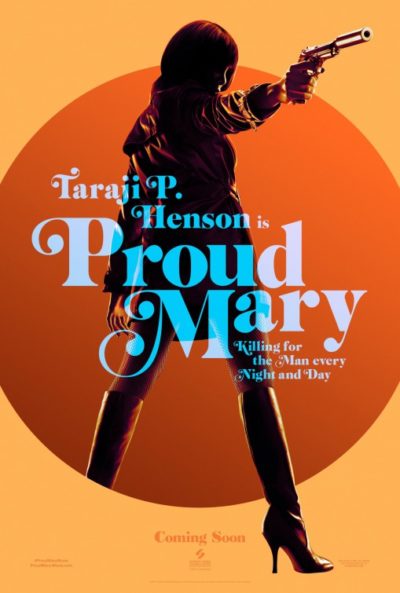 Despite the distinctly retro feel of the poster, intro and much of the music, this is very much a contemporary affair. Mary (Henson) is an enforcer working for Benny (Glover): at one point, she was in a relationship with his son, Tom (Brown), and he still wants to continue it. During one hit on a debtor, she finds the target’s young son, Danny (Winston), obliviously playing video-games in his bedroom. Struck by guilt, she leaves him alone, and keeps an eye on the kid thereafter. A year later, she rescues him from the abusive drug dealer who has “adopted” Danny, but the resulting bloodbath is a big problem. For the dealer in question worked for Benny’s biggest rival, who is not happy about the removal and demands Benny find the culprit. Mary, who was already fed up and wanting out of her career, has to decide exactly where her loyalties lie.
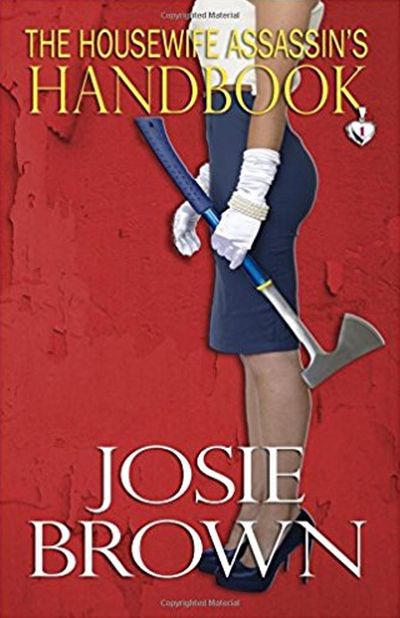 My preferred format for reading is paper; and that’s the only format I support financially, since the only language Big Publishing understands is dollars and cents. Even for a reader like myself, though, e-books have their uses. Writers can offer particular books for free in that format, and that makes it possible to read them first in order to check the quality before you buy the paper edition. And sometimes that opportunity saves you money that would have been wasted if you’d taken a chance on the paper book to begin with! For me, this series opener (which Brown makes available free in e-book format on a permanent basis) was one of those books I was thankful I didn’t have to spend money on, which I’d have regretted.
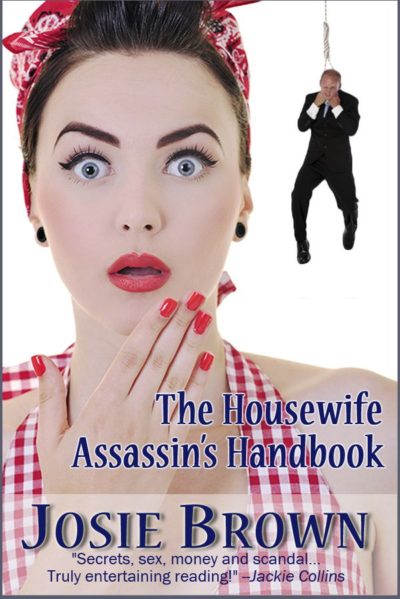 The principal problem I had here was that the plotting is simply not well thought out, and not convincing. One could argue that the essential premise is far-fetched; but I was okay with suspending disbelief that far. (Whether or not black ops organizations would hire a single mom with kids is a matter of speculation, since real life organizations like this don’t publicize their personnel policies. :-) ) But even within the premise Brown creates, much of her plotting simply doesn’t stand examination. Some of the major actions by the villain(s) are at cross-purposes with some of their other major actions; several events that take place here would involve the police in the story, at a level that couldn’t be ignored, but there’s no indication of that here; Donna’s reasoning for one major decision is weak and unconvincing; and Acme (the company she works for) would be much more actively involved in the decision-making at the end, not passive as it is here. Also, characters could not realistically suddenly just shrug off previously incapacitating wounds (which happens here twice), and there are other significant logical slips that took me out of the story. The author writes prolifically, but she apparently wrote this novel too quickly to take her craftsmanship in plotting seriously, or to put any real thought behind it. (That’s a real shame.)