



★★★
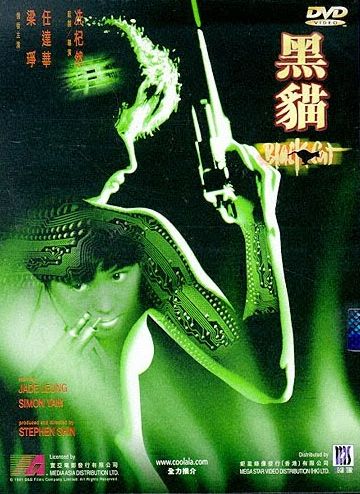
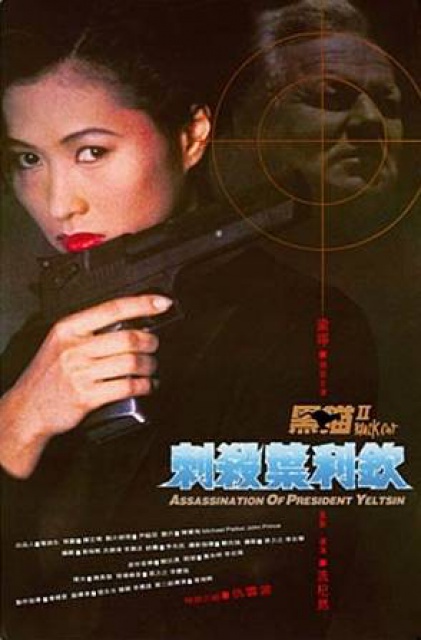 While neither Nikita nor The Assassin ever resulted in a sequel, the success of Black Cat lead, immediately to a follow-up. This is both good, in that it forced D&B Films into coming up with some new concepts, and bad, because what they came up with is a barely coherent mess. They take Leung – who had won the ‘Best Newcomer’ award – and give her a role where she gets to speak twice. The real star is Robin Shou, well before his Mortal Kombat days, and with a much better haircut too.
He plays a CIA operative – the laserdisk subs say this stands for Central Intelligent Agency, clearly dating this before 9/11 – who is investigating a group out to assassinate President Yeltsin. Their chosen hitman has been beefed up with some kind of ill-explained technological wizardry, but luckily, one person can detect the radiation he gives off: Black Cat, who now has a chip in her head (to match the one on her shoulder, hohoho). This leads to an amusing sequence where Black Cat heads off on her own, charges into a mall, and shoots an old lady because – wouldn’t you know it? – the senior citizen just happens to be giving off the same kind of radiation, courtesy of her medical treatment. Well, I found it amusing, anyway; there’s something about a head-shot which spatters the face of a nearby clown with copious amounts of blood. Er, just me, then? :-)
Okay, the movie may never be dull, and is certainly not short on action. Yet it doesn’t make any sense. Why would the CIA send operatives into Russia to save their president? And what are they doing operating in America? Isn’t that illegal? Oh, I forgot – it’s the CIA we’re talking about here. Leung’s robotic performance – even though entirely appropriate, since she now comes with an remote-control off switch – also feels like a terrible waste of her talents. There’s a lot of wire-work in the action sequences, but it’s not badly done; the highlight is probably a fight in a steel-works where both Robin and Jade have to take on large numbers of adversaries. The final battle, when Black Cat fights the assassin around the wreckage of a crashed plane, is cool too, with the two antagonists bouncing off the debris.
However, the overall impact is bitty and sporadic. While there are some nice ideas, they are poorly thought-out and developed, and the script doesn’t meld them into any kind of satisfactory structure. The action sequences feel equally bolted-on, though I did like the use of a President Yeltsin lookalike (at least, one presumes it was a lookalike, though I recall the real ex-President Gorbachev did appear in a Wim Wenders film). After the critical acclaim that greeted her debut, Jade Leung could have turned her skills in any direction; unfortunately, this disappointing follow-up is largely symptomatic of the poor choices that seem to have dogged her subsequent career.
Dir: Stephen Shin
Stars: Robin Shou, Jade Leung, Zoltan Buday, Patrick Stark
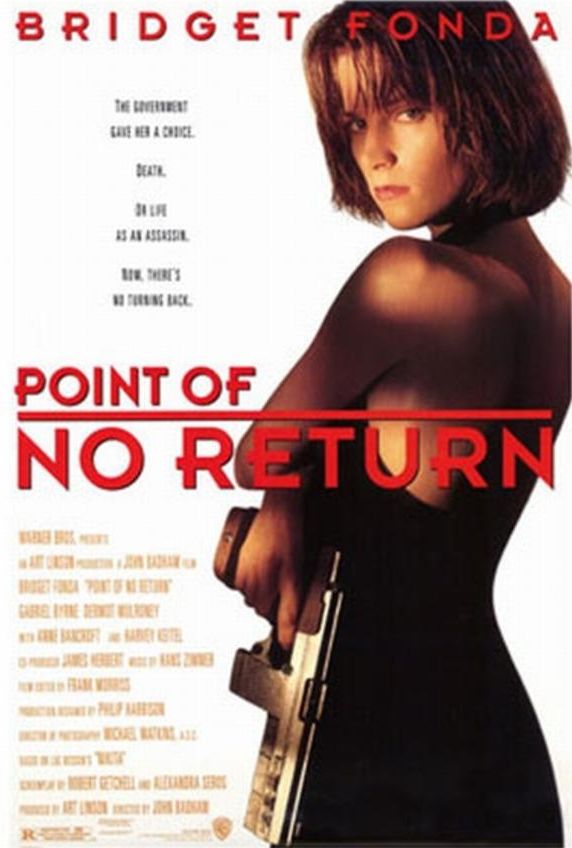
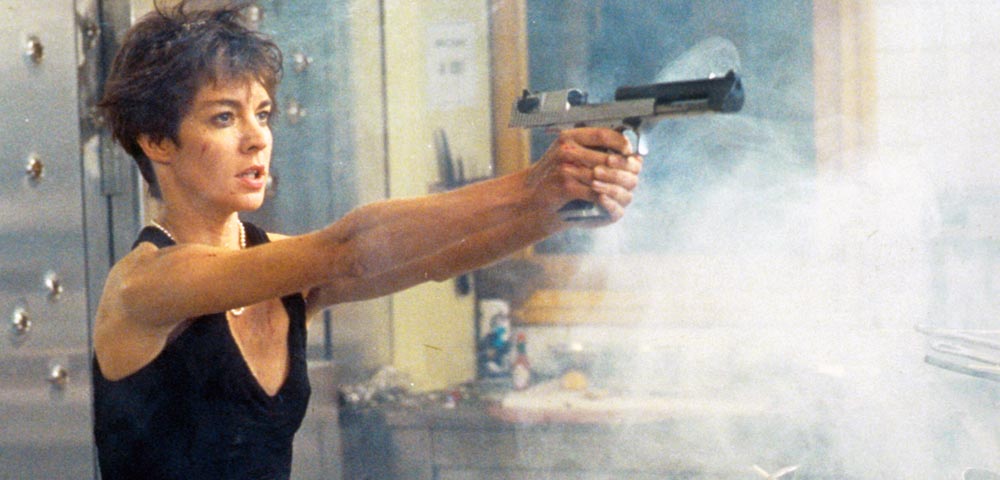
 Luc Besson’s original contains all the necessary elements which would become standard for the field. A criminal is “killed” by the government, only to be resurrected into a new life as an assassin for the authorities. Initially resistant, she eventually embraces her new life, but a romance reminds her of the world she left behind, and becomes a potentially lethal threat to her existence when it starts to interfere with her professional capabilities.
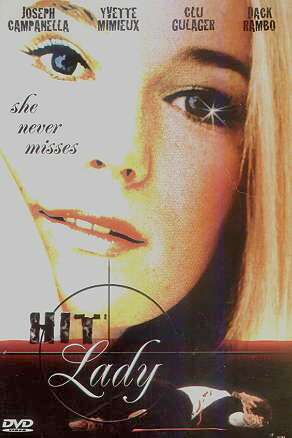 Things the movies teach us, #285: if you are a criminal, do not agree to do “one last job” before retiring, because it never works out that way. I guess assassin for hire Mimieux doesn’t go to the cinema enough, or she’d have known this, rather than letting herself get talked into that OLJ, in this case, killing a union leader. To make it look like an accident, she has to get close to him, only to find herself falling in love with her target – a common hazard of the job, going by how often this happens in films. From here, it’s all downhill, as her identity is compromised, and she has to flee.
 Advertised with the fetching slogan, “Guns don’t kill people – she does”, this is a film about a film, specifically the graduation documentary being made by Alex (Palladino), who has the good fortune to live opposite hitwoman, Blue (Rubin). She just happens to be going on her final job, and agrees to let him and sound-man Lars (Jayne) come along. On the way, however, things come out of the closet about Blue’s background, and Alex finds himself crossing the line between documentarian and instigator.
 Rubin, given the chance, does a good job, though it’s only in the final confrontational scene that we get to see what she is really capable of doing. Until then, the job of assassin seems little more interesting than that of a travelling salesman – she drives cross-country, pop-pop, and drives home again. It’s all rather too prosaic, making it hard to see why Alex (or, indeed, the viewer), would want to get so involved. It certainly isn’t the glamour or the excitement.
 This is an odd little film; heroine Angel (Walden – by some reports now a ski-lift attendant) is an assassin, ordered to take out the leaders of a white slavery ring. After the first killing, she finds solace in the arms of a random guy, and you
 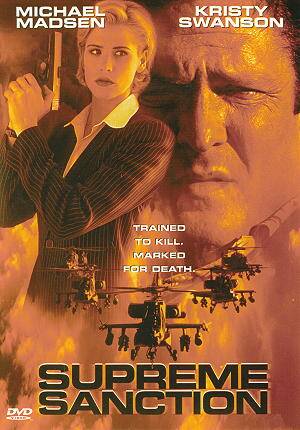 Director Terlesky starred in one of my favourite guilty pleasures, Deathstalker II, but this shows he still has much to learn about directing and, particularly, scripting. There just isn’t enough going on here to sustain attention, with too many scenes taking twice as long as necessary. Swanson plays Jenna, assassin for a government counter-terrorist agency which is now creating incidents in order to get increased funding. She switches sides and protects TV journalist Jordan McNamara (Dukes), whom she has been ordered to kill – her handler Dalton (Madsen) must now take her out.