★★
“Left feeling quite Cheetah’d…”
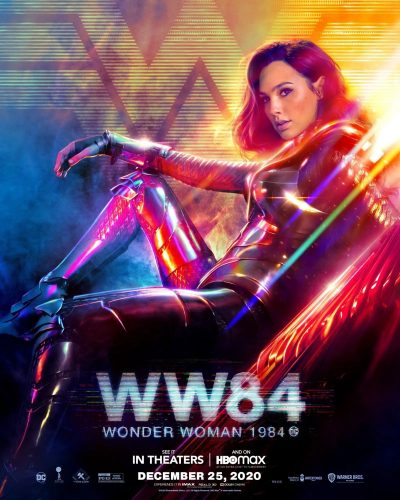 Before COVID-19 hit, this was scheduled to be the year’s biggest action heroine movie. Originally slated for a June release, it was the sequel to a film which earned a well-deserved $800+ million worldwide, and a similar return seemed within reach. But its opening was first delayed, and then it was announced the movie would only get a limited release, coming out in North America on HBO’s streaming service, HBO Max. Difficult times. But the sad fact is, this feels more like a contractual cash-grab. Even with the same star and director, it seems sadly lacking in genuine, emotional heart.
There are quite a few other problems. Firstly, this is set in 1984, because… Well, there’s no real reason. At least Captain Marvel gave us a fight in a Blockbuster Video store. Here, the period flavour seems limited to one Frankie Goes to Hollywood song, randomly dropped in at a party. Otherwise, it could easily be set now. Another issue is the sheer length. This is 151 minutes: that’s only 10 minutes longer than its predecessor, but it feels a lot more. Part of this may be because after the opening, you then have to wait for over an hour, before there is any further significant action. While I’ve not pulled out a stopwatch, the ratio of that to talk overall just seems considerably worse.
Then we have the plot, which centres on a magic hunk of rock, the Dreamstone, that grants one wish to anyone who touches it. Diana Prince (Gadot) naturally wishes for the return of dead lover, Steve Trevor (Pine). Mousy work colleague Barbara Ann Minerva (Wiig) wishes to be like Prince, a process which ends up turning her into supervillainess Cheetah. And eventually gives her a tail, making her look like a refugee from Cats. At least dodgy oil-baron Maxwell Lord (Pascal, who amusingly also appeared in the much-derided 2011 Wonder Woman television pilot) reads the fine print, and uses the Dreamstone to try and take over the world. Of course, the old saying, “Be careful what you wish for” comes into play. You just KNOW Diana’s wish will have to be revoked, parting her from Steve once again. Which would be okay, if it hadn’t seemed like a cheat all along, robbing their separation of any emotional impact.
As is, Steve seems almost entirely superfluous here. His main contribution is a poorly-considered scene where this resurrected 1917 aviator is able to fly a modern jet with no trouble or instruction. This seems about as plausible as a 1917 accountant being able to sit down at a desk and immediately use QuickBooks, and that’s ignoring completely the fact that the Smithsonian would exhibit a plane that’s fully fuelled-up and ready for take-off Hey, he does somehow have a hand in teaching Wonder Woman to fly. Elsewhere, it doesn’t help that every time I saw Lord, I kept expecting Baby Yoda to show up, and Wiig is hardly convincing as a plain Jane. Maybe one day, Hollywood will realize that it takes more than just slapping a pair of glasses on an actress.
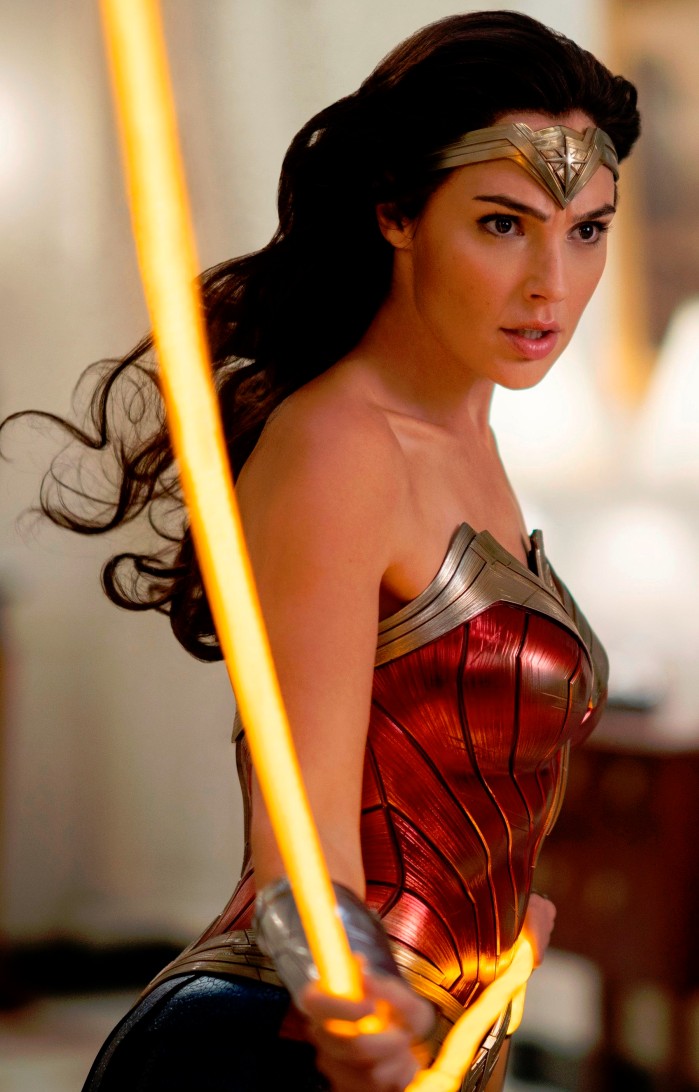
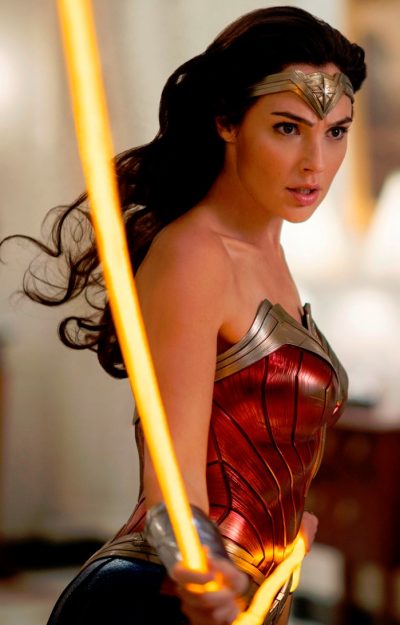 Gadot is still very good, but there just isn’t anything close to the sense of passion which she brought to the character in Wonder Woman. Here, saving the world seems like a day job, rather than something done out of a fierce, unbreakable conviction. The action sequences are merely alright. There’s some surprisingly poor CGI (even on a non-cinema screen), and they often seem short on physicality, with a couple of exceptions. A battle between WW and Cheetah in the White House is well-assembled, and there’s an opening sequence depicting a young Diana taking part in the Amazon Games. If it were a series, I’d be watching every week – my money would be on American Ninja Warrior star, Jessie Graff, who plays one of the competitors. That was nice.
However, even this falls short, both in emotional and technical aspects, of the iconic “No Man’s Land” sequence. And thus we reach the crux of the issue: in just about every way, it’s not as good as the previous movie. That was a genuinely groundbreaking effort, in which everyone involved seemed fully invested, and which deserves to rank among the best of the new wave of comic adaptations, be they Marvel or DC. This tastes more like heavily generic comic-book fare, with a story too heavily reliant on convenient happenstance, supporting characters that distract rather than support, and a resolution that is not much more than a 21st-century version of Wonder Woman demanding, “Clap your hands if you believe in fairies.”
Philosophically, I was intrigued by her explicitly stating at one point, “I hate guns.” I recently finished The Boys, with its slew of malevolent superheroes. In that world, firearms were one of the few things that could level the playing field and give “normal” humans a chance. Guns are, simply, a great equalizer, and hearing the super-powerful express blanket disdain for them is… interesting. Similarly, we were expected to believe Barbara Ann is simultaneously so plain nobody sees her, yet can barely take two steps without getting creeped on. Look, I expect Wonder Woman to be pro-feminist. But a degree of consistency is apparently too much. For when given a wish for anything, the two lead women want a) to be hot, and b) their boyfriend back? I am woman, hear me… whine?
There are some positives. If not exactly period appropriate, Hans Zimmer’s score is effective and elevates a number of scenes. And the film does, at least, leave the audience on a positive note with a really lovely mid-credit sequence. However, it’s also telling that those 60 seconds are likely more impactful – and, certainly, more emotional engaging – than the other 150 minutes combined. It has been a long time since I’ve seen a sequel, with the same director and star, that has fallen so far short. Maybe The Matrix: Reloaded? All told, you would be better off just watching the trailer. It certainly provides a greater jolt of eighties energy than the movie has any apparent interest in delivering.
Dir: Patty Jenkins
Star: Gail Gadot, Pedro Pascal, Kristen Wiig, Chris Pine




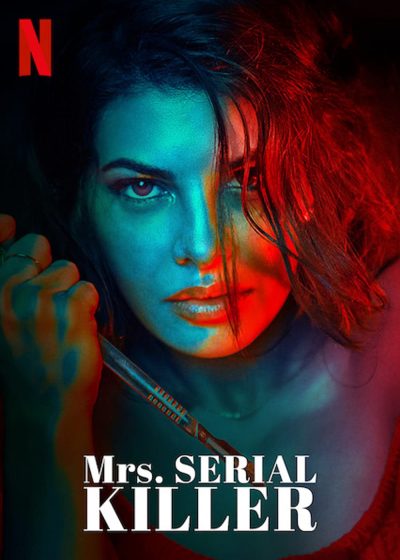 This is the kind of film which I’d say was enjoyable, rather than being good. Indeed, if you want an illustration of the difference between the two, this movie is a good example. Sona Mukherjee (Fernandez) is the wife of respected doctor, Mrityunjoy Mukherjee (Bajpayee). But their life is upended when the bodies of six, formerly pregnant, unmarried women are found on their property. Sona believes her husband was framed – possibly by police inspector and former boyfriend Imran Shahid, (Raina). She takes the advice of a dubious lawyer, who suggests that if the serial killer was shown to be still active, that would prove her husband’s innocence. So Sona kidnaps another expectant young woman, Anushka Tiwari (Khan) to provide a seventh victim. Only… well, Sona is a bit crap as a serial killer, and Anushka is a feisty little thing with a black-belt in taekwondo, pregnancy be damned.
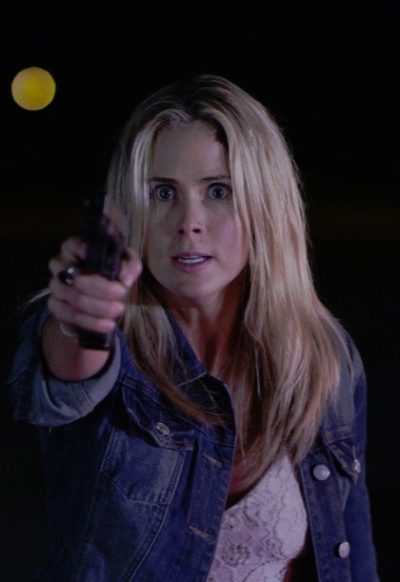 This falls victim to the Spielberg Effect. By that, I mean, that any movie directed by Steven Spielberg will inevitably become the yardstick by which future entries of that kind are judged – typically, unfavourably. Killer shark films will be compared to Jaws. Holocaust epics to Schindler’s List. And the genre of movies in which drivers are menaced by unseen truck drivers? Expect comparisons to Duel. And in this case, they are entirely warranted. I guess if you’ve never heard of Duel, this might just pass muster. But you would still be better off watching it, than this lame imitation, which has a nice car (a Mustang) and some lovely scenery (I’m guessing Canadian). That’s all it can offer though.
 Eva Destruction – and, yes, that
 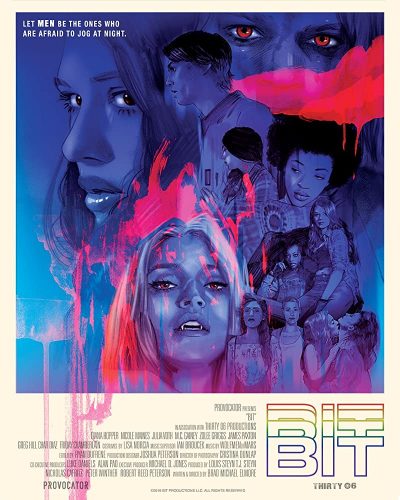 There are times when I am bracing myself, going into a movie. Here’s the synopsis for this one: “A transgender teenage girl on summer vacation in Los Angeles fights to survive after she falls in with four queer feminist vampires, who try to rid the city’s streets of predatory men.” Given my long-standing aversion to message movies, this seemed like 90 minutes of my worst nightmare. What had I let myself in for? But this proved to be surprisingly accessible – even for those of us who are neither transgender nor queer, and are enrolled in the Camille Paglia school of feminism.
 This was likely not going to qualify for inclusion here, until a twist in the final 15 minutes. Up until that point, it had been a largely irritating saga, that was considerably more horror than action heroine – and not even good horror at that. I’m still significantly unconvinced about the quality, but must grudgingly admit, this was a twist which I did not particularly see coming (though there is a large clue dropped near the beginning). Three gal-pals, Tamara (Betham), Maddy (Taylor-Compton) and Brooke (Allbright) head for a weekend’s lakeside R&R. On the way, Tamara’s car runs out of fuel, and she encounters the local creeps, but eventually arrives, and joins the other two in scamming drinks out of horny guys.
 Turns out, interesting is not the same as good or entertaining. Who knew? If you watch this unaware, as I did, you are certainly going to be very,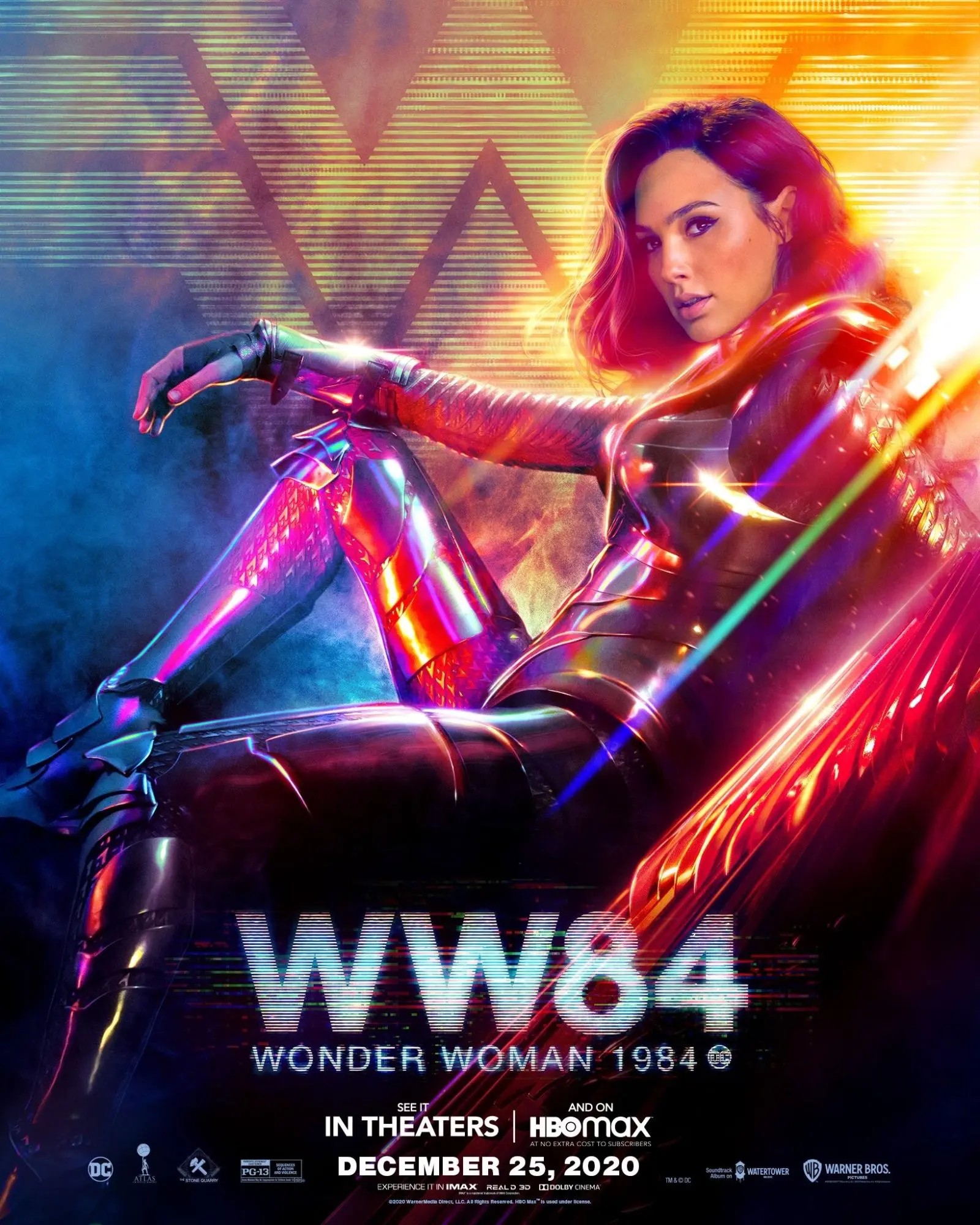
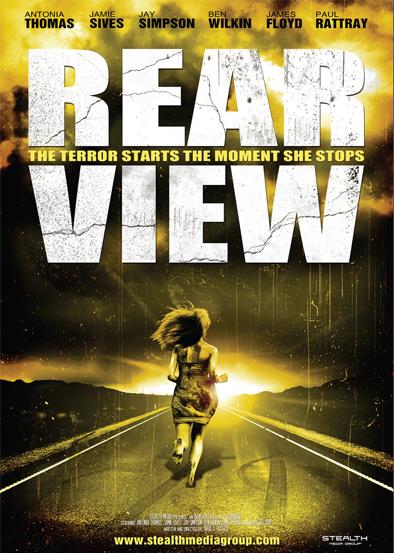 I must confess, I was perversely intrigued when I read a review on the IMDb, apparently from one of the directors, disowning this film: “Terrible, and despite it having my name on it, I had no say in the final cut.” While it is true to say that the synopsis – “Based on true events, a girl fights for her life on the Road – Tears Of Souls – chased by a gang of slave traffickers” – is almost entirely inaccurate, it’s not