 ★★★
★★★
“School’s out… forever“
My rule of thumb here is, I generally don’t get into politics, beyond what a film itself does. By which I mean, if a movie consciously injects a political theme or agenda, then that’s fair game. But otherwise, I try to review a movie as a movie, rather than seeing it through the lens of any political belief. However, in this case, I can’t ignore the elephant in the room, with Run Hide Fight having acquired an explicitly political subtext, over and about its content, through distribution by right-wing website, The Daily Wire. Yet, just as The Hunt was not calling for the murder of Trump supporters some suggested, neither is this the relentless pro-gun propaganda, you’d think from a few of the more vitriolic reviews. Once again, reality is more moderate than online opinions would have you believe. Who knew?
Director Rankin said (in an interview that’s thoughtful, and definitely worth the read), he wanted the film “to be so that two friends on opposite sides of the political spectrum could go watch this and both feel like it honored them, and they could go out for coffee or a beer, and talk about it.” I’d say he managed to do so, though I’m not certain such equivocation is the best approach, especially when it comes to such a controversial topis as school shootings. I might have had more respect if the film had taken a stance and gone for it. Though that would have taken more bravery – or stupidity! – given some of the reactions to what is a mild, even-handed take. It doesn’t really get more controversial than daring to suggest that sometimes, to stop a bad guy with a gun you need a good guy teenage girl with a gun.
From a moral point of view, my sole qualm was probably that too much time was spent on the chief perpetrator. It plays down the same line as previous entries in the school shooter genre – spending too much time on the killers rather than their victims, which almost regardless of execution, exacerbates the problem. This is something the script does address towards the end, when the heroine says to the ring-leader, “Isn’t it ironic, that after all your goddamn hard work, people aren’t gonna remember you? They are gonna remember me.” This might ring truer, if I wasn’t fairly sure he gets more lines than she does. I don’t care about your motivation. You’re insane. Now, move on.
Otherwise, it is basically Die Hard in a school, and as such, is no more worthy of complaint than any of the many other Die Hard knock-offs we’ve seen. Certainly, saying that educational facilities should be sacrosanct, inviolate and not used as the location for this kind of thing makes no logical sense. To quote Rankin, “There’s an easy answer to, ‘How could you?’ which is also, ‘How could you not?’ This is a major problem in America, so why not make a movie about it?” I would argue it’s in reality perceived as a major problem, largely due to the media hysteria around it. For in 2019, a grand total of just eight people were killed across the whole country on school grounds or during school-sponsored events. [Or, as Chicago calls it, “a quiet weekend.”] For context: lawnmowers kill more than ten times that number annually.
 Anyway, let’s move on and discuss the movie, as a movie – because that’s what matters.
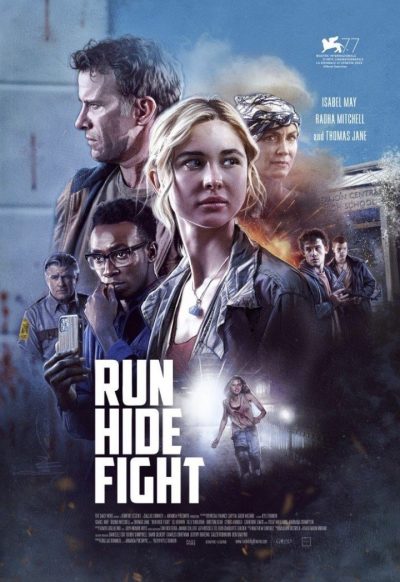
It’s almost the last day of the year, Jennifer Hull (May) is in her school cafeteria bathroom, when Tristan Voy (Brown) and his cohort of Columbine Mafia wannabes crash a van in through the window and take the students hostage. The authorities are slow to react, in part due to diversionary tactics, in part due to bureaucracy and in part… because it’s necessary to the plot, allowing Jennifer to scurry into the air-ducts and discover what being a TV dinner feels like. Having escaped the initial onslaught, her first instinct is to flee the scene, but fortunately for the movie, she decides to go back into the building, alert others to the reality of the situation and, eventually, face down the perpetrators.
You can largely pencil in the obvious plot points as they unfold, and the script offers very little in the way of surprises. Probably the biggest is that, as a Die Hard copy, it’s very restrained, with Jennifer responsible for the demise of only two (2) of the attackers. To put it into oughties video-game terms, it’s considerably more Metal Gear Solid than Goldeneye, with stealth being the order of the day, rather than rushing in with all guns blazing. It helps her that the attackers are streaming their act live on the Internet, which allows her to keep an eye on where they are. There are also some nice moments where she make use of the school environment to assist her; I’d like to have seen more of that.
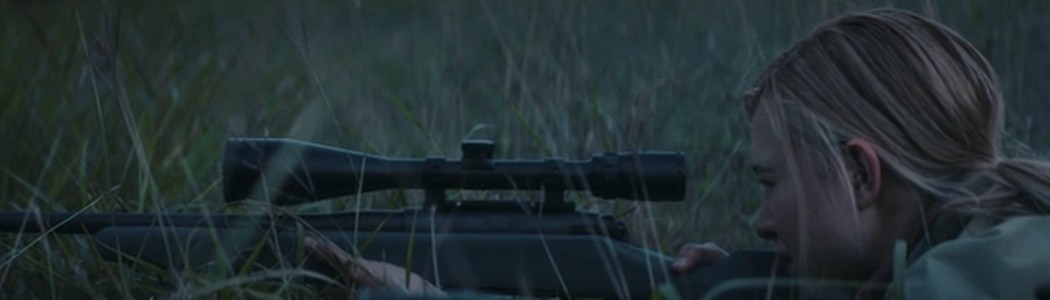
What the film does best is likely the set-up of Jennifer’s character. We first see her deer-hunting with her father (Jane), demonstrating a familiarity with and respect for firearms. It’s also established early that she’s still grieving after the loss of her mother, giving her some darkness. But generally, Jennifer is very much a normal girl, somewhat on the fringes of school life, but by no means an outsider. Mom’s ghost pops up now and again during events, a narrative conceit which I didn’t mind, yet can’t say I felt particularly enhanced things either. Still, she’s a heroine for whom I found it very easy to root.
It does feel like the script doesn’t quite know what to do with her after her first hand-to-hand fight, a messily close-combat affair. She turns her hand to a variety of different things, such as alerting other classes to the fact that leaving the premises is the best option, which feels like a diversion from the main plot. Eventually, of course, Tristan realizes there’s a fly in the ointment, and we get the face-off we’ve been expecting, which harks back to the early deer-hunting. It’s a good job too, as the penultimate climax had felt like a cop-out, with Jennifer teetering perilously close to damsel in distress mode. Fortunately, the real finale proved a good deal more satisfactory.
Much as with the political posturing, the film’s quality lies in the middle. It’s neither a new classic, nor the appalling piece of hackwork – both opinions I’ve seen put forward. It is considerably tamer than I expected, certainly not the outrage to common decency some have suggested (not that I’d have necessarily minded!). It is entirely competent and does a reasonable, rather than exceptional, job both as entertainment and in provoking thought. Not worth the hype, to be sure – yet certainly not worth the vitriol either.
Dir: Kyle Rankin
Star: Isabel May, Eli Brown, Thomas Jane, Thomas Jane



 This is the kind of film which makes for very uncomfortable date night viewing, simply because the situation presented is likely to lead to awkward conversations. Happily married architect Evan Webber (Reeves) has the house to himself for the weekend, his wife having gone with their two kids to the seaside, leaving him free to work on a project. A stormy night ensues, until a knock at the door, and he finds two lost young women, Genesis (Izzo) and Bel (de Armas), shivering on the doorstep. He can hardly make them stay there, so lets them in. Almost immediately, something is wrong, though initially this falls into the “Too good to be true” category. For they are nymphomaniac flight attendants, and inevitably – though after a credible struggle – Evan succumbs to their relentless charms.


 For most films. I’ve usually got a fairly good idea of what is likely to be the final review grade, inside about 30 minutes. It may drift half a star up or down, but it’s relatively rare for there to be more variation than that. This would be one such case, which started off as underwhelming, went through a brief surge of “Oh, yeah – I get it!” in the middle, before returning to the mediocrity from whence it came. At various points, this could have been anywhere between ★½ and (although briefly) ★★★★. Well done, I guess?
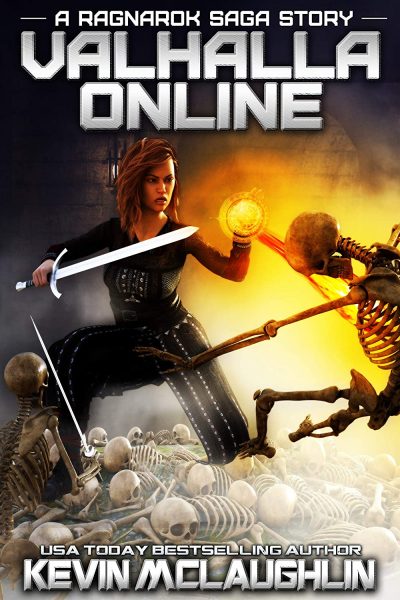 I could have sworn this isn’t the first entry in the LitRPG genre I’d reviewed, but I’m damned if I can find the previous one. So, just to be safe, I’m going to explain what LitRPG is: apologies if this is unnecessary! Basically, it takes the structure of role-playing games (RPGs) – things like character levels, ability scores, etc – and applies them onto a story structure. Obviously, the overlap between RPGs and books has been a long one: Dungeons & Dragons is heavily influenced by the work of Tolkein. But it has been mostly one-way traffic. The LitRPG genre sends things back the other way, producing novels that adopt the practices of the games.
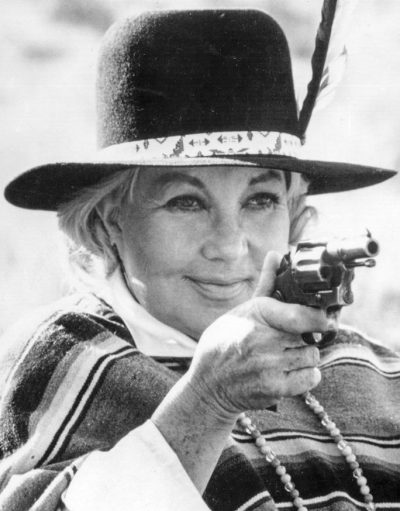 This upper-tier B-movie, produced by Julie Corman, is notable for a handful of reasons. It includes not one but two Oscar winners. Director Demme would go on to receive one for Silence of the Lambs, and star Leachman had already won for her performance in The Last Picture Show. There’s also a small role here for Sally Kirkland, who’d be nominated for an Academy Award down the road. And perhaps most trivia-worthy are the presences in uncredited roles, of Bill Paxton and Dennis Quaid – both making their screen debuts.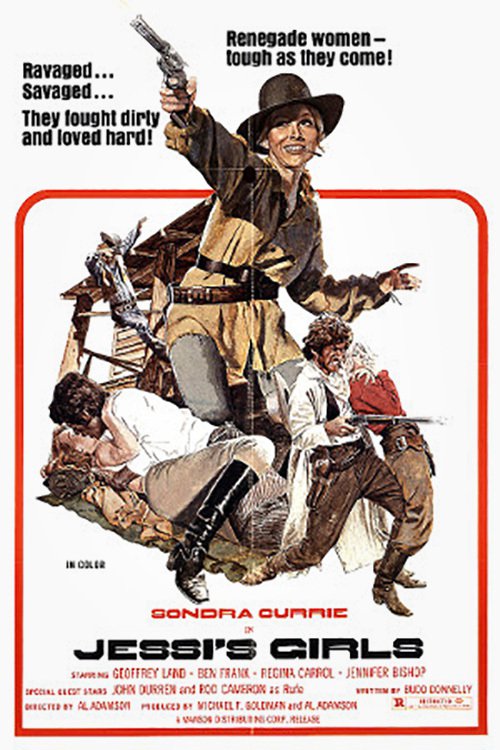
 It’s about the year 1880, and Jessica Hartwell (Currie) is heading out West in a wagon with her preacher husband. They encounter the gang of Frank Brock (Frank); they repeatedly rape Jessica, before shooting her husband fatally, and leaving her for dead. She survives, returning to health with the help of prospector Rufe, who sports an unfortunate, obviously fake beard, yet also teaches the young woman how to shoot. For Jessi has vengeance on her mind, and to assist her in this path, she liberates three other women from the custody of Sheriff Clay (Lund). There’s outlaw Rachel (Jennifer Bishop); saloon girl Claire (Regina Carrol); and Indian Kana (the not-exactly Indian Stern), who had been a part of Frank’s gang until he abandoned her.

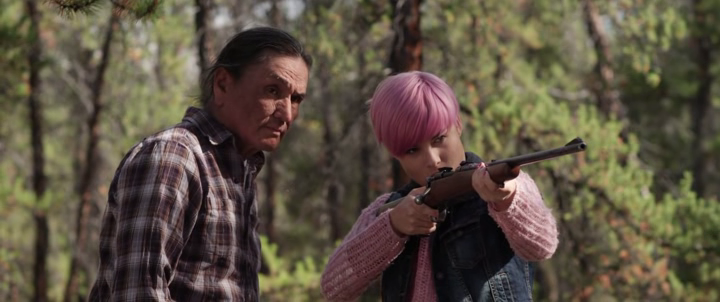 While certainly more relaxed that many of the films we cover here, this makes it in on the strength of its heroine’s character arc. That belongs to Lia (Jacobs), a teenage girl in the Northwest Territories of Canada, who is being raised by her father. When he has to go off for work, she gets sent north of the Arctic Circle to live with her grandmother (Jerome) for the nightless summer. She hates the rural life, and runs away, stealing a boat in the hope of reaching Dawson City, the nearest big town – not realizing it would be four weeks journey. She falls overboard after her boat breaks down, and is lucky to be rescued by Alfred (Howard), a hunter from the local Gwich’in tribe. As they cross the remote wilderness, she begins to appreciate it, bonding with the thoroughly down-to-earth Alfred and learning from him – wolves hate the smell of tobacco, apparently. But when an accident befalls her guide, Lia is going to have to dig into her own resources.