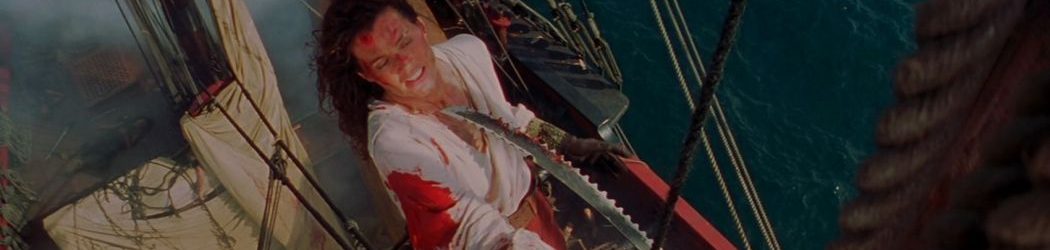
Coincidentally, I watched this the night after Sinners, another period piece which looks at the place of a specific culture in society. There, it was music in predominantly black society of the thirties; here, it’s professional wrestling in the overwhelmingly white society of the fifties [the presence of in this WWE champion Naomi as Ethel Johnson, feels very much a token gesture]. Definitely fewer vampires in this, however. It’s the story of Mildred Burke (Rickards), who went from working as a waitress in a diner, though wrestling at carnivals, to become one of the biggest draws in the ring of her time. The end of the film calls her the first woman to become a millionaire through sports.
It’s not an easy journey, being both helped and hindered along the way by sometimes manager, sometimes promoter, sometimes husband, sometimes abusive bastard Billy Wolfe (Lucas). She also has to deal with scepticism regarding her talent, other wrestlers and promoters trying to muscle in, and even legal barriers, with many states forbidding women’s wrestling bouts outright [In the UK, the city of London banned such matches until as late as 1979]. All while also being a single mother, trying to bring up her son. This builds to a battle for the Women’s Wrestling World Championship in 1954, pitting long-running title holder Burke, against her now ex-husband’s wrestler, and Mildred’s long-time rival, June Byers, whose dislike of the champion goes back to the carnival shows.
Definitely the best thing about this is Rickards, who very much looks the part of a wrestler: fit and well-toned, without ever seeming muscle-bound. Though it is odd how little she seems to age over the course of proceedings – likely close to twenty years all told, if the age of her son is any guide. Beyond the mere physicality, the Mildred we see here is also a warm and winning personality, and it’s very easy to root for her. As a fan of wrestling in general, I enjoyed the glimpse into the past of the pastime, and it treads a decent line between being accessible to non-fans, without dumbing everything down too much. Though there are some goofs, in terms of period wrestling: tapping out in submission only started in the nineties.
The main problem, and it’s a significant one, is the film is far too long, at a hundred and forty minutes. It’s clear that writer-director Avildsen was in love with his own script, but there are long chunks – mostly in the second half – which feel closer to soap opera. The whole scene with Burke and Wolfe buying out a whole hotel, so their black wrestlers don’t have to go somewhere else, seemed like pure virtue signalling, and caused me literally to cringe. There simply isn’t enough going on here to justify the running-time, and while the good stuff here is often very good e..g the lesson on how to cut a good promo, it definitely feels like a case where less would have been more.
Murder by the Lake is a TV crime series co-producted between the second public German TV channel ZDF and the public TV channel of Austria ORF. It started in 2014 with a 90-minute long TV movie, followed by a further movie each year until 2017, when the yearly output was doubled. Since 2024, there have been three movies each year. So far, 22 episodes have come out, with #23 scheduled for later this year. The German title Die Toten vom Bodensee translates as “The Dead of Lake Constance” – “Bodensee” is literally “Ground Sea”, but is called Lake Constance in English. When I saw the first movie I was struck by its surprising quality. If you have read my reviews here, you know I usually don’t think much of the quality of German film productions. This is different: not only is it a show that I always watched, but one where I bought the DVDs.
German crime shows tend to be boring and tedious, though I admit some have become much much better in the 20-odd years. This is one of those exceptions: The series captured my attention from the get-go; I found the single episodes remarkable and was quickly invested in the characters, who were very well portrayed by the actors. In short: It had a different dynamic and feel than most German shows. I wondered why it felt like that until I realized something: The creators of the show have borrowed heavily from successful recent Scandinavian TV crime series, so that you easily could call this “Scandinavian Noir, German style”.
It starts with Lake Constance, which is split between Germany, Austria and Switzerland. When a crime happens that falls under the jurisdiction of Germany and Austria, the commissariats of both countries decide to work together. A new special commission of “German-Austrian Crime Prevention” is formed, headed by German chief inspector Micha Oberländer (Matthias Koeberlin) and Austrian detective inspector Hannah Zeiler (Nora Waldstätten). Also involved, though more in secondary functions, are Austrian chief detective inspector Thomas Komlatschek (Hary Prinz), as well as a pathologist.
Sounds familiar? Well, then you probably have seen The Bridge. It had a Danish and Swedish inspector working together, in a concept used for many remakes around the world. Then there is the Swedish-German-Norwegian crime series The Sandhamn Murders, perhaps the first show to adapt ScandiNoir for a warm summer environment, rather than the usual harsh, cold surroundings of typical Scandinavian shows. The same goes for Lake Constance, whose beautiful surroundings immediately inspire viewers to plan their next holidays there. And last but not least is the character of Hannah Zeiler who is unlike any ever seen in any German TV show, let alone as a police investigator. With her hair combed back tightly, a nice Lara Croft braid, and a Spock-like mind, she moves like a cat. Unless she’s driving her 1971 Moto Gucci Nuovo Falcone motorcycle.
But most interesting is her behavior. When she first appears, she is strictly business. She says hardly a word otherwise, with no interest in getting to know the wife and daughter of her new colleague. She lets no one in emotionally, and shows an aversion to personal connection. Her behavior feels awkward, even upsetting, until you get used to it. Some watchers complained she mumbled her lines, but then, most characters here speak with an Austrian accent which can be a bit difficult to understand for Germans. It might also have something to do with the idea of a character who only slowly reveals her secrets to the audience. Because what I realized after a while, was that Hannah Zeiler is actually a more clinical, streamlined and slightly tamer Austrian version of Lisbeth Salander. Or at least her distant relative.
Similar to Lisbeth, Hannah has childhood trauma, as the sole survivor of a boat accident 20 years ago, where she lost both parents. While her mother died, her father’s body was never found. Hannah was raised by her adoptive father and now boss, Ernst Gschwendner (August Schmölzer), who plays an important role here. But in contrast to her Swedish predecessor, Hannah was never physically or psychologically abused, though the accident has left her with a fear of taking to the water. Also, the idea her father might still be alive has not entirely left her. This is a larger story arc that concludes four years later in episode 6, “The Returner”. It’s fascinating to realize how the “MCU method” of preparing a story arc over years, can pay off handsomely in the end.
Like Salander, Zeiler is a social recluse, and lives in a big house inherited from her parents. Her controlled external demeanor is in contrast to the chaotic life of Oberländer. He has family problems, with a wife who feels chained to the house and their child. He is constantly on the job, driving an old Volkswagen bus: he sometimes even spends the nights there, drunk, and it’s usually not very clean. Zeller and Oberländer are bound to clash; for a long time, it was the main reason for me to watch the series. Initially, their characters seem to come from different planets – the comparison of “like cats and dogs” is very fitting. Yet they learn to respect and rely on each other. It is touching to see Zeiler start to trust Oberländer, slowly open up to him, and their relationship develop.
There was a lot of personal development around the duo, which kept the audience coming back every year, and these were good storytelling moves. The original idea was to have cases with some kind of mystic or mythological touch, although after the first movie, it was then entirely forgotten for the next nine. Mind you, this isn’t The X-Files. The angle is more related to folk customs, superstition or single elements. For example, in the first episode a murder seems related to a Celtic mask found in the lake. In another, a dead girl is found in a mermaid costume. One episode happens during a traditional and ancient local parade. Another has a belief that a house is cursed because it was built on a former path. Or there’s a film that begins with finding a baby in a basket in the lake – was this meant to be a reference to Moses?
However, these serve only as local colour for the stories, and not much more. The stories themselves are often very complicated, with the present crimes related to ones in the past. There is a common theme of how the sins of the fathers (or mothers) are visited on the sons and daughters. Very often the results are tragic. Though thanks to the officials, these family stories are revealed and there might be a chance for a better future. For example, one episode involved two men swapped at birth by accident, and brought up by the other’s mother; when one of them finds out, it leads to tragedy. Another theme through the show, is the inability of characters to communicate with each other. and say what they feel or know. That begins with Zeiler, who is so tight-lipped in the beginning, you could get the impression that she keeps state secrets, though a logical and understandable explanation emerges later.
Yeah, tragedy is very much ingrained in the lives of the show’s protagonists. Oberländer in particular is faced with this a lot: An old love returns and tries to kill him with the rabies virus(!). His wife cheats on him, only then to die in a car accident. He has significant problems with his teenage daughter Luna, who doesn’t stay the lovely little girl she was in the first episodes. What Zeiler and Oberländer have in common, is that they are essentially both lone wolves whose main focus is their work, with Komlatschek in the middle as the well-meaning and warmhearted successor of Gschwendner. He partly balances out the behavior of Oberländer, who often appears overtly aggressive and angry, and Zeiler, who especially in the beginning seems cold-hearted, odd and a bit inhuman.
Action-wise, the show isn’t anything special, though for a German TV crime show, it moves with surprising narrative speed. Guns are drawn quite often, but shooting remains a last resort, even if a rabid dog roams the woods. But I really got to enjoy Zeiler driving her fast motorcycle over long empty roads, through beautiful landscapes. I will say, over time the show lost a bit of its attraction, after her epic arc finished; I cared less and less for Oberländer’s private problems. That said, I still watched every episode. Then in 2022, Zeiler left on a motorcycle trip, never to return. What had happened? Nora Waldstätten (seen in movies such as Carlos the Jackal, and next to Kirsten Stewart in Personal Shopper) had other projects she wanted to take precedence. Since the ZDF had endured a bad experience with an actress in another crime show, resulting in no new episodes for 4 years, they moved quickly to replace Waldstätten, though no-one directly admitted the actress was fired.
In episode 16 (“Nemesis”) Oberländer got a new Austrian partner in Luisa Hoffmann (Alina Fritsch, above). Zeiler was declared dead in the final scene, Oberländer getting a phone call informing him she had a fatal motorcycle accident – strangely in Spain. Honestly, I felt quite cheated by this cheap way to write a character out of a show. The powers that be could have come up with a better, more fitting and respectful way to get the character out of the series, especially considering she was the main reason to watch in the first place. I did get a strong feeling the writers and producers chickened out from what would have been the next logical step, after the relationship building over all those years: making Oberländer and Zeiler a couple! For let’s face it: both were so special, in their own way, that any relationship with a “normal” person was doomed. Yet, they connected with each other and always understood that “the job comes first”.
But the powers that be again ignored their own character and story build-up completely – see my review for Arcane season 2 – and pulled a former girlfriend of Oberländer out of nowhere. Unfortunately, she was a criminal that betrayed him and would be shot later by Komlatschek. I gave the new actress one quick glance and, without condemning her performance, realized that special… strangeness, charisma, aura, call it whatever you want, her predecessor exuded en masse, just wasn’t there at the slightest. You won’t be surprised that I didn’t watch any of the subsequent episodes.
Oddly, while Waldstätten lasted 15 episodes, Fritsch threw in the towel after 6 (her last one, “Medusa”, was shown January 2025). The final episode I saw had Oberländer and Komlatschek becoming the new investigative couple, and it apparently stays like that for the new episodes. It’s kind of sad when I think of how Waldstätten has been getting guest roles in other, definitely inferior TV crime shows since her dismissal. I wonder who will be the next woman colleague to turn up? After all, I think TV audiences like to see a good-looking interesting female character next to the boorish, angry Oberländer. As the films usually (and still) have between 6-8 million viewers for each new episode, it would be quite risky to change the recipe for success.
Creator: Sam Davis et al Star: Matthias Koeberlin, Nora Waldstätten, Alina Fritsch, Hary Prinz
a.k.a. Die Toten vom Bodensee English-speaking audiences can watch the series with subtitles, on MHz Choice, also through Amazon Prime.
I’m not sure whether this is too long or too short for its own good. Could be a little bit of both. As the tag-line for this review suggests, it bears more than a superficial resemblance to a certain other action heroine film. Faith Newford (Hall) is your everyday, upper middle-class woman: married to a loving husband, physician Bryce (Shipp), with a young daughter, and running a shoe store on the side. Let’s not trouble ourselves about the mysterious amnesia, which leaves a large chunk of her past a blank slate. The problem is, Faith – or Imani, as she was previously known when she was a special ops soldier, is not supposed to be alive at all.
A blow to the head suffered during an abduction attempt triggers the return of her old skills, albeit at the cost of sending her on the run. Turns out she was in possession of information which could prove seriously detrimental to the political ambitions of General Michelle Dupree (Mirto). It’s why Imani and the rest of her squad were supposed to have been eliminated. If dodging Dupree’s goons wasn’t enough, there is another shadowy yet powerful group, who have an interest in Imani from the other direction, intending to use what she knows against Dupree. It’s all rather too over-complex, and I suspect they’d have been better off either simplifying the plot, or making it a mini-series. Hence my opening sentence.
The makers do get some things right, not least there has clearly been a decent amount of resources put into this. It doesn’t look cheap, and they also largely avoid most cliches of black action cinema. Though, inevitably, you still get drug dealers, rap music and The Man – or, in this case, The Woman – they are more incidental, and not the focus. Hall is okay as the heroine. If no Geena Davis, she generally acquits herself adequately in most of the action scenes, at least when she’s not trying to go toe-to-toe with obviously far larger and stronger opponents. For example, Raymond ‘Supreme’ Avant Jr (Lofton), who looks like he could eat Imani for breakfast, and pick his teeth clean with her spine. Yeah, their fight was a tad cringe.
At least the cinematic amnesia wasn’t too grating. For the movie simply has someone sit the heroine down and explain the past, rather than relying on the contrivance of her remembering it when convenient. Sometimes, simple is better. However, the film isn’t good at managing all the threads in the plot carpet, and it proved too much for my poor little mind to handle. I think my brain threw up a blue screen of death somewhere in the middle, during one of the more expository sections, about who was doing what to whom and why: my interest and attention never fully recovered thereafter. I did find the ending satisfyingly bleak – there’s always someone more shadowy and powerful than you – but I’d not call this more than adequate.
Dir: Mike Ho Star: Brittany S. Hall, Demetrius Shipp Jr., Kris D. Lofton, Elyse Mirto
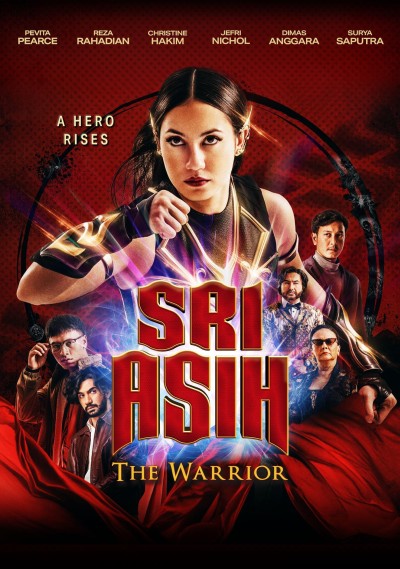
Turns out that Marvel and DC are not the only ones creating “cinematic universes” based on comic book. Another example can be found, perhaps surprisingly, in Indonesia. This film is part of the Bumilangit Cinematic Universe, and is a follow-up to 2019’s Gundala. I haven’t seen that, but I’m 99% sure that the scene in the end-credits is a direct cross-over to that, featuring its hero, given the apparent prediction late on of a team up to come between him and Sri Asih. Otherwise, though, this stands on its own, and you don’t need to have seen Gundala, or be familiar with the comic-book series about Sri Asih, created by R.A. Kosasih, and first published all the way back in 1954.
This is the third incarnation of the character, which was also first seen on the screen in 1954, in a now lost Indonesian movie of the same title. In this version, we begin with the birth of Alana during a volcanic eruption, in which her father is killed. Brought up by her mother, Alana is highly talented in martial arts, but has problems controlling her temper. After she fails to throw a fight as arranged against rich playboy and serial abuser Mateo Adinegara, he sends his men to beat up Alana’s mother, and the situation then escalates. Someone kills Mateo and his father, industrialist Prayogo Adinegara (Saputra) vows revenge. The result ends up triggering Alana’s transformation into her final form, the reincarnation of fire goddess Sri Asih.
Which is convenient, because someone is trying to carry out a ritual to obtain ultimate power, a process which require the sacrifice of a thousand souls. With the help of cop Jatmiko (Rahadian), who teeters between honesty and corruption, and childhood friend Tangguh (Nichol), now a journalist, Sri Asih has to figure out what’s going on, and stop the ritual. It’s all earnestly naive in an adorable kind of way. There’s a touching faith in journalistic integrity, and also lines like, “If you are unable to learn how to defeat your anger, it’s only a matter of time before it defeats you.” Occasionally this does topple over into clunkiness, such as when someone late on literally says, “I just remembered <key plot point about the thousand soul sacrifice>” Really?
However, if you can buy into the tone and go along with it, you’ll have a good amount of fun. It certainly does not feel like 134 minutes, which is more than can be said for some Marvel or DC product, though this is somewhat less highly polished. I do wish the fight scenes had been less CGI heavy: the impact is considerably more when Sri Asih and her opponents are knocking chunks out of concrete pillars than when she’s flying unconvincingly through the air. The best thing about Indonesian martial arts is the hard-hitting aspect, and that only intermittently comes through. It does have a cheerful “can do” attitude that’s endearing, and I’d not mind checking out further installments.
And if the above phrase doesn’t make any sense – it’s basically an underwhelming outcome during a baseball game – then you are probably not the target audience for this sporting drama. After almost a quarter-century living in America (much of it spent running a site about the local team as a sideline!), I’m fairly well-versed in baseball’s intricacies. But in contrast to some of the other Korean movies in this genre, such as Run Off or As One, you really need to know the sport going in to understand this on more than the surface level. Do not expect the film to explain what a knuckleball is, or the importance of spin rates.
The central character is Joo Soo-in (Lee J-y), a high school student who has dreams of becoming a professional baseball player. The main problem there is, she’s a teenage girl, and no woman has ever played professionally in Korea. While she pitches well enough – for a girl – she doesn’t throw with enough velocity to catch the eye of scouts. It doesn’t help that nobody really believes in her dream, with just about everyone trying to dissuade her. Even when she does get an offer from a professional team, it turns out to be to front their women’s outfit. Not least among Soo-in’s critics is her own mother (Yeom), already dealing with a feckless husband, who just wants her daughter to get real and start working in the same factory she does.
There are basically few surprises to be found here at all, with everything unfolding more or less as you would expect. It feels as if the script started off with a single word – “empowering” – and everything was developed from that point outward. For example, you will likely not be shocked to discover that mom is eventually won over to her daughter’s cause. Though I was amused by the scene where she’s told by the pro team the deposit on her daughter’s services is $60,000. Her response is, “I can’t give you that much money right now,” unaware the team is the one paying! Otherwise, it often plays like an All-Star Game of sports cliches, such as the gruff coach, romantic interest, etc.
I will say, the baseball stuff is well done: the actress seems to know her way around a pitching mound, and her mechanics look sound. [I wonder if CGI was used for the baseball, or if she really was throwing at 80+ mph?] It’s interesting that we never actually see Soo-in play in an actual game. Instead, it’s all training sessions and try-outs, as she tries to learn a new pitch, which relies less on velocity. As a fan of the game, I probably got a bit more out of this than most viewers, and was still never more than moderately engaged. When the outcome of any sporting contest is obvious, there’s not a lot of point, and much the same goes for sporting movies like this.
Dir: Choi Yoon-tae Star: Lee Joo-young, Lee Joon-hyuk, Yeom Hye-ran, Song Young-kyu
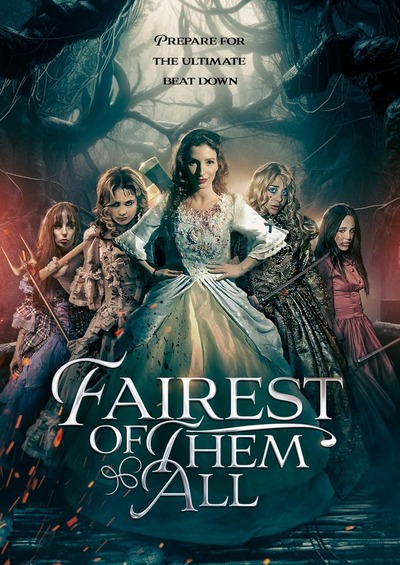
There’s a recent trend for horror films based on public domain characters. The most infamous is likely Winnie-the-Pooh: Blood and Honey, but traditional fairy tales have also been exploited to the same end. This is a sequel of sorts to the same studio’s Cinderella’s Curse (which I have not seen), but basically hurls every princess of legend into the mix. The excuse is Lewis Carroll’s Mad Hatter (Santer), who in this incarnation is a Joker-like psycho, who has kidnapped Alice (Desmond) and made her his slave, courtesy of his magic. He now wants a bride, and to this end abducts a selection of princesses and others e.g. Tinker Bell, as potential candidates. They will fight to the death. Last one alive becomes Mrs. Hatter.
Likely out of necessity, to differentiate the various princesses, the results play fast and loose with traditional folklore. For example, Belle from Beauty and the Beast, turns out to be a shape-shifter. Or there’s Snow White, who is driven by her cannibalistic impulses. It’s also notable that some of them are enthusiastically on-board with the Hatter’s plan. It therefore takes a while before any cohesion takes place between the kidnap victims, forming the necessary alliance to be able to fight back. This is quite an interesting concept, yet somehow still feels somewhat longer than its brief running-time of seventy-seven minutes. We are here to see regal catfights; instead, there’s rather too much sitting around and talking about things.
It also seems occasionally to veer into near-darkness, leaving it hard to tell exactly what’s happening. But I did like most of the characters, and a lot of the performances are enthusiastic enough to pass muster. Many of those involved seem to be actively “in on the joke”, being aware of the general ridiculous nature of the concept. Santer in particular sets the tone, and everyone else is at their best when they follow suit. The production values were surprisingly decent too, with an interesting, decrepit location, which seems to mirror the broken-down nature of Hatter’s sanity. It feels like there has been some effort put into the costumes, hair and make-up – again, reflecting the personalities of the princesses.
On the other hand, it’s clear none of the actresses have been chosen for their martial arts abilities, despite pronouncements from the director that, “This is a blood bath with epic fight sequences. Gore hounds are in for a treat.” It really is not, the fights are well short of epic, and I do not feel particularly treated either. I was hoping for a fairy-tale version of Raze. Instead, what I got was closer to after hours in the locker-room at Disneyland, following the consumption of one too many margaritas. Sure, it may be adequately entertaining to watch, but it’s probably not going to be the proudest moment of anyone involved. Better than most public-domain knockoffs though. I’m looking at you, The Mouse Trap…
Dir: Kunahan Thampi Star: Lewis Santer, Alina Desmond, Kelly Rian Sanson, Natasha Tosini
With its combination of alternate reality sci-fi and stylized action, this feels like it could have come from the mind of Mamoru Oshii, creator of things such as Avalon and Assault Girls. It’s not. Instead, it was created by toy manufacturer Bandai – like most of their shows, it works largely as a 25-minute long advertisement for product, in this case specifically model kits. But there are some interesting ideas to be found here, though they are somewhat let down by action that clearly has no interest in being realistic, and a tendency towards maudlin emotion. I was left wondering who, exactly, it was aimed at, because the sentimentality feels at odds with the young men who are likely the target consumers.
It takes place in a high school where the favoured hobby of Koharu Tachibana (Shiraishi) is making plastic models. After buying kits of a gun and a figure called Alice, and assembling them, she wakes to find herself an unwilling participant in ‘Girl Gun Fight’. Four teams of three young women, are pitted against each other in battle, overseen by each team’s commander – hers being Alice (Ohara). Between rounds she’s returned to school, along with the other participants, but naturally, nobody believes this story. There’s an awkward twist, in that if you lose all three of your lives in the game, that’s it. You do not get back to the real world, with all trace of you, including other people’s memories, being wiped out.
That’s a wonderfully dark concept, which we see realized as members of the team’s try, and fail, to protect their last life. But it also possesses almost industrial levels of perkiness, particularly reflected in idol-like pop video inserts, and bumpers of enthusiastic model-making. Tonally, it’s all over the place. I suspect that might be the point, in the same way I don’t know at whom it’s aimed. I’m inclined to go for male wish fulfillment, with Koharu being about as far as possible from the typical model-building nerd. On the other hand, it has a lot in common with the “magical schoolgirl” trope, often found in anime, and it’s driven largely by the power of friendship.
That’s especially true in the final two episodes, when Koharu, Alice and the survivors meet the wizard behind the curtain. It all gets a bit too sentimental for my tastes, with the protagonists falling over themselves in a rush to self-sacrifice. The other weakness is action that, in the main, is nothing special – it’s very stagey, in a way at which Power Rangers might look askance. More hard-hitting fights would have added nicely to the contrast with the cheesier elements. Still, I burned through the ten episodes in three sittings, and was entertained, though the emotional impact I felt fell short of what the show was aiming to generate. I also do not feel any strong urge to take up kit-building as a hobby.
Dir: Yûsuke Taki Star: Sei Shiraishi, Yuno Ohara, Anna Ishii, Natsuki Deguchi
This e-story (at 73 pages, it’s at the longish end of the “short” story continuum) by my Goodreads friend, new independent author Theodore B. Ayn, is one of several recently-published works to his credit, and so far the only one of them that I’ve read. (I’m hoping eventually to read the rest.) While I didn’t officially receive it as a review copy, I treated it as one (the author kindly extended a general offer of a free e-copy long enough to allow me to take advantage of it when I’d otherwise have missed out). When I started it, I’d intended to read only a short bit, and to return to it later; but I wound up finishing it in a single sitting. As that indicates, it was (at least for me) a page-turner, and a propulsively quick read.
Ayn has an obvious admiration and respect for women who are both strong and muscular physically and who have a matching moral and emotional strength (an attitude that I share); and based on the cover art and descriptions, this is exhibited in all of his works, not just this one. (Arguably, the description of this one provides information that would be better picked up by the readers as the narrative goes along, though it isn’t a “spoiler” as such.) Basically, this particular story, set in a small Midwestern town that’s never identified in any more detail than that, pits brawny waitress Jeannie against even brawnier ex-biker gang member Clyde (no last names given for either) in a physical confrontation brought on by his sexism, arrogance, and hot temper. That description, however, is deceptively simple. This is a character-driven story which isn’t simple at an emotional level, and also isn’t predictable. (It should also be stated at the outset that it’s not an “enemies to lovers” romance; there’s no romantic element in the tale at all, let alone between the two adversaries.) Both main characters are complex, and developed in surprising depth.
The prose style here is straightforward and direct. Overall, Ayn prefers straight narration over dialogue, though he provides realistic dialogue where it’s needed to reveal character and move the plot. Technically, it could be claimed that, especially in developing his two lead characters’ back stories, he uses a fair amount of telling rather than showing. But within the constraints of the short format and of the centralizing of the fight itself as the outward core of the story (though inward developments are taking place at the same time), there’s no real alternative to that technique, and it’s actually well-suited to the kind of effect the author successfully creates. This is descriptive fiction, with no speculative element. I’ve characterized it as general fiction, rather than as crime fiction or action-adventure, because the characters are ordinary civilians, neither career criminals nor law enforcement professionals; no guns are involved, the setting is mundane, and the situation is one that could easily occur in everyday life. We’re in a very different atmosphere and milieu than that of, say, a typical Modesty Blaise adventure.
A word is in order about the art work here. While this isn’t a graphic novel as such, it’s greatly enhanced by, altogether, no less than 30 illustrations (some full-page) of particular scenes, in the same style as the cover art. These serve the same purpose that traditional book illustration always has, that of enabling the reader to more vividly visualize the characters and events of the story (and serve it very effectively!), but as the author confirmed to me in a personal message, they’re AI-generated. Personally, I would argue that such a use of AI to supplement the author’s creative vision is legitimate; it brings to life scenes he wants to depict in the way he wants them depicted, but with a draftsmanship he wouldn’t actually be able to create by hand. (Though the ability to use AI to create it also requires an expertise of its own.)
Unless a reader is scandalized by the sight of bare female arms or legs, there’s nothing salacious about the art here, and nothing suggestive or sexual about the story’s content. Bad language is limited to a couple of d-words. While this isn’t “Christian fiction,” it is fiction written by an author who’s a Christian; but it’s not “preachy” in any sense. (The lead characters are secular, and their spiritual state is only referenced in a single sentence.) It is, though, fiction that focuses on a rough, no-rules street fight between a man and a woman, with an antagonist whose moral code doesn’t include any scruples about hitting a woman, and a female protagonist who doesn’t see her gender as disqualifying her from slugging or kicking a man if it’s necessary. The author also has the kind of moral vision which can view a physical fight as an instrument, rather than an antithesis, of moral order. This story wouldn’t be recommended for readers who would be repelled or triggered by that type of imagery, content, or messaging. However, I’m not numbered in that group; and for me the story proved to be ultimately wholesome, emotionally enriching, and rewarding.
Author: Theodore B. Ayn Publisher: Self-published, available through Amazon, currently only for Kindle. A version of this review previously appeared on Goodreads.
The appeal of K-Pop in the West baffles me. I mean, I have a fairly low tolerance for pop in general. So the appeal of a foreign version, born from a culture to which you have no connection… Yeah. Fortunately, you need no knowledge to be entertained by this Netflix animated movie. It’s also tongue in cheek enough to work for non-fans, poking self-deprecating fun at the obsessive nature of K-Pop fandom. The title alone is so direct as to indicate the attitude. It’s accurate though. Pop trio Huntr/x are also demon hunters. They are the latest generation, tasked with keeping the forces of darkness and their ruler Gwi-Ma, out of our world through a barrier called the Honmoon.
Gwi-ma’s latest plan to dismantle the Honmoon involves creating an idol group of his own, the demonic Saja Boys. Their sudden popularity represents a growing threat to Huntr/x, who need to best them in the annual Idol Awards to stop the Honmoon from collapse. Things are complicated by the part-demon nature of Huntr/x lead singer Rumi (Cho), which she has kept secret from fellow members Mira (Hong) and Zoey (Yoo). They believe all demons are inherently evil, making her status a tad awkward. On the other side, Rumi gets to know Jinu, a member of the Saja Boys, who is wracked by guilt over his demonic nature. Naturally, it all ends in a potentially apocalyptic performance by the Saja Boys.
I was surprised it was Chris who actually asked to watch this: she’s not a K-Pop stan either. This did turn out to be better than expected. Admittedly, said expectations were low. But it’s nicely animated, and the previously mentioned willingness not to take itself seriously goes a long way. For example, when the heroines’ efforts to go down a slide are stymied by their battle catsuits, one remarks sardonically, @@@@. Or there’s the member of Saja Boys whose fringe is so long, it covers most of his face. It’s quite dry humour, something I like. Even the songs are… tolerable, in a Eurovision Song Contest kind of way (an event for which I have a soft spot).
Of course, the way it unfolds is never less than predictable, with the power of friendship and heroic sacrifice, being the order of the day. It’s also relentlessly PG-rated, meaning that no matter how many demons are slain – and there are a lot – do not expect to see so much as a single drop of blood. These elements were in line with what I expected, and I would certainly not mind a live-action version aimed at a more grown-up audience. However, was I not adequately entertained? Yes – yes, I was. It’s a frothy concoction, that gives a glimpse into a world beyond the one I know. In fact, two worlds: both the demonic realm and the K-Pop one. Your choice as to which is weirder.
Dir: Maggie Kang and Chris Appelhans Star (voice): Arden Cho, Ahn Hyo-seop, May Hong, Ji-young Yoo
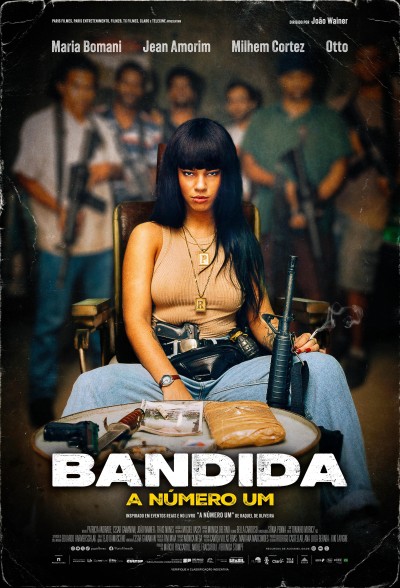
Interestingly, this is based on a somewhat true story, written by Raquel Santos de Oliveira. She comes from Rocinha, one of the most notorious slums in Rio, where she grew up on the streets. “By 11, I was already carrying a .38 revolver,” she says. In the mid-eighties, she was the girlfriend of Ednaldo de Souza, the man in charge of crime in Rocinha, and took over after he was killed in a gun-battle with police. She exited the gang a few years later, and was able to straighten our her life, quit using cocaine, and wrote a book, Number One, at the suggestion of her therapist. While fictional, it’s clear it draws a great deal from Rsquel’s own experiences.
It begins with the childhood of Rebeca (Bomani), which includes being sold off into prostitution at an early age. She’s able to dodge that, by instead working for local boss Amoroso (Cortaz), until the boss gets assassinated on the order of rival Del Rey (Otto), who thene takes over. Rebeca is able to switch sides, and falls in love for another member of the gang, Pará (Amorim). Naturally, any happiness they find together is short-lived and when she loses him as well, Rebecia decides to take revenge, even though her target is operating in cahoots with corrupt members of the police force. The story unfolds in flashback, Rebeca making a tape as her building is under attack, believing her story is all that will be left of her.
This makes an interesting contrast to non-GWG film, Elite Squad, which takes place in a similar setting, only told from the point of view of an honest police officer. [It’s highly recommended, by the way] Outlaw doesn’t run more more then eighty minutes, and so there’s isn’t a lot of slack. Indeed, I suspect it might have been better told over a longer period, since there are points where it feels like it is galloping through its story, mixing historical footage with modern content, aged to look like it’s the eighties. It is quite effective on a high level, but in the second half especially, I didn’t feel as if my attention was being solidly held, due to a narrative which seemed to lack flow.
It does seem like Wainer was heavily inspired by the gangster works of Martin Scorsese, such as A Bronx Tale. Okay, that one was directed by Robert De Niro, but he was clearly Scorsese influenced as well. It’s very down-to-earth, rather than glamourous, and doesn’t stint on the violence which goes along with the criminal territory. The strong sense of place you get might be the best element of the film, since Bomani only occasionally succeeds in inhabiting the skin of her character. If this had been the pilot for a TV series, such as one of my telenovelas like Dueños del paraíso, I would likely be interested in watching it. As a complete story, it’s fine but leaves little impact.
Dir: João Wainer Star: Maria Bomani, Jean Amorim, Milhem Cortaz, Otto
a.k.a. Bandida



 Coincidentally, I watched this the night after Sinners, another period piece which looks at the place of a specific culture in society. There, it was music in predominantly black society of the thirties; here, it’s professional wrestling in the overwhelmingly white society of the fifties [the presence of in this WWE champion Naomi as Ethel Johnson, feels very much a token gesture]. Definitely fewer vampires in this, however. It’s the story of Mildred Burke (Rickards), who went from working as a waitress in a diner, though wrestling at carnivals, to become one of the biggest draws in the ring of her time. The end of the film calls her the first woman to become a millionaire through sports.
  ★★★★
★★★★ Murder by the Lake is a TV crime series co-producted between the second public German TV channel ZDF and the public TV channel of Austria ORF. It started in 2014 with a 90-minute long TV movie, followed by a further movie each year until 2017, when the yearly output was doubled. Since 2024, there have been three movies each year. So far, 22 episodes have come out, with #23 scheduled for later this year. The German title Die Toten vom Bodensee translates as “The Dead of Lake Constance” – “Bodensee” is literally “Ground Sea”, but is called Lake Constance in English. When I saw the first movie I was struck by its surprising quality. If you have read my reviews here, you know I usually don’t think much of the quality of German film productions. This is different: not only is it a show that I always watched, but one where I bought the DVDs.
  But most interesting is her behavior. When she first appears, she is strictly business. She says hardly a word otherwise, with no interest in getting to know the wife and daughter of her new colleague. She lets no one in emotionally, and shows an aversion to personal connection. Her behavior feels awkward, even upsetting, until you get used to it. Some watchers complained she mumbled her lines, but then, most characters here speak with an Austrian accent which can be a bit difficult to understand for Germans. It might also have something to do with the idea of a character who only slowly reveals her secrets to the audience. Because what I realized after a while, was that Hannah Zeiler is actually a more clinical, streamlined and slightly tamer Austrian version of Lisbeth Salander. Or at least her distant relative.
 I’m not sure whether this is too long or too short for its own good. Could be a little bit of both. As the tag-line for this review suggests, it bears more than a superficial resemblance to
  Turns out that Marvel and DC are not the only ones creating “cinematic universes” based on comic book. Another example can be found, perhaps surprisingly, in Indonesia. This film is part of the Bumilangit Cinematic Universe, and is a follow-up to 2019’s Gundala. I haven’t seen that, but I’m 99% sure that the scene in the end-credits is a direct cross-over to that, featuring its hero, given the apparent prediction late on of a team up to come between him and Sri Asih. Otherwise, though, this stands on its own, and you don’t need to have seen Gundala, or be familiar with the comic-book series about Sri Asih, created by R.A. Kosasih, and first published all the way back in 1954.
 And if the above phrase doesn’t make any sense – it’s basically an underwhelming outcome during a baseball game – then you are probably not the target audience for this sporting drama. After almost a quarter-century living in America (much of it spent running a site about the local team as a sideline!), I’m fairly well-versed in baseball’s intricacies. But in contrast to some of the other Korean movies in this genre, such as
  There’s a recent trend for horror films based on public domain characters. The most infamous is likely Winnie-the-Pooh: Blood and Honey, but traditional fairy tales have also been exploited to the same end. This is a sequel of sorts to the same studio’s Cinderella’s Curse (which I have not seen), but basically hurls every princess of legend into the mix. The excuse is Lewis Carroll’s Mad Hatter (Santer), who in this incarnation is a Joker-like psycho, who has kidnapped Alice (Desmond) and made her his slave, courtesy of his magic. He now wants a bride, and to this end abducts a selection of princesses and others e.g. Tinker Bell, as potential candidates. They will fight to the death. Last one alive becomes Mrs. Hatter.
 With its combination of alternate reality sci-fi and stylized action, this feels like it could have come from the mind of Mamoru Oshii, creator of things such as
  The prose style here is straightforward and direct. Overall, Ayn prefers straight narration over dialogue, though he provides realistic dialogue where it’s needed to reveal character and move the plot. Technically, it could be claimed that, especially in developing his two lead characters’ back stories, he uses a fair amount of telling rather than showing. But within the constraints of the short format and of the centralizing of the fight itself as the outward core of the story (though inward developments are taking place at the same time), there’s no real alternative to that technique, and it’s actually well-suited to the kind of effect the author successfully creates. This is descriptive fiction, with no speculative element. I’ve characterized it as general fiction, rather than as crime fiction or action-adventure, because the characters are ordinary civilians, neither career criminals nor law enforcement professionals; no guns are involved, the setting is mundane, and the situation is one that could easily occur in everyday life. We’re in a very different atmosphere and milieu than that of, say, a typical Modesty Blaise adventure.
 The appeal of K-Pop in the West baffles me. I mean, I have a fairly low tolerance for pop in general. So the appeal of a foreign version, born from a culture to which you have no connection… Yeah. Fortunately, you need no knowledge to be entertained by this Netflix animated movie. It’s also tongue in cheek enough to work for non-fans, poking self-deprecating fun at the obsessive nature of K-Pop fandom. The title alone is so direct as to indicate the attitude. It’s accurate though. Pop trio Huntr/x are also demon hunters. They are the latest generation, tasked with keeping the forces of darkness and their ruler Gwi-Ma, out of our world through a barrier called the Honmoon.
 Interestingly, this is based on a somewhat true story, written by Raquel Santos de Oliveira. She comes from Rocinha, one of the most notorious slums in Rio, where she grew up on the streets. “By 11, I was already carrying a .38 revolver,”