
★★
“Too little, too late.”
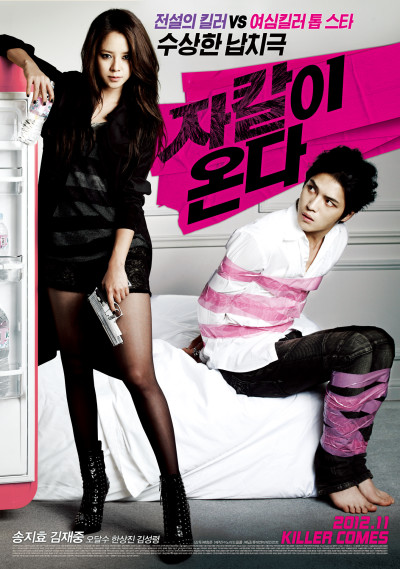 For years, an assassin known as “Jackal”, has eluded all efforts at capture, taking out targets before vanishing without trace. However, it seems that retirement is close, when a note is found, apparently left by the killer. This indicates that they are tired of the chase, and will be in a town’s low-rent hotel, waiting for the police. The cop (Han) who has been hunting Jackal is, understandably, wary and suspects a trick, but sets up a stakeout in the hotel to see what unfolds. However, already in one of the rooms there is K-Pop superstar Choi Hyun (Kim)., who had been hoping to hide out for a bit of peace and quite, only to be kidnapped by a rookie killer (Song), hired by his jilted lover. She’s apparently not very good at her job, especially after Choi convinces her he isn’t actually the star, but a celebrity lookalike. Meanwhile, a local cop (Oh) has been drafted in to help with the stakeout, and the hotel staff are proving rather less than helpful, treating the stakeout as a bonus cash-cow to be milked, rather than a chance to help the authorities.
For much of its running time, there is a great deal of sitting in hotel rooms, alternating with scenes of creeping about around corridors. The overall feel is more like a Korean take on British farce, and I sense a good deal of cultural stuff may fly over Western viewers’ heads – for instance, Kim actually is a K-Pop superstar, so issues like obsessed fans and record company executives with ulterior motives probably have particular resonance. It’s just too static to work, concentrating for spells on the burgeoning relationship between novice killer and her victim, then drifting off to the cops and their surveillance operation. What should be the key question – who is the Jackal, and what is their plan? – seems to be all but forgotten until the very end of the film. This is a shame, because this is both interesting and well-considered. Unfortunately, the overall impact is largely to make you wish it had shown up about an hour earlier, with the film developing forward from there with similar energy.
The performances aren’t bad, and there are occasional moments that are genuinely funny. For instance, the police disguise themselves as hotel cleaners so they can check rooms, only for the real employee to insist they actually do the cleaning. But these are only sporadic at best, and the script is generally so weak, in terms both of setting up the central storyline and executing it, that the final 10 minutes aren’t enough to salvage proceedings. You get the sense that a prequel, or a sequel, covering the Jackal’s exploits before or after this particular incident, would have been more interesting.
Dir: Bae Hyeong Jun
Star: Song Ji Hyo, Kim Jaejoong, Han Sang Jin, Oh Dal-su
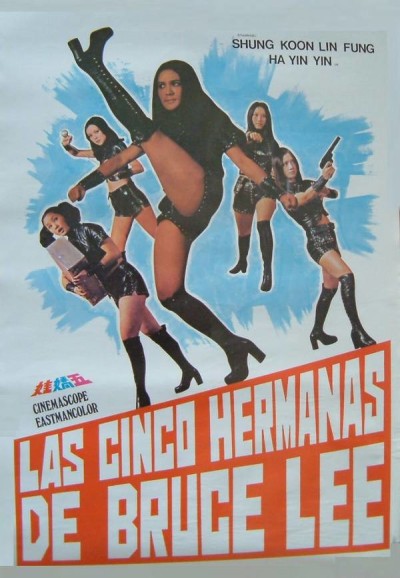 Four years after Bruce Lee’s death, and film-makers were still trying to fool moviegoers into believing their product had some connection to kung-fu’s first global star. Not sure where the deception occurred, as the print here simply overlays the new title over the (still-legible) Hong Kong one,
  It’s 1993, and the peace process in Northern Ireland is cautiously inching forward – though there are some who prefer a more robust method of rebellion, shall we say. Among them is Collette McVeigh (Riseborough) whose little brother was killed by the British Army when she was 12. Along with her brothers Gerry (Gillen, whom you’ll know as Littlefinger from Game of Thrones) and Connor, she is part of the armed struggle, until a mission to plant a bomb in London leads to her capture. MI5 officer Mac (Owen) gives her a stark choice: face a long stretch in prison, separated from her children, or become an informer on her own family. Collette chooses the later, perhaps influenced by Mac showing her it was an IRA sniper who killed her brother. But it soon becomes clear more is at play, with Mac’s boss (Anderson) apparently intent on sacrificing Collette, in order to protect another, more valuable asset.
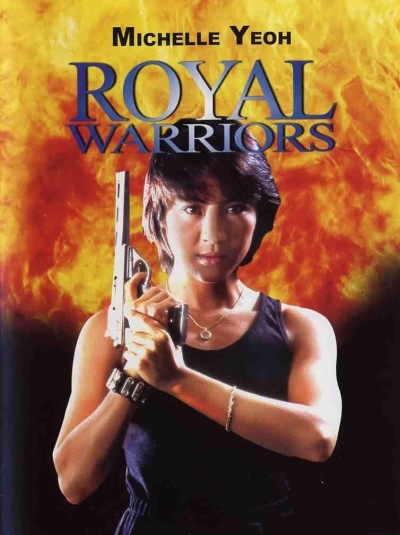 It’s really the finale which makes this stand out – not necessarily for its qualities (though it’s far from bad), more for the batshit insanity. It sees ex-cop Michelle Yip (Yeoh) storm a construction site in an armoured car, to rescue the coffin containing the body of a colleague, which has been suspended from a crane by the bad guy. How the hell did we get here? Good question. It all starts on a plane back from Japan, where among the passengers are Yip, Interpol agent Peter Yamamoto (Sanada, recently seen creating doomsday diseases in Helix) and security guard Michael Wong (Wong – a lot of thought clearly went into that character). On the flight, there’s a hijack, in an attempt to free a killer being extradited to Hong Kong; our heroic trio foil it, killing the hijackers. But that just brings down the wrath of the rest of the gang, who vow to take their revenge on the people who killed their colleagues. And they really don’t care who gets in their way, as a mass gun-battle at a night-club shows – it also gets Yip taken off the case.
 I’m on the fence with regard to the Japanese uber-gore films, most notably, by the Sushi Typhoon studio, which have achieved renown (or infamy) of late. While some (
 This is definitely a case where less would have been more, and with a more enthusiastic hand on the editor’s knife, this could have become a decent eighty-minute feature – and possibly an even better 50-minute one. Kamikura does often demonstrate an awareness and acceptance of exactly how ludicrous the entire scenario is, and the film is at its best when wholeheartedly embracing its own insanity. For instance, each of the cyborg athletes’ talents is influenced by their sport: Hitomi Oka is a tennis-player, so whacks people with an over-sized, pneumatic racket, and lobs exploding tennis-balls at them. Additional helpings of that kind of imaginative lunacy – and considerably less tied-up schoolgirls being prodded or whipped – would certainly have made for a more entertaining end product.
 ★★★★
★★★★ Crackle is the streaming content subsidiary of Sony – it has been around for a while, but we only became aware of it last December, when a new widget popped up on our Apple TV. Think of it as a little like an advert-supported version of Netflix; you can watch for free, whenever you want, but you have to “pay” by sitting through commercials (during which the FF option on your remote is disabled. Bastards!). The library of movies and shows offered is based around that studio’s library, and has a number of entries for action heroine fans. Bonus points, not just for having Run Lola Run, but in the subtitled version; they also have Ultraviolet: Code 044, the anime spin-off from Milla Jovovich’s action-horror film, though that is only available dubbed. We’ll get to that later, I imagine, but the first thing to leap out at us was this original series, about a pair of female assassins. It’s certainly not to be confused with the Samuel L. Jackson movie or Benjamin Brett show.
 There are six episodes, but they’re barely 20 minutes each, discounting adverts, and by the time you remove the credits, and “previously/next time on Cleaners” sections, it’s basically a single feature. Maybe I’ll get round to editing it together in exactly that fashion. There’s a hint of Tarantino in the fast-paced dialogue, as the characters snark back and forth at each other – my favourite line was Roxie’s response, after Veronica had expounded on some topic: “Jesus! What did you have for breakfast? Wikipedia?” Leyden throws on large helpings of style, which is something of an acquired taste: in the first episode, it seemed more of a chore than a pleasure, but as the show wore on, he either restrained himself better or we grew used to it.
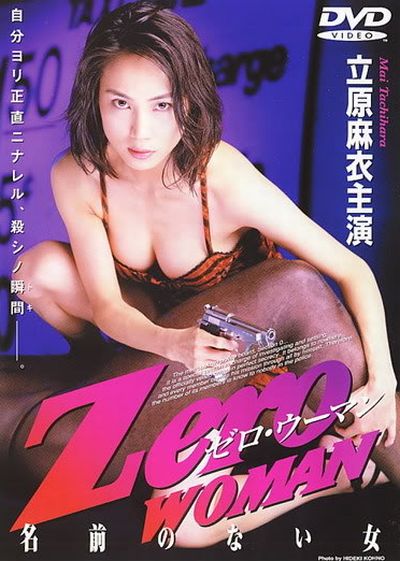 After the genuinely impressive bleakness of Assassin Lovers, the series comes crashing back to earth with a splat like a rotten tomato for this entry, which fizzles out early on, and then manages to lumber on for another 45 minutes. Rei (Tachihara) spends her time between missions hanging out at a gay bar, and rescues one of the rent boys, Mitsusu (Kitagawa), who ply their trade there after a vicious assault – accompanied, it has to be said, by the least appropriate music in the history of cinematic homosexual rape. He ends up moving in with her, to the latest in a series of unfurnished apartments provided by Section Zero, and the two damaged individuals start creating a life, of sorts, for themselves. However, there’s a serial killer, apparently with a deep hatred of men, operating in the area, and Rei is given the mission of tracking down and eliminating the psycho.
 ★½
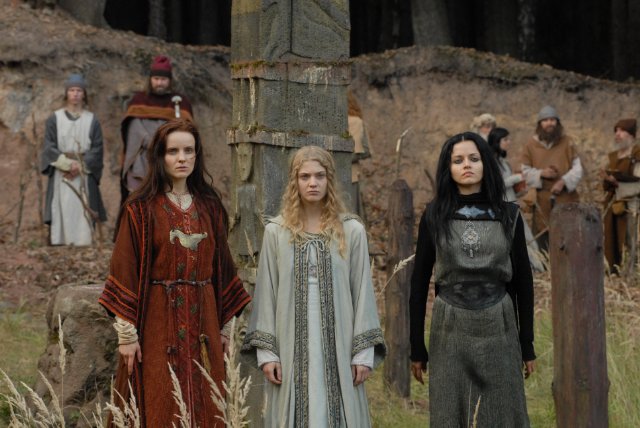
★½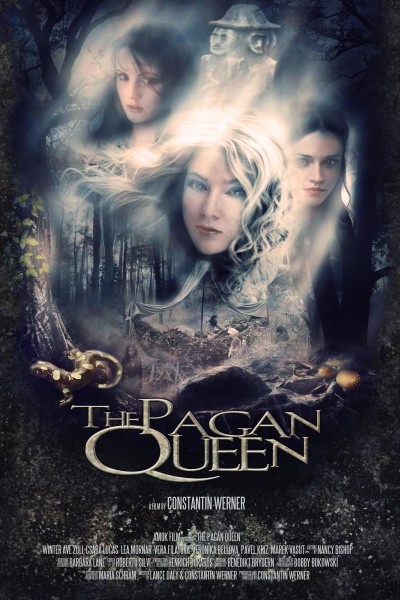 It really is nowhere near as good as this sounds, and the synopsis above is significantly more coherent. I swear, I didn’t fall asleep – but it felt like I did, the story lurching from scene to scene in a disjointed manner that rapidly drained all interest. Outside of the heroine, there was hardly any significant effort at giving the characters motivation or depth, and matters weren’t helped by the fact the entire nation seemed to consist of about 25 people. The scenery is nice, and the soundtrack has a full, orchestral feel which seems to have escaped from a higher-budget movie, but it doesn’t work as a historical piece or as a political one – and, certainly, not as an action film. However, I was amused by what I suspect is likely a realistic, if ruthless, depiction of what would probably happen when a warrior maiden comes up against her male counterpart.
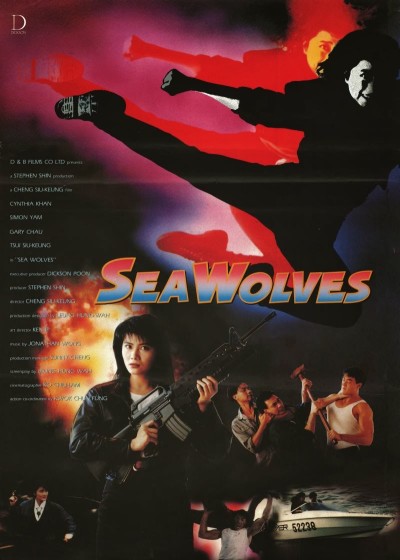 As with the preceding entry, there’s a smattering of social commentary; here, the topic is Vietnamese boat people, who reached Hong Kong in droves during the late eighties. The bad guys are a group of pirates, led by Keung (Chu), who prey on the boats, stripping the refugees of valuables before killing them. On one raid, member of the crew John (Yam) recognizes friend Gary (Chow): while he manages to hide Gary, and stop him from being killed, the stowaway suffers cinematically-convenient amnesia, until the boat docks in Hong Kong.