




★★
“Maybe it makes more sense if you’ve played the video-game?”
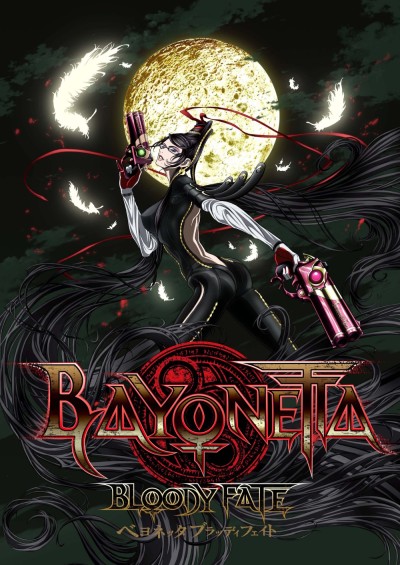 I might have enjoyed this more, if I hadn’t recently sat through 25 episodes of basically the same plot, in Blood+. Generic anime storyline, #7: supernatural entity, trying to bring about the end of the world because… That’s what they do? In this case, there are sages and witches, who balance good and evil. 500 years ago, however, one from each side united, and the offspring was Bayonetta (Tanaka). She is now taking out angels, but there’s also a religious cult preparing for the rebirth of their saviour, a journalist who blames Bayonetta for the death of his father, and a mysterious, very whiny little girl, who keeps calling her “Mommy”. Who that turns out to be will surprise no one.
I had to piece together the above, and it’s kinda vague in some areas, I suspect largely because there’s an unspoken assumption that, if you’re watching this feature, you’ve played the video-game on which it is based. Now, that’s probably not an unfair assessment for the majority of viewers. However, any casual spectator (and I certainly fall into that category) is likely to be somewhere between confused and bored by the approach, which seems to gloss over stuff that warrants more exposition, and explains in details things that shouldn’t need it. For instance, at one point, Bayonetta is on a train, and is attacked by another woman, leading to a spectacular battle in, on and around the carriages. The attacker then vanishes from the movie for a long period, without explanation. Game players, I suspect, will know the who and why, far better than I did; to me, it just felt disjointed and badly constructed.
Which is a shame. I used the word “spectacular” in the previous paragraph, and there’s no questioning that aspect of proceedings. The look here is very stylized and elegant, especially during the numerous fight sequences, both imaginative and well-animated. in a way that reminded me, in some aspects, of the early Aeon Flux animated shorts. It’s just a pity this obvious effort wasn’t expended on a feature which provides little more than fan service, both in the storyline and a rather leering approach to its lead character, that is significantly less mature than the subject matter deserves. While I understand and accept Bayonetta herself is, to a certain extent, intended to be a parody of this kind of OTT character, the movie is probably only recommended if you’re looking for an animated superheroine who resembles Tina Fey impersonating Sarah Palin. I get the feeling that is likely to be just a little bit too much of a niche market.
Dir: Fuminori Kizaki
Star (voice): Atsuko Tanaka, Norio Wakamoto, Tesshō Genda, Mie Sonozaki
 What? Gina Carano in another action flick? Why was I not informed of this? After all, Haywire was an undeniably impressive entry in the genre, featuring some of the crunchiest mayhem seen in a while. Throw in that this was directed by Stockwell, who directed the hidden gem, Cat Run, and my interest was thoroughly piqued. Sadly, this isn’t up to the level of either, though certainly has its moments. Carano plays Ava Grant, an ex-junkie who met her other half, Derek (Gigandet) at a Narcotics Anonymous meeting, but whose murky past is clearly far beyond that of her husband. Ava’s father brought her up tough, and able to protect herself, basing her life on mantras such as, “Survivors have scars. Losers have funerals.” We see, in flashback, that she was an apt student.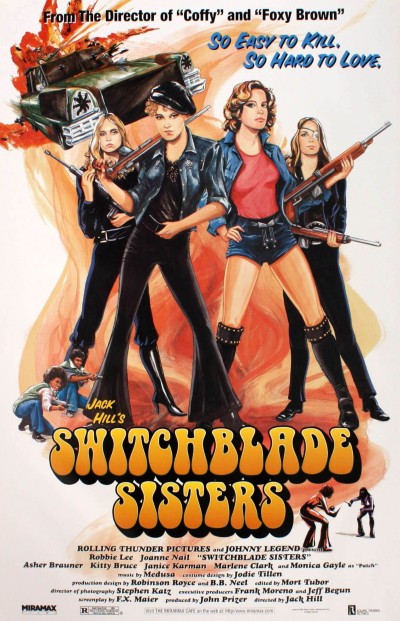
 The briskly-moving piece of seventies trash is much beloved by Quentin Tarantino, and I have to agree with him about its merits. While some elements haven’t stood the test of time well, in other ways, it’s well ahead of its era, and there is, literally, never a dull moment here. Initially, the teenage girl gang are the Dagger Debs, a somewhat subservient bunch to their male counterparts, the Silver Daggers, and their leader, Dominic (Brauner). He’s paired up with the Debs’ #1, Lace (Lee), but has eyes for new girl Maggie (Nail), who is soon impressing Lace with her street smarts and toughness.
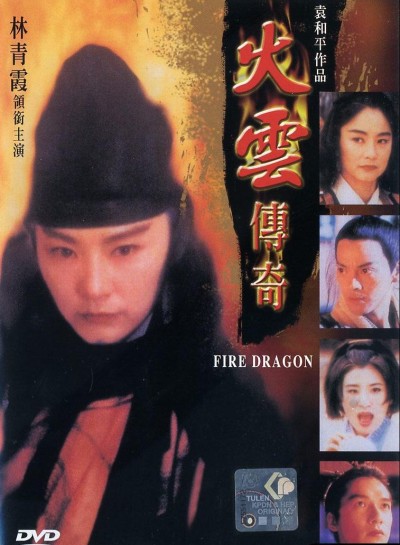 Prince Six (Tan) is plotting rebellion against the legitimate government, but Ming (Chu) has obtained a piece of compromising evidence from a dying Imperial guard. Before he can deliver it, the seal proving his identity is lifted by Tang Lyn-Yu (Ng), who runs a circus troupe, but has set her amorous eyes on Mind. He returns to the troupe, to try and locate the seal, but also there, undercover, is Fire Devil (Lin), who has been tasked by Six with locating and destroying the evidence of his treachery. However, after her involvement in a battle which leaves a young child orphaned, along with her beginning to fall for Ming, she begins to question whether she is on the right side of the fight. It doesn’t count as much of a spoiler to say that it ends with Fire Devil taking on Six, in a finale which involves so many things blowing up, you’d be forgiven for thinking the title of the film was as given at the top.
 There’s something almost theatrical about this, because virtually the entire film takes place in a single location, the downscale home of Lorna (Gershon), who has just knocked her husband Dale (Kilmer) out with a frying-pan, after discovering he was apparently involved in a bank robbery which netted $100,000. She has now called over her best friend, local barmaid Tiny (Giddish), to try and decide what to do next, with the first step being to find the loot, which Lorna is convinced Dale has hidden somewhere in their home. However, the local sheriff (Liotta) is also sniffing around, being fully aware of Dale’s fondness for armed robbery in his younger days. It’s not long before the dead bodies are piling up, requiring alternative uses to be found for the turkey carver and industrial-strength blender. And that’s just the start of the unpleasantness.
 Boo (Chow) owns a failing boxing gym, and largely survives only by catering to masochistic geeks, with fantasies of being beaten up by Lara Croft, etc. To try and recoup customers driven away by her abrasive style, she hires the bubbly Miu (Lo), as a replacement for childhood friend TT (Yu), with whom she broke up after a spat over a man. Just as Miu brokers a reconciliation, the trio get an unexpected job offer, to work in Indonesia as bodyguards for the mysterious Lady Zhuge (Tong). Except, they eventually discover, this was just a lure to bring them in as fresh meat for her all-female fight club, where they must battle to the death.
 ★★★
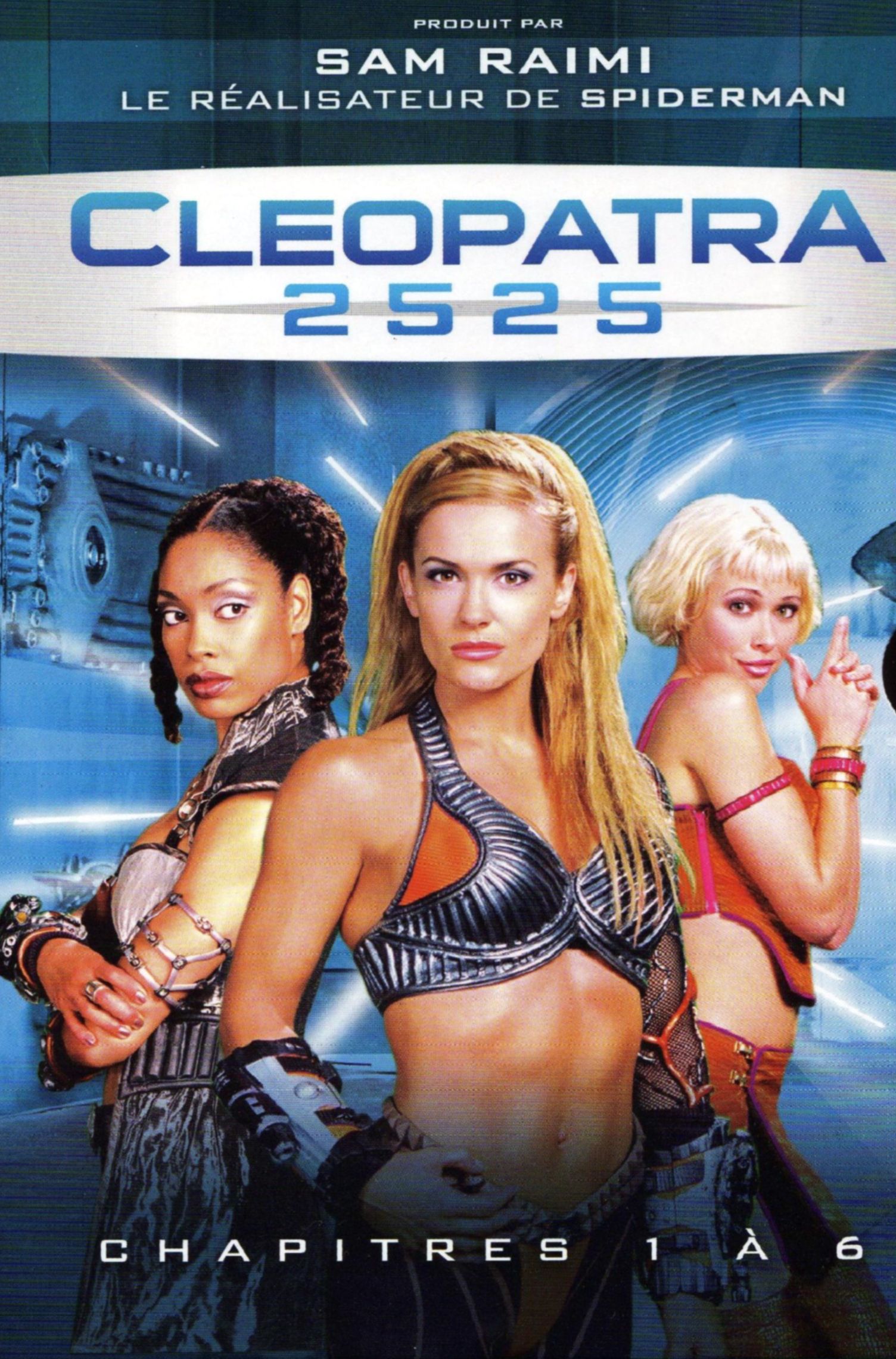
★★★ All three, however, were clearly selected as much for their visual appeal, and the 25th century is not short of beautiful people – it’s also quite warm, going by the ah, flimsy clothing worn by the trio. Cleo and her former profession fit right in. But taking any of this seriously would largely be doing the show a disservice, because it’s clear it doesn’t take itself seriously. There isn’t really time for that kind of thing, with each episode barely 20 minutes, excluding opening (theme song sung by Torres, a funked-up and lyrically altered version of Zager and Evans’ one-hit wonder, In the Year 2525) and closing credits. There isn’t much time for anything, in fact: both characterization and plotting remain about as scanty as the outfits. Hel is thoughtful but can be distant; Sarge likes shooting things first and asking questions later; Cleo, to be honest, is mostly irritating, coming over as both whiny and rather vacuous.






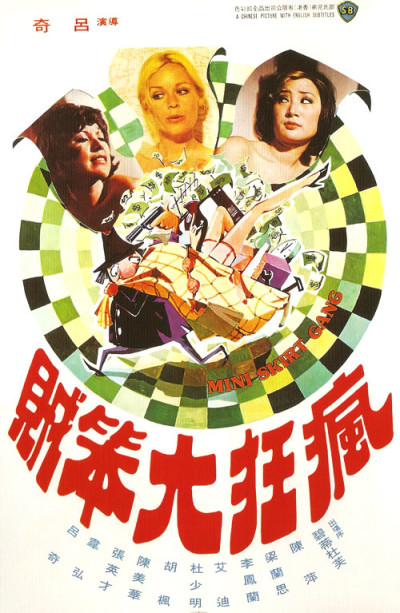 Dear god, this is awful. The only reason this 1974 film manages the dizzy heights of 1 1/2 stars, is the finale, which is actually a pretty decent burst of comedy action, highlighted by the heroine receiving inspiration from a poster advertising a Peking Opera production of the Mulan legend. Up until then, it’s a rancid piece of film-making, wasting the talents of those involved. Well, the actresses anyway, since Lui Kei provides no evidence, in either his direction or script, that there was any talent present to begin with.
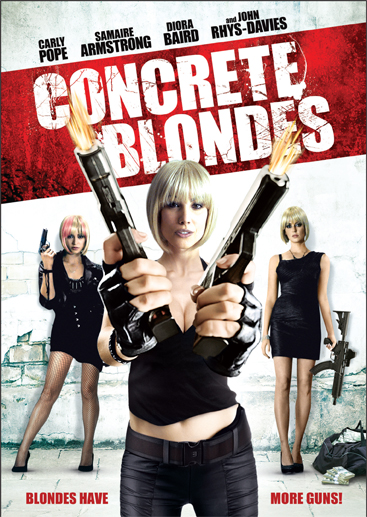 This is the story of three young women, sharing a house. There’s Kris (Pope), the sensible and apparently staid one, who works as a tax accountant; her flighty girlfriend Tara (Armstrong); and roommate Sammi (Baird). Tara and Sammi stumble into the aftermath of an apparent gangland shootout, exiting with a bag containing over $3 million in cash. The trio have very different ideas about what to do next, but Kris convinces them the best bet immediately, is to stash the bag in a lock-up, secured by three separate padlocks, with each holding one key, until they figure out if anyone is coming after the money. However, Sammi’s inability to keep her mouth shut proves disastrous, as her boyfriend is $50,000 in debt to local mob boss Kostas Jakobatos (Rhys-Davies), and sees an opportunity to clear the balance, and a lot more. Neither of the men have reckoned with Kris who, it turns out, is much more prepared for the situation than her two house-mates.
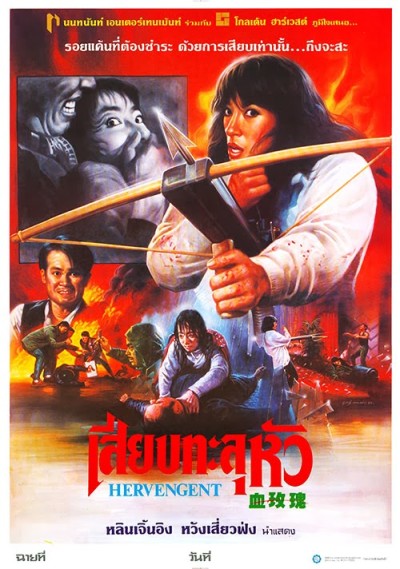 Director Lam is responsible for insane cult classic, The Story of Ricky, and if this is more restrained, it’s only by comparison. Casino manager Chieh Ying (Wong) is gang-raped by five sleazebags – and, wouldn’t you know it, they’re the same guys who killed her father. Worse is to come, as a trip to the doctor reveals a rather nasty case of venereal disease, and after some melancholic wandering around which occupies the rest of the first half (and, to be frank, is rather boring), our heroine gets tore into the villains, extracting the titular payback. Though you know the old saying, “She who seeks vengeance, must first dig two graves”? That’s a severe understatement here, because this roaring rampage will end needing an entire cemetery, costing Chieh Ying almost everybody she cares about, from her uncle, a wheelchair bound kung-fu wizard (Lam, best known for the Mr. Vampire series), to her wannabe boyfriend (Wong).