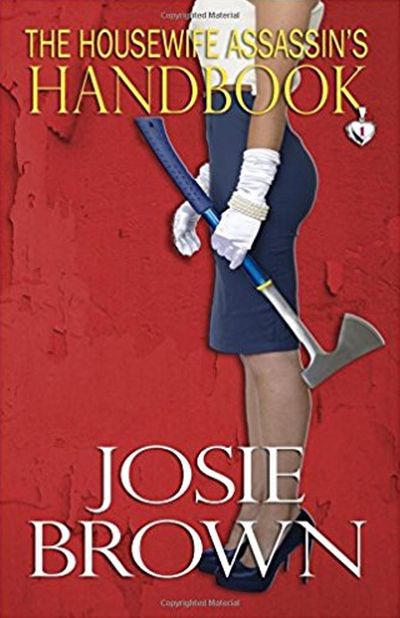
 My preferred format for reading is paper; and that’s the only format I support financially, since the only language Big Publishing understands is dollars and cents. Even for a reader like myself, though, e-books have their uses. Writers can offer particular books for free in that format, and that makes it possible to read them first in order to check the quality before you buy the paper edition. And sometimes that opportunity saves you money that would have been wasted if you’d taken a chance on the paper book to begin with! For me, this series opener (which Brown makes available free in e-book format on a permanent basis) was one of those books I was thankful I didn’t have to spend money on, which I’d have regretted.
The novel’s premise is intriguing enough, and the harrowing first chapter grabbed my attention effectively. We’re plunged into the action right away, with present-day events narrated by protagonist Donna in present tense. At the first opportunity, she drops back into a flashback (in past tense) that gives us an introduction to her childhood and family background –and yes, that’s relevant!– how she met her husband, their few years together, and her discovery, after he was identified as the dead victim of a car wreck on the night she gave birth to their third child, that he had a BIG secret: the corporation he worked for was a front that contracted to do wet work for the CIA, and he was an assassin, most recently assigned to help bring down the Quorum, a shadowy organization of ex-government assassins who’ve gone rogue and are out for profit. (They planted the bomb in his car.) We also learn how, needing to support her kids and wanting to better protect them (long story!), and wanting vengeance on the kinds of scumbags who made her a widow, she subsequently agreed to go to work for Carl’s employer, in his old job. (That’s not as big a stretch as it would be for some women –she learned to shoot as a kid, is naturally talented for and very good at it, and met Carl at a firing range.)
While I was reading the first few chapters, I expected this to be a four-star read. The body of the novel itself (we’ll talk about the italicized chapter beginnings below!) actually is more serious in tone than comedic, although it does have some deadpan humor that arises from the incongruities of Donna’s job responsibilities vs. her domestic ones. Her reflections about the ethics of what she does aren’t approached flippantly, and she’s a well-drawn character who earned my sympathy and respect –a very tough woman, morally and physically, but essentially a good and decent person and a caring mom (who intends to survive and be there for her kids). Brown creates a situation that’s fraught with moral and emotional complexity and shades of gray to start with, and then ups the emotional ante exponentially with a new development –followed by some more really compelling twists and turns, the first one of which I didn’t see coming. (I did suspect the second one.) None of the other characters are developed as fully as Donna, but they’re believable, and the author does conjure a sense of place with the southern California setting (in Orange County). And I liked the depiction of family life, and Donna’s relationship with her kids.
In fairness, I also need to defend Donna against the complaint of one reviewer, who regards her as a moral pariah because she lies to her kids, at a very serious level. Well, yes, she does (although she doesn’t like that situation). But as a reality check, these kids are 12, 10 and 5 years old, with big mouths, limited impulse control, and a child’s immaturity and deficient understanding of danger and the complexities of real-world situations. Even if the lies involved are extreme, telling them the truth in a life-and-death situation, where things they do and say could have disastrous consequences, is not a course I’d advocate.
 The principal problem I had here was that the plotting is simply not well thought out, and not convincing. One could argue that the essential premise is far-fetched; but I was okay with suspending disbelief that far. (Whether or not black ops organizations would hire a single mom with kids is a matter of speculation, since real life organizations like this don’t publicize their personnel policies. :-) ) But even within the premise Brown creates, much of her plotting simply doesn’t stand examination. Some of the major actions by the villain(s) are at cross-purposes with some of their other major actions; several events that take place here would involve the police in the story, at a level that couldn’t be ignored, but there’s no indication of that here; Donna’s reasoning for one major decision is weak and unconvincing; and Acme (the company she works for) would be much more actively involved in the decision-making at the end, not passive as it is here. Also, characters could not realistically suddenly just shrug off previously incapacitating wounds (which happens here twice), and there are other significant logical slips that took me out of the story. The author writes prolifically, but she apparently wrote this novel too quickly to take her craftsmanship in plotting seriously, or to put any real thought behind it. (That’s a real shame.)
Finally, a word is in order about the titular “Handbook” aspect. As a gimmick here (and as nearly as I can tell, in the other 15 books of the series as well, though I haven’t read them) Brown prefaces each chapter with short, italicized snippets giving supposed household hints that blend home economics with mayhem. These are unrelated to the story-line (though some may have a passing thematic connection to something in the chapter), don’t advance it in any way, and don’t reflect any things that Donna might actually do. Instead, they’re intended to be humorous (often depending for their humor on exaggerations that are completely over the top). Some readers like these (one reviewer found them to be her favorite aspect of the book!); so as the saying goes, “Your mileage may vary.” Personally, though, their humor generally fell flat for me; it typically strains too hard, and comes across as weak (or nonexistent) and forced. I found them an irritating nuisance that the book would have been better off without. Good fiction doesn’t need gimmicks to appeal; and if the author had given us a tight, plausible, well-constructed plot, this novel wouldn’t have needed any gimmick either.
Ultimately, I gave this two stars rather than one, in consideration of its positive elements; and I did finish it (I had to see how it ended!). But I don’t plan to continue reading the series.
Note: The book includes several episodes of explicit sex –including one that’s very abusive and disgusting, although there’s a defensible literary reason for describing it– and other sexual situations (in the opening scene, Donna’s posing as a prostitute). There’s also some bad language, including the f-word (though in Donna’s vocabulary, the latter is only a verb used in unloving contexts, not an all-purpose adjective/adverb) and in the sexual scenes, vulgar terms for some body parts. Most of the other bad language here is strictly of the d- or h-word sort.
Author: Josie Brown
Publisher: Signal Press, available through Amazon, both for Kindle and as a printed book.
A version of this review previously appeared on Goodreads.




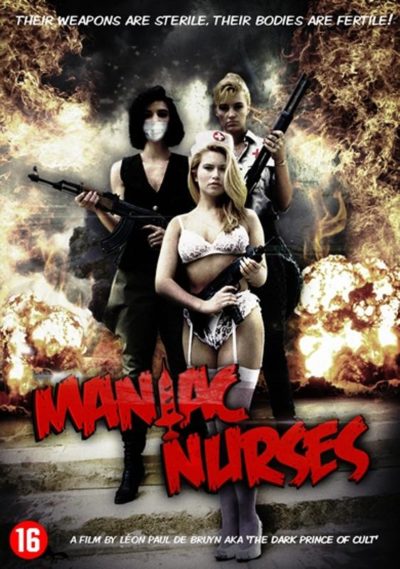 That this Belgian flick starts off with a dedication to Ilona Staller (a.k.a. Italian porn star, Cicciolina), artist provocateur Jeff Koons, and Traci Lorde, likely tells you it should not be taken too seriously. Certainly, the amusement to be found largely requires the viewer to be aware of the genres to which this is a homage. This is best exemplified by the Ilsa trilogy, yet there are also aspects borrowed from women-in-prison and Naziploitation in general. The more you’re familiar with those, the more you’ll get out of this: if you’re not, this will seem just a bad movie. A really bad movie.
 12 months after apparently vanishing while on a covert mission, the husband of former soldier Lena (Portman) suddenly shows up, unable to remember what happened, and suffering massive organ failure. The couple are quarantined by the government, and Lena learns of “Area X” in Florida. An apparent meteor strike has led to a “shimmer” which is gradually expanding in size: all expeditions into the area have vanished without trace, until Lena’s husband showed up. Lena joins another such expedition, led by Dr. Ventress (Leigh), hoping to reach the lighthouse which marks the apparent focus of the event, and discover something which can help her husband.
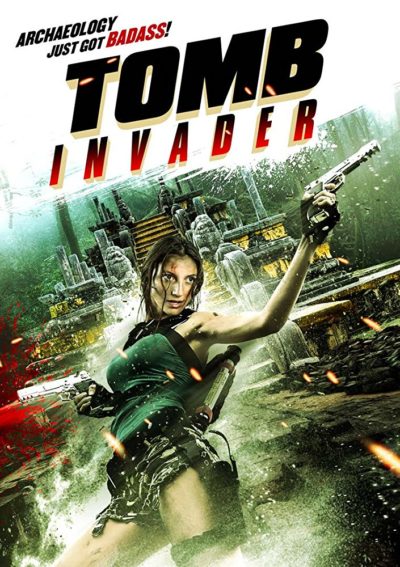 Anyone can review Tomb Raider. Here, we go the extra mile and review the third-rate knock-off version. For despite being someone whose fondness for maverick studio The Asylum is already
 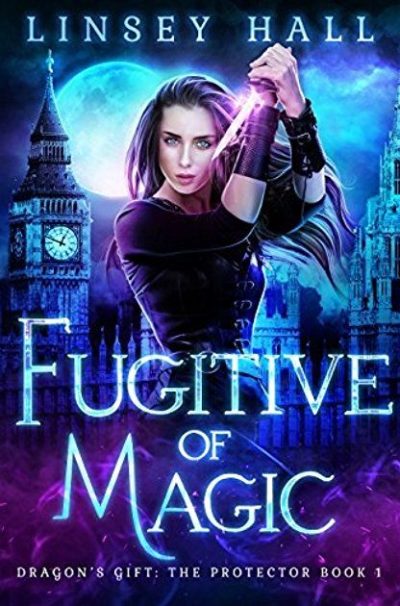 It’s probably worth noting that although this is Volume 1 in the somewhat clunkily-named “Dragon’s Gift: The Protector” series, it follows in the wake of two other Dragon’s Gift threads by the same author, The Huntress and The Seeker. While you don’t need to have read those to enjoy this, it does explain a structure, which could seem somewhat odd. For the volume sets up a trio of treasure-hunting magicians – Cass, Del and Nix – then all but discards the first two and concentrates heavily on Nix. Turns out Cass and Del were the subjects of the Huntress and Seeker sagas respectively, and the Protector gives Nix her turn in the spotlight. This is why some aspects, such as the shop run by the three women, seems more than a bit undeveloped: I presume they were featured in the ten or so previous volumes set in the same world.
 Nora (Carrere) and her two American friends cross the border to Tijuana for a weekend of partying. It doesn’t quite go as expected: the trio instead end up locked up in a Mexican police-station. When two cops on guard at the jail attempt to rape one of her pals, Nora grabs a gun and shoots them both dead. While this perhaps does solve the immediate problem, it obviously creates some rather heftier issues. The three women go on the run, assisted by another inmate, Juan Delgado (Gómez), who has the local knowledge they need to survive south of the border. It turns out Juan was just about to sneak across the American border, and he agrees that if they will fund the payment to the coyotes for him and his family, they can come too.
 Behind a remarkably generic and forgettable title sits an entirely reasonable slice of low-budget Irish action-horror. It’s clear creator Kavanagh knows what has gone before, and if the resources here don’t allow her to reproduce them on anything approaching the same scale, she knows her limitations and works well enough within them. Besides, who can resist a film that works a Ramones lyric into its dialogue? Taryn (Hogan) feels responsible for the death of her little sister, abducted and killed on the way home from school. She gets a chance to do something about it, when approached by the mysterious Falstaff (Parle) after her sister’s funeral. He reveals a secret world of demons and sacrifices – Taryn’s sister being one of the latter – and offers Taryn a chance for revenge, if she’ll come and work for him.
 Every four years, when the Olympics arrive, we fall in love with handball. What is handball, you might be asking. Basically, think seven-a-side soccer, except (obviously), played with the hands rather than feet. It’s an amazing sport, all but unknown in the UK and US, and deserving a far wider audience – a YouTube search for “Olympics handball” will get you sorted. Which is why we were fascinated by the idea of a film focusing on it, specially, the story of the 2004 South Korean women’s team. What they did was roughly that country’s equivalent of the 1980 ‘Miracle on Ice’. The once-dominant Korean team had fallen far from grace, and barely qualified for the Athens Olympics. But they reached the final, against the Danish side, which went into double overtime, and then a penalty shootout.
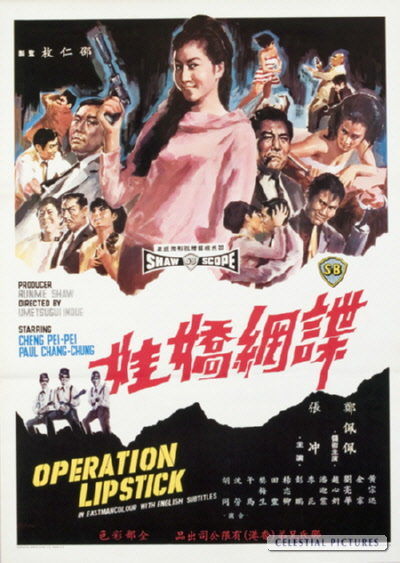 So warbles Li Bing (Cheng), a second-generation thief who has abandoned the criminal life and now performs a cabaret turn which is part song-and-dance, part magic act. These efforts to go straight are derailed when her former partner (Lee) shows up, demanding shelter due to being pursued for a wallet he lifted. She agrees to help, only if he returns the stolen property: when they try to do so, they find the owner now lacking a pulse.
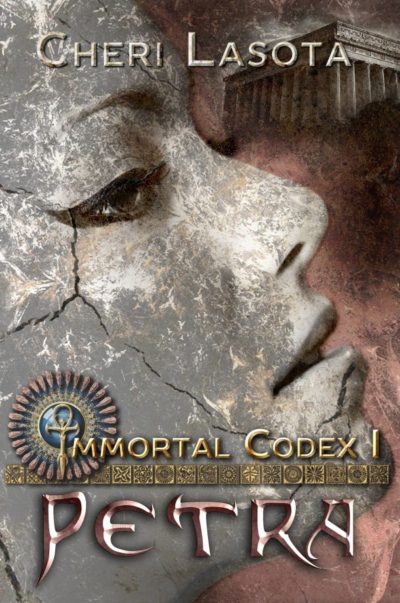 Petra is a teenage Roman slave at around the birth of Christ. She is completely under the thumb of her sadistic master, Clarius, until a strange conjunction of events and a poisonous herb with mystical qualities changes the power dynamic entirely. Both of them, together with her lover, Lucius, attain immortality. But it’s an immortality which requires the two men to drink from Petra annually, or they will degenerate into sub-human monsters. Neither is happy with the arrangement: Clarius is not used to being reliant on anyone, least of all his former property, and Lucius hates the fact Petra agreed to submit to their ex-master, in order to save him. As the centuries stretch into millennia, Petra begins, slowly, to put together a group people who will be capable of defeating Lucius and the immortals he has recruited, allowing her to live in eternal peace with Lucius.