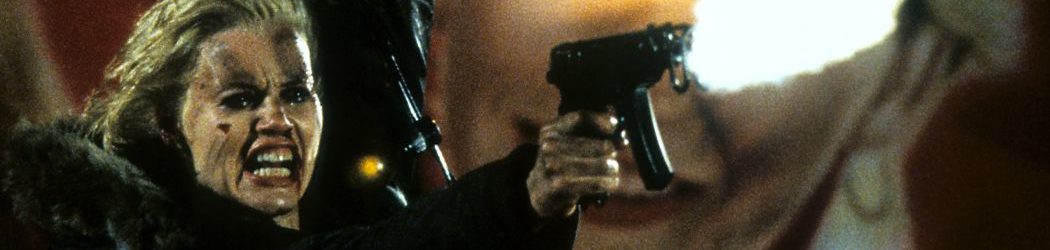

★★½
“Can’t argue with the title, certainly.”
 There’s no hanging around here. Virtually as we meet our heroine, Hsiang Ying (Lee), she’s getting tossed off a cliff by her kung-fu teacher, into a pack of wolves. Having survived that and made her way back – perhaps assuming this was all some terrible misunderstanding – her master then disavows her, announces he was the man responsible for killing her father, and locks her up in a cage. This all happens within, literally, three minutes of the film starting. Fortunately, a passing stranger sees fit to free her from the cage, and the ‘Heartless Lady’, as she becomes known, can go on her way, with the eventual aim of being exactly what the title suggests: revengeful.
Not much in the way of surprises either, although there’s no shortage of action, some of which might possibly be quite good. I am, unfortunately, not able to speak with authority, as there does not appear to be any version of this available which comes close to approximating the correct aspect ratio. This is “pan and scan” at its most annoying – and making matters worse, there’s no panning. You simply get the middle chunk of the screen, regardless of relevance. Which leads to a surreal moment later on, where there’s a discussion between two characters, both of whom have managed to be cropped out of the picture, leaving an entirely unoccupied frame. Antique still life: Chinese room, with conversation.
I might be inclined to give the film the benefit of the doubt, except for the hideous attempts at “comedy” – and, please, take the quotes there as necessary. For some reason, the script decides to give Hsiang a buffoon for a side-kick: he’s named “Clown” in the English dub, more in hope than an accurate reflection of any amusement gained from his presence. For virtually any scene in which he appears, will have you wishing the cropping of the print had been even more extreme. This reaches the pits in a scene at a brothel, where he and Hsiang are seeking information about their target, and is so painfully unfunny as to be borderline offensive. When one aspect of a film sucks so badly, it’s harder to believe it’s good anywhere else.
Yet, there are occasional moments – maybe no more than three or four consecutive seconds, when Lee is shot from far enough way that she fits completely on the screen – which are almost impressive enough to make you go. “I should try and track a good-quality copy of this.” Lee is fluid and graceful in motion, not dissimilar from her Hong Kong contemporary, Angela Mao, although the supporting cast here is more knock-off, and fails to make anything of an impression. In the end, this is all just too generic, from the title through the environment to, pretty much, the entire plot. As noted elsewhere, I watched this the same day as another film made in approximately the same time and place: the two have already merged into one Taiwanese blob of fu.
Dir: Artis Chow
Star: Judy Lee, Wen Chiang-lung, Man Kong Lung, Li Tung
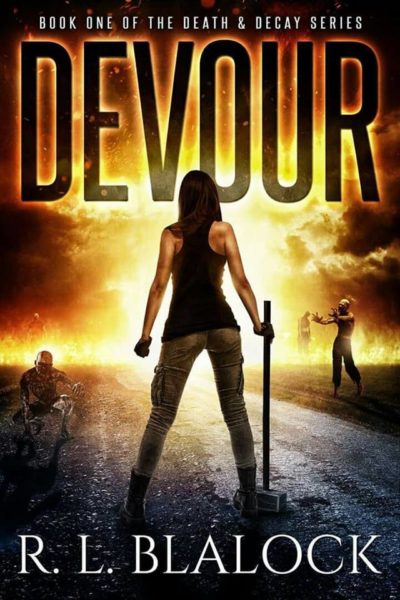 Back when I was growing up in Britain during the eighties, I was a voracious reader of horror fiction. The two staples of my literary diet were the works of James Herbert, who occupied the more “literary” end of the spectrum, and Shaun Hutson, whose novels were about as subtle as a kick to the groin. This likely tends towards the latter end of the spectrum, being a straightforward tale of survival during the zombie apocalypse. It begins as Olivia Bennett is heading home from lunch with her husband, when the St. Louis freeway on which she is driving becomes one of the first killing zones.
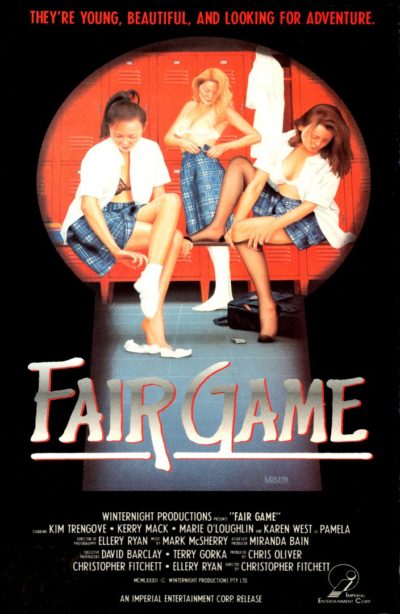 In particular, not to be confused with the Cindy Crawford film of the same name. But for the purposes of this site, more importantly, not to be confused with the film of the same name,
 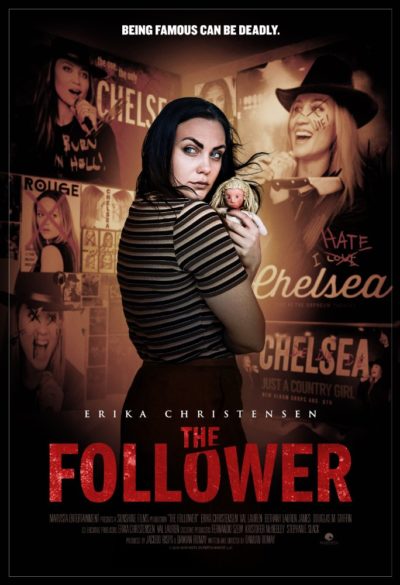 Country singer Chelsea Angel (Christensen) announces to her fanbase that’s she taking a time-out from touring and recording – not least because of her recently-discovered pregnancy. Her flight home crashes in the middle of nowhere, and she wakes up to find herself chained up in a remote cabin, along with another survivor, Evelyn (James). Except, it soon turns out that Evelyn isn’t the innocent air hostess she initially appears. She’s Chelsea’s most obsessive and dedicated fan, who was actually responsible for the plane going down. And now, she has the object of her affection – not to mention, her unborn baby – all to herself, for some quality time, in which she can address Chelsea’s new style, with which Evelyn is not happy. Meanwhile, the singer’s boyfriend, Dillon (Lauren), and the guy in charge of her fan-club, Frank (Kirkpatrick), are trying to figure out where Chelsea has gone, following the online trail Evelyn left behind.
 Having started our acquaintance with the Ladies Shooting Club trilogy last year with the third book, The Blacksmith’s Bravery (long story), my wife Barb and I are now reading the other two volumes in order. Neither of us were disappointed in this one! My reviewing it here was a happy surprise. Although the covers of all three books feature gun-toting women, and a basic plot current of the trilogy is women learning to take responsibility for defending themselves and others, the heroine of the third book wasn’t actually called on to engage in any gun-fighting action. So I assumed the same would be the case here. But [at the risk of a mild “spoiler” –though for fans of this site, this will add interest rather than spoil it :-)], in this series opener, our heroine does need to step up to the plate with a Winchester. (Contrary to many fictional and movie depictions, rifles were used more for serious shooting in the Old West than six-guns). Despite that difference, though, both books have a lot of similarity in tone, content and style. Since I gave the concluding volume five stars on Goodreads, that’s a good thing!
 While not the first to be released, this was the first movie directed by Miike, who would go on to become one of the most prolific – yet, still, critically-lauded – directors to come out of Japan in the last quarter-century. Perhaps this is well-informed hindsight: yet, if still pretty basic in its content, it does feels at least somewhat above what you would expect from a straight-to-video movie by a first-time director.
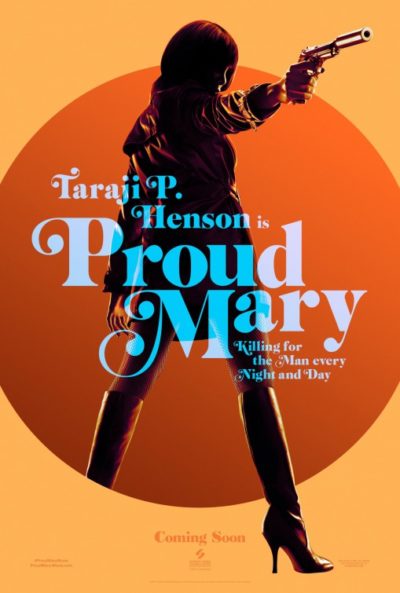 Despite the distinctly retro feel of the poster, intro and much of the music, this is very much a contemporary affair. Mary (Henson) is an enforcer working for Benny (Glover): at one point, she was in a relationship with his son, Tom (Brown), and he still wants to continue it. During one hit on a debtor, she finds the target’s young son, Danny (Winston), obliviously playing video-games in his bedroom. Struck by guilt, she leaves him alone, and keeps an eye on the kid thereafter. A year later, she rescues him from the abusive drug dealer who has “adopted” Danny, but the resulting bloodbath is a big problem. For the dealer in question worked for Benny’s biggest rival, who is not happy about the removal and demands Benny find the culprit. Mary, who was already fed up and wanting out of her career, has to decide exactly where her loyalties lie.
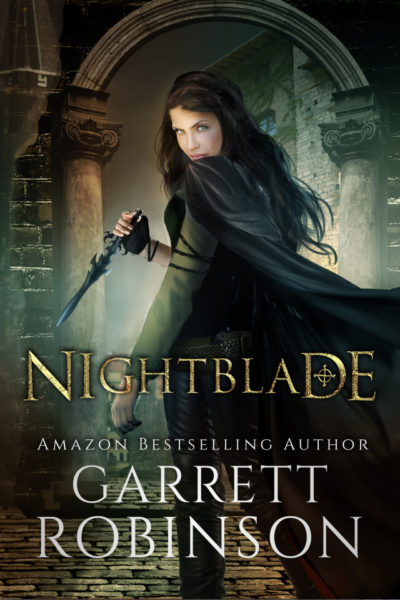 One of the common problems I’ve found with fantasy novels is establishing the universe. It’s clearly going to be very different from the reader’s, and the author needs to get them up to speed on how things work in the book’s setting. If this isn’t done quickly and effectively, the reader can be left floundering in a world they know nothing about. Robinson uses a neat trick to get around this. His heroine, Loren, basically knows nothing about it either, because she has been brought up in a remote rural area. Virtually all she knows about life outside the woods comes from tales told to her by an itinerant tinker, and her dreams of becoming a heroic thief seem no more than fantasies.
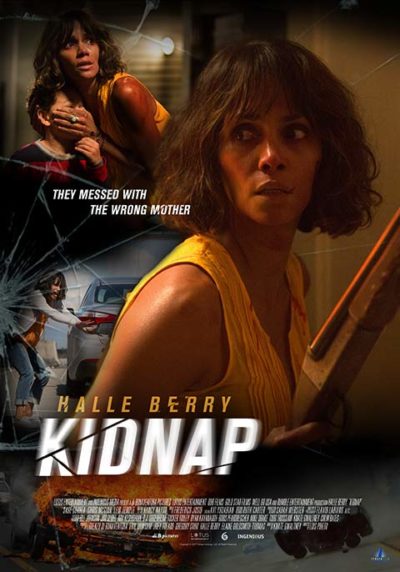 Oh, how the mighty have fallen. And considering Halle Berry’s last appearance on this site was for Catwoman, that’s saying something. This is so dumb, I genuinely felt I could feel my IQ slowly sliding away as I watched the movie. Even now, simply remembering it has me feeling more stupider by the sentence. If this review ends up sounding like Beavis & Butthead by the end, that will be why. Its plot is beyond simplistic. Karla Dixon (Berry) has her child abducted from a New Orleans park while she’s on the phone, by husband and wife kidnappers Margo (McGinn) and Terry (Temple). Losing her cell in the process, she takes off after them in hot pursuit, and nothing will get in her way for the next 80-odd minutes.
 Business is on the streets, check it out.