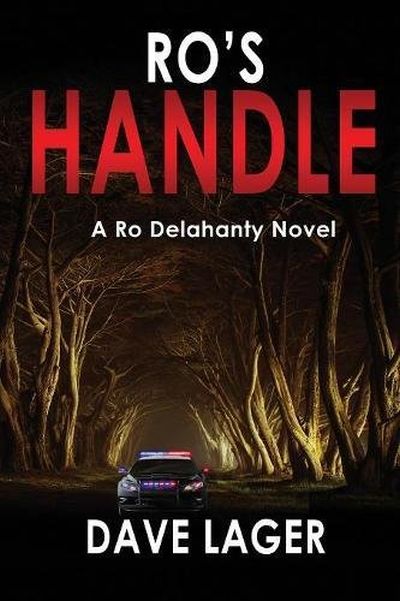
 Although I didn’t set out to, in roughly the past year, I’ve read no less than three novels, and one short e-story, that feature female cops as protagonists: this one, “The Academy” (the short e-story that’s the teaser for Robert Dugoni’s Tracy Crosswhite series), Tami Hoag’s A Thin Dark Line, and Justin W. M. Roberts’ The Policewoman. It occurred to me that an instructive way to open this review might be to compare and contrast the four works.
Like Tracy Crosswhite, Lager’s Rowan (everybody calls her “Ro”) Delahanty is a state champion in pistol shooting, who goes into law enforcement as a career. (Ro also has a black belt in judo.) And like Hoag’s Annie Broussard, she becomes a sheriff’s deputy. (Her milieu is a county dominated by a mid-sized city, sort of a median between Tracy’s Seattle and Annie’s backwoods south Louisiana parish.) The principal difference here is that both Tracy and Annie started their careers with ambitions to become detectives, and they’re protagonists of mystery series. This book has no mystery elements as such, and Ro’s vocational interest is strictly being a uniformed beat cop. She’s also younger than Tracy, and had already decided to become a cop as a fifth grade kid (whereas Tracy switched careers after teaching high school chemistry for several years), and she doesn’t carry the emotional baggage of a sibling who was murdered and a parent who committed suicide. (Instead, the Delahanty family is impeccably wholesome and normal.) So Ro’s definitely her own person, not a Tracey Crosswhite clone. And where “The Academy” focuses on the theme of sexism and sexual harassment as a challenge female cops have to face, those elements are very limited in this book, only show up near the end, and manifest themselves only in comments that aren’t made to Ro’s face.
Both Roberts’ Sarah and Ro are basically gun wizards (who, of course, have to put in a lot of training and practice to get and keep that level of skill, in addition to their natural talent!) formidable in combat, and drawn in such a way that some readers will view them each as something of a “Mary Sue” –that is, a heroine who’s too perfect to be realistic– though I didn’t see them that way. But although I classified both this novel and The Policewoman as action-adventure, the action elements in the latter are a LOT more prominent than they are here. This one has only one action scene, and that starts only in Chapter 22 of a 29-chapter book. Some readers (though I wasn’t in that number) of Robert’s book took issue with the first four chapters of character introduction/development and stage setting as being supposedly too slow-moving and boring. Those readers would really have an issue with the first 21 chapters here. And the shooting itself is actually over very quickly, as it would be in real life. Fans who have to have unremitting slam-bang action and a high body count will find this aspect limited and tame here. (Again, I’m not in that number myself, and I actually found that aspect of the book very well done.)
All three of the novels compared here provide the heroine with a “love interest” and have some “romantic” elements, including some unmarried sex. But (though I won’t include any spoilers) the overall handling of the “romantic” aspect here was, for me, highly unsatisfactory and off-putting, and would not, IMO, generally appeal to “romance” fans either. It should also be noted that the relationship escalates to sexual intercourse on the first date (which is the third time the couple have seen each other!), so has very marked insta-love issues. And Ro’s lover here is a divorced dad 13 years her senior, who has a 15-year-old daughter (Ro’s only 21).
You might ask, if this isn’t a mystery, a full-blown action novel, or a real romance, what IS its appeal? What sort of novel is it? I’d describe it as very much an intensive character study of Ro, and a very realistic “slice of contemporary life” novel describing the world of a rookie female cop. Lager obviously has a practically exhaustive knowledge of police equipment, organization and procedure, which gives the work a great deal of authority. Ro is a round, three-dimensional protagonist with a lot of depth to her development, and does exhibit some admirable, heroic qualities. (Frank is developed well too.) As his fascinating blog entries indicate, Lager has a mental picture of Ro’s entire life history from childhood on and a comprehensive understanding of all her characteristics as a person. He doesn’t feed us ALL that information here (the novel only covers the time beginning with her winning the Iowa state shooting championship in April 2003, shortly before joining the sheriff’s department, to September 2003, when she earns her “handle,” or nickname for radio identification purposes, and sort of becomes one of the guys -she’s currently the only female deputy). But we get a lot of it, including a thorough introduction to her family, a few glimpses of her childhood, her orientation week, her habits, life and dislikes, stuffed toy panda, etc. By the time this is over, we know her like a real person (and probably like her –I did, and do!)
This is not, of course, the stuff of high drama. Some readers will feel that the plotting and development of the story is way too slow-moving. The heavy accumulation of detail and description, including things like the menus for people’s breakfasts, description of Ro’s underwear, the specifics of what she and other characters are wearing, etc., contributes to that impression. Related to this, there tends to be a lack of meaningful conflict in the story-line until towards the end. (For instance, both Ro and Tracy Crosswhite are champion competitive shooters, and we see them both in competitive settings. But where Tracy is being scored on her pistol shooting in “The Academy,” it’s at the climactic moment of the tale, and the outcome is in doubt until the end, making for genuine suspense and tension. In Ro’s championship competition, on the other hand, I never really felt any element of suspense or tension, and her win is almost anti-climactic.) Only near the end is there a situation where Ro is in real danger and engaged in actual combat; only near the end is there any real sense of possible conflicts in her relationships with other deputies, and only near the end is there any real question about the nature of her relationship with Frank. Most of the story is pretty much a matter of day-to-day life (with the exception of starting a dating relationship). As might be expected from a college speech teacher, Lager’s technical mastery of prose style is quite professional; there are just a very few places where minor editing would have helped.
For me, this book was difficult to rate, because there are aspects I really like and aspects that I really dislike. I didn’t mind the slow-paced build-up quite as much as some readers probably will, because I was interested in learning about Ro and what makes her tick, and about the workings of a modern sheriff’s department (I learned much that I didn’t previously know, and I think most readers would). IMO, the action scene was good, the handling of the psychological aspects of the aftermath struck me as true to life, and the ending worked very well for me. The Ro-Frank aspect of the plot ultimately proved to be a major liability in my estimation, which dragged down the rating. If the book were written with no “romantic” element at all, just as a straight police-life and action story, I’d probably have given it five stars. As it was, the romantic-erotic parts earned one star. Overall, I decided to split the difference and give the book three, since I liked much of it. (And yes, I will read the sequel!)
I was gifted by the author with a review copy of this book, but no guarantees that I’d like it were offered or expected. Nor did World Castle Publishing (which also publishes my novel) put any pressure on me to write a favorable review (and I would have canceled my contract with them if they had!).
Note: This novel has only one explicit sex scene, but it occupies a very prominent position in the strictly-linear story arc, and it’s extremely, graphically detailed, with a “you are THERE!” immediacy. There is a certain amount of bad language, including f-words, religious profanity, the c-word to describe part of the female anatomy, etc. (Some, though not all, of this reflects real-life cop culture.)
Author: Dave Lager
Publisher: World Castle Publishing, available through Amazon, both for Kindle and as a printed book.
A version of this review previously appeared on Goodreads.



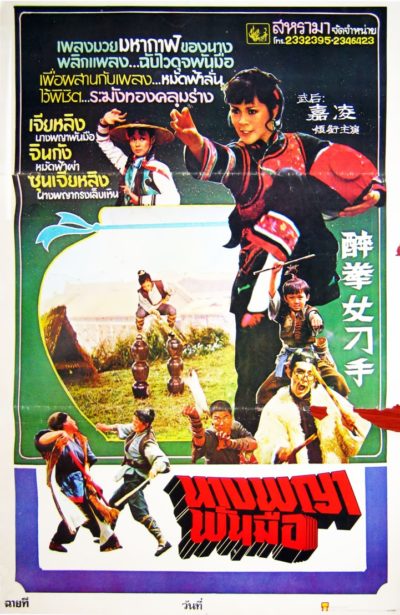 In this late era Judy Lee film, she stars as the confusingly-named Brother Blind, a name which scores only 50% for accuracy. She is indeed, largely unable to see, the result of a confrontation with the motley group of bandits who killed her father (Sit). Though even here, there is some confusion as to whether there are 13 of them, as an alternate title suggest, or 14 as the English dub mentions on several occasions. They’re certainly a random bunch, some of who are missing limbs or fingers, as well as two “giants” who aren’t very tall, and a “poison dwarf” who wields a blow-gun, responsible for Brother Blind losing her sight.
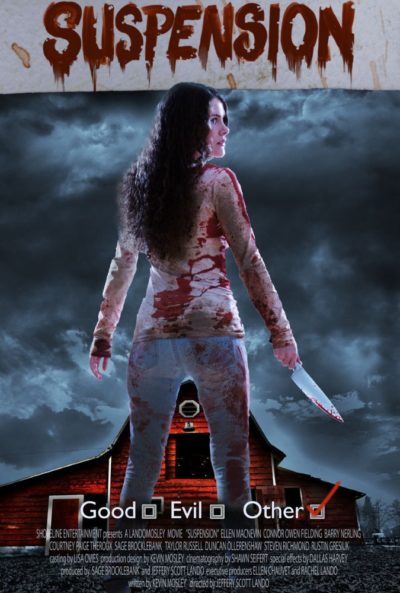 Bullied by her peers at high school, Emily (MacNevin) takes refuge in drawing. Although, rather than high art, her preferred method of expression is horror comics: working on these in class is what gets her the titular punishment, imposed by a disapproving teacher. Emily’s strip depicts the havoc wreaked by a serial killer – who might (or might not) be inspired by her absent father. However, the line between imagination and reality becomes blurred, and on the night of a student party to which Emily has not been invited, someone starts stalking and murdering those who have tormented her. Looks like Daddy is out, and protecting his little girl – or, is he?
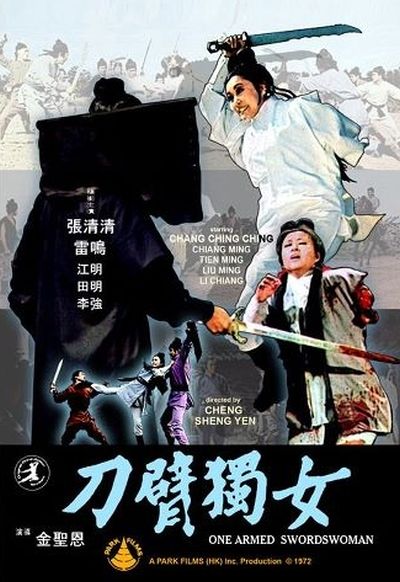 Official disclaimer. I watched two seventies Taiwanese kung-fu flicks the past weekend, this one and Revengeful Swordswoman, and I’m having serious difficulty keeping them separated. You are therefore warned that some plot elements discussed here, may actually have seeped over from Revengeful, or vice-versa…
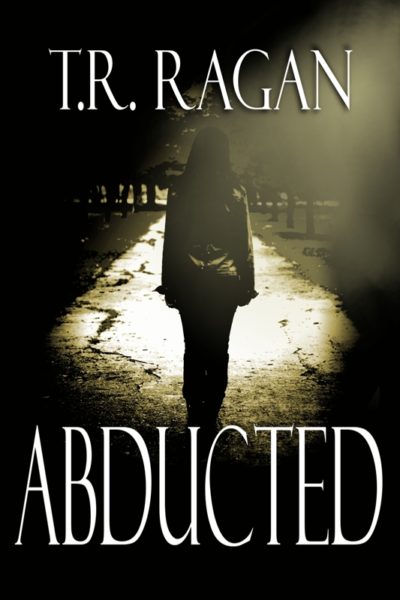 A largely uninteresting and occasionally tedious read, this begins when the 17-year-old Lizzy Gardner is abducted by a serial killer known as “Spiderman”, for his habit of using insects to terrorize his victims. Lizzy manages to escape, but Spiderman isn’t captured, until almost a decade and a half later, when someone confesses to the crimes. By then, Lizzy has become a private eye, and also giving lectures to young girls, on how to avoid falling victim as she did. She’s not convinced the right person has been caught, and she’s right: the real Spiderman is by no means happy that someone else has taken “credit” for his crimes. So he starts up again, with the eventual aim of recapturing Lizzy, the one who got away…
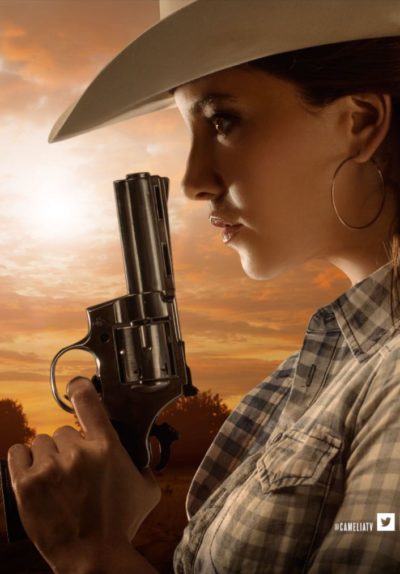 “A woman, if she loves a man, can give him her life.
 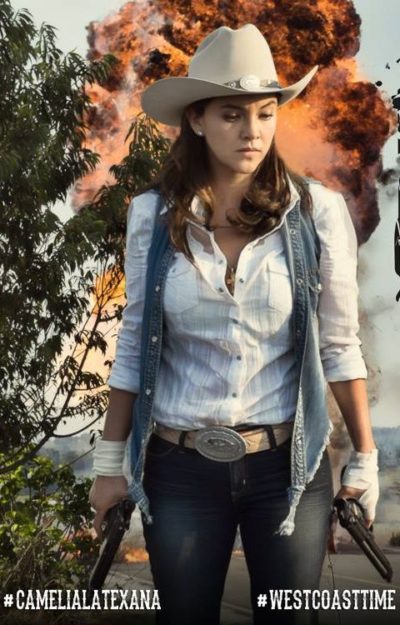 The song had previously been adapted into a 1977 film, starring Ana Luisa Peluffo and Valentín Trujillo – though the dynamic was rather different there, with the leading lady being a couple of decades older than her lover. (More than 20 years earlier, Peluffo had caused a significant scandal, when she appeared nude in 1955’s La fuerza del deseo, the first such scene in Mexican cinema) The song was also adapted into an opera in 2008, and has been acknowledged by Arturo Pérez-Reverte as a significant inspiration for






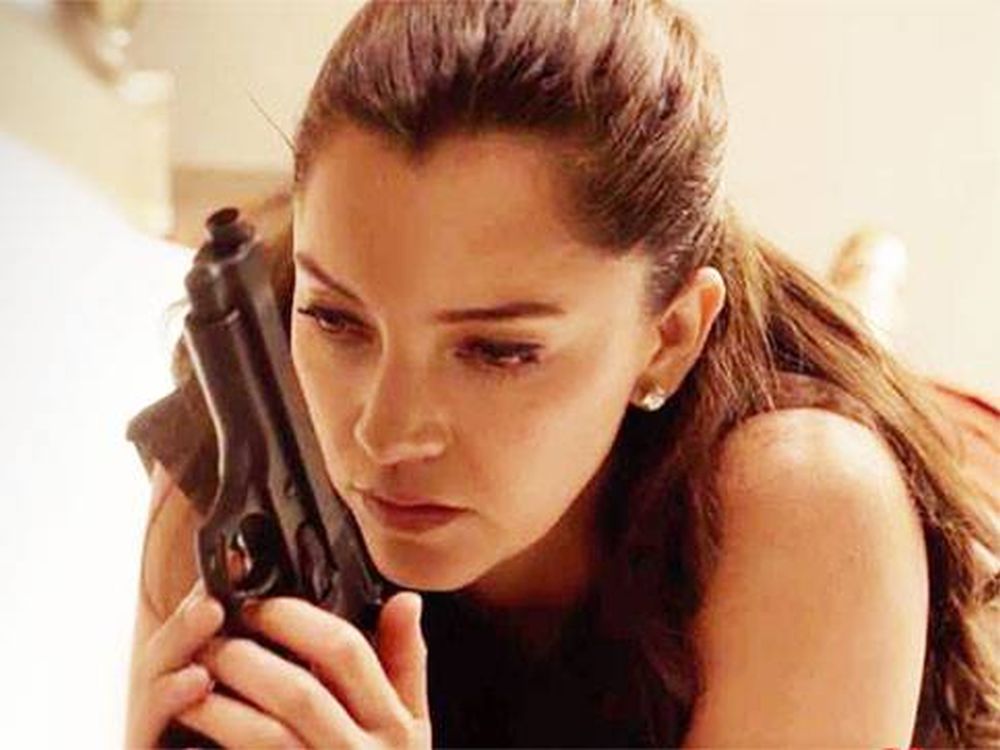
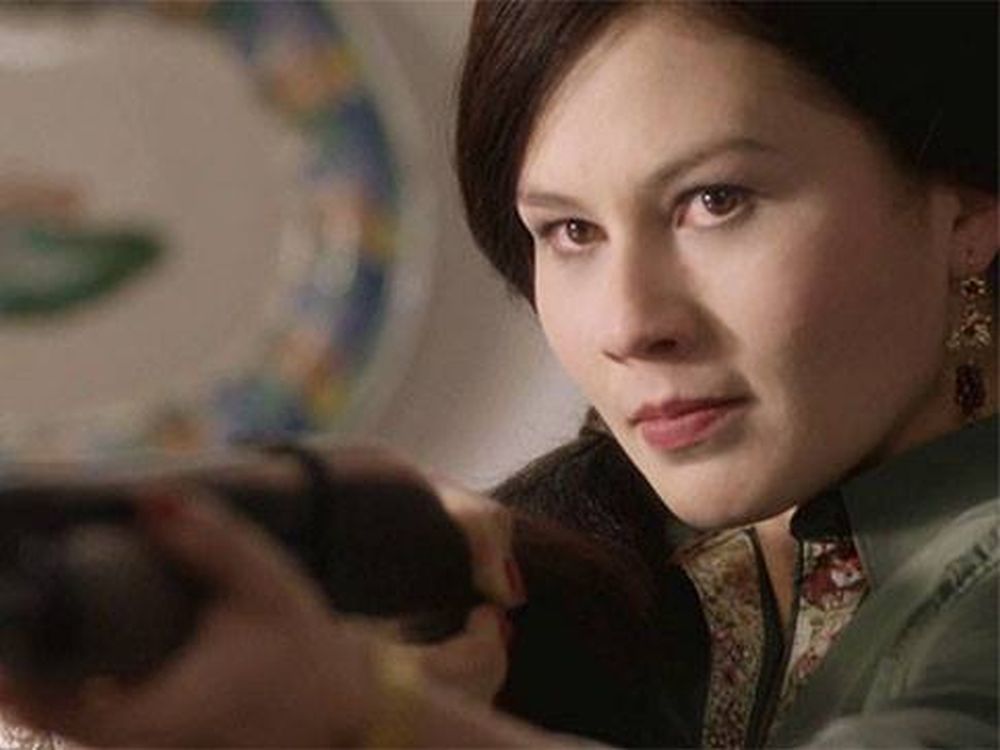
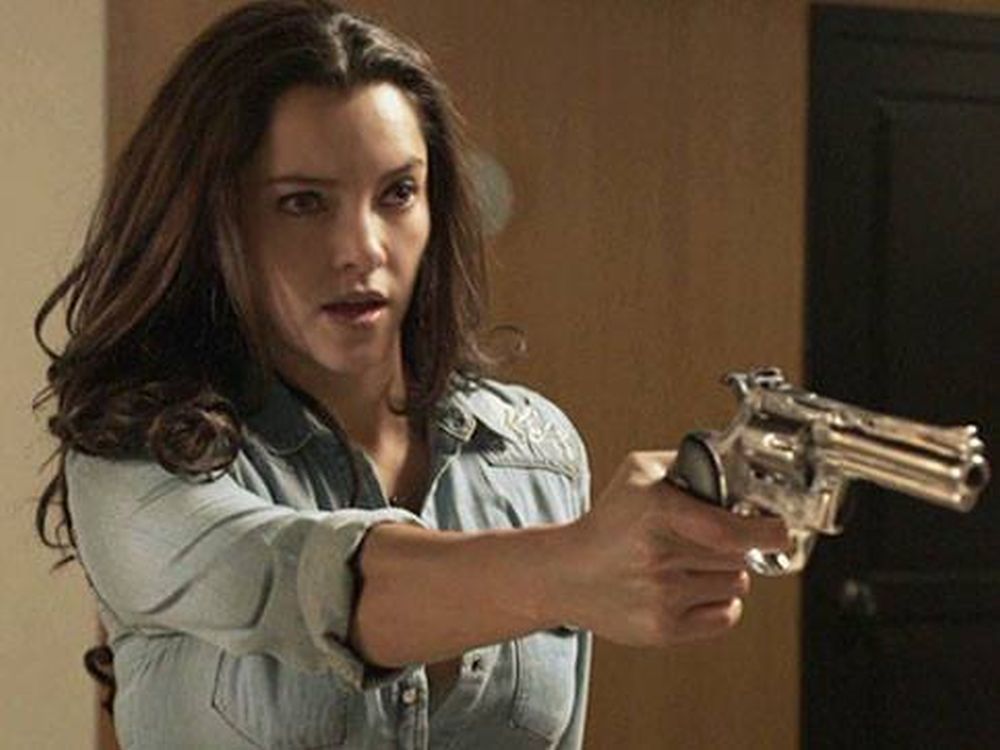
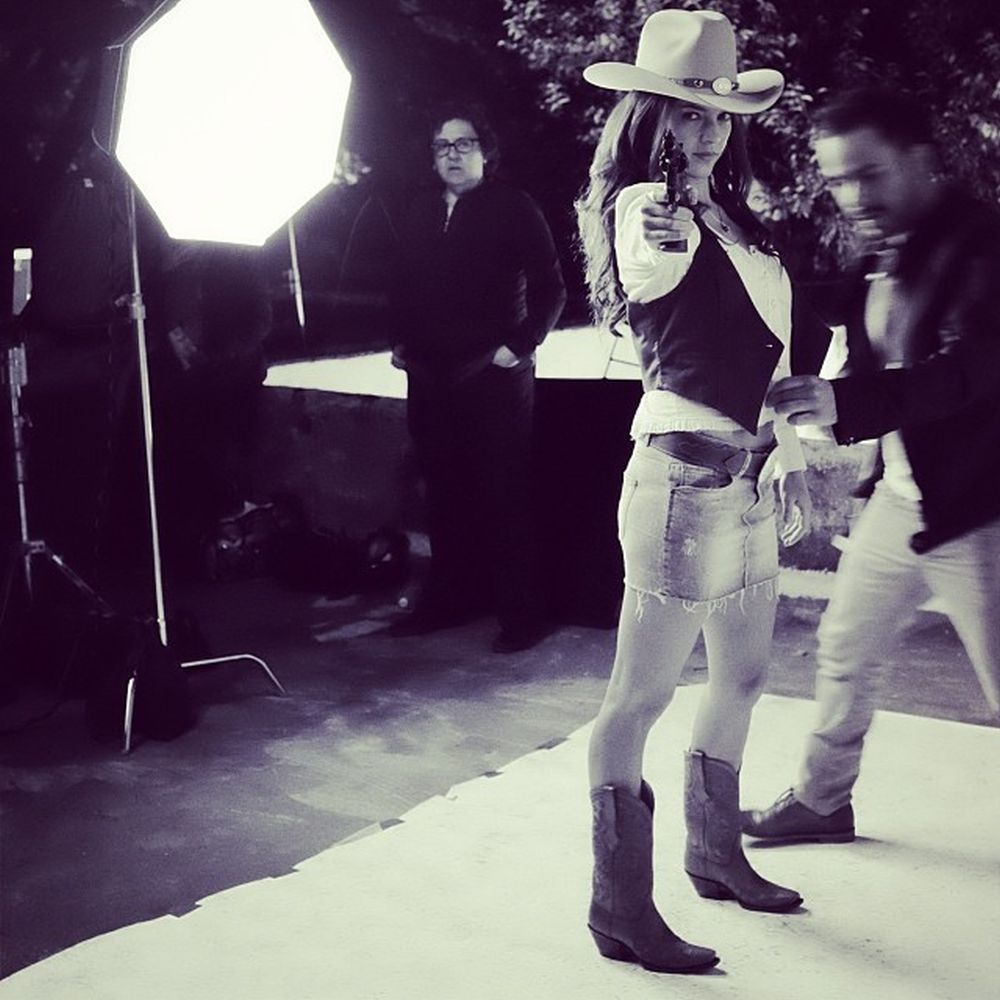
 I’m not kidding. Director Deodato is best known as the man behind one of the most notorious of all “video nasties,” a film which created such a furore, he had to produce the actors to convince the Italian courts he hadn’t killed them. But in almost fifty years of work (he’s still active today), Deodato has done everything from spaghetti Westerns to science-fiction. And more than a decade before Holocaust, back in 1968, he directed this bawdy action-comedy.
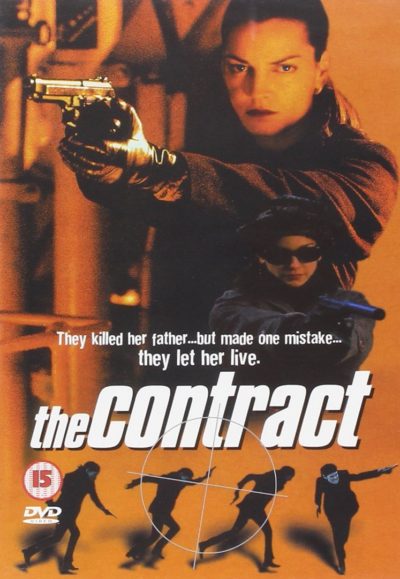 I bumped into this one on a stand of ultra-bargain DVDs, at a truck stop on the way home with Chris from an anniversary trip to Las Vegas. The cover, understandably, piqued my interest: the film didn’t manage to make such an impression, except in intermittent bursts. Hannah (Black) is an assassin, working under the tutelage of her father, Luc (Imbault). He spurns a lucrative contract, smelling a rat: Hannah goes behind his back and takes the job, only for Dad to be proven right, when the hit goes wrong. Luc is killed, leaving Hannah and her oblivious artist boyfriend James (Oliver) on the run from Senator Harmon (Williams). He’s a CIA honcho, who has just announced his plans to run for higher office, and needs to clean up certain elements of his past – now including Hannah and James.
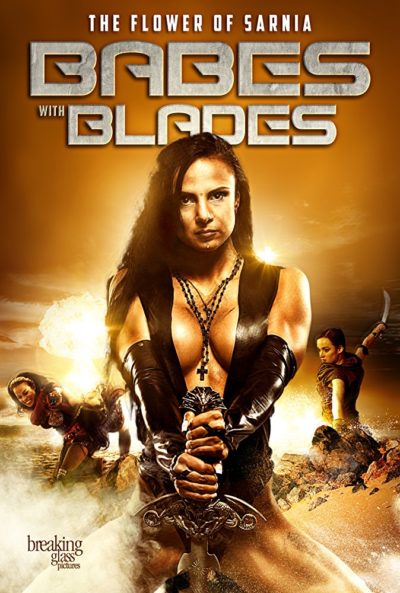 I’m unsure who the woman is on the DVD sleeve. I can only presume it’s Lady Not-Appearing-In-This-Film. For what we have instead seems to be a real labour of love for British stunt-woman Cecily Fay. Though calling her a mere stunt-woman would be selling her short: she also wrote, directed, starred in, edited and scored this feature, plus did the fight choreography and sound re-recording, while sewing every sequin on the costumes herself. Okay, the last might be a bit of a stretch, but since she is also credited as the costume designer… perhaps not. Hell, even Robert Rodriguez doesn’t have such a large collection of hats, and this overwhelming multi-tasking might help explain why it took close to five years between the start of filming and its eventual release. The main problem is that Fay’s talents, while considerable, are not equally spread.
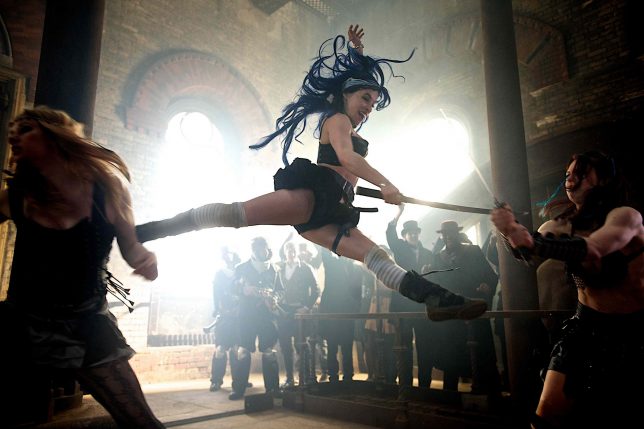 More positively, we have Fay’s acting and directorial talents. The former isn’t much of a surprise, as I enjoyed her performance in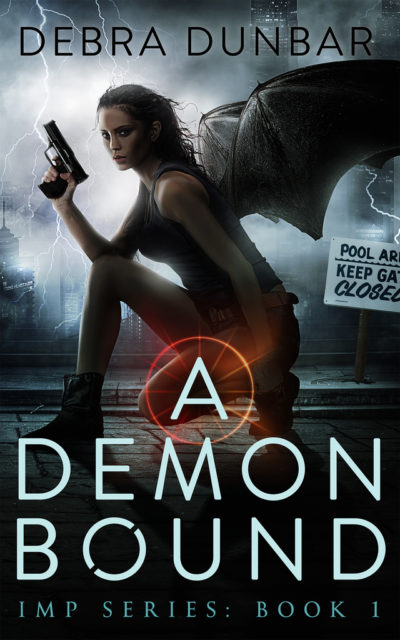
 While the cover image is certainly striking, I should mention that it is inaccurate in one significant point. At no point do I recall the heroine ever wielding a gun. While such false advertising would normally be a sore point, in this particular case, we’ll give them a pass – since the reason she doesn’t, is because she is simply too bad-ass to need one. For