
Babes With Blades: The Flower of Sarnia

★★★
“Not QUITE what the cover would suggest…”

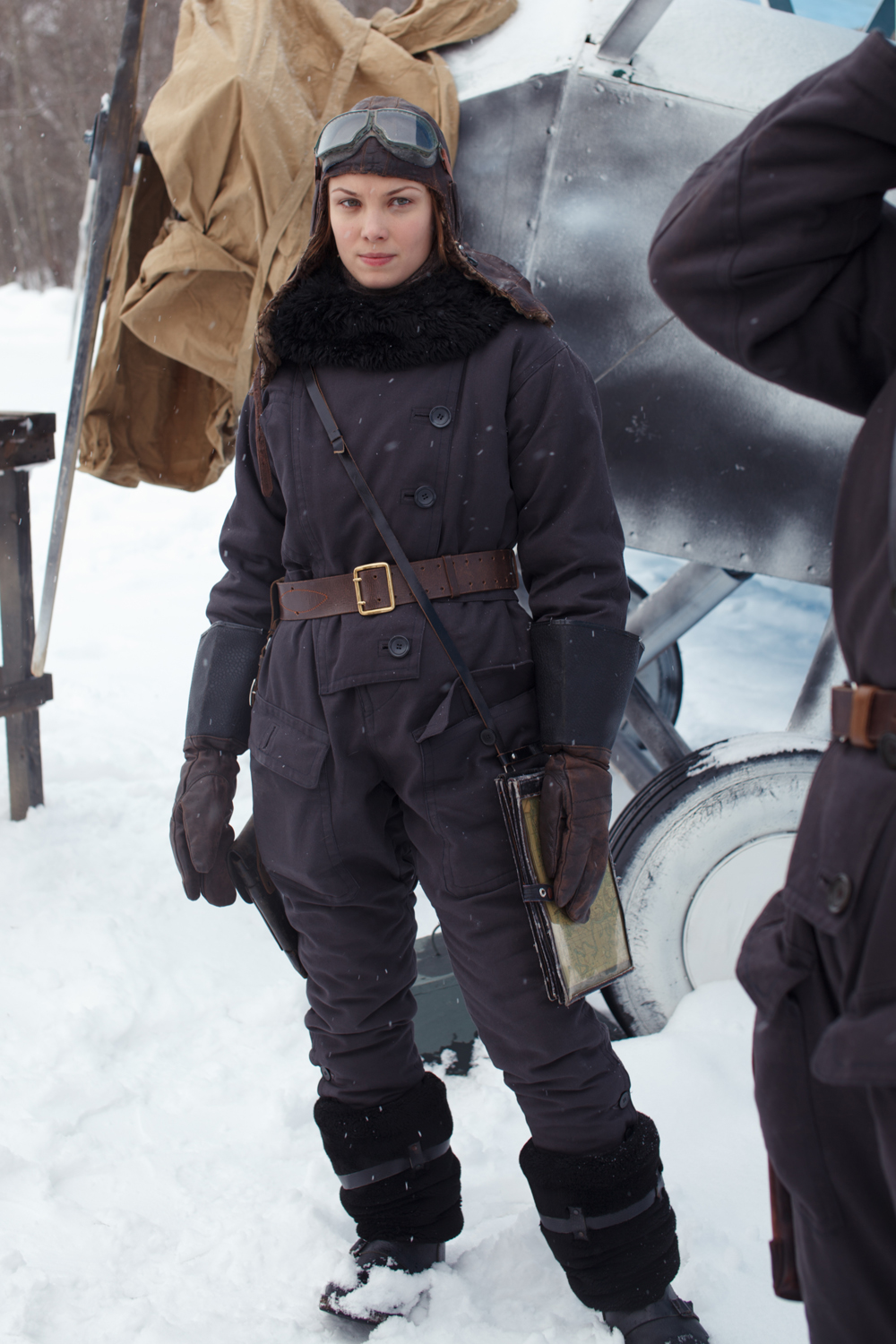
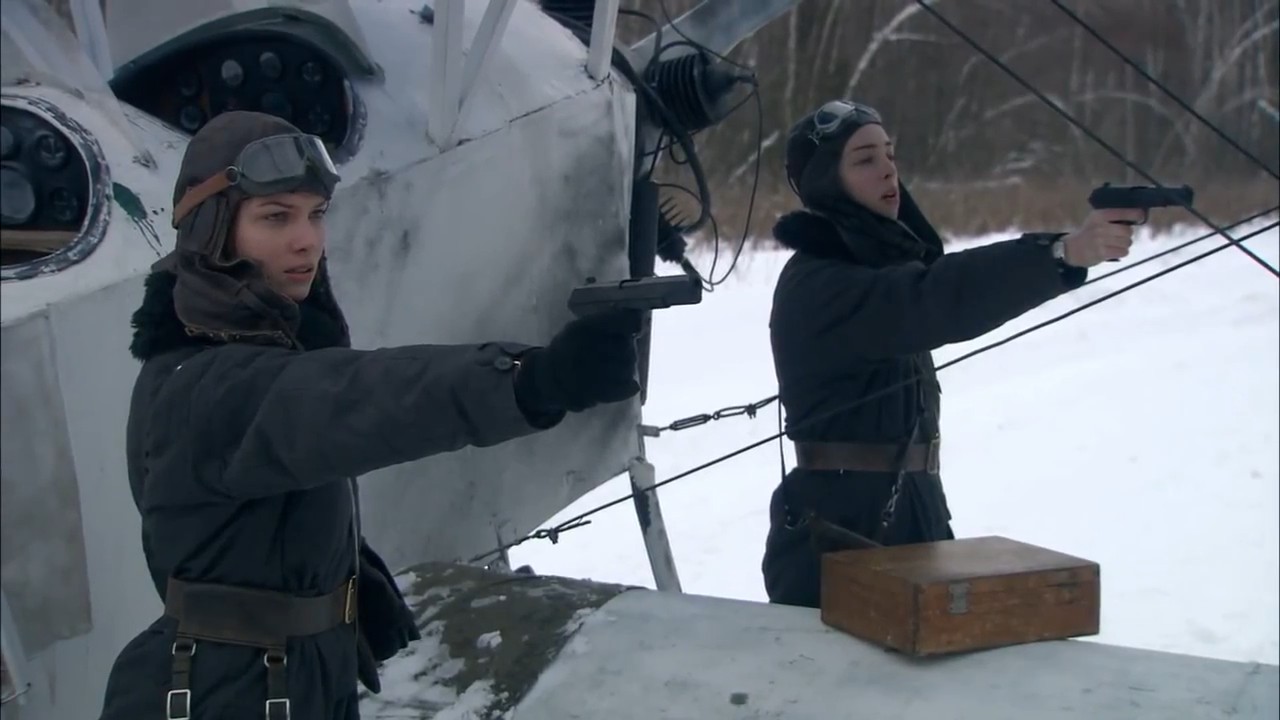
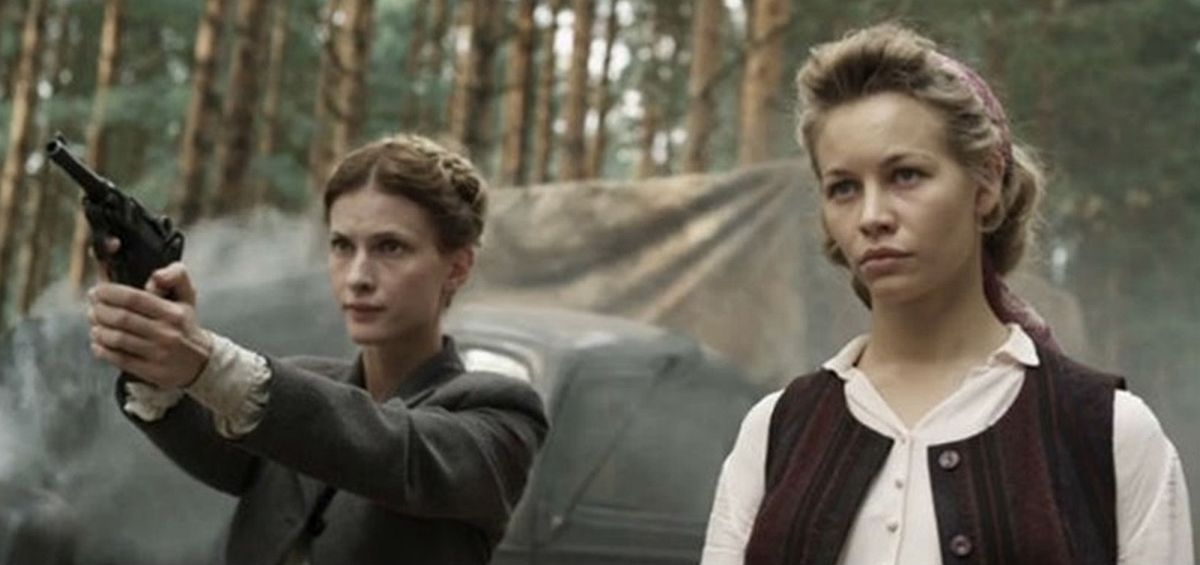
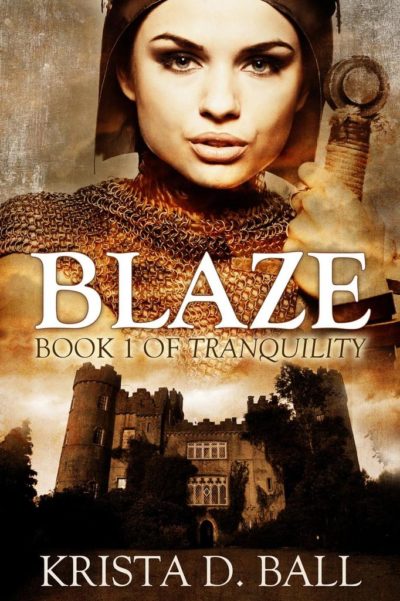
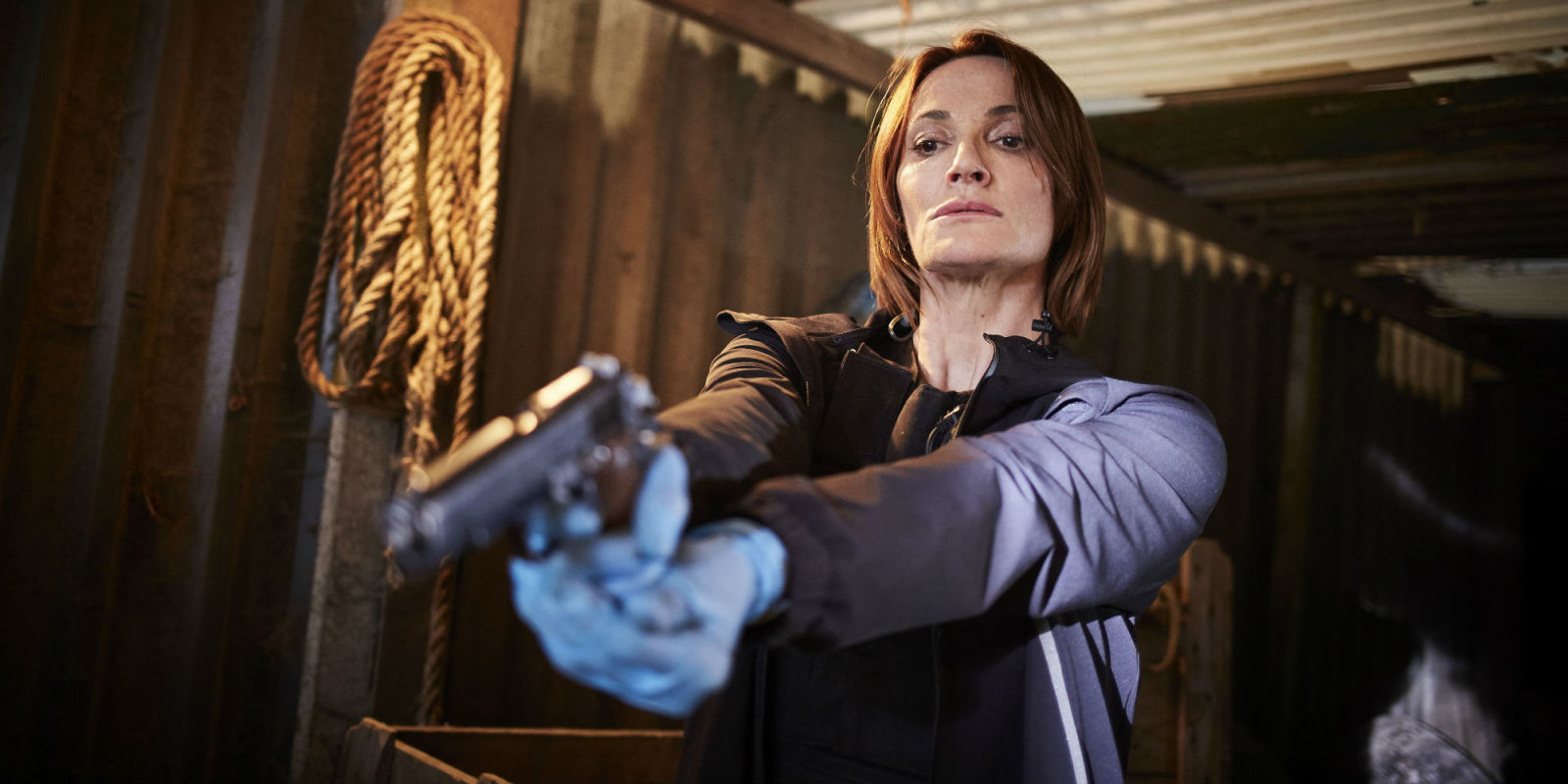
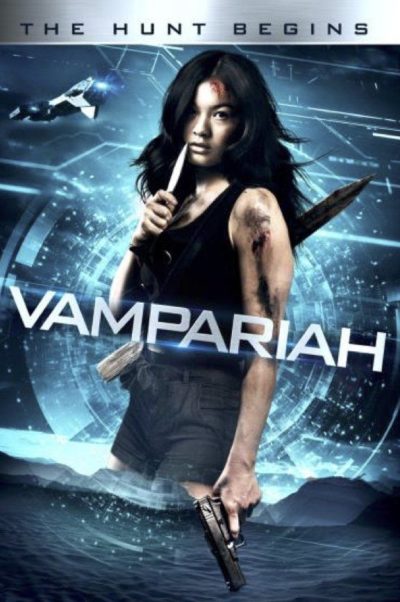
I’m unsure who the woman is on the DVD sleeve. I can only presume it’s Lady Not-Appearing-In-This-Film. For what we have instead seems to be a real labour of love for British stunt-woman Cecily Fay. Though calling her a mere stunt-woman would be selling her short: she also wrote, directed, starred in, edited and scored this feature, plus did the fight choreography and sound re-recording, while sewing every sequin on the costumes herself. Okay, the last might be a bit of a stretch, but since she is also credited as the costume designer… perhaps not. Hell, even Robert Rodriguez doesn’t have such a large collection of hats, and this overwhelming multi-tasking might help explain why it took close to five years between the start of filming and its eventual release. The main problem is that Fay’s talents, while considerable, are not equally spread.

The issues are particularly apparent in the writing and editing departments. The first is kinda forgivable, and hardly a rarity in low-budget cinema, But I still find myself always hoping for something better – in this case, than an ill-considered mash-up of Star Wars and Gladiator. Azura (Fay) is the last survivor of her planet, Sarnia. She has been captured by Section Commander Sorrentine (Simpson), the ruthless dictator responsible for wiping out Azura’s people, and is made to fight for the amusement of the masses. While Azura plots her vengeance, a small rebellion (very small – like, it has four people in it, tops…) is brewing under the leadership of Viridian (Burniston), and is preparing a devastating strike against the Empire.

The whole SF angle is just not very well thought-out. These people have interplanetary travel, yet haven’t made a gun that takes less than five seconds to reload? I know every non-historical martial arts film has to handle it somehow, but this is close to the feeblest excuse I’ve heard. Given how little the future has to do with the rest of the plot, Fay would have been better off abandoning it entirely, making Sarnia an island instead of a planet, and setting it in the past to wipe out the firearm issue entirely. But worse, still, is the editing. You’d think Fay would know how to assemble an action sequence. Apparently not, for the movie adopts the Moulinex approach of choppy editing, which makes it so much harder to appreciate the skills of the fighters. There is one scene – here’s a GIF taken from it, to give you some idea – which is awesome (even if rather cribbed from Kill Bill), simply because Fay the director steps back and lets Fay the stunt-woman do her thing. It’s just a shame the rest wasn’t shot similarly.

More positively, we have Fay’s acting and directorial talents. The former isn’t much of a surprise, as I enjoyed her performance in Warrioress, and she brings the same sense of conviction to proceedings as the heroine here. You may not believe any number of things about this world, but you can always believe Fay could be the last survivor of her species. The rest of the performances are.. a bit of a mixed bag, shall we say. Some appear to have strayed in from a fashion show at a steampunk convention, but punk veteran John Robb is clearly enjoying himself enormously as the arena MC [I got a vaguely Michael Rooker vibe off him!] 

Given this was also Fay’s directorial debut, it’s acceptably solid. She avoids the obvious pitfalls, and if more functional than stylish, she has clearly been a) around enough TV/film sets, and b) paying attention on them, to handle things. I’ve seen far worse efforts from people with far longer IMDb resumes to their names. However, the bottom line is that you will still need a solid tolerance for low-budget cinema, and all that entails, for this to be acceptable viewing, though accepting its status as an obvious passion project will help mitigate the flaws. And this may be unprecedented, but I almost wish they’d gone for a less gratuitous title and sleeve; they both suggest something I should probably save for when Chris is out of the house, when the reality is considerably more restrained.

Dir: Cecily Fay
Star: Cecily Fay, Michael Collin, Joelle Simpson, Cheryl Burniston

A Demon Bound, by Debra Dunbar

Literary rating: ★★★★
Kick-butt quotient: ☆☆☆☆

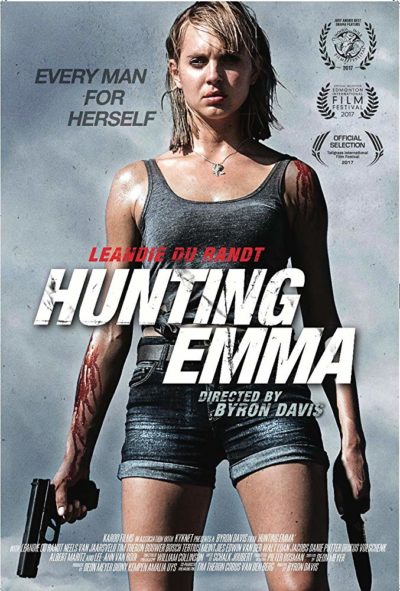
While the cover image is certainly striking, I should mention that it is inaccurate in one significant point. At no point do I recall the heroine ever wielding a gun. While such false advertising would normally be a sore point, in this particular case, we’ll give them a pass – since the reason she doesn’t, is because she is simply too bad-ass to need one. For Samantha Martin is an imp: a demon who has chosen to spend a chunk of her substantial life-span (measured in centuries) among us mortals, rather than in the underworld. Why? Largely because it’s more fun up here.

Who needs guns, when like Sam, you possess a broad range of powers, including regeneration, transformation and the ability to manipulate energy? However, she has to be very, very careful about their use, because her kind is not supposed to be prowling the Earth at all. To prevent this, angels are continually monitoring for signs that indicate demonic abilities, and enforce the prohibition with extreme prejudice. A large, glowing sword may be involved. So, Samantha keeps her talents in check and manages her property business, or hangs out by the pool, generally keeping a low profile.

Things are rudely interrupted, however, when her hellhound returns home, much the worse for wear. Turns out he had got into a fight with a werewolf living on a nearby farm, whom Sam ends up having to kill. The local lycanthropes are not happy about this, and demand a service from her as reparation. Turns out a rogue angel, Althean, has been carrying out a one-man program of genocide against the werewolves, and they need someone to stop him. Unfortunately, Sam’s efforts bring her to the attention of Gregory, the angels’ chief enforcer on Earth, who is also on Althean’s trail – but is none too happy to discover Sam’s presence.

This was a tremendous amount of fun to read, mostly because of the heroine, who is unorthodox, to put it mildly. Foul-mouthed and unrepentantly immoral, Sam is a big fan of both sex and violence, largely bemused by human notions such as loyalty and affection, and treats our species as an amusing plaything, put on Earth for her enjoyment. Yet, over the course of the book, it appears there’s more to her than this. The fact she prefers Earth to Hell is just one of the various hidden depths which emerge, and we get to learn about the back-story of this struggle – not least that the angels and demons are not as far apart as either might prefer to think.

While Sam is clearly the book’s core, with it all being told from her first-person perspective, I also enjoyed Gregory and his conflicts. He has issues of his own, with some among his kind endorsing Althean’s murderous mission, as they believe werewolves to be Nephilim, the offspring of angels with humans, and deserving of extermination. It’s all surprisingly complicated, and I’m highly curious as to where the series goes. Credit Dunbar too, for telling a complete and well-rounded story here, albeit with an epilogue to leave the reader intrigued.

This is comfortably R-rated, since Sam has absolutely no problem with using violence, though most of it is against other supernatural entities. Not out of any moral scruples, however, just because we humans aren’t worth the effort! I’d love to see this made into a movie, though given her fondness for nudity – partly for practical reasons resulting from energy transmutation, partly to wind up the more prudish members of society – it would require a particularly broad-minded leading lady. In the meantime, I’ll certainly be investing in further installments of the Imp Series, of which this is the first volume.

Author: Debra Dunbar
Publisher: Inked Entertainment, available through Amazon in both printed and e-book versions.

Viral

★★½
“Facebook status: feeling infected.”

Firstly: it’s not a frickin’ virus at all! The threat here is a blood-borne parasite, which is completely different, so I have no idea where the title came from. Glad I got that off my chest. Where were we? Oh, yes… The Drakeford family have just moved in to a suburban community in California. Daughter Emma (Black-D’Elia) is trying to settle in at their new school. something at which her more extrovert older sister Stacey (Tipton) is better. This distraction is why they don’t notice the growing concern about a disease that’s spreading across the globe – until a classmate succumbs to this nasty ailment, which makes the infected highly aggressive.

From there, the siblings’ safe, stable world disintegrates rapidly. Mom is stuck at the airport, and when Dad goes to try and find her, he doesn’t come back. Matters escalate after Stacey drags the reluctant Emma to a particularly ill-advised house party [Maybe it’s just me, but in the event of any communicable epidemic breaking out, I would not exactly be attending social gatherings], where they get to see the effects of the illness first hand. Scurrying back to the sanctuary of their home, and hot local kid Evan (Tope), the sisters are thrust back on their own resources, as martial law is declared and the area comes under strict quarantine. This means fending off not only the infected; the military, too, pose a threat to what remains of the family.

Despite its title, the film makes a credible effort to ground its epidemic at least somewhat in real science. Specifically, it references the toxoplasma gondii parasite, which does affect the behaviour of its rat hosts. Of course, this is taken to extremes here, and you end up with something closer to what was seen in 28 Days Later: fast, neo-zombies, driven by hunger. Disappointingly, this is spun into a teen-centric story, which feels as if it might not be out of place on MTV. And, like most MTV shows, anyone older than the target audience will have to suppress a frequent urge to yell at characters for their poor life skills, e.g. the frequent removal of their face-masks (see Evan, above). Stacey fares especially poorly here, to the extent I suspect her brain being controlled by a parasitic worm might increase her IQ significantly.

The effects work is light, yet solid enough, and there is a shudder or two to be had, not least from the creepy parasites. If you can watch Emma hone her amateur surgeon skills – remembering a lesson given by her teacher father – without flinching, you’re tougher than I. Yet such moments are the exception, rather than the rule they need to be, and the lack of any real escalation is surpassed only by the underwhelming ending. Despite the unexpected death of one major character, as apocalypses go, this one feels more a moderate nuisance than life-threatening peril. “OMG, I can’t update my Instagram. This totally sux.” The movie certainly won’t be getting a “like” from me.

Dir: Henry Joost and Ariel Schulman
Star: Sofia Black-D’Elia, Analeigh Tipton, Travis Tope, Colson Baker

Black Mirror: Metalhead

★★★½
“Run Bella Run”

Black Mirror has consistently been the standard for thought-provoking, usually (although not always) dystopian science-fiction since it first aired in 2011. The latest season, the fourth, premiered on Netflix just before Christmas, and the fifth episode falls squarely into our wheelhouse. Filmed entirely in black-and-white, it’s set in a post-apocalyptic landscape following some unspecified catastrophe. A group of three people prepare to raid a warehouse in search of supplies – and, in particular, one item. However, their search alerts a security robot, which looks somewhat like a greyhound made of black metal, and makes quick work of two intruders, leaving only Bella (Peake) left to pursue. The robot’s combination of stamina, speed and absolute lethality will require all her human ingenuity, if she’s to escape.

The influences here are numerous. You could start from Terminator crossed with Night of the Living Dead, though there was a 1953 SF story by Arthur Porges called ‘The Ruum’ which was also built around someone pursued through a rural landscape by an unstoppable robotic pursuer. As such, this is always going to be a limited scenario, especially when there’s only person on the other side. It was probably wise for the makers to keep this at a crisp 41 minutes; the other entries in the season run as long as 76 minutes. However, I still had a feeling they left food on the table, storywise: this was especially true at the ending, where the strength of character Bella had shown to that point, apparently deserts her entirely. It seemed to me she still should have had fuel left in her tank, and this made for a disappointing conclusion.

Until then, however, it was a very well-constructed thrill-ride, with Bella using her smarts to deal with everything her dogged (hohoho!) adversary can throw at her. The balance ebbs and flows between the two, as human and robot tussle across the battlefield, both using what they can find along the way to help themselves. [Sideline: why is it, whenever anyone picks up a knife in a kitchen to use as a weapon, it is always the Psycho knife?] Especially in the latter stages, when the setting moves from the countryside to inside a house, it almost seems to nudge over into slasher film territory, with Bella as the “final girl” – albeit one rather more mature than the usual, teen-aged inhabitants of that trope.

Like the best dystopias, there’s more than an element of plausibility here, with the robot’s shape and movements inspired by the (somewhat creepy) products already being put out by Boston Dynamics. It’s also more straightforward than many Black Mirror episodes: creator Charlie Booker specializes in the final “gotcha”, a twist that radically re-defines what has gone before. Here, this is limited to a last shot in which the viewer discovers the purpose of the raid on the warehouse, and it’s more poignant than upending. It may not be one of the most memorable Mirror stories, which stick in the mind long after it has finished. Yet it’s an efficient and lean effort, capable of standing alongside any other episode.

Dir: David Slade
Star: Maxine Peake

The Policewoman, by Justin W. M. Roberts

Literary rating: ★★★★★
Kick-butt quotient: ☆☆☆☆½

“…courage is not the absence of fear, but rather the judgement that something else is more important than fear.”

Debut author Justin W. M. Roberts and I became acquainted recently in the Action Heroine Fans group that I help moderate on Goodreads. I noticed his mentions of this novel there, and was interested enough to accept his generous offer of a hardcover review copy; but no guarantee of a good review (or a review at all) was asked or expected. This book had no trouble earning its stars on its merits! For much of the time while I was reading it, I expected to give it four and a half stars, but after the impact of the ending, there’s no way I could give it any less than five.

“Write about what you know” is an axiom Roberts clearly takes seriously. British born (and a graduate of Hull Univ.), his father was an army general, and the future author seems to have been what’s sometimes called in U.S. slang an “army brat,” who grew up in close proximity to military bases and traveling around the world to different postings. For the past 25 years, he’s made his home in Indonesia; this book is set partly there and in the British Isles, and like the author, his titular heroine straddles the two cultures.

He also appears to have a background in police and/or military counter-terrorist services. His knowledge of S.W.A.T. (special weapons and tactics) terms and procedures, firearms specs, and both British and Indonesian police and military organization and organizational culture and traditions is extensive, to put it mildly, and he puts this to use in spades throughout the book. It’s noted at the beginning of the book that almost all of these tactics are “intentionally disguised” to protect police and military officers (so that baddies can’t use the book as a text to learn what to expect!), but it still has a very realistic feel. We’re in the hands of a writer who knows his stuff here; readers who need and want technical accuracy won’t be disappointed. For other readers like me, who don’t know one brand of firearm from another and have little technical knowledge of covert operations, much of this information will go over our heads, but it will still give a feeling of verisimilitude, and maybe impart some knowledge that will stick! (Seven and a half pages of glossaries of organizational “alphabet soup” and British, Indonesian and Irish military/police slang and terms and Gaelic –here spelled “Gaeilge”– phrases are provided; and if you’re anything like me, you’ll refer to them frequently.)

To write a gripping tale of action adventure, of course, one needs more than technical knowledge. Such a story requires a fundamental, high-stakes conflict with moral issues that matter, involving believable characters that the reader can actually care about. Roberts delivers that here, too. His story is set in 2026, in order to allow for the full effects of planned downsizing of the British army, scheduled to be fully effected in 2020, and for the related rise of a new player in international drug trafficking, the Irish Drug Cartel. The book opens with a grisly and highly attention-grabbing torture scene that (once the reader interprets it in the light of the information that follows in the first chapters) establishes the moral polarities very clearly.

Heroine Sarah –half Indonesian, half European, from a military family, and raised partly in England– still in her 20s, is a high-ranking and very capable officer in the paramilitary wing of the Indonesian National Police. She’s seconded early on to Interpol and sent to England to join the task force battling the Cartel. It’s no exaggeration to say she’s one of the best, and best-drawn, action heroines I’ve encountered in fiction. The other important characters are also vividly realized –Niall, the Cartel’s pet psychopath and torturer, is as radically evil a figure as you’ll ever encounter in a book. (There are so many secondary ones that some of their names and sometimes organizational affiliations are hard to keep track of, but you don’t actually have to –in those cases, I just sort of went with the flow. :-) )

There’s a lot of action, but significant character development and interaction as well. (Some readers found the first four chapters slow-paced or even boring, because of the introductions and setting up of the situation, but I honestly did not; I thought Roberts did a good job of holding interest there.) While I’ve classified this as action-adventure rather than mystery, the author effectively uses some techniques of mystery fiction in places to hide clues in plain sight. Some parts of this book are profoundly moving, and it packs a very real emotional wallop. The narration is in third-person, present tense mode; this took some getting used to, but I actually adjusted to it pretty quickly. A quibble might be that some Cartel members are more loose-lipped and careless than would probably be the case in real life, but that is a minor quibble.

Roberts’ online author profile notes that he’s “an active promoter of secular humanism.” This particular book, however, doesn’t grind any sort of philosophical ax. If it has any messages, they would be recognition that drug use and drug trafficking is a pestilent scourge on the world, and high admiration and respect for the often-maligned work of the brave men and women of the police and military who put their lives on the line to stand against it. (Interestingly, Sarah is a professed Catholic, and that aspect of her character is treated respectfully. Granted, it’s clear that her religious beliefs, as far as they go, are more a matter of birthright church membership than a life-transforming personal spiritual commitment –but she does tangibly demonstrate that they go further than just empty words.)

Some content warnings are needed here. I mentioned an opening torture scene. There are some other torture scenes here as well, all of them graphic, and the violence is grim and bloody, with a lot of messy deaths. The author would say the violent content isn’t any more graphic than it has to be, and (unlike Niall), he clearly doesn’t take pleasure in it; but this isn’t a read for the squeamish. While there’s not much bad language in the first three or so chapters, there gets to be a lot of it later, with quite a bit of use of the f-word. This does reflect English-speaking cop and military sub-culture, as well as the speech of low-life thugs, and also, to a degree, contemporary secular British speech (which apparently has coarsened even more than American speech in recent decades). While there’s some unmarried sex here, the sex between the good characters is loving and not really explicit; but there’s a lot of locker-room–style sexual banter that’s R (or X)-rated. Some female readers might also feel that the book suffers some from the “male gaze” syndrome, especially in the references to a photo of Sarah in a bikini.

In summary, I’d recommend this novel for action fans generally, not just for those who particularly like action heroines (though many of the latter will agree that Sarah’s “the ultimate action heroine!”). The content issues, IMO, don’t detract from its very real merits (and might not bother many readers at all); and the author deserves particular credit for bringing to life an admirable heroine of mixed race, a demographic that gets way too little representation in English-language action fiction.

Author: Justin W. M. Roberts
Publisher: Self-published, available through Amazon, both for Kindle and as a printed book.

A version of this review previously appeared on Goodreads.

The Golden Cane Warrior

★★½
“I guess Golden Cane Training Montage wouldn’t be as marketable.”

Veteran martial arts guru Cempaka has been training her four students, the children of other gurus she defeated, for years. It’s time to pass on the ultimate move, and the titular artifact which goes with it. She selects Dara (Celia) as her heir, but before Cempaka can bestow the necessary knowledge, she is attacked by Biru (Rahadian) and Gerhana (Basro), two of the students passed over for Dara. In the ensuing fight, Cempaka is killed and the cane stolen by Biru. The injured Dara is found and nursed back to health by the mysterious Elang (Saputra), a man with a murky past and no shortage of his own skills. Biru and Gerhana frame Dara for the death of their mistress, and use the cane’s power to take over the local area. Can Dara track down the last living practitioner of the Golden Cane style, and learn the skills necessary to defeat her fellow students?

Indonesia seems to be an increasing source of action films of late, though this is both different in style from, and not as good as, The Raid. It trades contemporary grit for a more classic and historical approach. Not that there’s anything wrong with this approach, intrinsically. It’s just that if you aren’t bringing much new to the table, then to make an impression, you have to do what you do well enough to make an impression. This only succeeds sporadically, and is bogged down by a middle section that’s positively glacial in pace. From when Dara falls off a cliff at the end of her first duel with Biru and Gerhana, the action takes a back seat until the final rematch. Cue instead, the training montages and drama that falls well short of being… well, dramatic.

Fortunately, the action which bookends this troublesome section is not bad at all. Though, unfortunately, the editing style is a little less than traditional, and appears more informed by MTV than classical kung-fu. This makes it hard to tell exactly how skilled Celia and her friends are; at least it never descends into incoherence, and you can tell who’s doing what to whom. The fight between Dara and Gerhana is likely the highlight, the two women battling both outside and inside, throwing everything they can at each other.

Of course, you wonder why Dara doesn’t break out the Golden Cane move quicker. Logically, it’s a bit like having a machine gun in your back pocket, yet still deciding to fight your opponent with a stick first. Dramatically, it’s both essential, and in line with the tropes of the genre. To be fair, you will need to accept that this is a film content to follow well-trodden paths, rather than breaking any new ground of its own. Even allowing for this, while delivering a couple of memorable moments, it certainly does not come anywhere near justifying its 112-minute running-time.

Dir: Ifa Isfansyah
Star: Eva Celia, Nicholas Saputra, Reza Rahadian, Tara Basro

Valley of Ditches

★★
“Dull as ditches-water”

After a brief prelude, we first see the heroine Emilia (Todisco) tied in the back of a car belong to her abductor, Sean (Fenton), who is nearby digging what appears disturbingly like a grave. He is seriously unhinged and driven by his loony religious faith to punish those whom he perceives as deserving the wrath of God. Which in this case would be Emilia and her boyfriend, Michael (Sless). Emilia’s first escape attempt does not end well, and she finds herself in the hole in the ground, handcuffed to the corpse of her boyfriend. Now what?

The answer, unfortunately, is “not nearly enough.” I think it’s the lack of any real development of the characters up front which is the main problem. There’s something to be said for cutting straight to the meat of the matter. Except here, we don’t have any reason to care about Emilia, before we’re thrown in alongside her, and immediately expected to root for her escaping this predicament. There’s no particular motivation given for any this, beyond Sean’s burbling about Old Testament stories, including the one which gives the film its name. He’s the same, cookie-cutter slice of fundamentalist fruitcake we’ve seen a million times before: I’m not in the slightest religious, and even I found this more annoying than convincing.

There are various flashbacks to Emilia’s earlier life with an abusive father (Novell), and I read that abuse is supposed to be one of the film’s main themes. It says a lot that I had to read this, because the film certainly does not do enough to put its point across, whatever this may have been intended to be. There’s an awful lot of sitting around in the desert, and the heroine takes about ten times as long to reach the necessary decisions as I would, given the same circumstances. [I’d start with the principle: “Look, he’s already dead…” and quickly figure things out from there]

I will admit, there’s something to be said for the sparse approach here. There are really only three characters, and the location is mostly the desert, both aspects which cut back on the potential costs. It’s a setting which could be leveraged into a taut, effective thriller, pitting Emilia against Sean in a lethal struggle. Yet instead, there’s precious little tension generated after the first few minutes, particularly after Sean appears to have wandered off entirely, for some ill-defined reason. There’s a final face-off, in which vengeance is sought; I’m not sure it makes much sense, based on what has happened to that point.

This is probably all a little too “indie” for its own good, not least in the soundtrack, which seems to have strayed in from a hip, locally-owned coffee bar. The points it’s trying to make might have been better served by another genre, rather than dressing it up in the guise of a thriller, that doesn’t appear particularly interested in providing any thrills.

Dir: Christopher James Lang
Star: Amanda Todisco, Russell Bradley Fenton, Jeremy Sless, Andrew Novell

Vendetta, by Jack McSporran

Literary rating: ★★
Kick-butt quotient: ☆☆☆½

Let’s start with a grumble. Perhaps I’ve been spoiled by the number of full books – or even collections of multiple books – I’ve picked up for $2.99 or less. Maybe that’s why I can’t help feeling gypped when a book lasts only about an hour. The official page count on Amazon says 182 pages. But this figure doesn’t take into account that a significant chunk is actually the first few chapters of Kill Order, the first “full” novel about British government agent, Maggie Black – available separately for another $4.99! If I’d realized this was only 133 pages of actual story, I’d probably not have fast-tracked this. I was then further disgruntled to discover that the “Maggie Black Starter Library” includes both books at the same $4.99 price. Sadly, let the buyer beware. Is it too late to get a refund for this? Consider this volume docked a star of literary rating as a result.

It’s a bit of a shame, since what there is, isn’t too bad. Maggie Black is an agent of “The Unit”, an entirely off-the-grid intelligence agency of the British government, specializing in dirty work. She was recruited by her boss, Bishop, Nikita-style – whisked out of jail, after deciding his offer of employment was preferable to a lengthy prison sentence – and trained in all necessary skills. Her mission in this slim volume, is to go to Venice and disrupt an impending agreement between Carlo Rossi, an international drug trafficker, and Peter West, a British dealer looking for a supplier. To this end, she adopts the persona of “Rebecca Sterling”, a brash American also seeking a source of cocaine and heroin.

The task becomes a great deal more complicated after Carlo is assassinated during their first meeting, with Rebecca suspected of being involved in the murder. Fortunately, she has help, in the form of Leon, another Unit agent, playing the part of Rebecca’s bodyguard, as well as Isabella, an Italian undercover agent who had worked her way into a position as the late Carlo’s PA. This leads to three particular set-pieces: a chase across the Venetian roof-tops; an escape from a near-death situation; and a battle in a cemetery which turns into a lengthy battle and pursuit around the canals of the city, with an explosive finale.

McSporran (a pseudonym adopted by a children’s author – as a fellow Scot, I can’t figure out whether I’m amused or offended!) has a good handle on his location, capturing the atmosphere of Venice. The action, too, is quite well done, crisply and clearly handled. The main problem is the plotting, which runs the gamut from obvious to eye-rolling. One paragraph after Leon showed up, I could tell he and Maggie would end up in one of “those” relationships. The villains, too, do the evil overlord thing, such as chatting merrily away with their captives before deciding a quick death is too good for them [if ever I become an evil overlord, I will ensure any prisoners are checked for knives before being tied to a post below the high-tide mark…] There’s also a bomb which shows up out of nowhere, having not been mentioned at all before it goes off.

It is a solid enough set-up, with effectively infinite scope for development down the road, and I did like the lead character. However, the weaknesses in the story-line, combined with the bad aftertaste left by the quantity of content here, are enough to push any further installments quite some distance back down my literary waiting-list.

Author: Jack McSporran
Publisher: Inked Entertainment, available through Amazon in both printed and e-book versions.

Ingobernable: season one

★★★
“Dirty politics, Mexican style.”

This is not quite a telenovela, for this has only 13 episodes and aired directly on Netflix, without appearing on any television channel. It’s also a little more punchy and gritty than most, and rather than going down the well-trodden path of what I guess we should call the narconovela, is rooted instead in political conspiracies.

Mexican President Diego Nava Martínez (Hayser, the male lead in Camelia la Texana) plummets from a hotel balcony to his death. The prime suspect is his estranged wife Emilia Urquiza (del Castillo, the original Reina del Sur), though she was actually unconscious at the time. Rather than sticking around, Emilia decides to leg it, and is helped by some old friends in the Mexico City slums. It turns out the President was preparing to announce an end both to the war on drugs, and the resulting secret detention camps, run by the military. This appears to have triggered an assassination by a murky coalition involving the army, the CIA and a secret group known as “X-8”. Can Emilia prove this is more than tin-foil hat malarkey, and clear her own name?

Weirdly, the show was filmed without its star ever setting foot in Mexico. She is still on thin ice there, as a result of her relationship with jailed drug lord, El Chapo, and a subsequent – trumped-up, according to del Castillo – money-laundering investigation. Despite this, it does a good job of depicting life at both the very top and bottom of Mexican society, and pointing out the stark difference. As Castillo said, “The real criminals are the ones who wear white shirts and a tie.” Though this is likely heavy on the working-class hero trope, with the noble peasants banding together to stick it to the man.

Still, there’s enough to appreciate here, with Emilia being harried from one place to another, while trying to get to the truth. It helps that, before marrying the president, she was involved in security operations, which gives her an insight into their tactics – and more importantly, how to avoid them. If this is never quite leveraged as much as it could be, it does at least help explain her action heroine abilities! Emilia isn’t the only woman who knows her way around a gun either; given the reputation of Mexico as a very macho culture, these are quite surprising characters.

They include Anna Vargas-West (Ibarra), who pulls triple-duty as Chief of Staff of the President’s Office and the dead president’s lover… while also being a somewhat reluctant CIA agent, under the command of Pete Vázquez (Guzmán). And then there’s Patricia Lieberman (Marina de Tavira), the tenacious special prosecutor appointed to look into the President’s death. But the most striking cultural difference is when Emilia and her team are trying to get evidence about the detention centers, and decide that merely catching the Defense Secretary at an S&M brothel wouldn’t be sufficient to discredit him. Suspect that would be more than plenty in Anglo-American politics!

Annoyingly, the 15-episode series ends in a cliff-hanger, without any true resolution: something I should likely have guessed, once it was revealed that the Defense Secretary had nothing to do with the President’s death. Fortunately, the show has been renewed for a second season, or I have been severely peeved. Overall, I was reasonably impressed by the first, and if you’re looking for something with aspects of both Jason Bourne and House of Cards, this should fit the bill.

Dir: José Luis García Agraz
Star: Kate del Castillo, Alberto Guerra, Erendira Ibarra, Luis Roberto Guzmán

Strip Club Massacre

★★
“Secondary staged carnage.”

After Megan (Watson) loses her job, boyfriend and the roof over her head in the same day, she decides to head off to Atlanta, where friend Amanda (Riggs) puts her up for a bit. Amanda’s boyfriend (Rollins) is manager at a strip club, and gives Megan a job as a cocktail waitress. But after realizing the gap in earnings between those employees who keep their clothes on, and those who don’t, Megan decides to make the jump into strip-tease. This rapidly brings her into conflict with Jazz (Brown), another stripper who rules the club through terror and intimidation, along with the help of her cronies. She takes it upon herself to make Megan’s life hell. However, she can only be pushed so far, before Megan and Amanda, push back.

A classic grindhouse title, which somewhat delivers on its premise: nearer to the “massacre” than the “stripclub” side, I’d say. Indeed, it’s rather more restrained in terms of nudity than I’d have expected. The gore, on the other hand, is plentiful in volume, if not necessarily quality: some of the special effects count as “special” in roughly the same way as “special education”. The story is basic to the point of simplistic: Megan is somewhat sympathetic, yet you’re never brought along on her descent into psychotic violence. It’s more like a switch is suddently flipped: I can imagine the film-makers thinking, “Right, 15 minutes to go, enough of this characterization nonsense, time for the rampage sequence.” It’s still about 20 minutes too much, and this perhaps needed a better outside hand, to cut down on what often feels self-indulgent fan fiction.

The most interesting character in all this is probably Jazz. If Brown looks familiar, you should probably be somewhat ashamed of yourself. That’s because she was previously known as Misty Mundae, and starred in a large number of films with titles like Gladiator Eroticus, Lord of the G-Strings and Spiderbabe. About which, I know absolutely nothing. :) She has now moved on from such things, and clearly knows her way around a script in a way that Watson (understandably, this being her feature debut) doesn’t. Jazz thus becomes hateable, in the same way Megan should have been likeable. She’s a vicious, coke-snorting bitch, who treats the club as if it were high school, and Jazz head cheerleader. A great villain, they should have made the film around her.

As a result, Jazz’s death is about the only one which packs any kind of emotional impact – it’s not too dissimilar to one I saw in La Esquina del Diablo, actually. The rest are mostly exercises in sloppy gore – as noted, some of which work, others which don’t. For instance, the (male) death by crowbar rape is perhaps more likely to put you off tacos than anything. [They could at least have used a fireplace implement, and had Megan cheerily quip, “How’s that for strip poker?”] And why does Amanda enthusiastically join in the mayhem? No credible explanation is ever offered. It’s all very clearly a small-budget effort, made with more passion than anything else. Unfortunately, outside of Brown, it does little to escape the obvious limitations imposed by its resources.

Dir: Bob Clark
Star: Alicia Watson, Erin Brown. Courtney Riggs, Stefan Rollins
a.k.a. Night Club Massacre