



★★★
“Good afternoon and good night.”
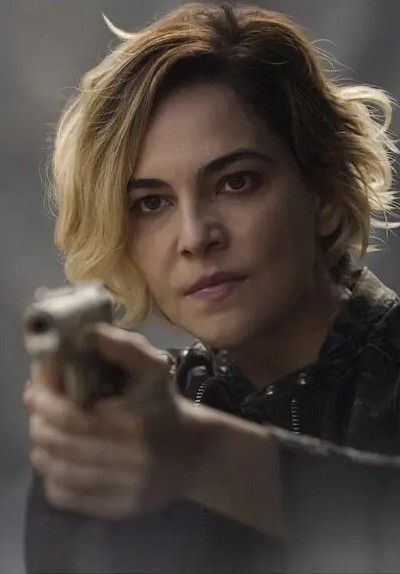 I’ll treat these two seasons as one entity. Indeed, there’s a case to be made that you could include the first season as well, given the way they are inter-connected. However, it feels that the second and third are more directly linked. If you recall, the initial series had Sao Paolo cop Verônica Torres (Müller) looking into a domestic abuse case. However, this turns out not be as simple as it appears, with the abuser being protected by a mafia-like group, whose tentacles are embedded in a selection of power structures, including the police force. Series #2 and #3 take a broader scope, Verônica looking to take down elements of the group, and end their systemic abuse of women.
The second series focuses on Verônica’s efforts against a church run by sketchy and abusive faith healer Matias (Gianecchini). He has a line in inviting poor hurt souls – albeit only attractive, young women – to stay on the church’s property, where bad stuff happens to them. His wife is firmly beneath Matias’s thumb, and Verônica is now operating more less unofficially, though with tacit help from some on the force. Her only hope is to get to the daughter, Angela (Castanho), who is lesbian because Netflix. If she can convince Angela her father is not the saint his public persona appears to be, they might have a chance to expose his crimes. But doing so simply removes another layer of the conspiracy, with the shadowy “Doúm” remaining at large.
Which is where the third series comes in, as she finds Doúm to be horse breeder Jeronimo (Santoro). Initially, he seems on her side, which is remarkably naive of her, because he set my alarm bells ringing from the very start. Doesn’t help that he looks like a creepy combination of Liam Neeson, Kid Rock and Tommy Wiseau. And that’s before we learn about the questionable relationship with his mother, or that he grew up in the same abusive orphanage as Marias. Such concerns are very justified, because it turns out Jeronimo is not just breeding horses for fun and profit. He has his eye on both Angela and Verônica’s daughter, as the next brood mares, ready to be auctioned off to rich clients.
I felt it all got a little silly and excessive in the third season, with the plot requiring events which stretched plausibility to a breaking point. It’s likely a good thing it was only half the length of the second series, at three episodes rather than six. While it ends with Verônica looking to continue the fight for justice in her extra-legal capacity, the show was canceled, and I feel that’s wise given the steadily diminishing returns. There was a nice sense of circularity, series 3 ending in a suicide, the way the very first episode opened. However, the televisual cycle of abuse was becoming repetitive, although both the second and third seasons had some interesting revelations about Verônica’s family background. While Müller’s performance held things together, it’s likely better this stopped too soon, rather than too late.
Creator: Raphael Montes
Star: Taina Müller, Reynaldo Gianecchini, Klara Castanho, Rodrigo Santoro
 Based on the trailer, I was hoping for something like a Korean version of The Transporter. It seemed to promise this, with Jang Eun-ha (Park) playing a courier for Baekgang Industries, a company who will transport things – mostly people, it appears – from Point A to Point B, when regular delivery methods are not possible. For example, because the passenger in question is being chased by enemies, and needs to make a quick exit from the country before he’s found. Her latest mission involves baseball pitcher Kim Doo-shik, who has blown the whistle on a match-fixing scandal, so needs to escape before those behind it get hold of him and young son Kim Seo-won (Jung).
 ★★
★★ I was expecting this to be a follow-up to the previous Giantess films, most recently
  After the unexpected pleasure of
 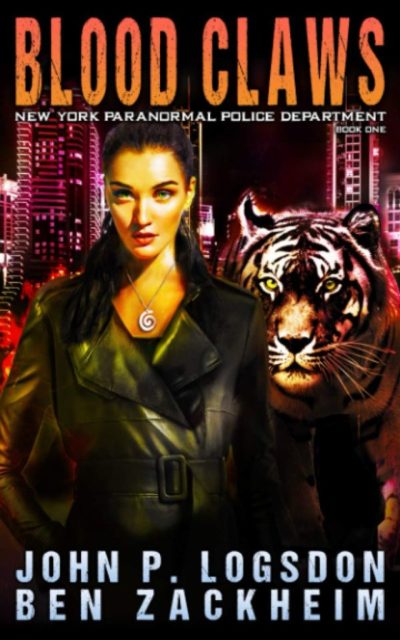 I picked this up without realizing I already had another book in the _______ Paranormal Police Department universe. That was
 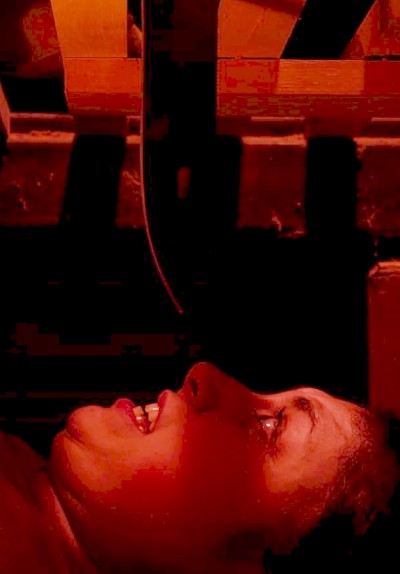 This is fairly sparse, unfolding entirely in the single location of a furniture factory, over the course of a single night. The central character is Karen (Terrazzino), a single mother who has just taken on the job of a cleaner and overnight security guard at the premises, in order to provide for her young daughter, who is ill on the night Karen has to start work. These issues quickly pale into insignificance – though not irrelevance – when a group of masked men enter the building, looking to hunt down and kill her. With the doors chained from the outside and the phone lines cut, Karen is entirely on her own against the bigger and stronger, but fortunately not smarter, intruders.
 This animated series bears a certain resemblance to another Japanese show on Netflix, the live-action Alice in Borderland. Both are adaptations of Japanese manga series (Alice started three years earlier), which see a number of young people suddenly transported to a lethal and sparsely populated version of their city. There, they have to figure out how to survive, and what the heck is going on, in the face of enemies human and… well, not-so human. Both shows also manage to reach the end of their first series without achieving even the slightest degree of significant resolution, though the journey to reach that point is still reasonably entertaining, and certainly does not stint on the old ultra-violence.
 The structure here is kinda odd. While each of the three volumes included in this omnibus are effectively standalone stories, they each feel so slight as almost not to be worth bothering with. In particular, there seems to be a
  Mary (Kessell) has a grudge, and probably with good reason, I’d say. Because the serial killer known as Diablo killed her daughter, Kelly, in a particularly brutal manner – finishing his victim off by burning her alive. With the help of information provided by FBI Agent Selena Wall (Adedeji), Mary puts the pieces of the case together, and eventually lures Diablo (Howard) into attacking her, then brings him back to her house. This has been turned into a hi-tech, maze-like warren designed to force Diablo to confront all his crimes, and in particular his murder of Kelly. Naturally, things don’t quite go as intended. Expecting rational, predictable behaviour from a serial killer was probably a mistake by Mary, despite her technological advantages.