



★★
“Hope isn’t necessarily good.”
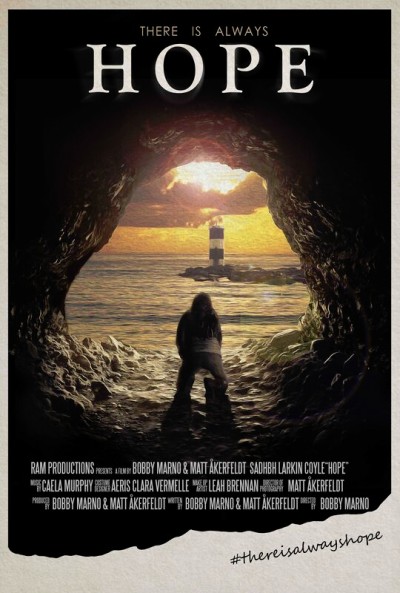 Hope (Larkin-Coyle) is an aspiring vlogger, though has not yet figured out how to make it pay sufficiently to quit her grindingly dull day job, for a boss who perpetually questions Hope’s commitment. She’s not wrong, because Hope’s heart definitely lives in the outdoors, not at a desk or in a Zoom meeting. Her particular niche of content creation is in wilderness adventures, whether that’s going up mountains, diving underwater or – as in this case – scaling a cliff-face. She then posts the videos online, so that others can live vicariously through her experience. She’s excited for her next trip, which will take her back to a part of Ireland by the ocean, which was a favourite haunt of her late mother.
However, a moment’s inattention leads to disaster, with Hope sent plummeting to the rocks below. When she regains consciousness, she finds her shin bone shattered and sticking out of her leg. With (inevitably!) no cell signal, she is thrown back on her own resources, and will have to make her way out of an increasingly precarious situation, entirely by herself. As you can imagine from this synopsis, it puts a lot of weight on the shoulders of the lead actress, and it’s all a little contrived. Initially, I expected there to be much more of her speaking to the camera, documenting events for her online followers. But the film doesn’t really go that way, favoring a more general voicing of Hope’s inner monologue.
In the main, to be blunt, you are basically watching a woman crawl across rocks for an hour, and I’m probably stating the obvious when I say that this is of limited appeal. There are some inconsistencies which seemed annoying at the time, almost as if whole scenes had been removed. One second, Hope is on a beach. The next, she’s swimming in the water – broken leg and all. Then she’s suddenly marooned in a cave. There’s also character stupidity, such as Hope’s ignorance or wilful disregard for basic survival protocols. However, there’s a third-act twist which, to be fair, goes a long way to explaining what had gone before. On the other hand, you’re left wondering if perhaps the film-makers have sabotaged the entire point with it.
A more definite problem is the sense that there simply is not enough happening here. The fall, presumably for budgetary reasons, is a simple fade to black accompanied by a scream. I will say, the sounds Coyle makes when exploring her wound are legitimately harrowing, and help sell her injury as much as the small but effective effects work on her leg. That takes care of about five minutes, leaving… 93 others, which fall well short of possessing the same degree of intensity. It feels as if the makers were looking to paint a psychological portrait, using the frame of a wilderness survival story. As someone who was expecting a genuine wilderness survival story, I’m left feeling distinctly short-changed, and a little bit cheated.
Dir: Bobby Marno
Star: Sadhbh Larkin Coyle
 Reviewing director Profitt’s filmography on the IMDb is an interesting experience. He seems to have started off in the paranormal, drifted through pseudo-reality TV with titles like Untold Undercover Police Stories, and has now found a niche in the low-budget urban gangster field, for which Tubi seems to have an inexhaustible appetite. But the promise very much exceeds the product. Case in point: while the woman on the cover here
 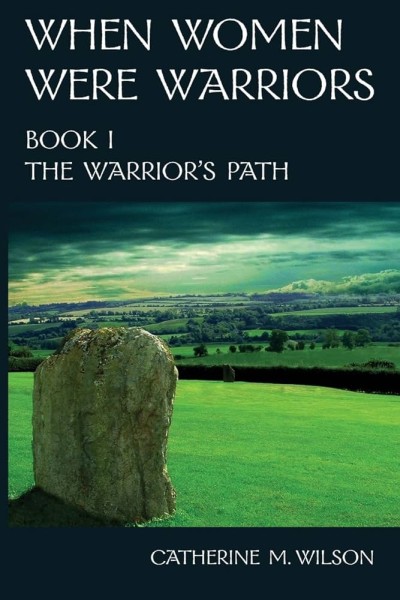 To be frank, I was expecting rather more action given the title here. Almost all of it, however, takes place “off-screen”, as it were, being described second-hand, rather than experienced. It makes sense in the context of the book, and it’s not badly written. But when you use the word “warrior” or derivations thereof, not once but twice in your title, it would seem fair to expect a higher quotient of… warrioring. I tagged this as fantasy, mostly because it clearly takes place elsewhere and/or elsewhen. It is fairly grounded e.g. no dragons or vampires, but certainly contains elements I would call mystical.
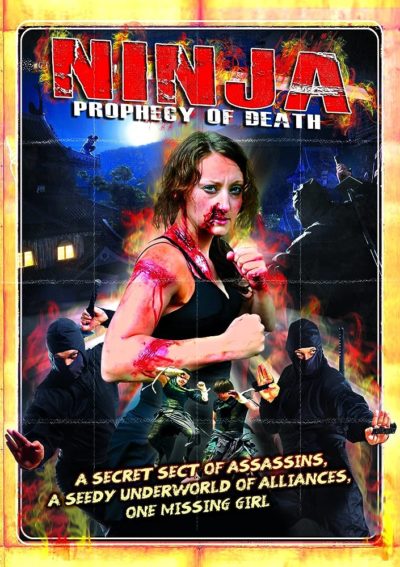 To a certain degree, this should be graded as “incomplete”. Easiest to quote the IMDb on the reason why. “This film was to be shelved by director Kabasinski, when post-production had a lengthy delay and he went on to produce the film Skull Forest. Very happy with the improvements in overall production value of Skull Forest, Kabasinski was going to just take this film as a ‘loss’ having already moved forward. It was not until an editor from Buffalo, NY stepped in and expressed desire in taking on the project. Feeling indebted to the cast and crew for the film and post-production going better then expected, Kabasinski decided on releasing the film.”
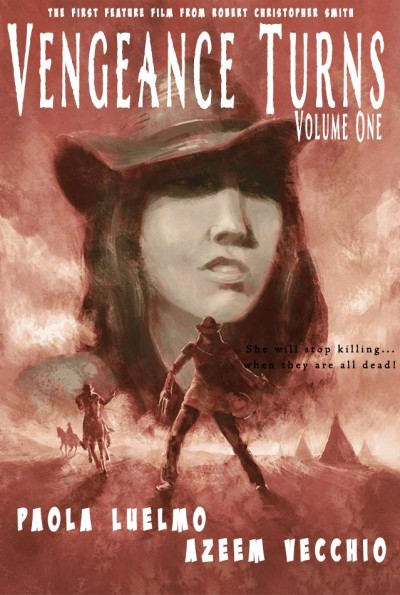 The film opens with a caption, “The first feature film from Robert Christopher Smith,” and it’s largely superfluous. Because, to be brutally honest, you can tell. It’s filled with choices which virtually scream, movie-making debut. That it’s a passion project for Smith is clear, and the persistence with which he pursued his vision is clear, and highly laudable. Perseverance can only take you so far, however, and is no substitute for skill and experience. It does feels this was a learning experience on the fly, with a palpable improvement over its course, and Smith left the production a significantly better film-maker than he came in, I suspect. At least it does tell a fairly complete story (glares over at
 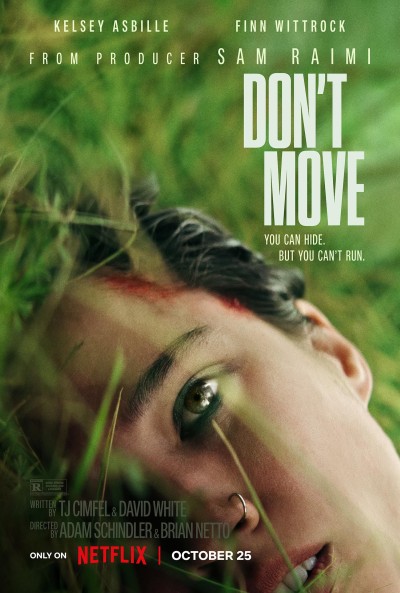 A somewhat gimmicky but adequately competent Netflix Original, I guess the moral here is that being abducted and stalked by a serial killer is the best kind of therapy. We meet Iris (Asbille) in the remote woods where her young son previously died. She never recovered, and is now standing on edge of a cliff, contemplating suicide. She’s interrupted by the arrival of a stranger, Richard (Wittrock), who talks her down. However, it turns out he has an ulterior motive: he wants to be the one to kill Iris. He tazes her, and while subsequently managing to escape, she has also been injected with a muscle relaxant that in twenty minutes will render her unable to move.
 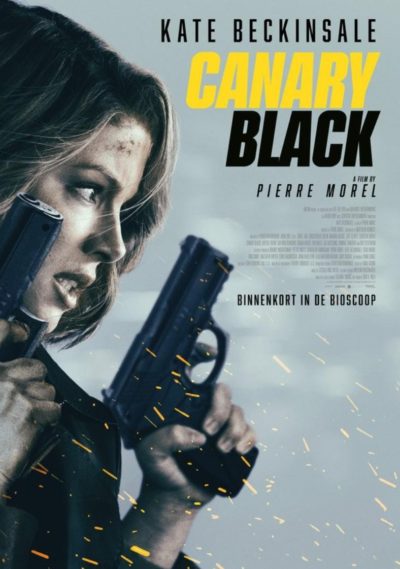 Both director Morel and star Beckinsale should be familiar names around here. The former directed
  Director Tjahjanto gave us one of the best action films of the last decade in
 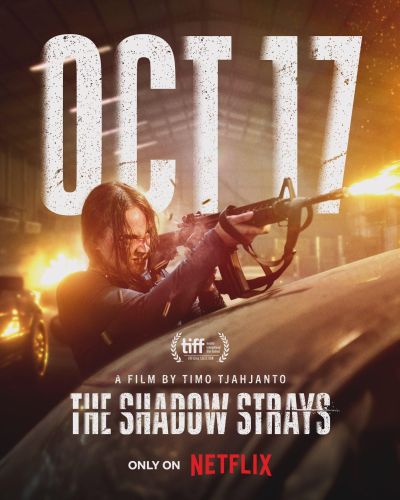 The Shadows are a sect of assassins, who are basically unstoppable. 13 (Ribero) is a teenage trainee, who screws up a mission in Japan alongside her instructor, Umbra (Malasan), and barely survives. 13 gets put on administrative leave, and her enforced idleness is where the problems start. In a thread strongly reminiscent of Leon, she watches a neighbour get killed by a gang, and takes care of the son, Monji. However, he vanishes, apparently abducted by the gang, and 13 isn’t standing for that. Beginning by turning low-level enforcer, Jeki (Emmanuel), she works her way up the power structure, which goes right to the top of Indonesian political society. The resulting chaos threatens to expose the Shadows, so Umbra is then dispatched to terminate their rogue agent.
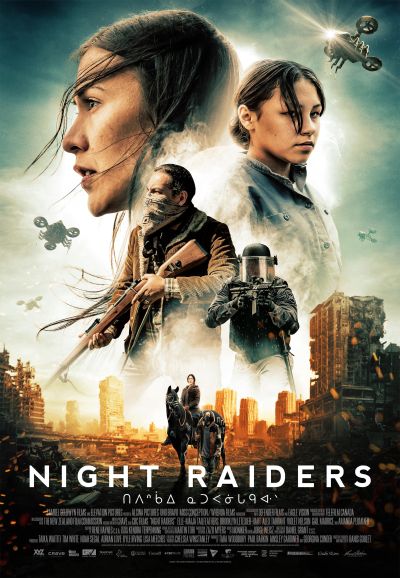 This rather gloomy slice of social science-fiction seems to take place in a post-apocalyptic version of Canada, albeit a fairly low-key apocalypse. It seems to have led to a rigidly class-based system, with a sharp division between “citizens” and the rest. That leaves the indigenous population on the outside, scrabbling hard to survive and avoid having their kids “re-educated” in military-style academies. [This pointedly echoes
 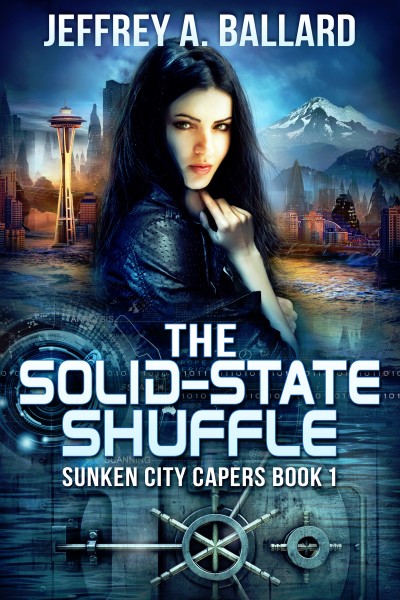 There’s an interesting setting here, and the concept isn’t bad. However, the author is flat-out terrible at explaining things, and that derails the book badly. There were entire pages which seemed to be an written almost in another language, such was the level of technological gobbledygook spouted – and I write as someone who works in the field. Too often, it felt as though the writer was using technology as an alternative to magic: whatever needed to be done, there seemed to be some gadget, gizmo or app which the heroine or her allies could whip out to perform the necessary task.