


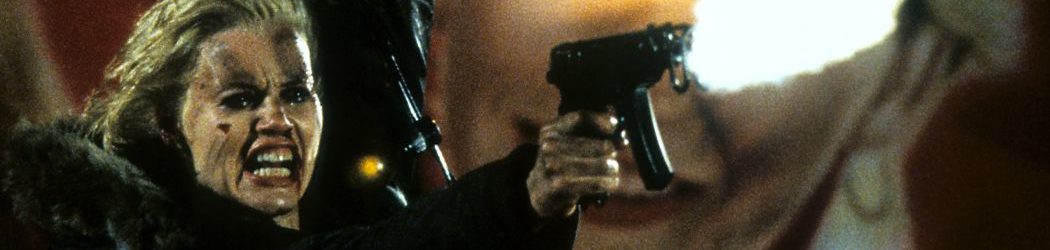

[The following interview was taken from the now unavailable (as far as I know) Vol.2,#1 of ‘Eastern Heroes’ magazine, published in summer 1992. It’s occasionally cringe-inducing (Bey, if you’re going to chat up actresses, we don’t need to read about it in the transcript!), but has its moments. No copyright violation is intended, and it’s reproduced for informational and educational purposes only]
Bey Logan goes on a pussy hunt, and tracks down the ‘Black Cat’ herself, that sensuous, sexy and ever-so-slightly-psychopathic Jade Leung.
RAP ON A HOT TIN ROOF
My old mate Betty Chan was looking worried. “When we did the Black Cat press tour in Malaysia,” she confided, “Jade didn’t say anything…” This didn’t phase me a bit. I’ve met most of Hong Kong’s lethal leading ladies, from Michelle Khan to Yukari Oshima, and there was no way I was going to miss the opportunity to meet the latest winsome woman warrior. D & B’s Black Cat has yet to get a release in the U.K. In fact, it has yet to get a distribution deal, which just goes to show how slow the U.K video market is at the moment. More than a few of you might well be wondering what’s so special about the him, and its leading lady. Trust me. Black Cat boldly goes where no H.K femme de la fureur flick has gone before, and the precious Jade is a Miss with a hit…
Luc Besson’s slick French thriller La Femme Nikita was a surprise success worldwide. The movie tells the tale of a psychotic Parisian street punk, played by Anne Parrillaud, who is drafted by a secret department of French Intelligence (if that’s not a contradiction in terms) to perform covert assassination missions. In the course of the film, the Nikita of the title suffers to the point that she is redeemed of her past sins, and finds a kind of freedom.
Many critics were stunned at the way Besson used a woman as a viable action hero. Clearly, they had never seen many of the Hong Kong hyperthrillers, films that prove time and again that a Yellow Widow is just as deadly, and that hell really has no fury like a woman’s scorn (or sidekick, for that matter). There’s nothing new about Chinese film-makers ‘borrowing’ the plot from a western movie, as D & B did when they lifted the Nikita storyline to make Black Cat. Previously, though, such transitions have tended to beef up the stunts ‘n’ guns ‘n’ gung fu content, while avoiding the kind of nudity and sexual situations commonplace in the west and in Japan. Just compare Killer’s Romance or Dragon From Russia with their original, the animated Crying Freeman! Black Cat, on the other paw, marks the first time that a Hong Kong movie has adapted a western tale and added an element of sensuality to the tale!
In the U.K, ‘Category 3’ is a kind of prisoner. In Hong Kong, it’s a kind of film that contains nudity, on-screen sex and obscene language. These three elements have been stocks in trade for Hollywood since the days of Cecil B. DeMille but, oddly, seeing at there are so many of the buggers, Chinese people seem to have been rather puritanical about reproducing reproduction. Until now. In the last year, ‘Category 3’ has leapt to the fore, spearheaded, in fact double spearheaded, by the extraordinary success of one Amy Yip, an actress who makes Dolly Parton look like Shelley Duvall, a woman who seems to have taken delivery of a pair of Scud missiles with the same subtlety with which Iraq received its Supergun barrel. Known far and wide as the ‘Dai (Big) Balls Queen’, Amy is a much-loved figure of fun. However, the raunchiness of some of this Mae East’s vehicles have paved the way for more mature treatments of adult sensuality in Hong Kong action pictures. A prime example of this new genre-within-a-genre is Black Cat.
“She’s very shy”, observed Betty, for the umpteenth time, as we awaited the arrival of the Divine Ms. Leung. Betty Chan, I should explain, is the luckless D&B P.R. person who gets lumbered with taking care of my every whim when I go on the beat in Kowloon. Previously, she had fixed up interviews for me with the likes of Cynthia Khan and Donnie Yen. Perhaps she was worried that my straight ahead, no-holds-barred, National Enquirer q-and-a technique would unnerve poor Jade. I feared not. Along with my usual wit and charm, I had a secret weapon. I speak French, and so does Jade Leung. Would this be enough to ensure a frank and meaningful exchange of ’phone numbers…um…views? Read on….
BEY LOGAN: Est ce-que ce tres difficile pour tourner les cascades dans votre premiere film d’action ?
JADE LEUNG: Oui, c’est tres difficile, mais j’ai… Ai-yah! Your French is better than mine! Let’s talk in English and Cantonese, please!
BL: Okay Jade, you just made your first action film….
JL: It’s my first film of any kind!
BL: So you were in at the deep end in terms of doing fights and stunts. What was your background prior to doing Black Cat?
JL: I’m from Hong Kong. I went to Switzerland for about four years. I was studying there. I came back to Hong Kong in 1990, and went to work as a model.
BL: What were you studying in Switzerland?
JL: How to speak French, but not too much! I stayed in a Chinese restaurant there, so I wasn’t always speaking French. Also, I studied fashion design.
BL: It’s a real jump from that to being an action film femme fatale. How were you discovered?
JL: At that time, (director) Steven Shin started looking for a new actress to star in this film, Black Cat. They had the script already. Then, a friend of Steven Shin introduced me to him, and he picked me out of two hundred girls who auditioned for the part. All the girls in the modeling agencies cast for the film.
BL: Why do you think they picked you, out of two hundred other beautiful girls?
JL: I think I had a certain ‘look’ they wanted, and also I am very strong! My style was suitable for Black Cat.
BL: Most performers pay their dues with small roles in films before becoming big stars, yet here you were with a starring role right of the bat. It must have been quite a challenge for you. Were you nervous before you started shooting?
JL: A little bit, but I liked the character of Black Cat, of the girl, so I feel I can accept the challenge.
BL: What kind of training did you have to undertake to prepare for the film?
JL: I did about three months training in Chinese kung fu, reactions, falls, weight training and so on. It was very hard!
BL: Obviously you carry off the action in the film very well, but, given the quality of the Chinese action directors, that probably wasn’t as hard as pulling off the acting side of the part. Did you have any acting lessons?
JL: No. Not one. On the set, the director prepares me and shows me how to act.
BL: A lot of people have said that Black Cat is very similar to La Femme Nikita. Est-ce-que tu connais cette filme?
JL: Oui. Je connais. I think that our Chinese film and this French film are not the same. The story has some similarities, but the way the story is told is different. Also, I think I play the character differently from the way the actress plays Nikita…
BL: You’re certainly a lot prettier than Anne Parrillaud…
JL: (giggling): Merci beaucoups!
BL: Both films are highly stylised in terms of the action and the violence, which is another reason people might compare them. Black Cat is a intense movie, and your character in it is a very extreme one. Do you find it easy to come off that level of intensity, or do you come off the set, go home and beat up the boyfriend?
JL: When I finish filming, I’m too tired to beat up anybody! The whole production took only one and half months to shoot. So my schedule was very tight. I’m in virtually every scene, so I didn’t have many rest days. Out of forty-five days, I worked every day! Sixteen hours for one day, I work! As you know, the film is set in Canada, in Hong Kong, in the U.S and in Japan, so, in each country, we have a different crew. However, in every country, I’m still working every day, with no rest!
BL: In the film, your character is a ruthless killer, but, in person, you’re obviously very nice and quiet and normal. How do you generate that kind of assassin mind set?
JL: That’s what acting is all about! I like acting, and I really liked the fact that the character was so extreme. It made it more fun! Sometimes, the girls in Hong Kong films are just there for the hero, you know?
BL: On-screen and off from what I hear…
JL: I loved playing such a violent role. It’s a real change for a girl in a Hong Kong movie.
BL: So how did you perfect your ‘mean’ look for Black Cat?
JL: Before shooting, I look in the mirror and try for the right expression. Then, when we’re filming, I try to remember how that look feels.
BL: Were you injured during filming?
JL: Everywhere except my face was injured.
BL: How they can beat upon such a beautiful body… (Jade giggles.) When you see the film now, which is your favourite scene?
JL: I like the first part very much. Everything until we go back to Hong Kong. You have seen the film?
BL: Yes. Betty screened it for me the other day. How was it working with my old friend Simon Yam? I made a film with him in England.
JL: He’s very good. He’s a good actor, and he taught me a lot. He’s like my big brother!
BL: He’s a cool guy…
JL: No. No. He’s very nice. He’s a very sweet guy. Actually, I think every girl is attracted to him.
BL: Yes. I meant he looks cool! Everyone knows Simon is really a pussycat. When you’re not filming, what do you like to do?
JL: I go to the gym every day, to work out for about two hours. Otherwise, I stay at home and watch videos or listen to music.
BL: You know, that’s exactly what Jackie Chan says he does when he’s not working! And we all think you guys have such wild lifestyles… One reason that Black Cat has become so notorious so fast is that its one of the first of this new kind of Category 3 action film. It’s mature in the way that an American action film is. How does it feel to be the symbol of this new wave of Chinese action actresses?
JL: It’s different from the kind of female action heroes we have had before, like Michelle Khan and Yeung Ly Tsing. So far, I’m the only one who can do this, and be a kung fu star and, I suppose, some kind of sex symbol. It doesn’t worry me at all. It was such a great part in Black Cat, but I know I can go on to play different kinds of roles.
BL: I know the nudity in Black Cat is still very low key compared to an American film, but it must still be quite difficult to do, especially in a Hong Kong movie, where mainstream films tend to be so puritanical with regard to the female form.
JL: I didn’t do the nude scenes deliberately to shock people, or to make my name. They were part of the script and I knew that when I accepted the role. As I’d been a model before, I’m not too self-conscious about my body, so I didn’t find it too embarrassing. Also, it was shot very discreetly. Also, Thomas Lam, who plays my lover in the film, was very gentle. You know the scene in the jacuzzi? He says to me before filming: “Okay, in this scene, I act like your boyfriend, and then, afterwards, we just forget about it.” He was very professional, and that helped a lot.
BL: I think that viewers in the West might be a little disappointed if they expect some hard raunch in Black Cat, because it really is very soft…
JL: Will it be the equivalent of a Category 3 when it’s released in Britain?
BL: Yes, but for the violence, not for the nudity or sexual situations. We get stronger stuff on TV over there. Jade, what will your next film be?
JL: Probably Black Cat 2.
BL: What a startlingly original title! I believe you’re signed to a six year contract with D&B…?
JL: Yes.
BL: And how old are you now?
JL: Twenty-two.
BL: Wow. Do you have a set number of films each year in your contract?
JL: Three films a year.
BL: Three films a year for six years! We’re going to be seeing a lot of you, and hopefully in more ways than one…
JL: (giggling): You’re bad!
BL: What was the funniest thing that happened during the shooting of Black Cat?
JL: Well, you know the scene where Thomas and I aim rolling aroundon the table? The kissing scene? We n.g. (no good shot) over thirty times! We kept rolling out of shot of the camera. Afterwards, both our lips are really red, from my lipstick!
BL: I think he was n.g.-ing on purpose. What kind of films do you like to watch? Chinese or American?
JL: American movies.
BL: Who’s your favourite American actor or actress?
JL: I like Julia Roberts very much…
BL: Really? I hear she may be playing the lead in the American version of Nikita. So, something you have in common with Julia Roberts!
JL: I don’t think of Black Cat as the Chinese version of Nikita…
BL: Well, a lot of people do. Amy Tsui (wife of director Tsui Siu Ming) was telling me that they planned to make a Chinese version of I.a Femme Nikita, but that they abandoned it because you guys got there first! (Jade’s pager beeps for the the umpteenth time during the interview) You know, for someone who’s not working at the moment, you get an awful lot of pager messages. Must be all your boyfriends…
JL: No, it’s not my boyfriends!
BL: Well it ouqht to be! Seriously I wouldn’t worry about Black Cat being compared with Nikita. It stands up surprisingly well, and I think you should worry more if Nikita had been a bad movie. If you could work with any director in Hong Kong, or any actor, who would it be?
JL: I would like to do a film with the actress Gong Li, you know, from Raise the Red Lantern?, and with her boyfriend, the director Chang Yee Mo. They’re both from Mainland China, and I really like their work.
BL: A real jump from Black Cat to Raise the Red Lantern! Which American director and actor would you like to work with?
JL: Al Pacino, Julia Roberts and, for director, Martin Scorsese!
BL: The Black Cat, the Pretty Woman, the Godfather and the director of Goodfellas and Raging Bull… That’s going to be quite a movie! You do some kung fu fighting in Black Cat. Have you kept that up since the movie?
JL No. Like most action actors here, I just learn on the set. Actually, for movies, you don’t need to go to a kwoon and learn from a sifu, but, if you want to fight for real, then you have to do that. Right now, I just go to the gym to do weights…
BL: What’s the Jade Leung Workout consist of?
JL: Swimming, to build up muscle tone, and aerobics, to lose weight, then all kind of weight training exercises to tone my muscles. All kind of things!
BL: Most Hong Kong actresses have pretty bad reputations in terms of their private life. Are you aware of this, and do you take steps to avoid it?
JL: I have my own lifestyle. I don’t care what other people do. I do my own thing!
BL: So a second Black Cat movie is definite?
JL: I think so, yes. We hope to shoot part of it in Russia. We should start early next year.
BL: Would you like to came to England some’ to meet all the fans you’re going to have after Black Cat is released?
JL: Yes. I’d love to come to England and I’ve never been there. I plan to come over next year, because I want to improve my English
BL: We could run a competition in the the magazine ‘Adopt Black Cat For A Month’. The winner could have you stay with them, and they could teach English! Good idea?
JL: (giggling): Yes! Great! You’re crazy..!
BL: So they tell me. Jade, good luck with Black Cat 2, and thanks for taking time out for this interview.
JL: Thank you very much.
(Thanks to D’n’B’s Betty Chan for her usual gracious assistance, and to the Kowloon Sheraton for, as ever, playing host to my rap session with Deeb’s latest lethal lady.)
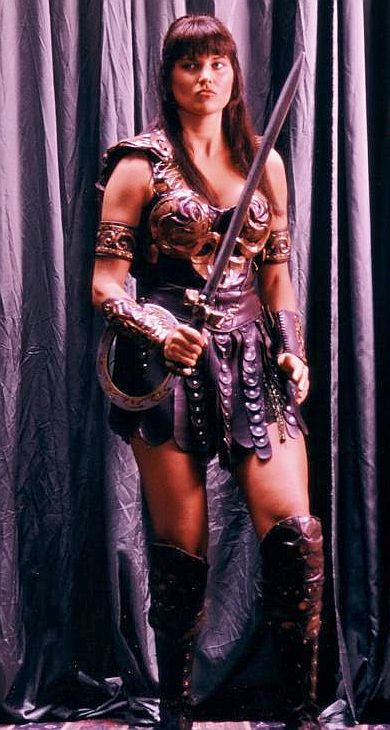
 Xena is one of the definitive action-heroine shows of all time. Originally appearing as a supporting character in a three-episode story arc on Hercules: The Legendary Journeys, in which she abandons her life as a warlord and opts instead to fight for good, as a way of making amends for her life. The producers opted to develop her as a spin-off, and the show ran for six seasons between 1995 and 2001, ending in a two-part finale (the review of which, below, was written first, hence it somewhat duplicates the overview here). It proved highly-popular for a show with no designated network home, pulling an audience in syndication of up to 7.8 million viewers during its second season, and inspiring a devoted fanbase that persists, even a decade after the show has come to an end.
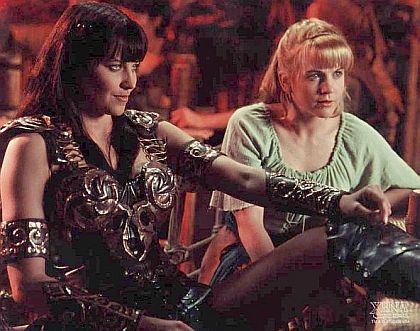 There was enormous, often ferocious debate among fandom over the nature of Xena and Gabrielle’s relationship, some asserting they were a lesbian couple. While both showed plenty of evidence of heterosexuality, there was a lot of content open to interpretation – much of it absolutely deliberate, and known as “subtext” in Xena fandom. I never found it convincing. My issue with it was not one of sexuality, simply compatibility: Xena and Gabrielle were absolute opposites, in background, upbringing, personality and approach. They just didn’t “fit” each other, from what I could see, and there was no chemistry visible. Xena and Hercules: I could see that. Xena and the Queen of the Amazons: no problem there either. But Xena and Gabrielle? Sorry. Not buying this. It also played into the stereotype that any strong woman
 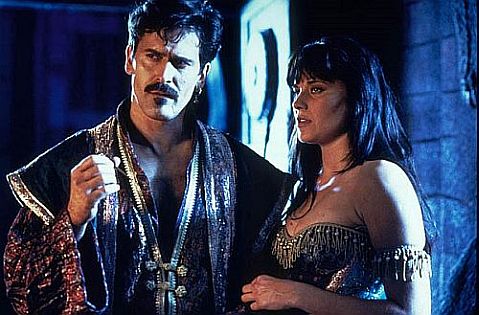 It’s assumed viewers are at least somewhat familiar with Xena’s background, as she is first seen burying her armour in an effort to bury her past. Of course, this is about as successful as it usually is in fiction, and it’s not long before she’s saving villagers, including Gabrielle, from slavery. That includes an aerial battle atop platforms, which is the first sign of the show’s strong influence from Hong Kong action films; it was using wirework, in a way that predated its popular arrival in Hollywood. Similarly, the stunning New Zealand locations foreshadow Lord of the Rings, to the extent that I kept expecting to see hobbits gamboling along in Xena’s wake.
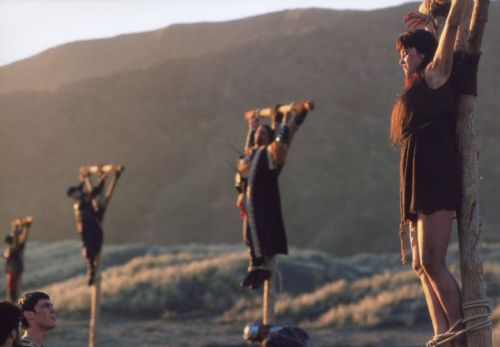 The defining moment of Xena’s sophomore season didn’t take place in any episode. In fact, it didn’t even take place in New Zealand, but thousands of miles away, During a rehearsal for an appearance on The Tonight show with Jay Leno, Lucy Lawless was thrown off a horse after it lost its footing, and broke her pelvis. It’s interesting to compare the reaction of the producers to what the Tapert/Raimi team did when the star of Spartacus, Andy Whitfield, was similarly a victim of severe misfortune, more than a decade later. There, they put the show entirely on hold and opted instead to film a prequel without him.
 In terms of style and approach, the show covers even more ground here than the first time, from absolutely froth to grim darkness. Xena even gets crucified by Julius Caesar in one episode [confusingly, the actor responsible also crops up later, playing Cupid, complete with fluffy wings…]. I’m sure I’m not the only one who found themselves whistling Always Look on the Bright Side of Life, during the scene shown above right. Another unwitting Python reference is the wretched Here She Comss, Miss Amphipolis, a dreadful tale of drag-queen empowerment, featuring perhaps the least convincing female impersonator since John Cleese put on a dress – as on the left, watch that Adam’s apple
  I used to be a Xena fan; for the first couple of series, I was a die-hard, never missed an episode, bought the merchandise, went to the gatherings, etc. I loved (with one exception) the supporting cast – Joxer, Ares, Autolycus – and still reckon Callisto remains one of the great TV villainesses of all time.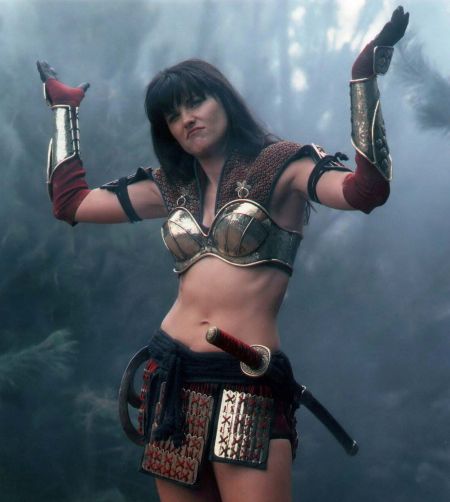
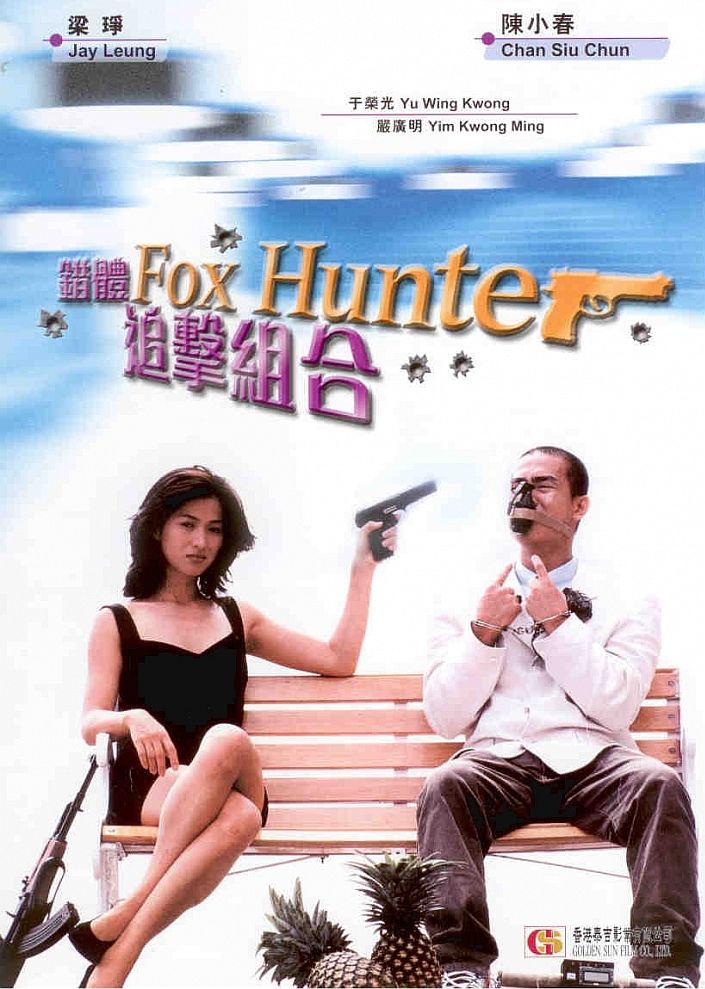
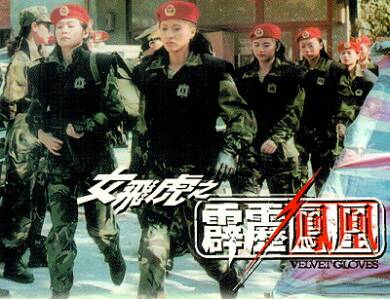 This film is a 90-minute explanation of why Jade Leung’s star never took off. While some decisions Michelle Yeoh made might have been questionable, at least her films were rarely boring, and never down to the level of this piece of tedious dreck. It depicts the struggles of a class of policewomen (including Jade), to become part of the elite. The idea certainly has potential – the Inspector Wears Skirts series has a similar premise – but here, there is almost no character given to any of the girls; they all blur into each other, like a dozen GI Jane-wannabes.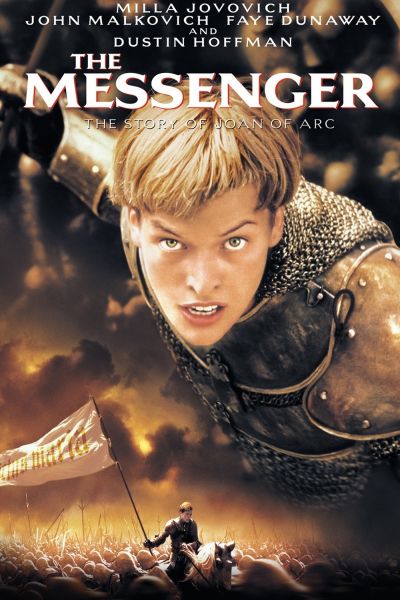
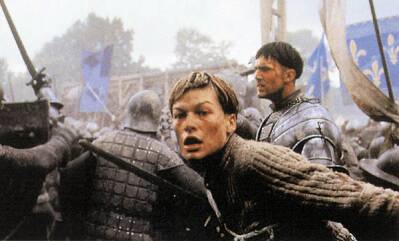 Joan’s capture, trial and execution are fairly close to the truth, though in reality, the King was less involved and more concerned for Joan than shown. It certainly is reasonable to suggest that a naive innocent such as Joan would have been used for political ends. Once she’d outlasted her usefulness – and with the king on the throne, she quickly became more a hindrance than a help – she would have needed to be disposed of. Must confess, I quite like the concept of Joan as a medieval version of Lee Harvey Oswald. Dustin Hoffman’s appearance as Joan’s conscience is another neat touch, and his sarcasm works well. Indeed, the film is one good performance from being excellent. The bad news is, it’s Jovovich who is the culprit (a messenger who deserves to be shot?), though Besson and co-writer Andrew Birkin perhaps warrant most of the criticism for twisting facts and characters in order to fit a predetermined goal. Their Joan is so far from the historical record, they’d have been better off placing their character in an entirely fictitious setting.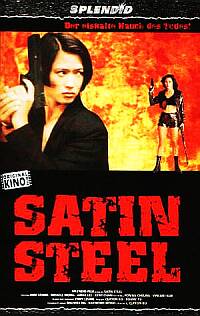


 The 1980’s were the Golden Era for action heroines in Hong Kong cinema. Names like Cynthia Khan (a.k.a. Cynthia Yeoh), Michelle Khan, Yukari Oshima, Cynthia Rothrock and Moon Lee all came to prominence in the decade. Just sliding in before the bubble burst was Jade Leung, who came out of nowhere to win Best Newcomer at the Hong Kong Film Awards for her performance in 1991’s Black Cat. Jade was born in the then-British colony, November 23rd 1969, but spent four of her later teenage years in Switzerland, where she studied fashion and learned French. In 1990, she returned to Hong Kong and was one of 200+ actresses to audition for Steven Shin, director of Black Cat. She won out, despite her lack of experience, and underwent a rigorous training program to get in shape for the movie.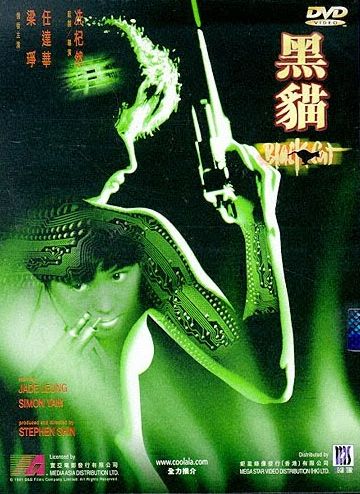
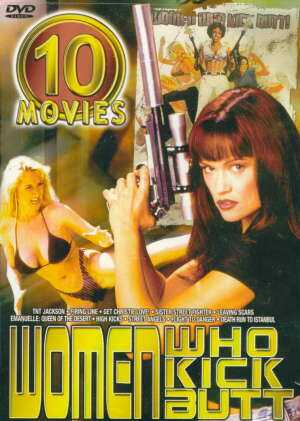 Ten movies in a box for $17.99 – how can you possibly go wrong? And yet…I have this nagging feeling that there’s a reason you’re paying $1.80 per flick. But, hey: if there are two good films in the set, I’ll have got my money’s worth. Any more, and I’ll be delirious happy. So, we’ll be temporarily abandoning our usual ratings for a more financial one as we attempt to discover, are these films
 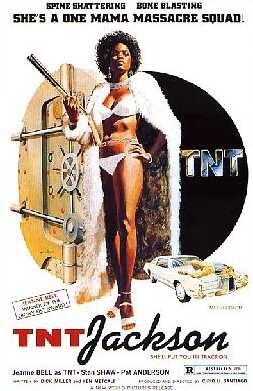 Dir: Cirio Santiago.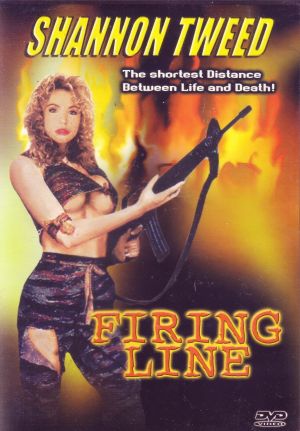
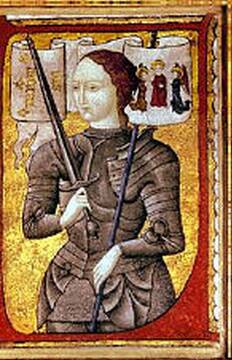
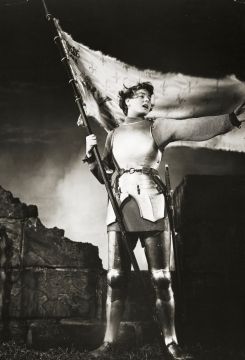
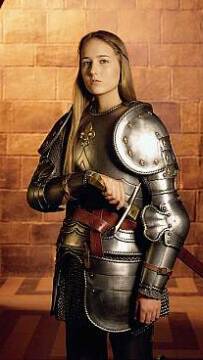
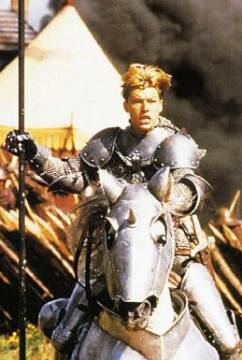
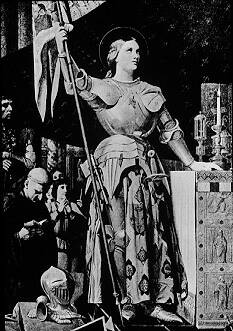 Born in the French province of Champagne in 1412, to a peasant farmer, Joan (or Jeanne – I’ll largely stick to the Anglicization) never learned to read or write, but was regarded by her contemporaries as a highly pious child. It was at the age of 13 that she first heard voices, but it took several years before they convinced her to leave home and help the French king, who was engaged in a battle to liberate the country from England. She presented herself to the local commander, who was skeptical at first, but was eventually convinced after Joan reported news of an English defeat before official confirmation arrived. Joan, clad in male attire to protect her modesty, travelled to see the king, and convinced him of the legitimacy of his claim to the throne, despite a faction of the court strongly opposing her influence. Her faith, simplicity and honesty won the day, and she acquired her sword, found buried behind an altar, in the exact spot she said it would be.
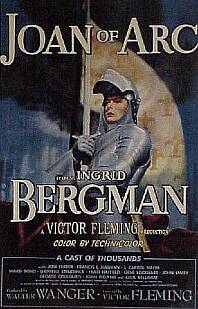 This was nothing more than a show trial, despite the efforts of those in charge to find support: according to biographer Jules Michelet, one jurist said “that everything about the trial was wrong; that it failed to respect the proper forms; that the assessors were not free; that the sessions were held in secrecy; that the accused…could not be expected to argue with learned doctors” and finished by declaring that it “was a trial to impugn the honour of the prince whose cause this girl is supporting; you should frankly say so.” Perhaps wisely, the holder of these opinions opted to leave France immediately for the safety of Rome.
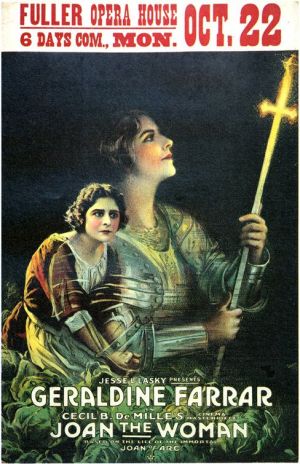 I don’t watch many silent films: it’s such an entirely different experience, obviously, much less driven by dialogue and more by gestures, leading to a style that can look extremely over-theatrical to the modern viewer. My efforts to enjoy the likes of Nosferatu, for example, have usually ended in my providing an accompaniment of snoring, to be honest. This was much better. Despite a running time of over two hours, this 1916 DeMille epic successfully held my interest, as it told the story of Joan of Arc. The framing device uses the then-contemporary World War I, and an English soldier (Reid) finds Joan’s sword in the trenches, the night before a dangerous mission [Interesting how the English are the enemy in the back-story, but the good guys “now” – at the time of release, America was still several months from entering the war, on the British side]. He then experiences a flashback vision, taking him to medieval France, where he is an English soldier saved by Joan (Farrar) in her milkmaid days. We follow her for the story you know, becoming the inspiration for the French army to defeat the English, before her capture, trial for heresy and – I trust I’m not spoiling this – burning at the stake.
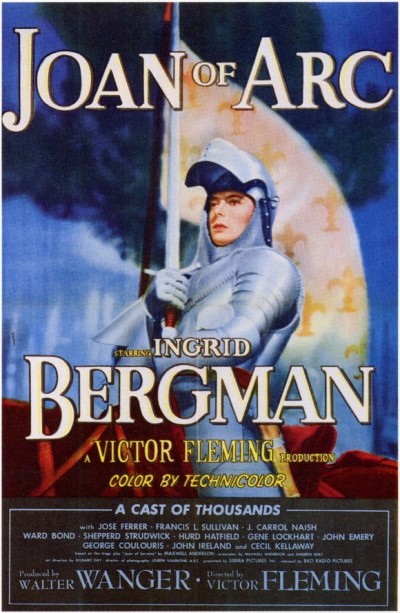 This film’s origins as a stage play are painfully apparent, and you can also see why the distributor’s felt it needed to have 45 minutes cut out before it could be released, as frankly, it’s a bit of a bore. The battle to recapture Orleans is the only action of note here, even though that represented the start of the Maid’s campaign to restore France to its proper ruler (Ferrer), rather than the end. After that, this more or less skips forward to his coronation, then Joan’s capture, spending the rest of the movie – and there’s a lot of it – going through the trial, and the railroading of the heroine into, first throwing herself on the church’s mercy, then recanting her recantation and returning to wearing men’s clothes, thereby sealing her fate. There’s not much here which you won’t have seen before, if you’ve seen any of the other versions of the story, touching the usual bases from Joan’s revelations that she’s going to be the saviour of France, through her trip to see the Dauphin, and so on. It does downplay the “voices” aspect, especially early on, perhaps a wise move since it’s difficult to depict, without making her seem like a religious fruitcake.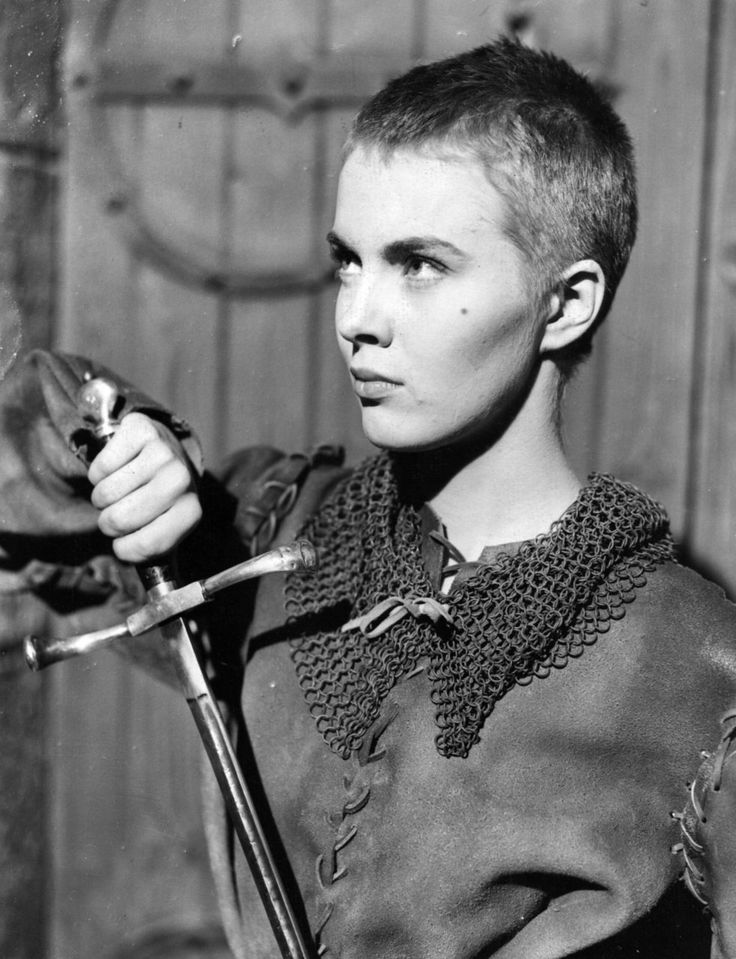
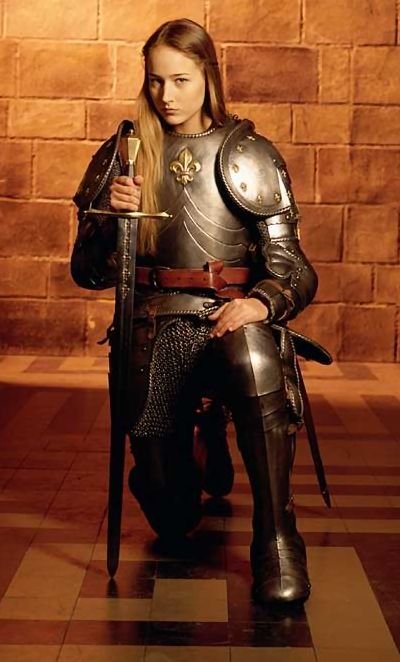
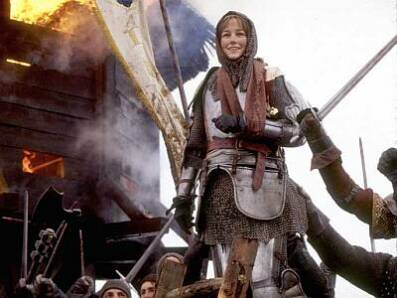 However, the main difference between this and The Messenger is that Joan of Arc is convincing. Perhaps with the advantage of having extra time (the DVD of the miniseries runs 189 minutes), they make the effort to show her interacting with other characters, and Sobieski’s calm, complete assurance is a striking contrast to Jovovich. The viewer can see why people would believe her, and it naturally follows they will too – Sobieski’s Emmy nomination was entirely well-deserved. Despite playing fast and loose with the facts (another example: Joan’s brother was not killed in battle, but lived to see her trial verdict overturned), this strong central performance holds the film together and, with the aid of the other fine actors, makes it eminently watchable. It may not be historically accurate, but it does a fine job of explaining why her myth is still honoured in the third millennium, without coming down in one camp or the other regarding the source of her visions. There are few TV miniseries worth watching, and fewer still worth owning, but this one comes highly recommended.
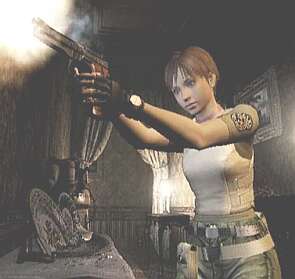 Romero is most – indeed, almost
 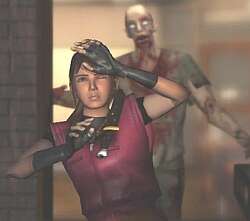 Romero’s problems are, as ever, plot and dialogue. Chris literally stumbles into a secret entrance, yet apparently played there as a child. Chris and Jill get one brief scene, are separated for 30 pages, then come perilously close to having a quickie between kills. Then there are speeches like, “They made you believe you were doing a good thing when it wasn’t good at all. It was evil! The kind of evil that resides in all of us. Makes us greedy, uncaring. The kind of evil that will wipe us out, in the end. Unless we stand up against it.”
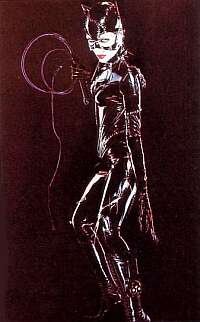 Daniel Waters’ career has been one of ups and downs. For every brilliantly-observed piece of satire, such as Heathers, there has been…well, Hudson Hawk. However, also on his resume is perhaps the best Dark Knight movie yet made, Batman Returns – though, let’s face it, with a supporting cast including Christopher Walken, Michelle Pfeiffer and Danny DeVito, a telephone directory would likely have made compelling viewing.
 This is, very clearly, a parody of the superhero genre, playing with the conventions of secret identities, powers, merchandising and so on. The part of Spooky, one of the CoG members who is a woman masquerading as a male superhero, looks to have been written for Michelle Yeoh – one move is described as “a famous maneuver of renowned Hong Kong actress Michelle Khan — hint, hint” which puts Waters several years ahead of Hollywood in recognising her talents.
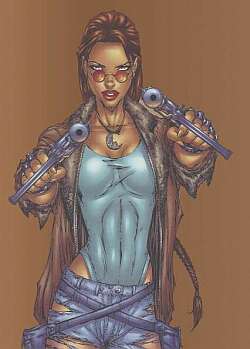 Few films had as twisted a path to the screen as Tomb Raider. [For a three-part history of some of the rumours since August 1997, see
  Once they enter the El Dorado complexes, the script reads like a description of levels from the game, with levers to pull, gaps to jump, tunnels to swim through, and keys to rooms located in other places. It’s hard to see how this could have been brought to the screen without feeling like you were watching someone playing the game. In addition, the trick used to locate an entrance is a painfully direct steal from the textbook of Dr. Jones – as is the massive, rolling boulder that forms one of the traps inside.
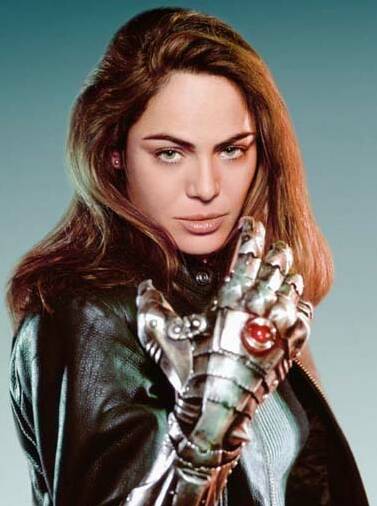 Much as in the first season, the second series of Witchblade brushed against greatness. Unlike the first, where you can point at the final episode as the key weakness, this time round it is a chronic rather than acute malaise that prevents it from getting the seal of approval. When it was great, it was fabulous – it just seemed that for every full, satisfying episode, there was a lame clunker to compensate. Particularly at the start of the season, there seemed to be precious little imagination on view.
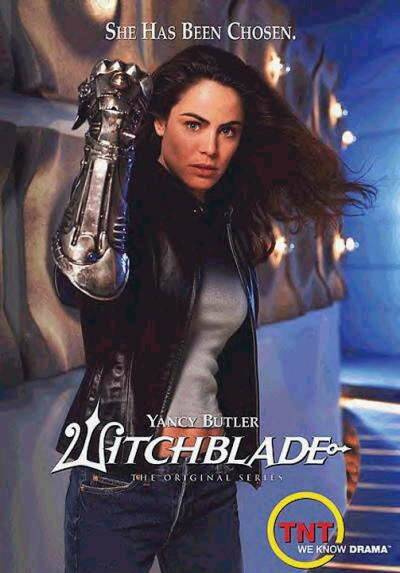 The finale, Ubique, also has to rate highly, for sheer perversity at the very least – Nottingham reaches new levels of creepiness in his final scenes with Lucrezia. Throw in a kicking soundtrack (Lords of Acid!), some spectacular deaths, and we’ll forgive a central plot device teetering curiously close to the main premise of feardotcom, which opened in cinemas the very same week. Among the interesting themes on view are the way both Pezzini and Nottingham both struggle to come to terms with the loss of their fathers, albeit temporarily in the latter’s case. This may be linked to one of the unresolved issues carried forward; who is the guy with wavy grey hair who always seems to be lurking round Sara? Indeed, the whole Nottingham/Pezzini relationship had perhaps more depth than any other in the show; veering between love, hate and obsession, with never a dull moment.