



★★★½
“Powerful portrayal by Theron, but tells us little we didn’t know already.”
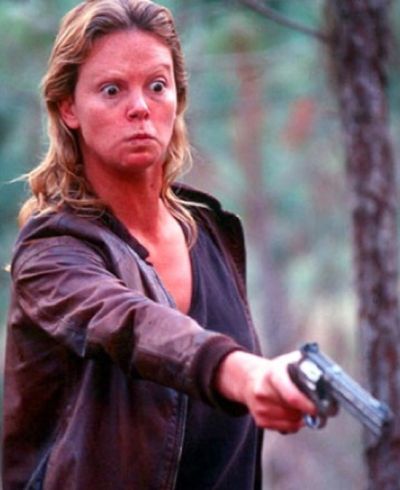 Got to give Theron the credit she deserves here, especially since the biggest previous impression she made was probably her 2 Days in the Valley catfight with Teri Hatcher. Safe to say her performance here will lend that scene an extra chill, as she plays Aileen Wuornos, America’s best-known female serial killer, a roadside hooker who killed seven men before being caught and executed. The film depicts her life, from when she meets lesbian-wannabe Selby (Ricci), with both women looking desperately for affection of any kind. The two fall into a downward spiral; initially, Wuornos kills to escape a brutal client, but by the end, she’s doing it simply to get money and a car.
Despite Theron’s remarkable transformation – both psychological and physical – the movie seems hollow at its heart, not least because Ricci seems wildly miscast, stumbling around behind Wuornos like a bumbling puppy. Oddly, Wuornos’ real lesbian lover was a strawberry-redhead called Tyria Moore, so the film is clearly well off complete accuracy. This is perhaps for legal reasons: the dead can’t sue; the living can, and frequently do. While the film effectively ends with her capture, Nick Broomfield’s jaw-dropping documentary covers the later period of the case perfectly well.
The two central characters operate in a vacuum; there’s hardly anyone with more than one scene. As a result, the movie makes Wuornos out to be the victim of an incredibly hard life, yet an unexplained gulf still remains between that, her general hatred of humanity, and her multiple murders. While Theron’s performance is certainly worthy of praise, for a better look into the abyss, watch Henry: Portrait of a Serial Killer.
Dir: Patty Jenkins
Star: Charlize Theron, Christina Ricci
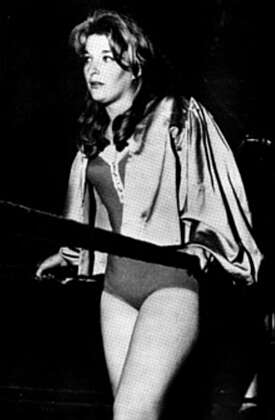 Despite the title, and the fact that Vivian Vachon is the most featured wrestler, the portion of this film which has much to do with women’s wrestling is actually rather small. It’s more a general overview of wrestling and it’s fans, during a strangely innocent era (the early 1970’s), before Vince McMahon dominated, when it still worked to give the illusion of a genuine sport.
 Supermodel-thief Mimi (Melanie Marquez) steals an artifact from a Chinese temple, then heads to the Philippines, via Hong Kong. HK and Chinese cops (Khan & Yeung) are on her tail, as is former partner Ko. This is, frankly, a mess. Yeung apparently does no detective work; Khan goes on a date to an illegal street fight; they’re supposedly partners, but only share one scene; and what
  This is one of those Hong Kong movies which seems to believe that if they cram in enough complications and characters, you’ll overlook the deficiencies. They’re kinda right: if you can let go (I did, Chris couldn’t), you will enjoy this a whole lot more, though here, it’d take five times as much plot to make you ignore the truly woeful titular bird. There would seem to have been confusion in the prop department over whether the request for a “giant crane” meant a bird or a piece of construction equipment: it looks as if they split the difference, building something with feathers, which remains (painfully) obviously mechanical.
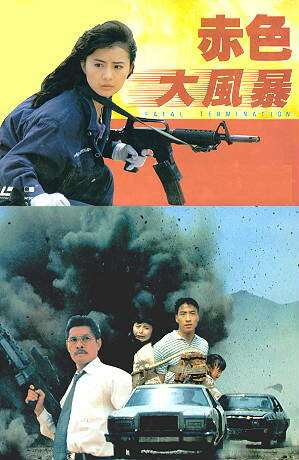 At first, this isn’t much of anything, least of all an action heroine movie. Cop Simon Yam investigates a customs officer (Shou) who is smuggling guns; it’s pretty ho-hum until an innocent underling is killed after finding evidence of the crimes. When his sister Moon (Lee) and her husband (Lui) get involved, this swiftly leads to the one scene in this film that
 “I’m working with a man named Monkey Fist. My evil career is
  It does remain a Disney show, hence the irritating musical interludes and, while the action is fast and furious, no-one ever gets hurt – though the sequence where a naked mole-rat comes out of a kid’s trousers is frankly freaky. But assisted by a stellar supporting cast (Elliott Gould, Michael Dorn, Dakota Fanning, Michael Clarke Duncan, Vivica A. Fox and – slightly less stellar – Freddie Prinze Jr.), this is a great parody of the whole genre: as one character says, “Time travel – it’s a cornucopia of disturbing concepts.” The tongue-in-cheek self-awareness is a delight, both heroes and villains having a refreshingly world-weary attitude, cheerfully admitting the paradoxes inherent in the story. Even an evil, golfing, kilt-wearing Scot comes over as endearing rather than insulting – Mike Myers, please note. The expected fluff blends with some surprisingly dark moments, such as the “Re-education Center” which seems right out of 1984. This is what the Tomb Raider movies
 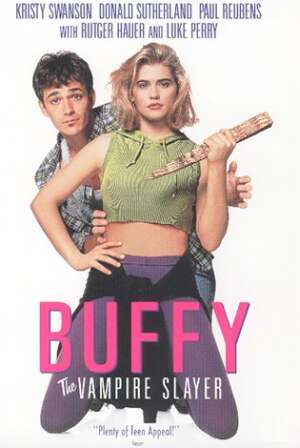 Buffy may be the only successful TV series based upon a failed film. A critical and commercial flop, creator Joss Whedon just wouldn’t let it lie, and finally got the mix of drama, horror, comedy and action he wanted in the show. The movie is a different matter, and has not aged well. The SoCal culture now seems incredibly dated, and Swanson takes too long to become the sympathetic heroine essential to the film. It also has no idea what to
  Even given that this was shot in 6 days for $5,000, it sucks on every conceivable level. Scenes are twice as long as necessary, or totally superfluous. The script has little of interest. And since there’s absolutely no sign of talent whatsoever, I have to presume the director slept with his leading lady. Hope she was better in bed than on screen. Rachel and Jane execute drug deals for their boss – emphasis on “execute”, since they get both the cash and your drugs. Jane’s qualms get worse when Rachel is shot dead, and she leaves the organization, until an FBI agent forces her to return, in order to kill her employer. She also gets frequent visits from the ghost of her dead friend.
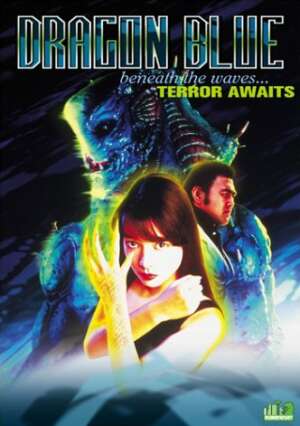 When the island site of a proposed resort starts seeing mutilated bodies turn up, they call in Feng Shui specialist Mayuko (Tanaka) to investigate. However, as she herself discovers, she’s no ordinary psychic, but the next in a line of guardians dedicated to stopping demons from entering the human world. With the aid of some conveniently informative dreams, a down-to-earth cop (pro-wrestler Mutoh, known in the West as The Great Muta) and a sword she finds underwater, it’s up to Mayuko to stop the Hellmouth from openi…er, save the world.
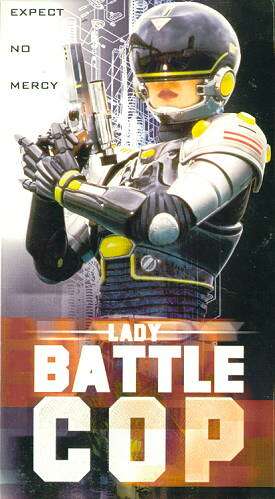 At least, so claims one of the songs in this largely ineffective movie, about professional tennis starlet Kaoru – Anna Kournikova will be in the Hollywood remake, no doubt – who is transformed into a crime-fighting machine. This takes place after she is killed by the Cartel, a crime syndicate bent on taking over Japan, despite apparently having about seven members. They do, however, have a “psychic robot” called Amadeus, which is probably the sole original thought in the entire film, and the whole thing gets kicked up a notch during his battles. The interesting question of where he came from (apparently a NASA creation), is never explored. This is a shame, since it’d be rather more interesting than almost anything the film actually offers.