




★★
“Diamonds are clearly not forever.”
 Erica (Kriis) is an attractive con-artist, who seduces married men in hotels, then drugs and robs them, knowing they’ll never be able to report the crime. She has just brought on an apprentice, Lauren (Patrikios), to learn the dubious trade, watch her back, etc. Their next score turns out to be the jackpot. as they discover the target was carrying a stash of diamonds with a seven-figure value. Absconding with their ill-gotten gains, the pair decide to lay low for a while, and head to Erica’s hideout on the holiday destination of Isabelle Island. They’re disturbed to read news reports that the target turned up dead in the room, and it quickly appears that the owner of the diamonds is closing in on them. But who is the threat? Local policeman, Mike (McCullough), for whom Lauren has a thing? Visiting boat-owner and part-time magician Tom (Berdini), with whom Erica has a fling? Or the creepy bald guy who arrives on the island and appears to be stalking Erica?
The performer who makes the best impression here is Tybee Island in Georgia, playing the role of Isabelle Island. It seems like a very nice place to take a holiday, picturesque and relaxing. Everyone else? Not so much. In particular, you could have Meryl Streep and Helen Mirren, and they’d still struggle to do anything with a script which resembles French lace, in that it’s a lightly-connected series of holes. For instance, when robbing the target, Erica first comes across an empty briefcase, before locating the diamonds in a tube, hidden in the toilet cistern. Inexplicably. she still takes the briefcase – which, of course, turns out to contain a tracking device. For the film’s entire duration, people both good and bad don’t behave in ways that make logical sense, and Creepy Bald Guy is probably the Worst Stalker Ever, though in his defense, there does turn out to be something of an explanation.
The leads are decent enough. There’s a nice contrast between the utterly cynical and untrusting Erica, who believes she’s on some kind of crusade to punish deceitful men, and the more naive and open Lauren, who gradually becomes more appalled, the more she discovers about her partner. I’d far rather have seen this angle exploited, with the two women turning from Thelma and Louise buddies, into vicious competitors, battling each other for the diamonds. Instead, they literally stand around while the (eventually revealed) good guy and villain tussle it out, mano a mano, on the edge of a convenient cliff. No prizes for guessing how that ends. The other thing is, for a film basically predicated on sexual attraction… it’s tame stuff. Given Kriis bears some resemblance to Penelope Cruz – though she’s Indian rather than Hispanic – this was disappointing. If ever you want proof that technical competence alone is not sufficient to justify a movie’s existence, this should be Exhibit A.
Dir: The Olson Brothers
Star: Elisha Kriis, Ellie Patrikios, William Mark McCullough, Riccardo Berdini
 Coincidentally, this one-man production was watched immediately after another, also put together toward the north-west corner, around the USA/Canadian border. But Carter Johnson is relatively restrained compared to
  Alexis Carew is a third-generation settler on the planet Dalthus, and the ward of her grandfather, her parents having been killed in an accident. But her future is murky, for Dalthusian law prohibits women from inheriting property, such as her family’s estates. With the alternative being a marriage Alexis really doesn’t want, the 15-year-old girl instead signs up to become a midshipman in Her Majesty’s Navy (or, at least, the space version thereof), on the interstellar sloop Merlin. However, this is largely just exchanging one set of problems for another, whether winning the respect of her colleagues, fending off the
  Around the turn of the millennium, Parvana (Chaudry) is an 11-year-old girl living in Kabul, Afghanistan – then under the strict religious rule of the Taliban, in the aftermath of the Russian retreat. Her father is arrested and taken off to prison, leaving his wife and children without a male guardian. Which is kinda important, because under Taliban law, women are not allowed out in public unaccompanied. With no other option, Parvana cuts her hair and dresses as a boy in order to be able to get supplies for her family. Teaming up with another boy-who-isn’t, Shauzia (Bhatia), they find work. Parvana starts saving for the bribes necessary to see, and hopefully win the release of, her father; Shauzia is saving up for her long-held dream of seeing the ocean. Of course, it’s never that easy, especially post-9/11, when the country is invaded by America and its allies.
 We know very well that, on low-budget films, people have to wear many hats. Hell, my IMDb entry began when a film I was supposed to be helping my wife produce, had an actor drop out. You can only respect those who can turn their hands to multiple jobs. And, yet… There’s a point at which it become self-defeating, because nobody can be
 Lurking behind one of the most cringeworthy titles I’ve ever seen, and a trailer that’s not much better, is a very pleasant surprise. Well, at least if you’re a fan of the “splatstick” genre, mixing over-the-top gore and comedy: Peter Jackson’s Brain Dead is the pinnacle of that genre. I certainly am, and consequently found this a real hoot. Girls volleyball team, the Falcons, are on their way home after their latest victory, when they end up diverted into a small town, populated entirely by inbred rednecks (or the Gallic version thereof). After an encounter in the hotel, they find themselves getting a night-time visit, and are soon being hunted down by the village’s residents. However, the biggest psycho may not be among the locals…
 My first viewing of this was on a day off from work, when I was down with some sinusy thing, and dosed up on DayQuil. So I chalked my losing interest and drifting off to the meds, and once I felt better, decided this deserved the chance of a re-view. However, the result was still the same: even as a bright-eyed and bushy-tailed viewer, I found attention lapsing. For this animated version of a mature comic, might as well be a He-Man and the Masters of the Universe episode. Which is a shame. I wanted to like it, since the creator of Lady Death, Brian Pulido, is something of a local comics legend here in my adopted home state of Arizona. This should have been better.
 Is it possible for a homage to be too accurate? This could be the problem here. It’s clear that Bickert has a deep affection for the “women in prison” genre – yet, again, possibly too much so. For this is less a parody or a pastiche than a loving re-creation, and doesn’t understand that a lot of these movies… well, to be honest, they suck. Badly acted, poorly plotted, thinly-disguised excuses for porn. And that’s the
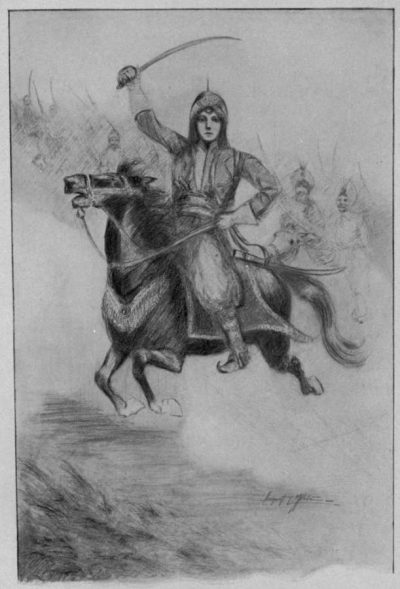
 The movie opens with a particularly elaborate disclaimer, admitting that “certain cinematic liberties have been sought,” and that “this film does not claim historical authenticity.” Probably wise: Indians take their national heroes very seriously; just last year, another historical epic, Padmaavat,