



Literary rating: ★★★
Kick-butt quotient: ☆☆☆
 I was initially a bit concerned this was going to be a slightly-more horror oriented version of Harry Potter, based largely off the title. I needn’t have been worried. For at least the first two books, this is quite startlingly dark and on the razor’s edge. As for the third… well, we’ll get to it. The setting here is a world where Filipino shapeshifters called aswangs, which feed on the fear of their victims, are migrating across from their home country and through Alaska. Lined up to stop them, by any means necessary, are hunters; it’s a harsh and often brief occupation. To replace those lost in battle, the titular establishment exists on Kodiak Island, to train hunters – mostly members of families who have been in the bloody business for generations.
Into this comes Ollie Andrews, a waitress who kills an aswang, and is recruited (well, abducted is probably closer) into Fear University. Her survival is largely down to an unusual illness/talent: her inability to feel pain. No pain = no fear, and so nothing an aswang can use against her. However, this ability has caused her issues in the past – not least, her abduction by a father/son pair of psychopaths. Though Ollie escaped, killing the father in the process, she has been pursued by the survivor, Max. This has forced Ollie to change her identity and keep on the move to avoid him tracking her down. FU [I’m not sure if the author chose the name for that acronym!] might offer her somewhere to belong, replacing the family she never had.
Keyword: might. For she has to overcome the prejudices of the other students, due to Ollie not being from one of those historic families. And that’s just the start, as she begins to discover the university’s quest to win the war under its head, Dean Bogrov and his shady scientific experiments. It also turns out there is a third group, operating between the aswangs and the humans, and Ollie’s past comes back into play; she was an orphan who never knew her father, and whose mother abandoned her in a closet. That’s an awful lot to unpack, and for the first two books, Collett does an admirable job. It’s a gritty approach, with Ollie a severely-damaged heroine, who has enough issues for an entire conference.
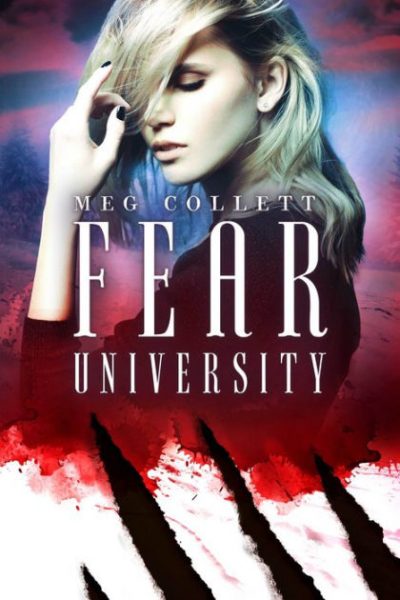 Those opening two books keep the story going forward. In the first volume, Fear University, she learns to tap into the power her talent gives her; builds a relationship with the similarly-broken young hunter Luke, who is her mentor; discovers aswang saliva can make her feel pain; finds out who her father was; and has to go through a life-or-death test involving both her, and her best friend at FU, Sunny. The second, Killing Season, is a rather drastic change in approach, with Ollie, Luke and others sent north to Barrow for the winter break, when the aswang are most active. That was the location used for vampire action film 30 Days of Night, and serves the same kind of purpose here. However, it’s almost as much a whodunnit, with the large house which is the hunters’ base apparently home to a killer. Not helping matters: Max shows up in town.
Then there’s the third… I should probably have detected the change in approach, based entirely on the title: Monster Mine. For sadly, the series loses its edge entirely. Rather than turning into Harry Potter, it instead becomes something which combines the whiny angst of the Twilight series, with the Daddy issues from Star Wars. That’s about as appetizing as it sounds, and by the end, this was a chore to slog through. To the point, indeed, that the free novella included in this omnibus edition, was left entirely unread. Collett does, at least, tie things up reasonably well, giving the reader some closure. It’s a pity that the groundwork laid for a memorable anti-heroine over the first two volumes, evaporates so drastically in the third.
Author: Meg Collett
Publisher: Amazon Digital Services, available through Amazon, both as a paperback and an e-book
Books 1-3 of 5 in the Fear University series.
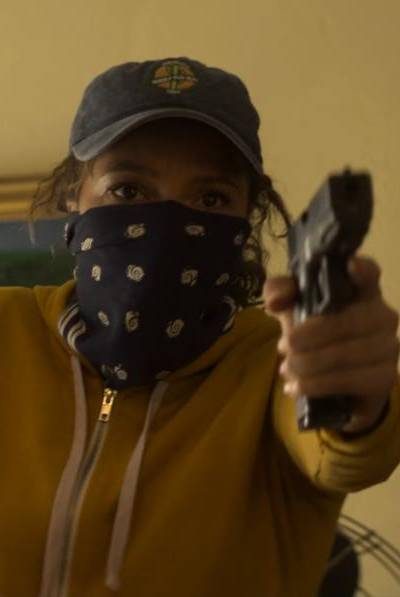 This occupies a rather odd middle-ground between a meditation on what it means to take a life, and a violent thriller. I’m not sure it manages to pull either off entirely successfully, yet some striking imagery helped sustain our interest. Katrina (Ejogo) is driving from Phoenix to Oklahoma City, with her young daughter, Clara (Pratt), to start a new life: it’s hinted that there may be an abusive partner in the rear-view mirror. The route takes her across the Texas Panhandle, and in an effort to avoid a traffic jam, she hits the back roads. This turns out to be mistake, as she first gets a flat, then Clara is bitten by a rattlesnake.
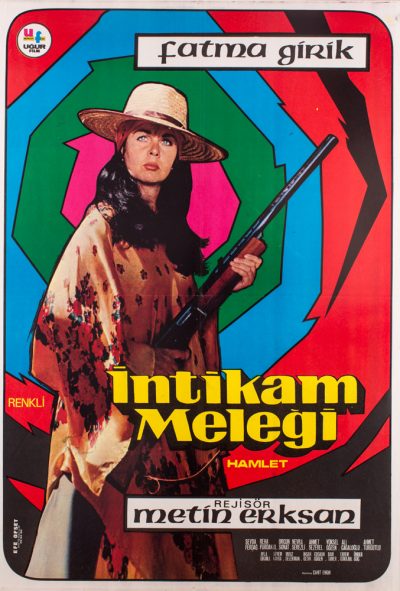 Okay, the above is shamelessly lifted from The Last Action Hero, in which there’s a spoof trailer for Arnold Schwarzenegger as Hamlet. But it applies just as much to this, which is remarkably progressive considering its origins; 1977 Turkey was not exactly in the forefront of women’s liberation. Yet here we are, with a modernized and severely truncated version of Shakespeare’s story. This runs 86 minutes, compared to 242 minutes for, say, Kenneth Branagh’s Hamlet. But it hits the main spots, even if only in passing: for instance, Hamlet’s soliloquy shows up, though “Alas, poor Yorick” gets short shrift.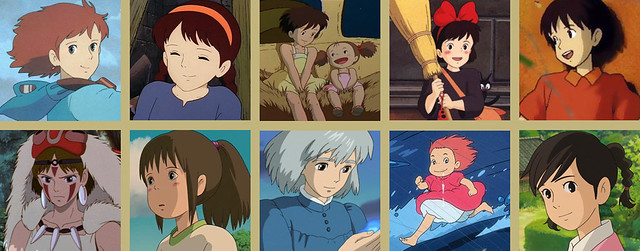
 Indeed, their femininity is often virtually irrelevant. Gender-wise, you could swap many of them out with young men or boys, and little would need to be changed. I’d argue it’s the most effective kind of feminism: the sort which doesn’t need to shout about it, but simply gets on with doing and being, and leads by example rather than the creation of loud noises. Yet, as we’ll see, it’s a philosophy which cuts both ways. Being female does not necessarily make you a good person: they can be every bit as egotistical, prejudiced, cruel and willing to bring down hellfire and destruction, as any man. That’s true equality in cinematic action.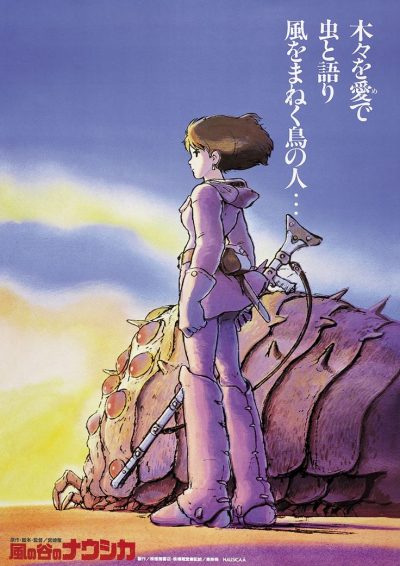
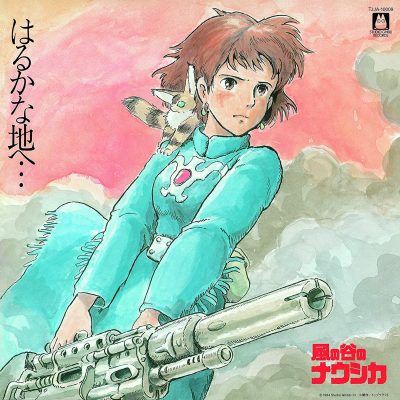
 After the enormous critical, if not commercial, success of Lupin III: Castle of Cagliostro, Miyazaki was commissioned to create a manga series for Animage magazine, with a potential film adaptation attached. Publication began in early 1982, but it would take a dozen years, albeit of intermittent publication, before that story was complete. When the series’s popularity among Animage readers was established, work began on the film adaptation, covering the early portion of the manga. Since this was before Miyazaki’s own Studio Ghibli was founded, an external company, Topcraft, were commissioned to create the animation. The budget was only $1 million, with a mere nine-month production schedule leading up to its release in March 1984.
 Miyazaki’s father ran an airplane parts company in World War II, and even his film company, Studio Ghibli, was named after an Italian plane. Almost every one of his movies
 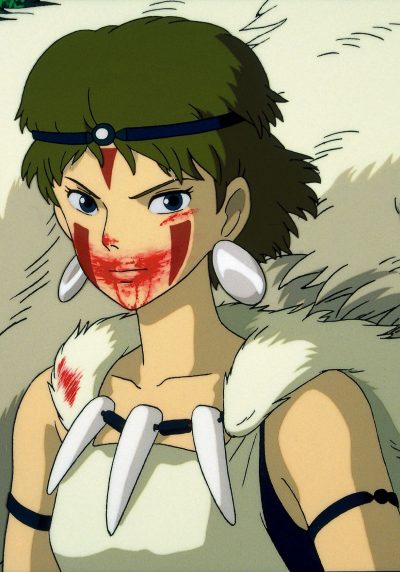 To some extent, this was the film which “broke” Miyazaki in the West, being his first feature to receive an unedited theatrical release in America. It wasn’t a huge commercial success, taking only about $2.4 million in North America. But it was very well-received, Roger Ebert listing it among his top ten films of 1999. It likely opened the door for the success of Spirited Away, which would win Miyazaki the Oscar for Best Animated Feature at the 75th Academy Awards. But if I’m being honest, I don’t like it as much as many of his movies. While there’s no denying the imagination and enormous technical skill here, it doesn’t resonate emotionally with me in the same way. I think it’s probably the central character, who is relatively bland and uninteresting, even compared to other characters in the movie.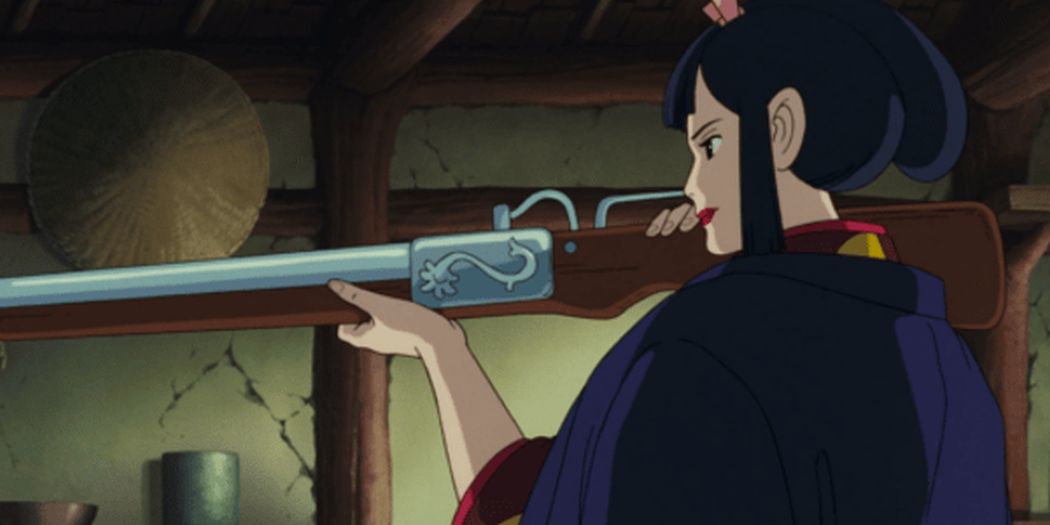
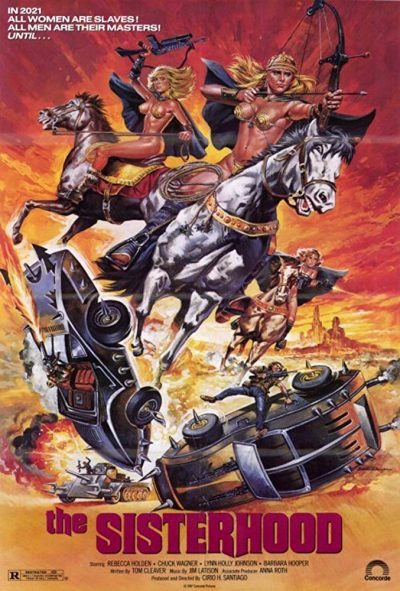 This one may be the origin of the meme, “After the apocalypse, food, water and gasoline are in short supply – but hair-spray will still be plentiful.” For there’s no denying the absolute silliness of this slab of post-apocalyptic nonsense. But it’s still imaginative and energetic enough that my interest was largely sustained. We’re apparently long enough after World War III for it all to have become the stuff of almost-forgotten legend. In the aftermath, the world is now occupied by roaming bands, mostly of men. However, certain women are gifted with special powers, and they have banded together into the titular group, under their reverend mother, and are feared by most as witches.
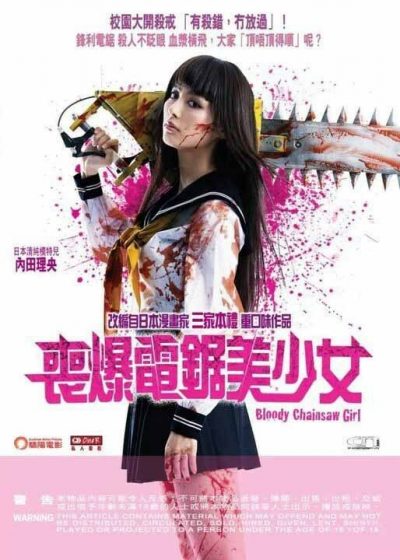 A solid enough entry in the Jap-splat genre, this benefits mostly from a winning central performance from Uchida as the title character, Giko Nokomura. Her family are in the demolition business, which is at least a token gesture towards explaining the F-sized chainsaw she carries everywhere – initially in a guitar case! She’s a bit of a delinquent, harking back to the sukeban movies of the sixties like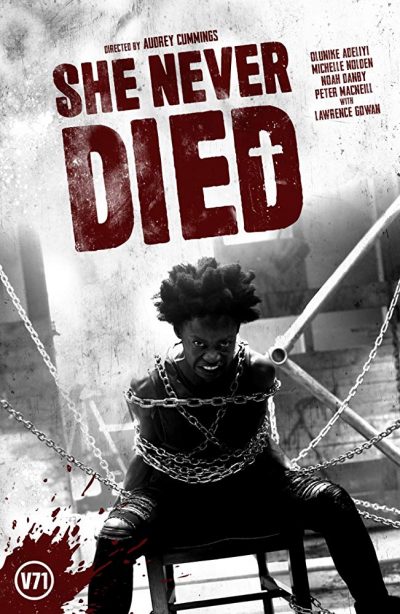
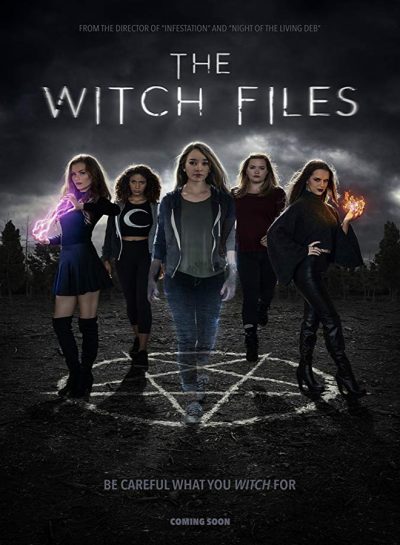 If John Hughes directed a film about witchcraft, it’d probably end up like this. For you have five stereotypical high-school girls in detention: Brooke the rich bitch (Ziolkoski); Greta the jock (Adrienne Rose-White); M.J. the timid mouse (Robinson); Jules the goth (Flatmo); and Claire the nerd (Taylor), who isn’t actually