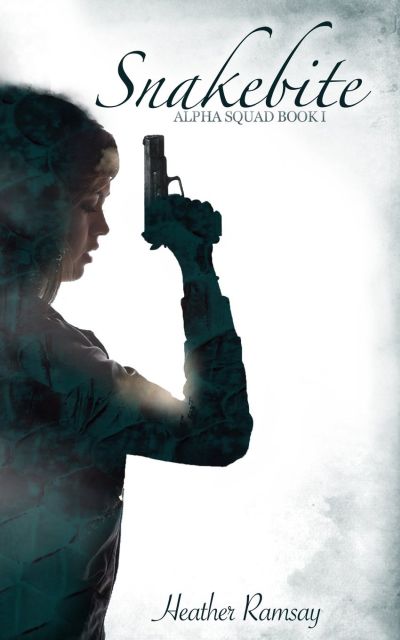
I believe I have previously written disparagingly about “cinematic amnesia”, where a plot revolves around the lead character’s loss of memory. Inevitably, it comes back at exactly the points required for the plot, and to maximize drama. Unless the maker is very skilled, it always seems highly contrived, and I tend to find it distracting. This may be the first time I’ve read a case of such blatant literary amnesia, and much the same problems result. As soon as “the A word” cropped up – page 37 – I was bracing myself for what was to come. The book did not disappoint in this area.
The heroine is “Phoenix” – not her real name, since she can’t remember her real one. She was picked up out of a burnt-out grocery store, and taken to become a member of an elite military unit run by the United Nations (there’s another clue, since the UN cannot actually organize the proverbial piss-up in a brewery). They roam the world, with their mission being to “track, contain or terminate threats to global safety”, under General Cobra. No, really: that’s what he’s called. He’s a former Colombian government operative, who left the country after his hardcore tactics made him too many enemies. But he’s now going back, with Phoenix as his undercover wife, to take out weapons dealer Li Julong and his associate, Dr. Max Devereaux.
You will no doubt be shocked – SHOCKED! – to hear that the pair have a previous connection to Phoenix and, indeed, might perhaps have something to do with how she ended up in the grocery store. Before we get there though, we have to grind our way through so much Unresolved Sexual Tension between Phoenix and Cobra. Initially, she hates him, but as soon as they start having to play house, her thoughts immediately become hot ‘n’ sweaty. A sample: “I didn’t want to admit it, but I had it bad for him… Only a few days ago I hated the sight of him; now I wanted to rub up against him like a cat in heat. I had to do something about it.” Yeah. It’s like that.
Then the switch in her head gets flicked, all of her memories come back, and Cobra is all but forgotten. I’m not sure this is how amnesia works, though to be fair, this isn’t your usual “bang on the head” flavour of that. After a brisk opening, this is more or less downhill all the way, and there’s not even particularly much in the way of action. Between first her UST, and then discovering the truth about her pre-amnesia life, there isn’t much room for anything else, and consequently, this becomes an increasing drag. About the only bit to stick in my mind is an extended near-death experience, which is well-written, yet doesn’t add much. Preferable to more UST or amnesia, however.
Author: Heather Ramsay Publisher: Titan Inkorp, though it appears weirdly unavailable on Amazon at this point/ Book 1 of 3 in the Alpha Squad series.
I’m not averse to the concept here. The Tubi synopsis says, “Three women rampage from Detroit to Chicago seeking revenge on Davion Legrel I, the ruthless criminal who killed their best friend.” I’d watch that movie: if anyone ever gets around to making it, let me know. Because this certainly would require subdued lighting and a very specific angle, as well probably as some kind of eye condition, before it could be mistaken for the synopsis. I am even slightly interested in lead character Christina (Brazier), a former Army nurse who, bizarrely, alludes to having learned interrogation skills while on tour in the Middle East. This would not be a combination I’ve encountered before.
Unfortunately, that’s where the good news ends. I guess the synopsis is technically accurate, providing you are happy with a very loose definition of the words “rampage”, “revenge” and “ruthless.” For the main problem is simply resources unable to depict convincingly what’s in the script. The most woeful example is when Christina and pals Robin (Merrill) and Stephanie (Reynolds) arrive in Chicago, and go to a “club” in search of information about Davion (Spearmon). “This is a classy place,” says one attendee. No: it is not. It looks far more like an empty office suite, having folding tables as furniture, and two bits of paper on the wall, with the words “CLUB” and “HADES” printed on them. And don’t even get me started on the woeful rap artist, supposedly launching his EP.
These poverty-row production values permeate the whole production. There’s a latter sequence supposed to be set in a top-end bordello, where our trio masquerade as hookers (explaining the cover), again for information gathering purposes. To be blunt, I’ve seen condemned crack houses with more erotic ambiance. The problem is, basically, ambitions far in excess of what the makers can deliver. They should have gone the other direction, rather than trying (and failing miserably) to appear high-end. Go low instead, and aim for gritty authenticity, telling a story fresh off the streets – a 40-ounce of MD 20/20, rather than Rémy Martin. Make that brothel an actual drug-den, ugly and grimy, and turn Christina’s journey into a descent to a lower circle of hell.
The results often left me feeling second-hand cringe for actors likely better than the film deserves, and relentlessly obliged to play make-believe so hard, to try and sell what’s happening. Meanwhile, the rest of the film seems to be actively trying to sabotage them, courtesy of elements like unconvincing CGI muzzle flashes. Though I was amused by the unexpected recycling of one of PulpFiction‘s most notorious lines. Specifically, the one about being a holding location for deceased persons of African-American heritage: it probably works better here, than coming out of the mouth of Quentin Tarantino. But it’s a rare moment where this manages to be other than an embarrassment. Even by the standards of this genre, this is well short of adequate.
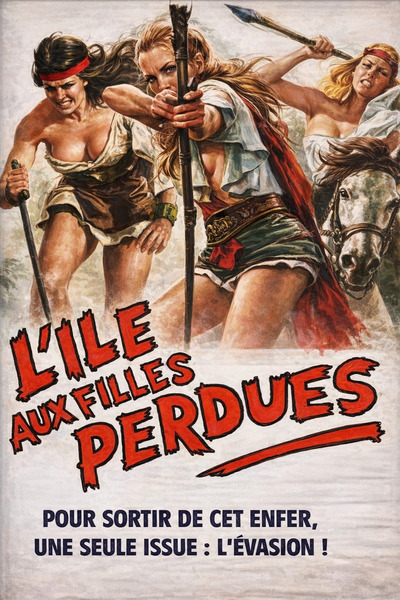
I actually ended up watching this one twice. The first time, on Tubi, was one of the worst prints I have ever seen. It was cropped and the color was so washed-out I could barely tell it wasn’t in black and white. However, the film itself was decent enough to get me hunting for a better copy. YouTube for the win: I found on there a glorious ‘scope version, with tints that fairly pop off the screen (compare and contrast) – and fifteen minutes longer, too. It’s a genuinely good-looking movie, and I don’t mean the copious quantities of attractive continental actresses. Well, not just them, anyway. This Italian-French co-production is an early example of the European women in prison genre, here with a historical bent.
An opening caption tell us this takes place at the end of the 17th century. Though that doesn’t quite fit with other elements, which seem around the French Revolution. Regardless, the government ship off their female prisoners to an island near French Guiana. There, they pan for gold, indulge in community sing-alongs and get eaten by alligators. The latest arrivals include Martine Foucher (Mercier), a noblewoman imprisoned for political reasons. There, she’s reunited with her sister, Jeanette (Ranchi), although she has assumed the identity of another, deceased prisoner. It’s a rough life. The only respite is if you sleep with the sleazy governor, Lefèvre (Muller), or his guards. Martine gets involved in an escape attempt, plotting to take some of the gold with them. It does not go well.
However, things look up with the arrival of new prison boss, Henri Vallière (Madison), who is much more compassionate towards the inmates, telling the staff, “They are not here to be tortured”. However, he is an impostor, not actually the naval officer he’s pretending to be. For Henri is a pirate, planning to stage a heist and steal all the gold. So he doesn’t truly care for the prisoners initially, though proves to be a dab hand at wrestling large reptiles. Key word: initially. Naturally, he develops feelings for Martine. This still leaves the inmates unsure of whether to turn Henri in, or throw their lot in with him.
They eventually decide to fight alongside Henri and his men, in exchange for a shot at winning their freedom. To be fair, this does only occupy a few minutes towards the very end of the film. After Henri’s plan gets revealed, the brisk and entertaining pace the movie had maintained to this point slows considerably. Instead, there’s a bit too much relationship shenanigans: I much preferred the earlier sections, where the women were actively engaged and had agency. For obvious reasons, given this was the early sixties, don’t expect nudity, although there is cleavage, and I concur with another reviewer who noted the similarity of Margaret Rose Kiel to Brigitte Bardot. Better than expected, providing you can find the decent print.
Dir: Domenico Paolella Star: Michèle Mercier, Guy Madison, Paul Muller, Federica Ranchi The good YouTube print is embedded below.
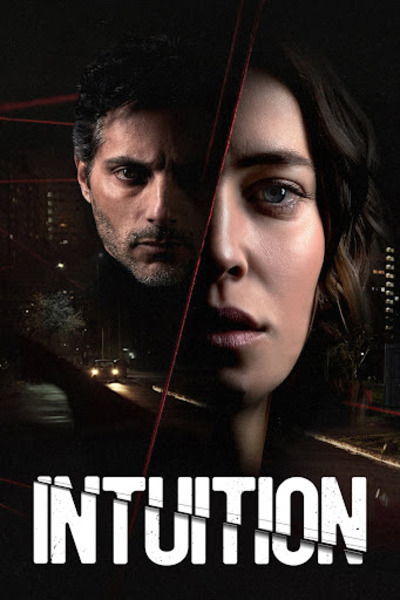
This is a prequel to Argentinian cop movie Perdida, and if I had checked its 2½-star rating before settling into this… I might not have bothered. This struggled badly to keep my interest, I suspect because there are two disparate plots going on, which never manage to mesh satisfactorily. We re-meet (pre-meet?) our heroine, Pipa (Lopilato) as a raw police recruit, who has just been teamed with Grizzled Veteran™ Francisco Juanéz (Furriel). Juanéz has a reputation, both for brilliance and breaking the rules. The latter comes out after his wife is killed in a robbery gone wrong. The person accidentally responsible is barely out of jail when he’s conveniently killed in a hit-and-run accident. Suspicion naturally falls in Juanéz.
Her bosses want Pipa to keep an eye on her partner and report his behaviour back to them. Meanwhile, she is also investigating the death of an obnoxious young socialite, whom it seems everyone in her circle had a reason to kill. As the two investigations unfurl alongside each other, we discover that there may be more corruption than Pipa was initially informed. Even if Juanéz turns out to have been responsible for the vigilante killing, will justice be served by his partner turning him in? More importantly, and less certain, can the viewer be convinced to give more than the slightest damn about any of the resulting drama? I’m afraid, from my position, the answer to the latter is a resounding “Meh.”
The mere presence of two unconnected plot threads strongly suggests the makers didn’t believe either had enough meat on their bones to satisfy the audience. In a film running 114 minutes, that would appear to be a problem. I’d rather they had simply worked on one or the other, developing it to the point where it was strong enough to sustain the movie on its own merits. As is, each has elements that could be of interest, but it feels as if, whenever they are at risk of engaging me, we immediately jumped to the other thread, losing all momentum. If there had been something new in the characters, this would have helped too. But Juanéz, in particular, is less an anti-hero, than a collection of cop tropes on legs.
I mean, if you can avoid rolling your eyes when it’s revealed Juanéz has an untreated heart condition, you’re a more tolerant viewer than I. Considering this was the first original Netflix movie to come out of Argentina, the results are less than impressive. The titular ability is used whenever the script paints itself into a corner, Pipa and/or Francisco pulling a clue out of thin air, so they can move the investigation forward. I barely could be bothered to summon the energy for an eye-roll by the time the final credits rolled. While there is a third film in the series, Recurrence, a.k.a. Pipa, it will be at least another seven years before I can bothered to review it.
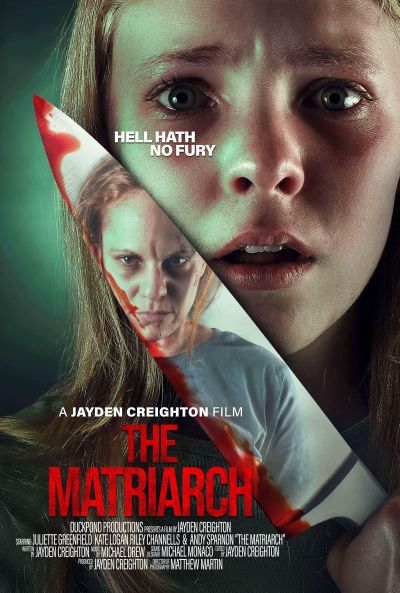
I’m always amused when I check the reviews on the IMDb for a film, and they are almost all “Totally amazing!” or “Worst film ever!”. The former tend to come from the movie’s friends; the latter, from people miffed by the positive reviews, and seeking to counter them. The reality is usually somewhere in the middle, and that’s the case here. Given this was reportedly made for forty thousand dollars – and those are Australian dollars, which right now is about 67 US cents – it’s quite impressive, and certainly doesn’t look low budget, despite a cast of basically three and a single location. However, it’s a film where, if anyone had behaved sensibly, proceedings would have been all over in about ten minutes.
This is the unfortunate story of Missy (Greenfield), a 13-year-old girl living with her dysfunctional, drug-addicted single mother Annette (Logan). Things go from bad to worse when her super-sketchy boyfriend, Trent (Sparnon), gets out of jail and moves in with them. He has… history with Missy, so she’s immediately on her guard, taking a carving knife to bed with her. Rightfully so, and Trent duly gets the punishment he deserves. Annette is none too happy about this, and decides that Missy needs to be disposed of as well. From here, things escalate relentlessly, as Missy tries to get out of the house of horrors, and her mother tries to prevent this, by any means necessary. Which includes a significantly escalating body count.
You definitely will have to suspend your disbelief in a number of ways. Firstly, in accepting that Annette’s maternal instincts are so shallow, that her reaction to the situation, is to try and murder her own child. Then, most obviously, Australian cops are dumber than a eucalyptus tree full of koala bears. Because the ones that show up here, behave in a way which isn’t just in defiance of police protocol, it goes against all notions of common sense. There are times too, where it feels like Missy is actively trying to stay in the house, though given her young age, her idiocy is likely more forgivable. This runs through the heart of the film, to a point where it feels almost like a parody.
Fortunately, I didn’t find it too tricky to put aside such considerations and just enjoy the lurid pleasures this has to offer. It feels like an Antipodean cross between The Shining and Home Alone, combining the disintegrating mindset of the former’s antagonist, with the latter’s impromptu attitude to survival tricks. Greenfield is particularly effective, and I found it almost impossible to believe that this was her on-screen debut. She is highly convincing as she gets put through the emotional, spiritual and physical meat-grinder by her own mother. Creighton, also helming his first feature, shows a firm grasp of the basics, and you won’t find much slack present. However, I would suggest Jayden the director fires Jayden the writer for next time – or, at the very least, has a lengthy chat.
Dir: Jayden Creighton Star: Juliette Greenfield, Kate Logan, Andy Sparnon
Bella Thorne’s struggle to appear in a film which reaches three stars on this site, continues unabated. While probably not helped by my tendency to confuse her with Kristen Stewart, that’s five attempts now. Although, for a minute here, I thought this might be the one where she finally cracked it, with a potentially interesting first half. But it could not sustain itself, and as the final credits rolled, and I saw Guinevere Turner’s name as the co-writer… Yeah, it all made sense. I mean, she wrote Bloodrayne. And I’m one of the few people who didn’t utterly hate that. She has… a certain type of script, shall we say, and leave it at that.
Here, the heroine is Clare Bleecker (Thorne), a high school student – Thorne was 24 when this was filmed, so about that… – recently transferred in from the East coast after the death of her parents. She’s staying with her grandmother (De Mornay), and moonlights as a vigilante. We first see her allowing herself to get picked up by a sketchy driver, whom she strangles and stabs to death. The resulting police interrogation brings her to the attention of Detective Timmons (Phillippe). But Clare is undaunted, and proceeds to look into the string of girls who have gone missing in the town, crimes going back decades which have never been solved. When her friend Julianna (Rovaris) becomes the latest to vanish, Clare decides the time for passive investigation has gone.
The early stages are, as noted, interesting enough to be intriguing. There’s a nice touch where her conscience is represented by regular visits from the ghost of one of her victims – albeit an accidental one. However, he all but vanishes after she discovers there’s a bigger problem in town than just random scum-bag men, and the film’s issues tend to multiply thereafter. It’s never adequately explained why Clare has gone all Death Wish in her teenage years, or the Joan of Arc inspiration. Perhaps the book on which the film is based, Clare At 16 (or, I guess, at 24), does a better job of that, but without a particular motivation beyond “Men are bad, m’kay?”, the flaws in plotting became increasingly apparent to me.
And others too, apparently: it took three years to get distribution. I do respect Thorne for trying, even if the results have been underwhelming, and would encourage her to keep trying. As I suspect I’ve said before: she isn’t particularly the problem here, so much as the material. There’s an entire thread about Clare trying to get a part in the school play which is spectacularly out of place. But Thorne’s post-Disney career has never exactly been one known for her making good choices: witness the whole OnlyFans debacle. I was more interest in watching Clare operate as a small-town version of Dexter, punishing the guilty while maintaining a facade of normality. The further this went, the more ludicrous this instead became.
Dir: Mitzi Peirone Star: Bella Thorne, Ryan Phillippe, Joy Rovaris, Rebecca De Mornay
This review requires a sad preface: “Rosemary Edghill” (there’s some uncertainty about her actual name) died of sepsis on April 7 of this year, at the age of only 69. But on a positive note, with 91 distinct works listed on Goodreads, she left behind a considerable body of speculative fiction; and judging by what I’ve read of it so far, it’s a legacy in which she could take genuine pride.
Published in 2002, this stand-alone novel draws significant inspiration from the popular TV series Xena: Warrior Princess, which ran from 1995-2001. (I was a fan myself back in the day –or as much of a fan as my work schedule allowed for TV viewing– and I’d surmise that Edghill was as well.) Our protagonist here, Glory McArdle, plays Vixen the Slayer, star of a wildly popular (fictional) TV show now wrapping up its first season, which has a lot in common with Xena, including a fervent international cult fan base, and a six-foot-tall heroine hailing from Down Under. (Lucy Lawless, who played Xena, was from New Zealand.) There are some differences; for instance, The Incredible True Adventures of Vixen the Slayer (“TITAoVtS,” for short) is set in Elizabethan England, and incorporates some qualities of Buffy the Vampire Slayer, and unlike Lawless, Glory –who got her role after going to an audition as an extra in the shooting of a pilot for a different series– was a former Phys Ed teacher, and before that a member of the Aussie Olympic gymnastics team. But the Xena parallels are significant; and just as real-life author Greg Cox wrote the real book Battle On! An Unauthorized, Irreverant Look at Xena: Warrior Princess, here he’s said to have also written the (imaginary) book Vixen the Slayer: The Unofficial Journeys.
In our first chapter, Glory (who’s in Hollywood taping a short MTV promotional for her series) gets an unexpected knock on her trailer door, while she’s waiting in costume for another take. Her visitors are three rather short people in fantasy-world costume. But they’re not, as she initially thinks, actors, or fanatical fans dressed up and acting out a fantasy. They really are mages from another dimension. You see, in their world, 1,000 years ago the great mage Cinnas the Warslayer chained an evil entity called the Warmother; but now she’s been loosed, and is wreaking havoc. To save their people, they’ve scoured all the other worlds they can reach for a “hero” (like the writers of the Xena series teaser, they don’t grasp the grammatical distinction of hero/heroine, but I digress), and been turned down by all the prospects. Having read Cox’s book, their last hope is Vixen the Slayer. Sensing that these poor deluded people genuinely believe what they’re saying, Glory’s trying to explain that the book is fiction; but when a sudden burst of uncontrolled magic sends all four of them back into her visitors’ world, that attempt might be a bit moot….
The cover blurb/Goodreads description creates the impression that this is a light exercise in humorous fantasy; and it actually does have a lot of humor (I read it to my wife, and she laughed out loud in several places). Both TITAoVtS and Xena are shows that offer mostly action-oriented entertainment without a lot of serious content, which might also lead readers to expect the same here. However, The Warslayer has its unexpectedly deep and serious side. Glory can deliver a fair amount of wry humor; but we’ll also see her bleed, vomit, and cry. While there’s some intense physical combat going on here at times, the battles aren’t all going to be physical, and the author has some really important things to say. (I’m not going to try to summarize them, because the story is the message, and you need to experience it the way she wrote it.) Her plotting here is not at all predictable. (But it’s deeply satisfying!)
There’s no sexual content here, and no obscenity (and no use of the f-word; Glory started to say it on one occasion, but stopped herself). There is, though, a certain amount of vulgar and profane language, used by Earth natives (it’s not a feature of native culture in the fantasy world). While she’s a likable young woman with a kind heart and good instincts, Glory tends to have an earthy and irreverent speaking style; she was raised on her dad’s Outback sheep station, a milieu where speech isn’t very refined (and some of the Aussie slang here that I’m not familiar with might be expressions I’d rather not have translated!). The worldview here is not Christian per se, but like Glory herself, though she’s basically secular-minded and God-shy, it’s not anti-Christian or anti-theistic either. Trigger warnings are in order for brief descriptions of the ravaged corpses of a pony and a dog (the Warmother and her playmates aren’t nice entities!); but the biggest problem here is the improbability that all of the non-Earth natives converse in fluent English. (I deducted a half-star for this in my rating, but rounded up.)
As an added feature, the opening few pages of Greg Cox’s imaginary book on Vixen are “quoted” as a kind of prologue here, and as an appendix, we’re given his supposed “Episode Guide” to the 17 episodes of TITAoVtS. (I’d guess that none of this is written by him, but that he gave his permission for the use of his name.) The deadpan humor of this material is a hoot; and as a suggestion to any TV producers who may read this, if anybody actually ever tried to make a real-life incarnation of this series, I’d be interested in checking it out. :-)
Author: Rosemary Edghill Publisher: Baen, available through Amazon, only as a physical book A stand-alone novel.
Watching reviews by some fans for the new Supergirl movie is like seeing someone being publicly tarred and feathered. But I do understand how this works. A review titled “Supergirl is an acceptable, though not great, summer superhero movie” wouldn’t get you many clicks, right? Almost any big studio movie seems to get the same treatment: heavily, negatively criticized; scrutinized as to its wokeness (which admittedly is a problem in today’s film landscape); and judged as garbage, long before the average Joe or Jane has a chance to see the movie and make up their own opinion about it. The numbers of views on YouTube have a clear message: social media thrives on vitriolic hatred, not a balanced attitude. I sometimes get the impression the reviewers have not even seen the movie themselves, arguably rendering their opinions worthless. How can anyone judge a movie that they have not watched?
This isn’t meant to say there aren’t problems today with the way movies are written, directed, produced or marketed. And the other side of the coin are ‘professional’ journalists, who appear to act as media mouthpieces for the industry. They consider every movie by established directors or big studios as great entertainment, glossing over its faults. There is something foul in Hollywood and I don’t want any of it. The big problem is, the average cinemagoer can’t rely on reviews or critics any more, and I think that’s a shame. Yes, any review will always reflect the author’s personal attitudes. But in the cases above, there is no balance, and the respective review is frequently very far from an objective dissection of the film. Let’s see if I can do better: though in any case, you should decide which movies you’ll support with your money – if at all.
Supergirl already got the YouTubers up in arms, when star Milly Alcock made some potentially ill-considered comments, including stating that Supergirl “probably goes both ways” sexually. That was perhaps not smart – unless the marketing department was targeting an audience which was never really interested in the character to start with. Supergirl, created in the late 1950s by Otto Binder, was originally intended as a tamer version for girls, of what Superman was for boys. Nevertheless, the majority of people who read Supergirl and kept the title alive over the decades were young men. She had a rich comic book history before the ill-fated Supergirl movie from 1984, with the lovely Helen Slater. And though DC decided to kill the character off sensationally in 1985’s “Crisis on Infinite Earths”, she made an indirect comeback in several forms, until officially returning as her true self in 2004.
Most of the buyers of her comics continue to be male. Not because “all men are creeps”. But because Supergirl was a cool character – and admittedly, also very pretty. But I have never heard about the supposed “queerness” a reporter asked Alcock about. From what alternate universe did this journalist come? Alcock continued, “What makes this film beautiful is that it’s not centered around a man, it’s not centered around love at all.” To be fair, the love story in the 1984 movie didn’t really work. But it’s a leap to conclude that a movie about a female action character is immediately better because it does not feature a love story. Look at Wonder Woman, where the love story between Diana and Steve was an integral part of the story, and see how well it worked. It’s really up to the screenwriter.
Comments like Alcock’s – though probably given without much thought – put her in the same category as Rachel Zegler, whose remarks contributed to the justified downfall of the live-action Snow White remake. That’s a shame. If a movie is bad, it’s one thing. But if the main star shoots her own film in the foot… The makers of this Supergirl mistakenly thought they had a movie targeting a female demographic of a certain age. The results of the first week indicate that 59% of those watching were male, the great bulk of those over 25. Contrast Wonder Woman, which drew a majority female audience. It’s a remarkable miscalculation. If you annoy the audience, don’t be surprised if it doesn’t show up for your movie. Who knew? Apparently not Alcock, and the financial flop turns out to be entirely studio-made.
Anyway, what’s the story? Supergirl continues from 2025’s Superman, which in its last scene introduced Supergirl. She is Kara Zor-El, Clark’s cousin, owner of Krypto the Superdog, and together with Clark, the only survivors of the planet Krypton. The Superman movie didn’t show the destruction of Krypton (we have seen that too often on screen in the past) but Craig Gillespie, director of Supergirl, gives us glimpses of it, or flashbacks to Argo City, the city that survived due to SF-technology on a chunk in space. Its inhabitants are nevertheless doomed, due to kryptonic poisoning. So, Kara’s father sends her to Earth, to her cousin who already lives here. The makers generally stay true to Supergirl’s origins, though there is no orphanage into which Superman puts her, nor surrogate parents like the Danvers as in the comics.
However, how it shapes Kara is very different from the original character: this Kara is jaded, cynical and stands in sharp contrast to Clark’s true blue heroism. Even when the movie was in production, she was compared to a “punk rock girl” – more or less the opposite of the original Kara. Obviously, this Supergirl has problems, and in 2026, The Powers That Be have opted out of the traditional image of Supergirl. Separate from any other concerns, it really depends on your acceptance of this new version, and if you are able to enjoy Milly Alcock in that role. Her interpretation has as little in common with the original character, as Daniel Craig’s had with the original James Bond. That this version of Kara would not follow the traditional values was already apparent on the official poster that replaced the famous Superman-Reeves statement “Truth, justice and the American way.” with “Truth. Justice. Whatever.” You either accept that or you won’t like the movie at all.
Supergirl is accompanied by her pet Krypto – still a super-annoying, not very realistic-looking CGI-dog. She celebrates her 23rd birthday in an intergalactic bar, then more or less accidentally gets involved with a 13-year old girl, Ruthye (Eve Ridley). Her parents were killed by the evil Krem of the Yellow Hills (Matthias Schoenaerts). Ruthye wants revenge but Kara is not interested in helping her. That is, until Krem pops up and poisons Krypto with an arrow. As she has only 3 days left until Krypto will die, Kara follows Krem with Ruthye, whom she just can’t shake off. I have to be honest; this is not much of a story. I’ve heard the movie went through different test screenings with audiences, and suspect a lot of what was originally in it ended up on the cutting-room floor. Which I’m generally in favor of, because I don’t really enjoy seeing 160 minutes long superhero movies. But here it felt as if the movie was kind of an emergency patchwork.
Why the flashbacks to Argo City, given we didn’t need any of Krypton in Superman? Yes, it might help frame Kara as a trauma survivor, since she watched her people die, slowly and painfully. But did we need the inserts of Superman (David Corenswet), save for audiences caring more about him than the new Supergirl? Why does bounty hunter Lobo (Jason Momoa) suddenly appear in the movie, only to quickly disappear from it again? Why is there an entire sequence with only Ruthye and Lobo in prison, while Kara is off, recovering from the effects of a green sun? I think Warner Bros. saw a potential flop in the making after test screenings, and tried to save what they could. Reducing the length (= more showings); bringing in Corenswet, whom audiences reacted quite positively to last year; and adding Lobo, a long-time DC comics fan-favourite.
The fact that the production had three different music composers over time, does not reflect well on it. That said, the music of Claudia Sarne, the composer the production finally settled with, is adequate: I liked it. But Gillespie obviously felt (or was forced?) to follow James Gunn’s way of using music: underlay an action scene with a cool rock song. Gunn has been doing this since his first Guardians of the Galaxy movie in 2014, and the result here is even less convincing than in his Superman last year. I yearn for the classic music of a John Williams (1978’s Superman – The Movie) or Jerry Goldsmith (1984’s Supergirl).
The big problem here – apart from the re-interpretation of Supergirl – is that there is little at stake. Kara wants to save her dog. Ruthye wants revenge, though the actress is never really able to deliver this convincingly, coming across as a little brat. Lobo just wants the bounty for someone’s head – and not even Krem’s. When I go to the movies to see a superhero movie, I expect that someone saves the world, prevents global annihilation, or at least brings order to the criminal underworld of Gotham. This movie feels very small because the ambitions of its protagonists are very small. I could at least understand why John Wick went berserk over his dog; I don’t feel an emotional connection here. The villain Krem is evil and… well, that’s it. He feels like lazy screenwriting. Villains should have an attitude, their own worldview, a philosophy, a big objective. Krem doesn’t have any of this. Yes, there is sex trafficking, which seems to be what Krem does. But we never get a good explanation for why or what purpose. Hitchcock once said, “The more successful the villain, the more successful the picture.” The mediocrity of its villain reflects negatively on this movie.
The end is also more than questionable: Supergirl repeatedly tells Ruthye she should not take revenge, because this is not the way, she won’t feel better after it, yadda, yadda, yadda. But then Kara takes revenge on Krem, making her appear a hypocrite. Also, I think heroism usually, albeit not necessarily, comes with a sacrifice. If Kara would have had to give up Krypto for some bigger purpose, e. g. saving all the girls captured by Krem, the story might have had a much bigger impact. Bonus: I would finally have gotten rid of this obnoxious CGI dog. Honestly, I despise him so much and don’t think he is cute at all. But be careful what you wish for; they might replace him with Streaky the Supercat!
There are editing and creative choices that baffled me. Instead of showing a bar brawl with Kara, the camera focuses on Ruthye in front of us, hiding from the fight. Mind you, in action scenes, the camera often gets so close we can barely tell who is fighting whom. In one flashback Clark tells Kara her powers will set in “right now” – and we cut away to another scene of Kara sitting in a room listening to music on her headphones. A couple who wants to trade Kara and Ruthye for their kidnapped daughter, poisons Kara – how did they know that their poison would work on her? In another scene in a prison, small, lightly-built Ruthye takes on a henchman around double her size, possibly four times as heavy, and easily beats him. There is no explanation given how she does that. While Kara isn’t physically big either, we know what kind of power Kryptonians have. But Ruthye?
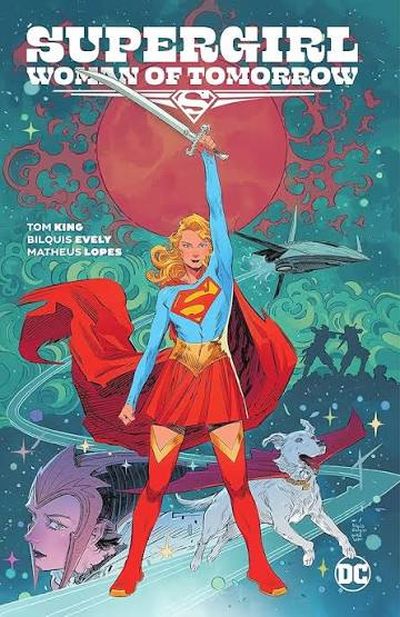
Some people have pointed out that the colour palette of this movie is mainly brown, dark or garish and I agree with them. While I personally didn’t have a big problem with it, I do prefer more colour in my superhero movies. This film was based on Supergirl: Woman of Tomorrow (left), by Tom King. While I haven’t read this myself, most reports say the movie has little resemblance with the original comic and changed its ending. Although the comic itself was an “Elseworlds” story, so you could argue it’s not really representative of Supergirl. All quite negative, right? Why am I then not as harsh as the YouTube fan critics mentioned above?
First of all, I still found the movie entertaining, despite all its flaws. That doesn’t sound much, but believe me, there are many movies out there which are either plain boring or don’t even try to be fun. Case in point: the week before, I saw The Death of Robin Hood with Hugh Jackman. Supergirl is far from perfect but at least it tries. Milly Alcock is indeed fun and a good actress. I figured what direction “her” Supergirl would go, when she was cast. I had seen her as a relentless rebel girl in Australian series Upright, and a larger audience discovered her in the first season of House of the Dragon as Rhaenyra. She has and is a great talent: while this movie doesn’t do her justice, she could have a great career in the right roles.
Eve Ridley does her best as Ruthye, but the part doesn’t offer much and she was not really convincing in it. The idea here is obviously that Ruthye is a counterpoint to Supergirl, creating a conflict between different objectives. It kind of works, though, I would have preferred the movie without an annoying teenager who constantly repeats herself like an NPC, and is little help during the search for Krem. Jason Momoa has been the fan-choice for Lobo, as long as there have been plans for a Lobo movie. Though this version seems a tame, “free from 12 years on” version, he is very enjoyable. I really, really would like to see a single movie with him as the Czarnian bounty hunter. But the new DC film universe under the current Warner Bros. management is already imploding. Again.
There are moments I like. If you can accept the idea of Kara being a more complex, work in progress (the ending suggests she may finally settle on Earth and support Clark), then that may help you enjoy the movie more. This Kara has a quite cocky attitude which sometimes made me chuckle quite a bit. At the same time, Alcock can bring the gravitas to more serious scenes if she is given those. To repeat myself: it’s all in the writing. I have to say, I expected more from Craig Gillespie, who directed the great I, Tonya a couple of years ago. But directors are dependent on the scripts they are given. A lot of the creative decisions concerning the movie (such as Supergirl killing Krem), were apparently made by Gunn, not Gillespie who seems more the “yes”-man of the production.
I understand screenwriter Ana Nogueira had never written a real movie before which is astonishing considering that it is said to have a budget of $170 million. It also seems questionable that she has already been chosen by Gunn to write upcoming DC movies Teen Titans and Wonder Woman. It’s estimated that the movie needs to make $300 million to cover its costs. At the time of writing, it’s a lot less than half that, only $116 million worldwide, and is losing screens rapidly. That doesn’t bode well for the movie. Though, it has been said that Gunn has further plans for Supergirl, as she plays a part in the next Superman-themed movie Man of Tomorrow – this time hopefully at her cousin’s side. Let’s hope, it’s not once again centered around the insufferable Krypto!
Dir: Craig Gillespie Star: Milly Alcock, Matthias Schoenaerts, Eve Ridley, Jason Momoa
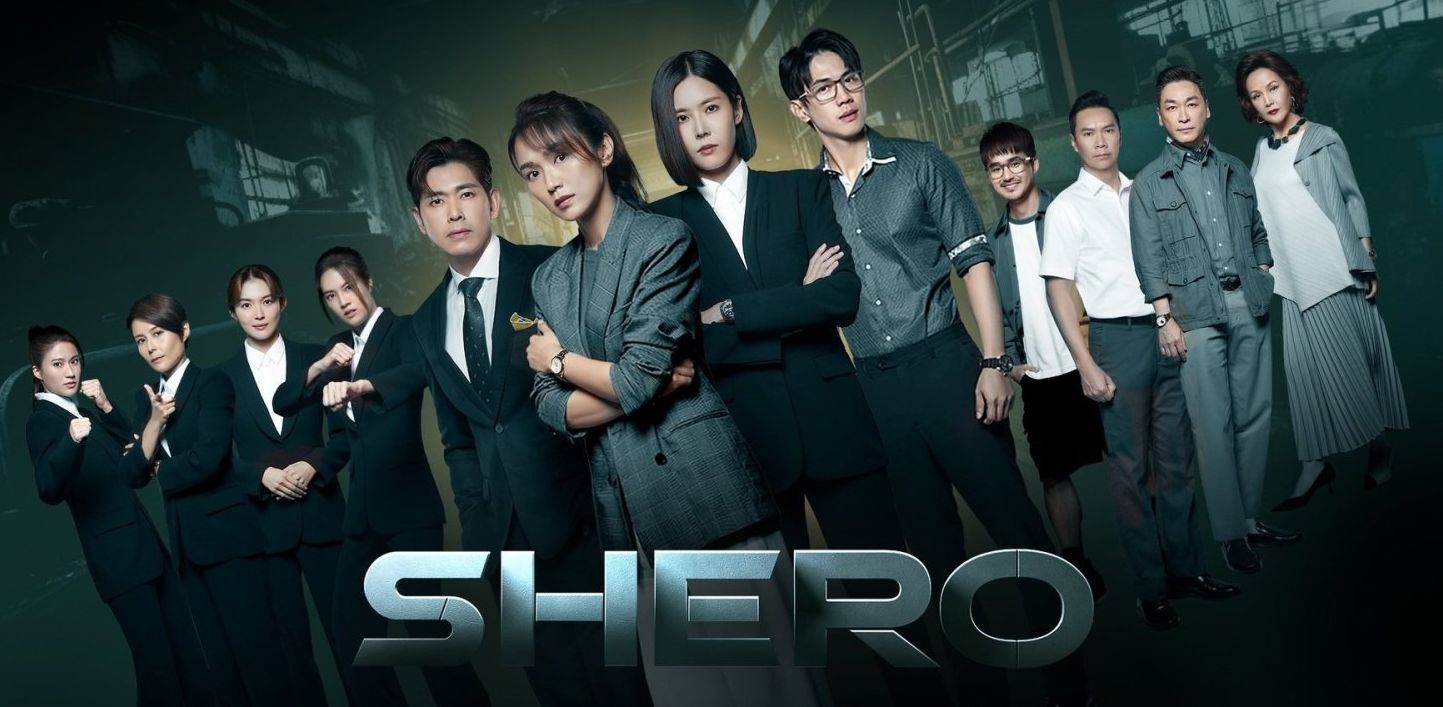
Not to be confused with Sheroes – because I know I did – this is a TV series from Singapore, marking the country’s first appearance on this site. So that’s nice. It’s the story of the Zhang sisters, Yin Xi (Wong), who runs an (almost) all-female bodyguard company, SHERO, and her younger sibling, photographer Yin Chen (Peh). While on a job in Australia, Yin Xi is attacked, and disappears: unknown to anyone, she is hospital, having lost her memory. Yin Chen takes over the company, and works to unravel the mystery of why her sister was attacked, with the help of Yue Rui Xiang (Tan), the CEO of a shipbuilding company who is a client of SHERO.
Turns out, there is a lot going on here – as you can imagine, given there are twenty episodes, each around 45-50 minutes long. Fifteen and a quarter hours, in total. So, for example, there’s an eventual connection to the murder of the sisters’ parents, seven years previously, which needs to be addressed. It also feels like SHERO need to ramp up the background checks on their employees, since it feels like all of them have secrets. Or as another example, there’s one worker who was a former drug addict – which is okay, this was known when she was employed. But her mother is a raging alcoholic, now victim to a blackmailer; a situation now seriously affecting her daughter’s work for the company.
So, really, there’s as much soap opera here as action, with romantic entanglements and family drama very much the order of the day. I was expecting something a little more like Pamela Anderson’s V.I.P. series (which I feel I must get round to reviewing), but this is much more one over-arching story-line across all twenty episodes, with occasional side-plots. Everyone in the show is almost weirdly attractive, and while I get that Singapore is one of the richest countries in the world, this feels almost a promotional video for the country [Makers Mediacorp are a state-owned media company, so that may be a factor]. Certainly, the Australian capital of Canberra gets its product placement in – and they are not the only ones.
There are some action scenes, mostly martial arts based, though guns seems to end up doing most of the killing. But they’re competent rather than particularly outstanding. The use of both amnesia and multiple personality disorder as plot points is hackneyed, both of these coming and going as the plot requires. Though I was impressed by how unexpectedly bleak the show ends up being. While I might not have made it to the end had I been more actively watching it, it was simply something not too demanding, to distract me while I got my daily exercise in. As such, it filled the gap in my morning regime adequately. Yeah, “adequate” seems like the right word for this overall.
Dir: Chen Yiyou Star: Joanne Peh, Romeo Tan, Carrie Wong, Nick Teo The whole series is available with subtitles on YouTube.
There’s a very strong start here, and this makes the way it implodes at the end all the more disappointing. The film certainly hits the ground running. It’s 1978 in rural California, and ‘Scorpion’ Joe Clay (Hébert) is fleeing from the scene of a botched bank robbery. His wounded partner in crime is bleeding out in the back seat, and there’s a hostage, bank customer Vivian Fontaine (Bell), in the trunk. But when he pulls off the road to sort things out, freeing Vivian so she can help, we discover there are much worse things in the desert than scorpions. For Joe quickly gets his head blown apart.
This is the work of completely insane Vietnam vet, former sniper Wyatt Moss (Healy). He lures people off the road, torturing and killing them, because… Well, because he’s a completely insane Vietnam vet. I will not be taking any further questions on the topic at this point. He has the tacit collusion of his brother (Ruck), the local sheriff, though even he has just about had enough of covering up for Wyatt’s madness. Vivian does manage initially to get the jump on the predator. However, she commits the fatal mistake, a common one in horror movies, of not making sure the killer is really dead. And guess what? He is not, leading to an extended chase sequence through the mines on the remote property.
Which is where the problems occur. Keating mistakenly thinks that having things unfold in near pitch-darkness, save for the occasional flash from a muzzle, somehow enhances proceedings. He is incorrect in this case. Not least because it goes to such an extreme, and for so long, the only evidence I had that my TV wasn’t broken, was the subtitles I had fortuitously left on from the previous movie. When it literally emerges, blinking, back into the light, you get a couple of captions in lieu of a climax, before the end credits roll. I am in no way exaggerating, when I say that it ranks among the worst endings I’ve endured, over the more than twenty years I have been running this site.
Although the early going is certainly derivative, most obviously of Quentin Tarantino, there’s no shortage of energy and surprises as we move through proceedings. We discover, for example, that Vivian is already having a bad day, and this may be a factor in her eventually having had enough, and fighting back. She staggers through the hellish landscape, encountering other victims – both alive and dead – trying to find a way out or help. Yet she ends up self-sabotaging these hopes, in the most unfortunate of fashions, leaving her entirely on her own. Such a shame the film decides not to give its heroine the finale she deserves, instead burying both it and Vivian in the darkness of an underground mine, and offering no satisfactory resolution to speak of.
Dir: Mickey Keating Star: Ashley Bell, Pat Healy, James Landry Hébert, Alan Ruck




 I believe I have previously written disparagingly about “cinematic amnesia”, where a plot revolves around the lead character’s loss of memory. Inevitably, it comes back at exactly the points required for the plot, and to maximize drama. Unless the maker is very skilled, it always seems highly contrived, and I tend to find it distracting. This may be the first time I’ve read a case of such blatant literary amnesia, and much the same problems result. As soon as “the A word” cropped up – page 37 – I was bracing myself for what was to come. The book did not disappoint in this area.
  I’m not averse to the concept here. The Tubi synopsis says, “Three women rampage from Detroit to Chicago seeking revenge on Davion Legrel I, the ruthless criminal who killed their best friend.” I’d watch that movie: if anyone ever gets around to making it, let me know. Because this certainly would require subdued lighting and a very specific angle, as well probably as some kind of eye condition, before it could be mistaken for the synopsis. I am even slightly interested in lead character Christina (Brazier), a former Army nurse who, bizarrely, alludes to having learned interrogation skills while on tour in the Middle East. This would not be a combination I’ve encountered before.
  I actually ended up watching this one twice. The first time, on Tubi, was one of the worst prints I have ever seen. It was cropped and the color was so washed-out I could barely tell it wasn’t in black and white. However, the film itself was decent enough to get me hunting for a better copy. YouTube for the win: I found on there a glorious ‘scope version, with tints that fairly pop off the screen (
 This is a prequel to Argentinian cop movie
  I’m always amused when I check the reviews on the IMDb for a film, and they are almost all “Totally amazing!” or “Worst film ever!”. The former tend to come from the movie’s friends; the latter, from people miffed by the positive reviews, and seeking to counter them. The reality is usually somewhere in the middle, and that’s the case here. Given this was reportedly made for forty thousand dollars – and those are Australian dollars, which right now is about 67 US cents – it’s quite impressive, and certainly doesn’t look low budget, despite a cast of basically three and a single location. However, it’s a film where, if anyone had behaved sensibly, proceedings would have been all over in about ten minutes.
  Bella Thorne’s struggle to appear in a film which reaches three stars on this site, continues unabated. While probably not helped by my tendency to confuse her with Kristen Stewart, that’s five attempts now. Although, for a minute here, I thought this might be the one where she finally cracked it, with a potentially interesting first half. But it could not sustain itself, and as the final credits rolled, and I saw Guinevere Turner’s name as the co-writer… Yeah, it all made sense. I mean, she wrote
 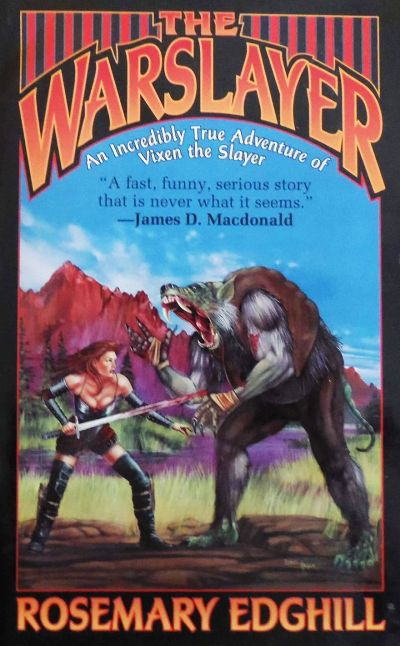 The cover blurb/Goodreads description creates the impression that this is a light exercise in humorous fantasy; and it actually does have a lot of humor (I read it to my wife, and she laughed out loud in several places). Both TITAoVtS and Xena are shows that offer mostly action-oriented entertainment without a lot of serious content, which might also lead readers to expect the same here. However, The Warslayer has its unexpectedly deep and serious side. Glory can deliver a fair amount of wry humor; but we’ll also see her bleed, vomit, and cry. While there’s some intense physical combat going on here at times, the battles aren’t all going to be physical, and the author has some really important things to say. (I’m not going to try to summarize them, because the story is the message, and you need to experience it the way she wrote it.) Her plotting here is not at all predictable. (But it’s deeply satisfying!)
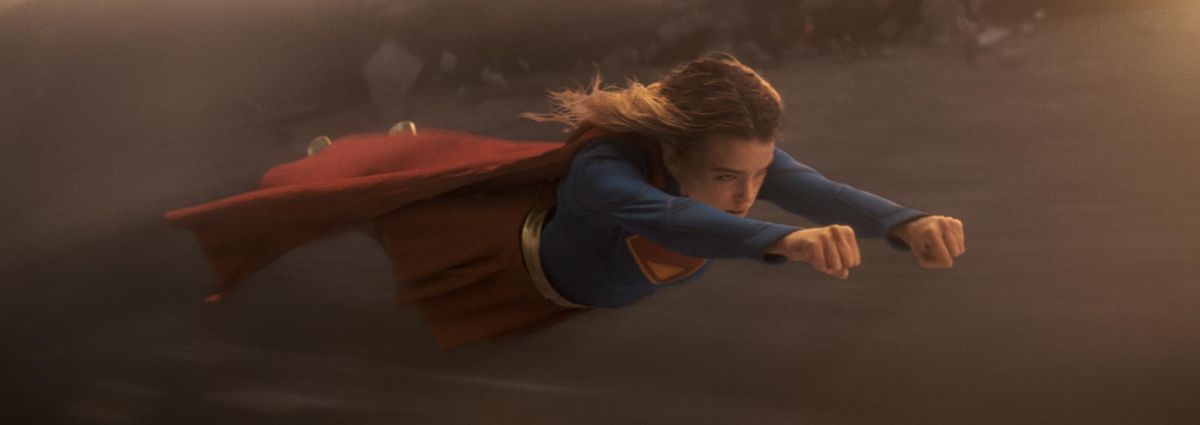 ★★★
★★★ Anyway, what’s the story? Supergirl continues from 2025’s Superman, which in its last scene introduced Supergirl. She is Kara Zor-El, Clark’s cousin, owner of Krypto the Superdog, and together with Clark, the only survivors of the planet Krypton. The Superman movie didn’t show the destruction of Krypton (we have seen that too often on screen in the past) but Craig Gillespie, director of Supergirl, gives us glimpses of it, or flashbacks to Argo City, the city that survived due to SF-technology on a chunk in space. Its inhabitants are nevertheless doomed, due to kryptonic poisoning. So, Kara’s father sends her to Earth, to her cousin who already lives here. The makers generally stay true to Supergirl’s origins, though there is no orphanage into which Superman puts her, nor surrogate parents like the Danvers as in the comics.
 There are editing and creative choices that baffled me. Instead of showing a bar brawl with Kara, the camera focuses on Ruthye in front of us, hiding from the fight. Mind you, in action scenes, the camera often gets so close we can barely tell who is fighting whom. In one flashback Clark tells Kara her powers will set in “right now” – and we cut away to another scene of Kara sitting in a room listening to music on her headphones. A couple who wants to trade Kara and Ruthye for their kidnapped daughter, poisons Kara – how did they know that their poison would work on her? In another scene in a prison, small, lightly-built Ruthye takes on a henchman around double her size, possibly four times as heavy, and easily beats him. There is no explanation given how she does that. While Kara isn’t physically big either, we know what kind of power Kryptonians have. But Ruthye?
 ★★½
★★½ There’s a very strong start here, and this makes the way it implodes at the end all the more disappointing. The film certainly hits the ground running. It’s 1978 in rural California, and ‘Scorpion’ Joe Clay (Hébert) is fleeing from the scene of a botched bank robbery. His wounded partner in crime is bleeding out in the back seat, and there’s a hostage, bank customer Vivian Fontaine (Bell), in the trunk. But when he pulls off the road to sort things out, freeing Vivian so she can help, we discover there are much worse things in the desert than scorpions. For Joe quickly gets his head blown apart.