




Literary rating: ★★★★
Kick-butt quotient: ☆½
Full disclosure at the outset: the author kindly donated me a paperback copy of this book in return for an honest review.
In the climactic novel of the author’s Elioud Legacy trilogy, The Draka and the Giant, former U.S. Army Ranger Ryan Helsing, a decorated and physically formidable veteran of the fighting in Iraq and Afghanistan, was introduced as a relatively minor character (I didn’t remember him until I read this book; it’s been a couple of years since I finished reading the trilogy). And as I recall from the prequel series, Unsanctioned Guardians, it was mentioned in the first book there, The Covert Guardian, that title character (and major figure in both series) Olivia Markham had a younger sister. These two people serve as co-protagonists of this new novel, intended as the opening volume of The Dragon’s Paladins, a projected spin-off series from the original trilogy.
 As reader’s of the latter know, Zane’s premise is that, from antediluvian times on down to the present, there have been some sub rosa matings between angels (mostly fallen ones, but occasionally celestial ones as well) and humans, and that the children of these unions walk among us, sometimes aware of their heritage, sometimes not. These Elioud have (latent, or more developed) super-human abilities from their angelic genes; and in the ongoing cosmic strife between God and Satan, they may be knowingly enlisted on one side or the other, or just imagine that they can ignore spiritual realities and be neutral. (This premise is taken for granted in the present novel, which should definitely be read after at least the original trilogy, if not necessarily the prequel; the reader needs that to fully understand the situation and to really know some of the important characters.)
Our main setting is the Balkans, in the very near future, about six months after the final events of the Draka and the Giant. Dianne Markham is now a 29-year-old “social media marketing consultant” (and yes, that’s an actual job). Secular-minded and not very close to her sister, in the past she’s been something of a playgirl type, and cultivated a loose lifestyle along that line; but more recently, she’s been aware of her biological clock ticking, and been feeling (and even acting on) some impulses towards a more serious and mature outlook and more responsible behavior. She has no clue about her family’s bloodlines, or that Olivia and her husband, Mihail Kastrioti, are two of the Archangel Michael’s top warriors and commanders.
But they are; and Olivia, warned of danger by her “spidey sense” (which we’ve come to recognize as Divine prompting) is taking measures to gather her birth family into the relatively greater safety of the Kastrioti fortress compound in the Albanian mountains. When we first meet Dianne, she’s on an Adriatic cruise, now winding down, with a bevy of her shallow “friends” (though Germaine Grimes is one she reckons as an actual friend). However, Olivia has sent our title character to secretly watch over her sister on the voyage, and to bring her to Olivia as soon as they dock in the Croatian port city of Split. That may be a long and dangerous trip (especially after the registering of the largest EMP phenomenon in history), and their interpersonal dynamics may get interesting….
In its stylistic and other qualities, this book has a lot of the same trademark characteristics the author displays in her six preceding books. Narration is in third-person, past tense; the H/h alternate as viewpoint characters, with occasional scenes from other viewpoints as needed. While this is definitely in the supernatural fiction genre, centering on combat between demons and demi-angels and their human pawns or allies, much of it also reads like descriptive fiction action-adventure or an espionage thriller (and Zane’s prequel trilogy actually is in the latter genre). This entails a lot of physical action and use of high-tech weaponry and communications. The development of nanotechnology here, and its tie-ins with “harmonics,” the energy frequencies underlying all reality and all living things, including people, which angels and their descendants can perceive but ordinary humans usually can’t, is in the realm of the science-fictional (and probably already was in at least the last two books of the first trilogy, though my knowledge of nanotechnology isn’t great enough that I could tell that on my first reading).
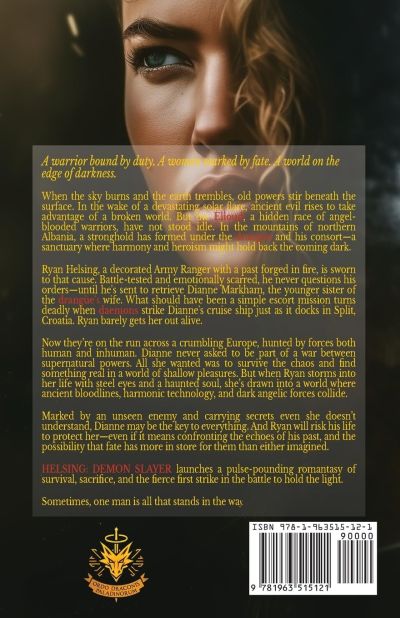
Zane sets a very brisk narrative pace, with a gripping intensity that makes this a real page-turner (I read it in less than two weeks, despite the 353-page length, which is fairly quick for me; and I always hated to put it down when I had to.) As in all of her work, she displays a detailed grasp of the settings and real-life locations, derived partly from Internet research and partly from her own travels. Given the cover art, it’s no surprise that Ryan Helsing is a highly capable action-hero; Dianne (who’s depicted on the back cover, but just with her face) doesn’t start out combat-trained, but she’s got guts and determination, and grows naturally into an action-heroine role. Both characters are developed well, in three-dimensional fashion. Their romance (that’s not a spoiler –Zane’s imprint is Zephon Romance, after all!) develops very quickly, but being thrown together closely and continuously under mortally dangerous and stressful conditions that demand constructive responses will bring out people’s mettle very quickly, and make it both easy and natural to assess and appreciate personal worth in a comrade-in-arms. Romance enhances the story and is a big part of it, but doesn’t swallow it whole.
Demonic possession of humans is taken seriously in the New Testament as an actual reality (borne out in other nonfiction literature on the subject), but the biblical writers don’t present us with a detailed theology of it. It’s a major plot element here; but here (as in some of the other books), how it works is a bit murky, and that’s probably my major quibble here. It’s sometimes suggested, plausibly, that the possessed are usually willing vessels of evil, or that all those outside the actual protection of Christ through faith are under some risk for it (and there are New Testament texts that could indicate that). But we also have a case of apparent possession of a human who doesn’t fall in those categories; and just as the St. Michael medals worn by some good characters here and in the other books have protective qualities, the demonically-cursed physical talismans here worn by some characters exert a malevolent spiritual influence.
 Related to this, although like all of the author’s books, this one has a strong good vs. evil orientation which is explicitly understood in Christian terms of God vs. Satan, there’s not a strong note of necessary personal decision to repent of self-will and turn to Christ in salvation. (Granted, Christian conversion is typically a gradual process of internal changes in response to moral and spiritual influence; but there does come a distinct tipping point in which personal loyalty flips Christ’s way. We don’t get a real sense of that here; Dianne starts out as essentially a heathen, albeit one who’s having a bit of a moral awakening; but insofar as she changes spiritually, the change appears to be more about her relationship to Ryan than to Christ.)
Some of this is probably influenced by the author’s Roman Catholic faith, though none of her books harp on denominational distinctives; Catholic (and Orthodox) sacramental theology attributes real spiritual influence to physical objects or actions, where other Christian believers wouldn’t go that far, and the former traditions place less stress on an actual, real-time decision for Christian conversion. (Many Christians, myself included, also wouldn’t consider the whole idea of modern-day demi-angels fighting physical battles against demons as really plausible; but it has to be recognized that the author isn’t necessarily claiming that it is. We should just regard the premise here as a fictional literary conceit that serves metaphorical functions, or allows the author to spin an imaginative story, not as a serious theological treatise.) It could also be argued that the climactic resolution of the conflict is too easy, though I didn’t consider that a serious flaw.
Even though both Ryan and Dianne use a certain amount of bad language (realistically, given their backgrounds) there’s no profane abuse of divine names nor actual f-word use here, and there’s also no explicit nor implied sex. (There’s no doubt that our H and h are strongly attracted to each other physically, but there’s also a sense that the attraction is also, and more importantly, to each other’s qualities of character.) Like the original trilogy, this can be recommended to readers who like clean romance (if they don’t mind what movie reviewers –and this would make a great movie!– would call “some sensuality”) and those who like action adventure, both male and female. It can also appeal to supernatural fiction readers who like the angels vs. demons theme, but the appeal wouldn’t be confined to Catholic (or general Christian) readers; I think many secular readers could enjoy it as well.
Author: Liane Zane
Publisher: Zephon Romance, available from Amazon, both for Kindle and as a printed book.
A version of this review previously appeared on Goodreads.
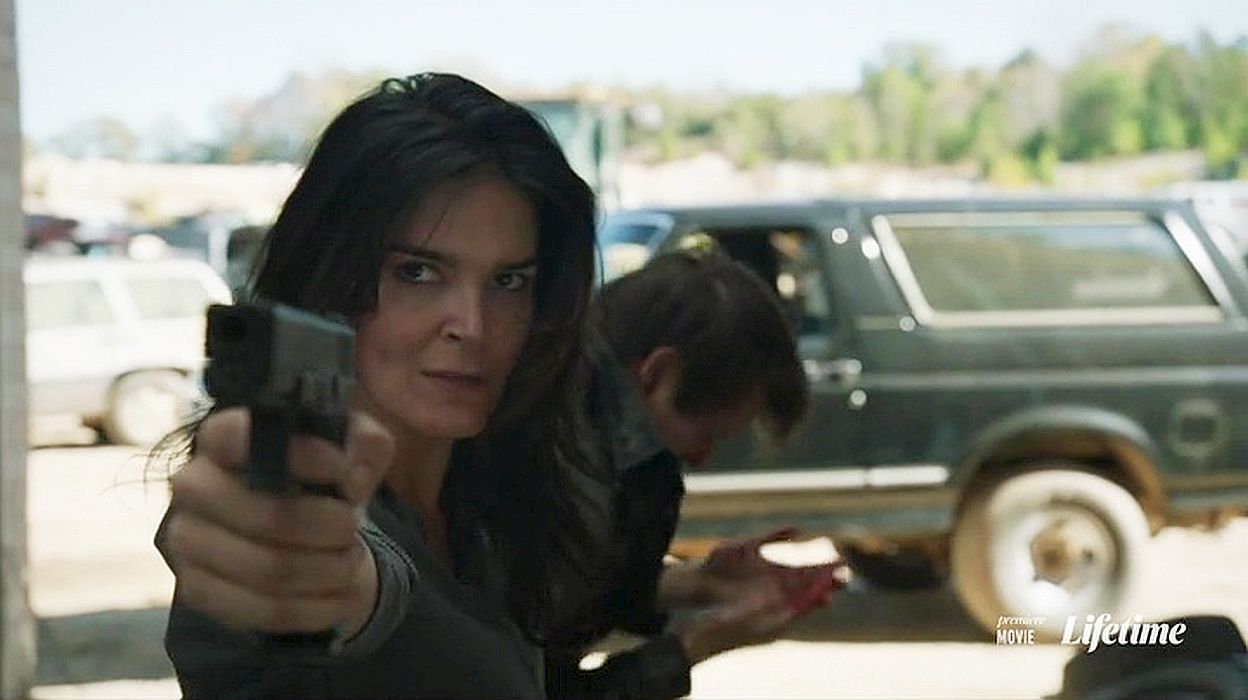
 I’m tempted to be very snarky, say something like “The torment here is entirely on the viewer’s end” and make that the totality of the review. However, that’s a dangerous precedent, one I don’t want to set. Before long, I’d be phoning it in, and churning out nothing but single sentence reviews. I would instead spend my time sitting on the couch, eating Doritos and scrolling idly on my phone, before dying prematurely of a heart attack, and turning Chris into a grieving cat lady. Do you want that to happen, Torment? Do you, really? However, it probably does say something that such morbid speculation is still considerably more fun than either watching or writing about this.
  ★★★
★★★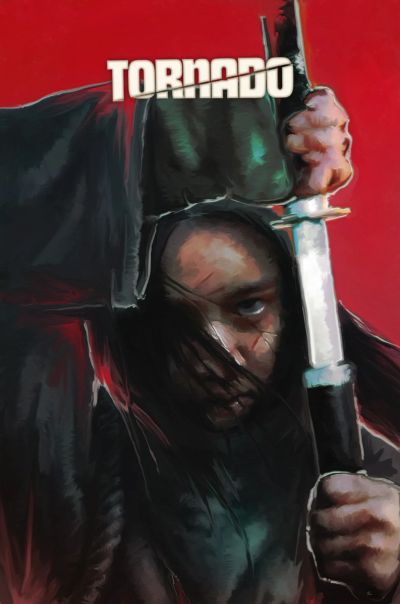 It’s a samurai film. Except, it’s a Western. Only, it’s one which takes place in Scotland. I trust that’s cleared up any confusion here. However, you will still need to manage your expectations, because based on both the poster and the trailer, it would be easy to go in expecting something action-packed. It is not. At all. That element is heavily back-loaded, to the final fifteen minutes. It does include one of the more imaginative and splattery kills I’ve seen this year. Probably a bonus half-star for that alone. However, it’s more a movie about mood, atmosphere and scenery than arterial spray. But I lived in Scotland. I already know it’s pretty.
 This was a real and pleasant surprise. I wasn’t even sure if this would qualify for the site, or if it would end simply being too gentle. Whole it’s not going to get any awards for hard-core action, it does fit in here. More impressively, it managed to make my empathize with someone whose views are ones I’d generally disagree with. It takes place in Iceland, where Halla (Geirharðsdóttir) is a middle-aged, single woman, waging a near one-person campaign of sabotage against heavy industry, mostly by disabling the power-lines which supply electricity to it, disfiguring the landscape and exacerbating climate change. It’s a game of cat and mouse, with the authorities keen to stop the eco-terrorist from dissuading foreign investors.
 However, Halla has issues of her own, beyond the net closing in on her property destruction. A long-dormant adoption request is suddenly approved, and she can’t risk further criminal acts, as a conviction would bar her from proceeding. She intends to go out with a declaration of her manifesto, literally flung from the Reykjavik roof-tops, and a final act, stealing Semtex to blow up a key electricity pylon. Her accomplice, government employee Baldvin (Ragnarsson) is increasingly concerned about the “one last job” trope, and twin sister Ása (also Geirharðsdóttir), a yoga teacher, threatens to put a spoke in the adoption process too, by vanishing off to India for two years to live with her guru.
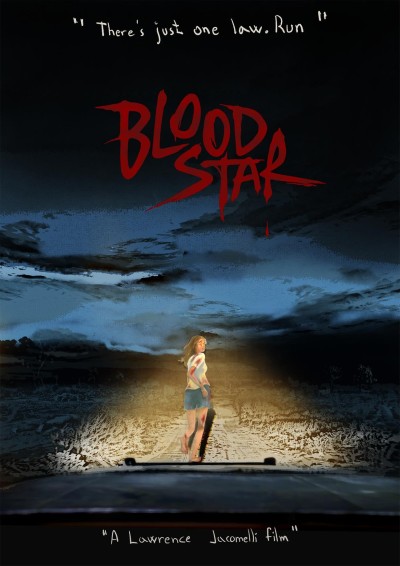 I get the idea of what this is trying to do: really, be a female-centric version of The Hitcher. Though to some extent, that franchise went there itself, in The Hitcher II: I’ve Been Waiting. Here, we have Bobbi Torres (Camacho) driving across New Mexico in her sweet muscle car, and when she stops for fuel, has an awkward encounter with Sheriff Bilstein (Schwab). Things get worse when she gets back on the road, and is quickly pulled over by the officer for speeding, which gets her a thousand dollar ticket she is unable to pay. Thanks to a prologue, we know Bilstein has a psychopathic fondness for tormenting and killing young women. This ain’t gonna end well.
 Sloane Tarnish is not exactly your typical bounty-hunter. Indeed, she’s training for a medical degree when her shady uncle, Vin, talks her into helping out with a little job. Craving excitement, she agrees, and finds herself posing as the wife of a Fleet officer, seeking to intercept a data key with potentially very explosive information on it. A year later, Vin’s ship turns up without him on it, and she finds herself the new captain, leading the crew as they try to figure out where Vin has gone, and why he vanished. To fund this search, Sloane takes up the bounty-hunting mantle.
 I must admit, my initial reaction to this was, it is less than a film, than footage from a group of Viking LARPers (Live-action Role-playing). The resources on view here are… not great. But the deeper I went into this, the more I found myself able to forgive the limited budget, and began to appreciate the story it was telling, and the characters inhabiting it. Oh, there are still major problems, such as in the “battle scenes”. And I use quotes there, since the count of participants there feels like it might reach… eight, if we’re being charitable. But when it wasn’t making ill-advised efforts to be epic in scale, I ended up enjoying this, and subsequently bought the Blu-ray.
  Not to be confused, in any way, with Zero Hour!, the 1957 Canadian film which was spoofed mercilessly in Airplane! This unfolds mostly over one night in a high-rise, where Ida (Hoover) is the last person left in the building, having taken over from best friend Katrina (Dumont). She finds herself being harassed by a pair of masked figures, and simultaneously receiving messages on her phone and computer from her husband, Isaac (Groetsch). Which is perhaps even more disturbing to her, because Isaac was killed in the home invasion which opens the movie. So what’s going on? Has he become a ghost in the machine? Do they have cellphones in the afterlife? Or is there a more prosaic explanation?
 At the beginning of this, I wondered if I was watching a Godzilla film. Because it opens with atomic bomb footage, depicting French test in the Pacific. We know what this leads to: gigantic lizards with fiery bre… Oh, hang on: it’s actually a group of women, looking for a place reputed to have particularly gnarly (if my knowledge of beach-speak doesn’t fail me, and it probably does) waves. There are three surfers, plus photographer Sarah (Galloy), who has been out of the game since an accident which wrecked her confidence. The island they find isn’t on any map, so it must be good, and not a death-trap waiting to happen to them. Right?