★★★
“Is There Life After Afterlife?”
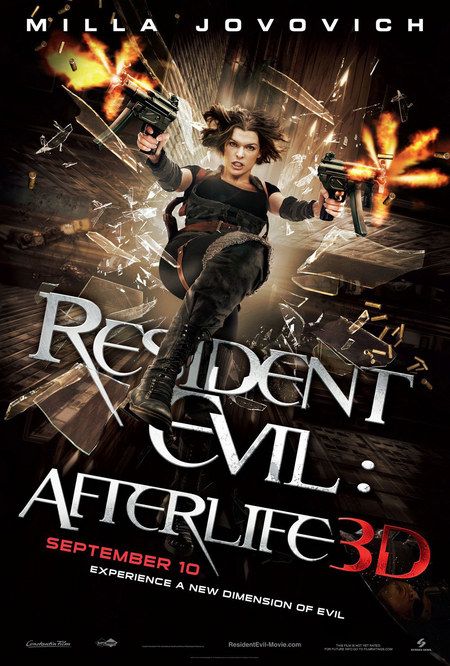
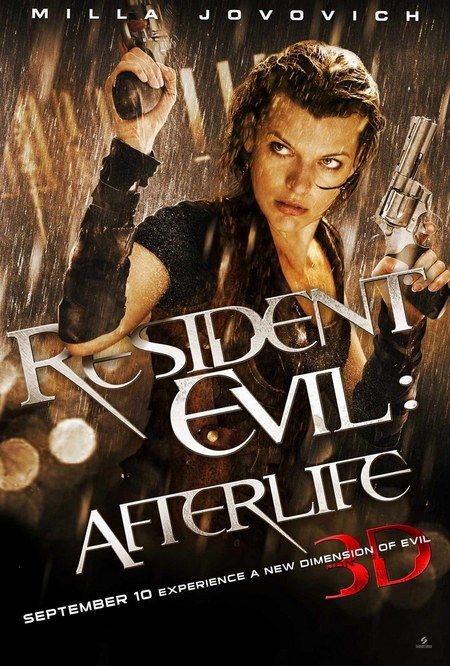
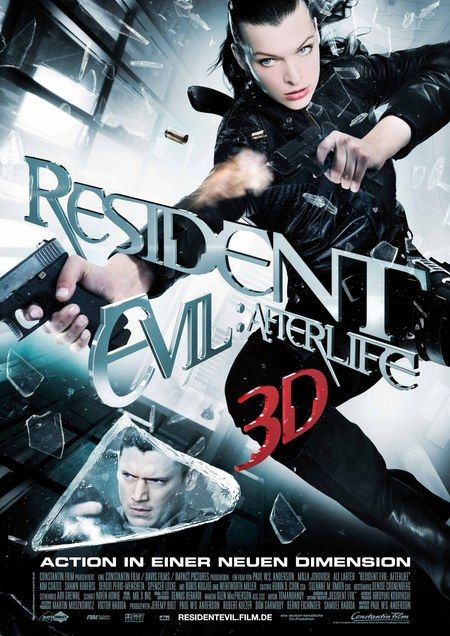
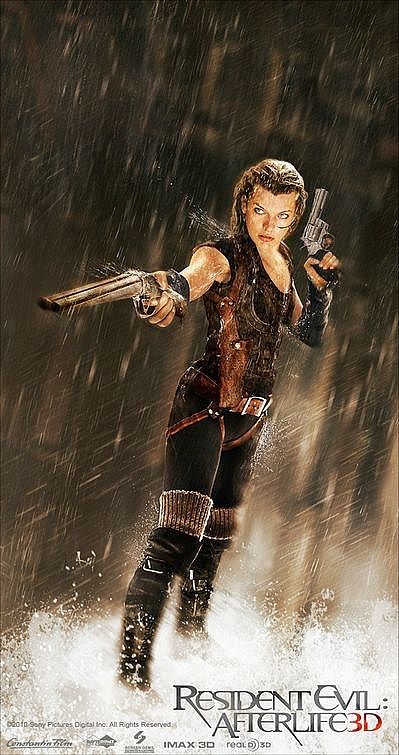
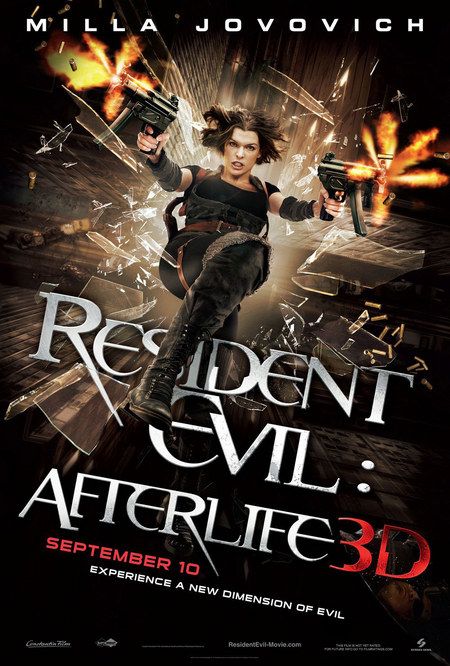 Milla Jovovich, coming at you in three dimensions! Unfortunately, Chris and 3D movies do not play well with each other – as we discovered at Avatar, where the resulting motion sickness had her staring at the back of the seat in front, after the first twenty minutes. She understandably declined all invitations to see Afterlife in this mode, so please note that with regard to this review, we’re strictly discussing the 2-D version. Other reports generally indicate the 3-D is pretty spiffy, having actually been shot that way, rather than being some hacked conversion job like certain movies I could mention [cough-ClashoftheTitans-cough]. That said, we move on.
We keep bumping into the first Resident Evil movie, which has been on cable a lot lately, and I’m tending to think my 3 1/2-star review was an under-estimate. Maybe due to the underwhelming nature of the last couple of entries in the series, the original moves briskly, keeps a tight focus on proceedings, and has a nice character arc for Alice. I was hoping that the return of its creator, Paul W.S. Anderson, to writing and directing for this fourth installment would signal a return to this approach.
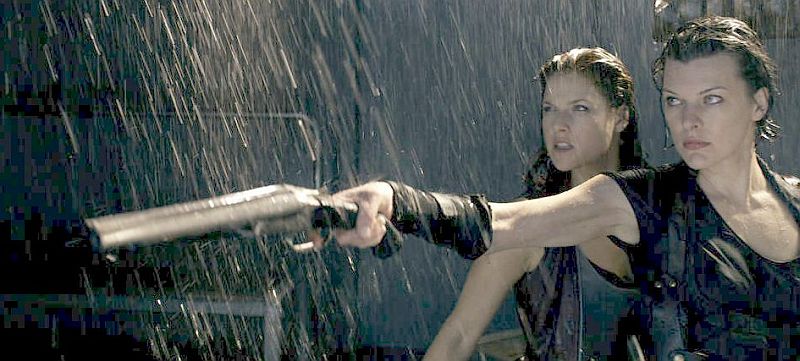
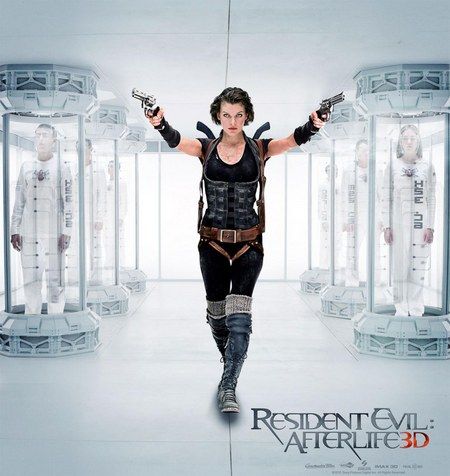
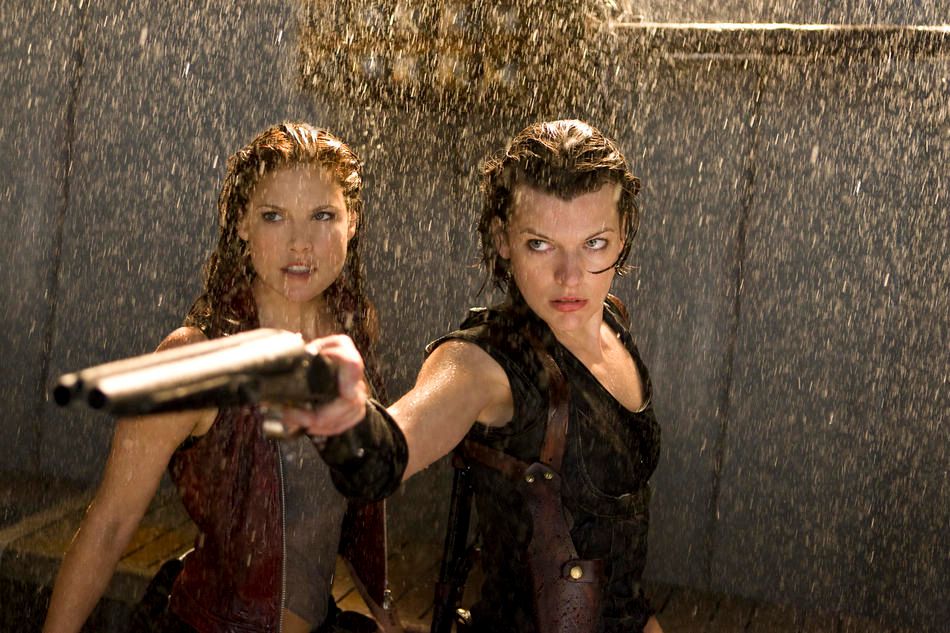
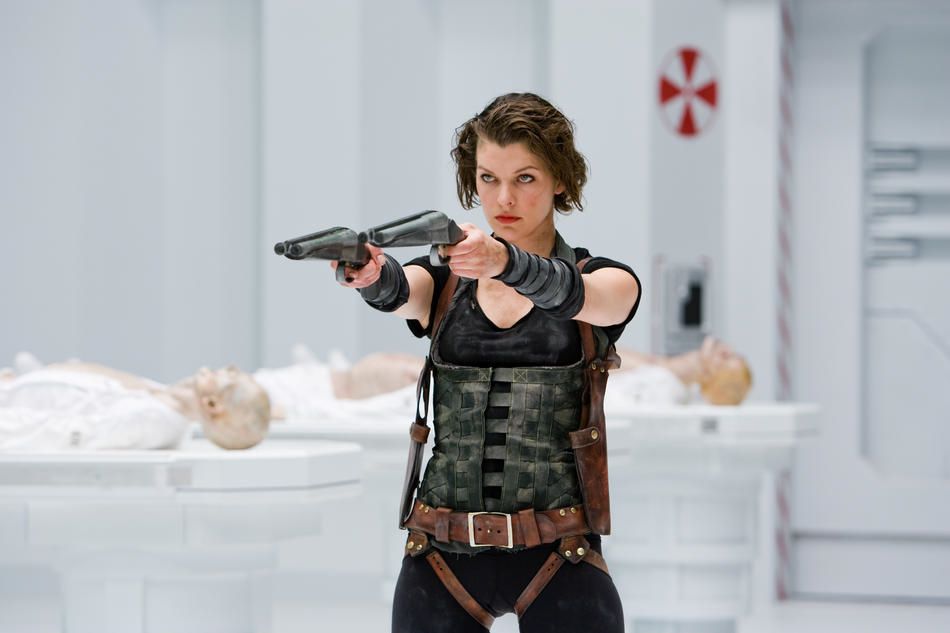
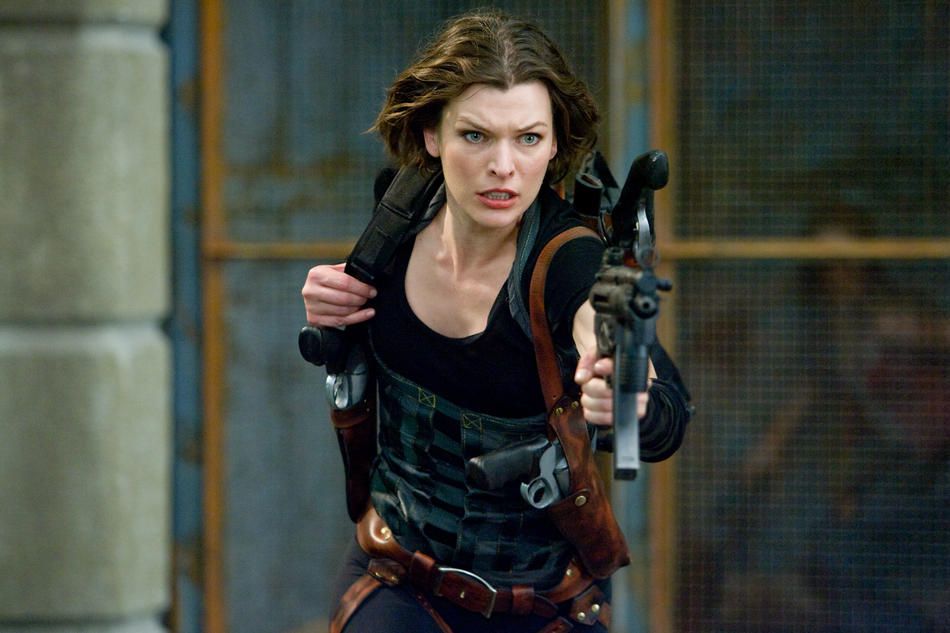
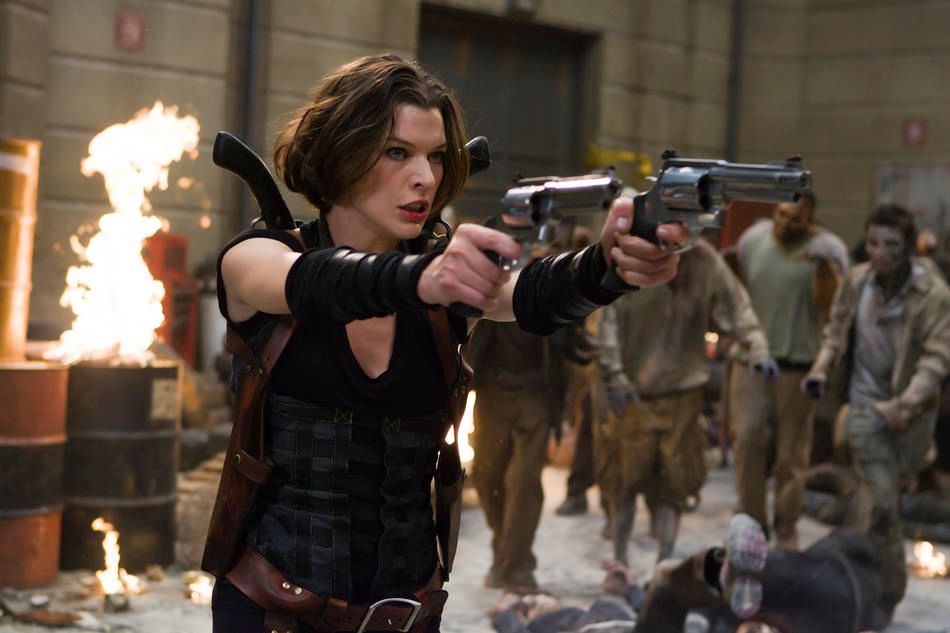
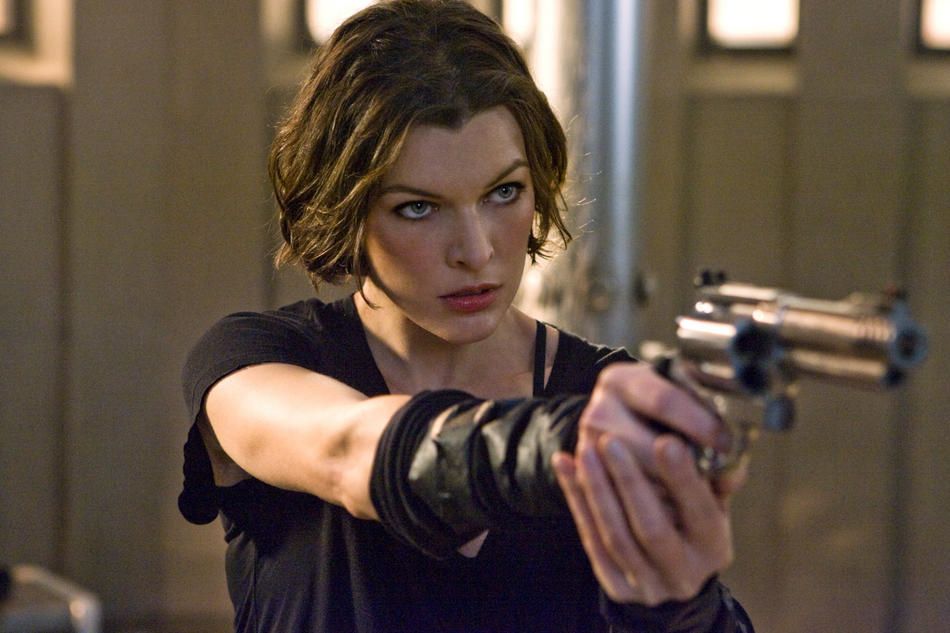
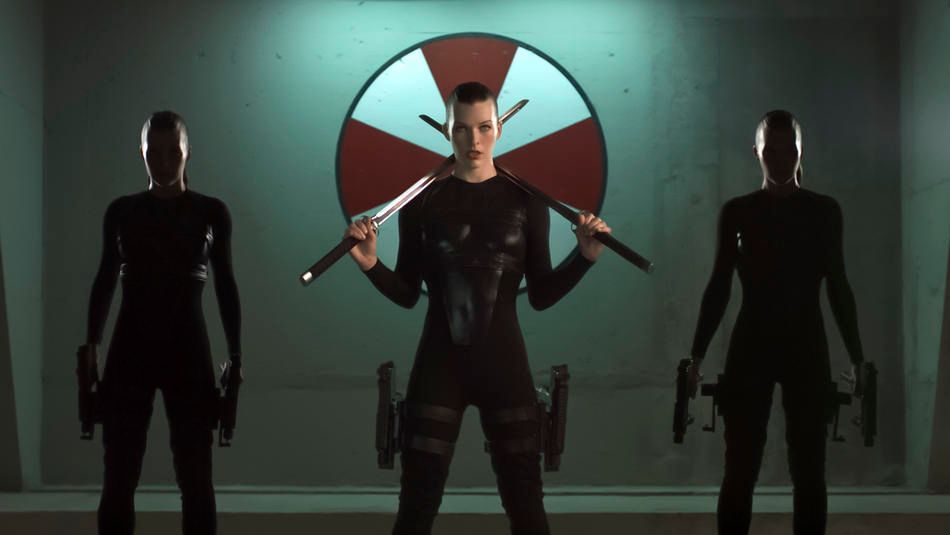
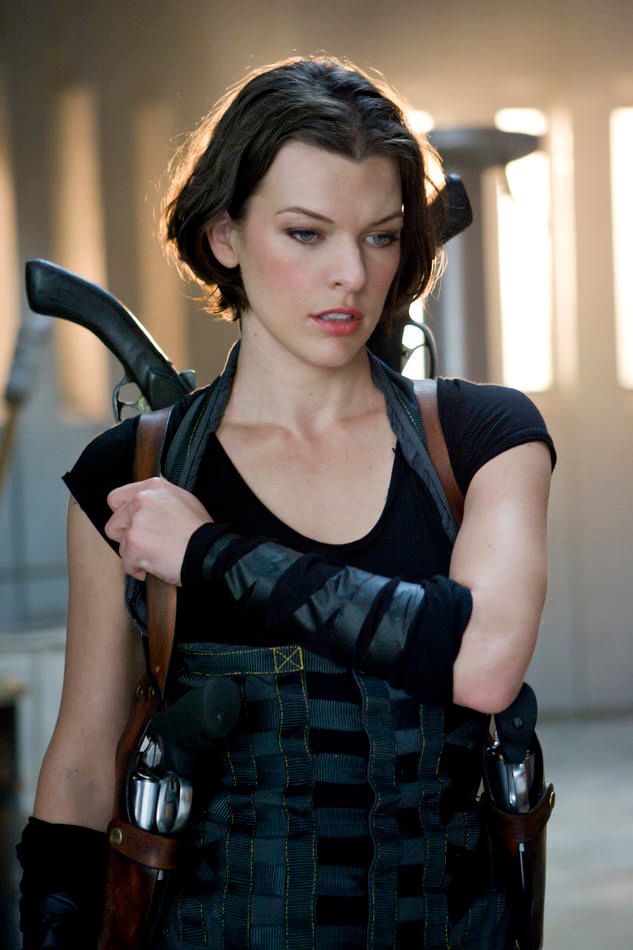
There’s really only one reason we bother with this series: to see Milla Jovovich kicking righteous ass. Everything else is – or should be – secondary. And for the first 15 minutes, it looked like this would indeed be a return to these basics, as Alice and an army of Alice-clones launched a righteous assault on the massive complex housing the Umbrella Corporation’s headquarters beneath Tokyo. It’s reminiscent of the lobby scene from The Matrix, with a swarm of Alice-alikes breaking in and hurling themselves against the guards like aggrieved lemmings, with no regard for their personal safety, as they try to take out Umbrella’s CEO’s Albert Wesker (Roberts).
It’s great: among the best scenes of the entire series, in fact. The bad news is, it’s also the best thing in the movie. The sequence would have made a great climax, but instead, everything thereafter feels like an anti-climax. Wesker escapes by helicopter, flipping the self-destruct switch and destroying the clones. However, the real Alice is aboard, and before the ‘copter crashes, he injects her with a serum that neutralizes the T-virus, rendering her human again. Boooooo-ring! Turns out they both survive the crash: quite why Wesker didn’t deal with her then, isn’t made clear. Alice heads to Alaska, in search of the haven called Arcadia where Claire Redfield (Larter) was heading at the end of the third film.
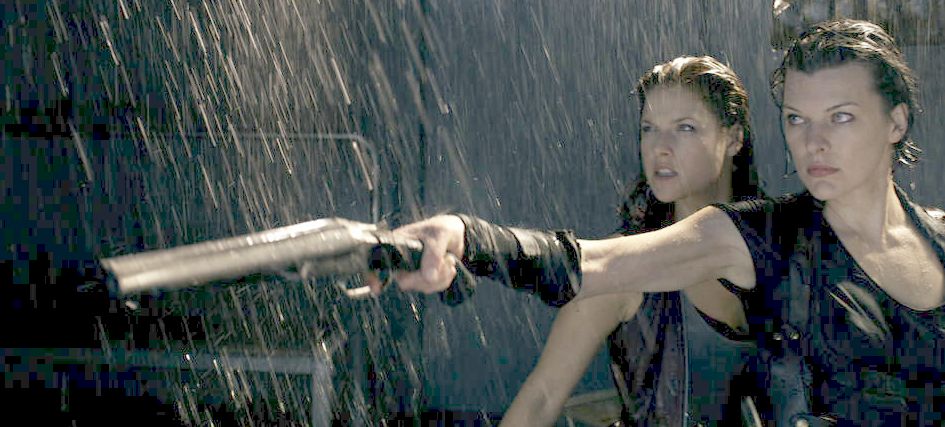
 That turns out to be a red herring, but Alice does find Claire, albeit now controlled by an Umbrella device on her chest. Removing that, albeit at the cost of Claire’s memory, the pair fly back down the West coast, eventually locating a group of survivors bunkered down in an LA prison – Arcadia turns out to be the name of a boat, anchored just offshore. As the zombies break in, the survivors make their way towards the boat, with the help of a prisoner who turns out to be Chris (Miller), Claire’s brother. Reaching the Arcadia, they discover it’s a trap, designed to lure people to it for Umbrella’s research, with Wesker overseeing operations. He wants to assimilate (or “eat”) Alice; as the only person to successfully meld with the T-virus, he wants that ability to enhance his own superpowers.
There’s way too much moving about in underground darkness here, and elements are lobbed in from the video game, which make no sense in the context of the movie. For instance, some zombies now have their faces split open and become all tenticular: why, is never explained, and the CGI used here is less effective than the effects used for a similar concept in Blade II, almost a decade ago. There’s also the Executioner, a giant creature wielding an even-larger weapon: again, its presence from a cinematic perspective is completely unexplained. In short, the film just doesn’t make much sense, though admittedly, between the battles, there was precious little of interest going on to hold my attention.
Nor is there much feeling of threat to the characters, who cheat death with blithe abandon – the sense of “anyone can die, at any time” present in the original is all but gone. A case in point would be the leader of the survivors, who vanished from the film entirely as they make their way out of the prison, only to reappear, right at the end, to no point whatsoever. Chris Redfield is an almost entirely superfluous character; like the monsters mentioned above, he is apparently there, just so that fans of the game can go “Look! It’s Chris Redfield!” The rest of us…not so much. The whole subplot of Alice’s humanity being restored doesn’t go anywhere either; that may well be fortunate. In any case, by the end, she seems completely back to normal. Well, “normal” in the way we want to see, anyway.
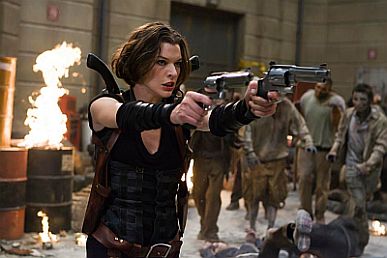 Which brings me nicely to the action, and it is, as usual for the series, solid, meaning this is, overall, just worth the 92 minutes of your time it will take up. I think due to the 3-D, the editing is more restrained than it has been of late; indeed, there’s probably as much slow-motion as anything else. I particularly liked Alice’s fondness for loading her shotgun with coins – again, I suspect largely for 3-D purposes. There’s a nice tag-match between her, Claire and the Executioner, but the final face-off versus Wesker is largely forgettable. As usual, the film ends on an interesting note: this time, it’s the return of a character last seen in Apocalypse, who makes a cameo early in the end-credits, and I wouldn’t mind seeing them return.
Despite the 3-D, the movie was only a mediocre success here, but a much greater hit overseas. For perspective, the percentage of total box-office coming outside North America for the first three entries was fairly constant, at 61%, 60% and 66% respectively. Afterlife got an astonishing 80% of its takings in foreign territories, grossing $236 million there, compared to only $60m in the US, barely recovering its budget. That’s one of the highest ratios of the year, and has only been surpassed a handful of times this decade, by films with a broad Stateside release. It’s this success abroad which means a fifth installment is all but certain. And as long as they keep making them, we’ll keep watching, hoping the potential, seen in flashes, might be more fully realized. A script which makes sense on its own terms, and doesn’t bother pandering to gamers, would be a good start.
Dir: Paul W.S. Anderson
Stars: Milla Jovovich, Ali Larter, Wentworth Miller, Shawn Roberts




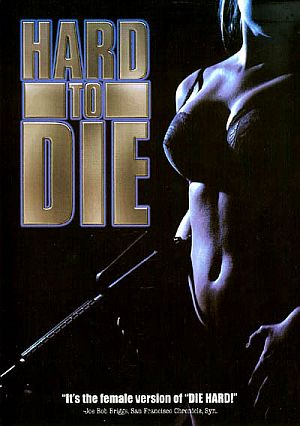 This slice of cheese couldn’t be any riper. Five employees of the Acme Lingerie Company are called in to work on a Saturday to do inventory, despite the presence of creepy janitor Ketchum. A misdelivered package arrives, intended for Dr. Newton, an investigator of witchcraft, and when the ladies open it, they unleash the soul of a serial killer (allowing the use of flashback footage from a previous Wynorski flick. Sorority House Massacre). Meanwhile, the workers, having got all dusty gathering up boxes in the basement, make the logical decision: to take showers and try on the latest Acme line of skimpy products. Which they then wear for the rest of the film. As the unleashed killer picks off them, and everyone else in the building, one by one. Fortunate that there’s an arms dealer who has also set up shop on another floor, and who has left large quantities of merchandise and ammo around…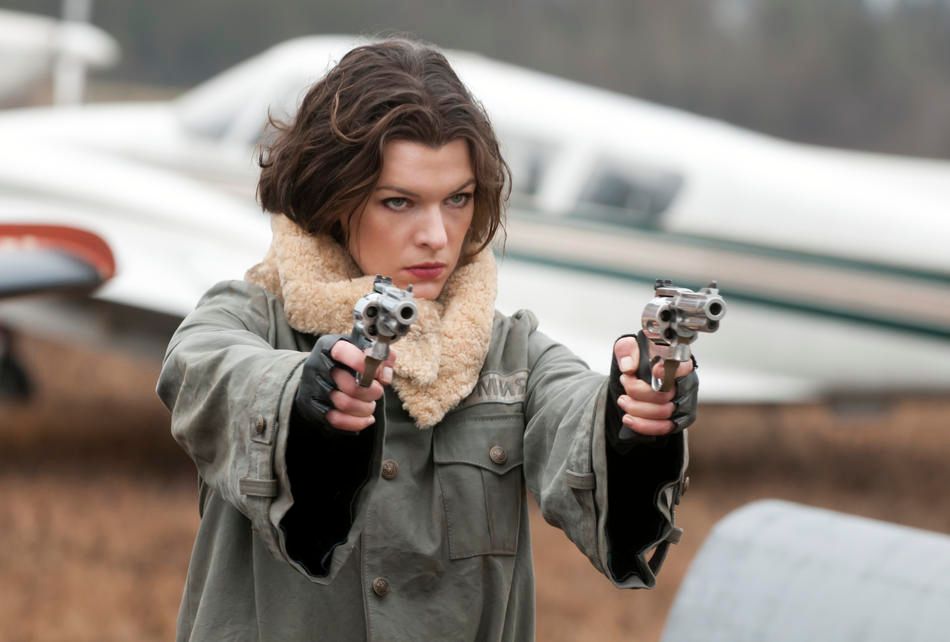



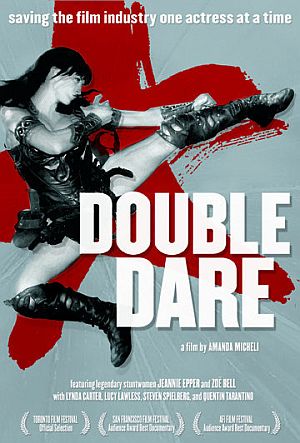
 The day after watching this documentary, I was clearing out the shed in preparation for our house move. I twisted my back, and thought about giving up, but soldiered on until the job was done – because that’s what Zoë Bell would do. It’s now my life philosophy: WWZD? She’s the main focus here, from working as Lucy Lawless’s double on Xena in New Zealand, through an unsuccessful attempt to break in to Hollywood, and on to a second try, where she’s hired to stand-in for Uma Thurman in Kill Bill. Paralleling this, it looks at Jeannie Epper, a veteran stuntwoman who shadowed Lynda Carter in Wonder Woman. Now nearing her 60th birthday, Epper is still active and seeking work, fighting against the problems of being a female in an extremely male-dominated industry.
 ★★★½
★★★½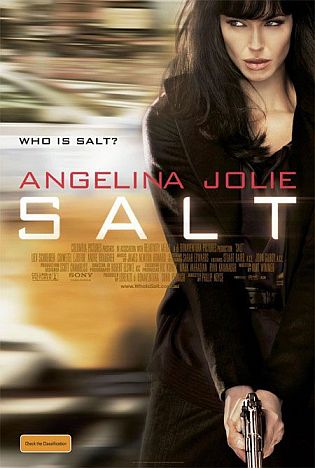 Angelina Jolie is the undisputed US box-office queen of action heroines. With
  Still, it’s entertaining and keeps moving. Credit for clocking in at a brisk 100 minutes, rather than stretching things out beyong what’s necessary: there’s isn’t much unnecessary fat on its scriptual bones, and a refreshing lack of romantic chit-chat. There are a couple of solid action set-pieces, most notably an early, frenetic chase through the streets, and Salt overall has an ability to withstand falls that Wile E. Coyote would envy. Towards the end, she descends a lift-shaft leading to the presidential bunker, without bothering to wait for the elevator, and can also turn a few common cleaning supplies into an impromptu rocket-launcher. These are talents I’m sure we all could use occasionally.
 Bliss Cavendar (Page) is stuck in the hickville of Bodeen, Texas: her mother (Harden) coerces her into small-town beauty pagents, but Bliss’s heart isn’t in it. On a shopping trip to Austin, she picks up a roller-derby flyer, and on attending the event with her friend Pash (Shawkat), falls in love with the sport and decides to try out. She has to lie about her age to do so, and also keep her attendance a secret from her parents. Bliss has a natural talent, and helps her team, the Hurl Scouts, previously the doormats of the league, to the championship game against the Holy Rollers, under Iron Maven (Lewis). The confidence Bliss gains is not without its issues however, bringing her in to conflict with her boyfriend and Pash, as well as her parents…
 I can certainly appreciate where the makers are trying to go with this one. Two Catholic schoolgirls, selling Bible door-to-door to raise funds for their educational establishment. Unfortunately, they knock on the wrong door: this is actually a whorehouse, run by the psychotic Lobo (Tahoe), who has just killed one of his hookers. The two are kidnapped: one is killed, while the other (Lyone) is left for dead, naked, in the nearby woods. She is taken to hospital, but has only a single thought in her head: revenge. Stealing a nurse’s uniform, she checks out, intent on taking our her wrath on Lobo and his no-less depraved sidekicks.
 Ok, that brief is a little harsh, but it is true to say by the end, I had opted to double-task, and was watching this while I stood over the sink in the kitchen. It wasn’t as good as I expected: I was hoping for something along the lines of Faster, Pussycat, and instead got a turgid, over-extended crime drama. While it has all the right aspirations, the yawning chasm between that and its execution would require several days’ trip by mule to cross. Alice Wynn (Sondrup) is part of an armored-truck robbery, only to find herself double-crossed and left for dead by corrupt cop Jill Robbe (Beisner). Alice vows to recover the loot and take revenge on Robbe, and won’t let anyone – examples include her late mother’s boyfriend, psychotic pimp Ramrod or his Swedish assassin – stand in her way.
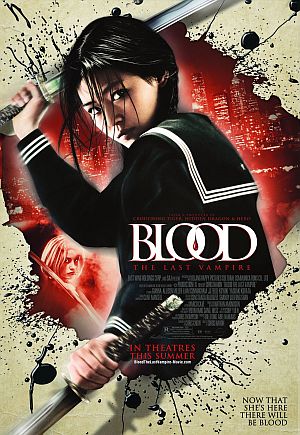 The animated version was one of the first reviews I wrote for the site, and I didn’t like it much – the fifty-minute running time allowed for hardly any development of scenario or characters at all. The feature fares a good bit better in these departments, though suffers from some horrendous editing styles and a couple of monsters which appear to have strayed in from a Playstation game (and I am not talking Playstation 3 here, either). The basic plot is retained. Saya (Gianna) is a half-demon with a grudge, intent on taking out Onigen (Koyuki), the one responsible for the death of her father. Working under the loose guidance of The Council, she is inserted into a school on an American air-force base in 1970 Japan. American girl Alice (Miller) has been added; Saya rescues her, and the two end up on the run, pursued both by Onigen and more regular forces.
 ★★★★
★★★★
 Zombie was responsible for the Werewolf Women of the SS faux-trailer in Grindhouse, and brings much the same gleeful approach to proceedings here. Indeed, we first see Suzi-X kidnapping the head of Hitler, which is kept alive in a jar (as in They Saved Hitler’s Brain), and then has to escape by fighting her way through a massive pack of Nazi zombies (that’d be from Shock Waves). Carnage ensues, as it pretty much does, any time Suzi-X is on the screen, which is a lot – she gets far more of the action than El Superbeasto does. Proceedings culminate in a lengthy, slo-mo catfight, entirely necessary to the plot, between her and Von Black, while the soundtrack cheerily informs us that “It’s OK to jerk off to cartoons – the Japanese do it every day – so rub one out for the USA…”
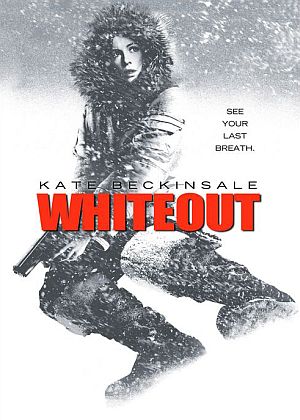 “Oh, look,” I said to Chris. “Whiteout is just starting. It’s about a US marshal investigating a murder in Antarctica. Let’s take a look, shall we?” And, of course, the first thing we see is Kate Beckinsale bending over in her underwear, as she undresses to take a shower. I haven’t heard her eyes whirring as they rolled in her skull like that, probably since the first 20 minutes of Bitch Slap. I’ll have to sit through a few Ghost Whisperer episodes to make up for that. God forbid, maybe even stay awake for one. The sad news is, that was probably the most memorable moment in a film which, on balance, is marginally less interesting than the weather phenomena name-checked in the title.