



 ★★★½
★★★½
“Mums with guns.”
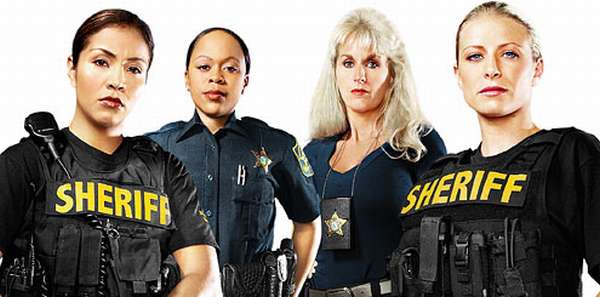
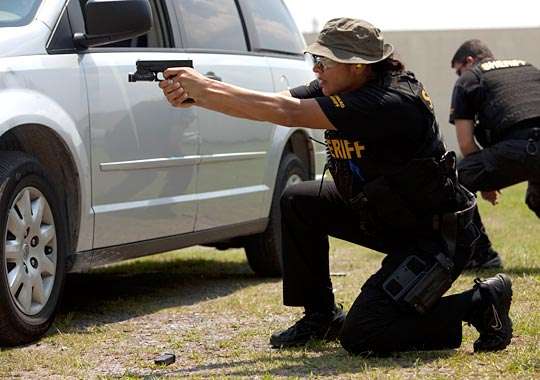 Twenty years ago, Cops debuted on Fox, and has become a part of the cultural landscape, leading to an avalanche of spin-offs, ranging from the serious to the complete spoofs (Reno 911 being the most notable). The very first episode took place in Broward County, Florida and, two decades later, the latest in the field returns there. PoBC, as I’m going to refer to it for obvious reasons, follows four women members of the Sheriff’s Department there, both at home and on duty, as they take down the bad guys and deal with the public.
The four present a cross-section, covering three races and a broad range of ages, from 25-year old Deputy Shelunda Cooper, to Detective Julie Bower – almost double Cooper’s age, whose hair appears firmly rooted in the 1980’s. Each episode is a semi-random selection of incidents. If there’s a theme, it’s in the type of crimes with which each deals. Bower is a member of the sex-crimes unit, which covers everything from rape cases to staging prostitution stings [one of which involved her dressing up as a street hooker]. All the cases of Detective Ana Murillo seems to involve drugs, while Cooper is the queen of the “domestic” – if there’s a family squabble, she’ll be there. Detective Andrea Penoyer’s caseload has a little more variety, though she achieved a certain notoriety for her gung-ho quote, “There’s always a good time to use a Taser,” featured prominently in the trailer (below).
Murillo seems to have a little bit of an attitude, shall we say, especially if any of the members of the public with whom she comes into contact do not adopt the appropriate reverential approach – such as the woman who has the temerity to talk on her cellphone. Murillo basically confiscates the phone, and there are numerous other incidents in the show which have a questionable nature as far as constitutional rights go. Her approach to law-enforcement appears to have more in common with Judge Dredd than “To protect and serve,” though one wonders whether TLC’s description of it as a docudrama – emphasis added – has more significance than might immediately be obvious.
“I’m no different fron the guys, I still kick ass and take names – I just do it with nail-polish and lip-gloss.”
— Ana Murillo
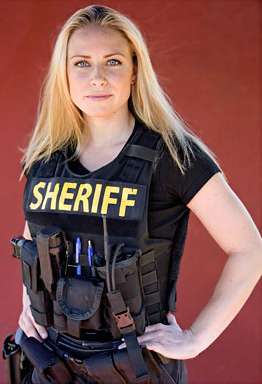 Despite Murillo’s unquestioned position as Empress of Lip-gloss, it’s blonde, blue-eyed Penoyer who is the glamour queen of the show – though the illusion is somewhat damaged when she starts yelling commands at suspects in a voice that’s probably the audio equivalent of getting Tazered. Though as she points out, such an attitude is necessary: “When someone walks in a room and you got a cop who is 6’5″ and 300 pounds, he looks intimidating. So we have to act intimidating: we have to be very, very serious and let people know we’re not playing around.” Well, not all the time, anyway. We also get to see Penoyer and her policewomen friends shopping for guns, and relaxing on the beach. In their bikinis.
This illustrates the strange double-standard at the heart of the show: on the one hand, it wants to show that the subjects are “just like the guys”. On the other, it keeps reminding us that three of the women are mothers – two of them single moms – and takes great care to point out how much they care about their kids. That’s the dichotomy that’s at the core of girls with guns: the contrast between the maternal and life-giving aspects and the death-dealer. I suspect, however, that it would be giving the creators of the show more credit than they deserve if I were to say they were conscious of such philosophical concepts.
Oddly, it’s Cooper of whom we grew fondest, even though she seemed condemned to the pettiest of crimes – someone refusing to pay a taxi fare for instance. Yet she seemed the one most genuinely concerned with her role as a member of the community, not just as a law enforcer. In one scene, she was called to an elderly gentleman’s apartment and ended up calling his girlfriend on his behalf; in another, she gave a homeless person the sandwich her husband had bought for her dinner. When she got a ‘proper’ crime – a burglary – and was able to take fingerprints, she was so genuinely delighted, we couldn’t help but cheer – hopefully, she’ll eventually achieve her ambition of getting into the CSI side of things.
I do have some serious qualms about the philosophy of policing shown here. While there’s no denying the awful effects of drug addiction [some of those arrested are a stark, poignant reminder of that], the efforts here seem almost entirely directed at street-level pushers – who, curiously, all seem to be black. What are the odds of that? Busting them is a pointless endeavour, since it simply creates a temporary gap in the marketplace, into which someone else will stop. Even more dubious are the prostitution stings: disturbing amounts of police resources are devoted to something which is basically a massive waste of time. Want to control prostitution? Legalize it, license it and tax it.
Once again, however, the creators have little no interest in addressing such things. This is about the telegenic end of policing, where no bad guy gets away and questions about rights and the ethics of entrapment operations are not considered. It’s entertainment, pure and simple – and even as people who have a very low tolerance for “reality entertainment” [since we usually find it neither realistic nor entertaining], this is curiously habit-forming.
Shown: TLC, Thursdays, 9pm
Star: Ana Murillo, Shelunda Cooper, Julie Bower, Andrea Penoyer
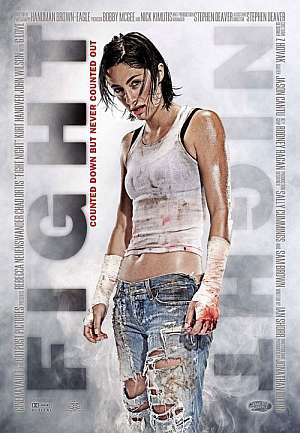 Michael Dublin (Ortis) is a wheeler-dealer, swinging between fixing underground fights and selling dodgy auto parts as need and opportunity arises. When the latter goes wrong, causing the car to explode rather than go faster, he is rescued from a beating by Katherine Parker (Neuenswander), a girl who easily disposes of the attackers, giving Dublin an idea. Instead of rigging the bets by getting good fighters to take a dive, what about winning with someone like Kat, who can win straight-up, but on whom no sane gambler would ever wager? Initially, things go as planned, despite her qualms about being labelled “Kid Vixen”. But Dublin’s reputation precedes him, and he is requested by Richter (Hanover), who runs the underground ring, for his fighter to lose a bout. Ok, “requested” might be the wrong word there. However, Kat is having none of it, leaving her manager with a very difficult choice to make, and choices have consequences.
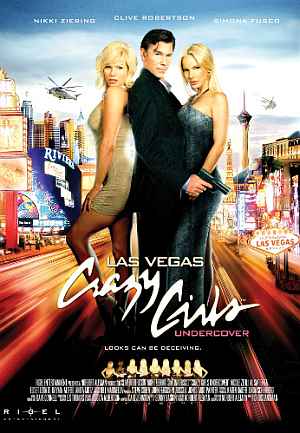 Written and produced by the man behind the ‘Crazy Girls’ topless revue at the Riviera in Las Vegas. Really, that’s about all you need to know: much like most Vegas shows, it’s quite shiny and glossy, but if you look behind the surface, it doesn’t have any real heart and possesses no brain at all. It centres on Damon Archer (Robertson), a freelance CIA operative whose day-job is running said revue – I dunno, but I always thought these shows consisted of more than five women [mind you, all I know about such things was learned from Paul Verhoeven’s epic]. They are investigating shady arms-dealer Hamid Marzook, a man with terrorist links who, it turns out, was previously responsible for the death of Archer’s wife and child. So, it’s personal as well as national security being at risk, with the terrorists seeking to detonate a bomb on Las Vegas Strip [though let’s not get involved in why Archer calls it a “chemical bomb”. Merely containing chemicals – half a ton of nitrates – does
 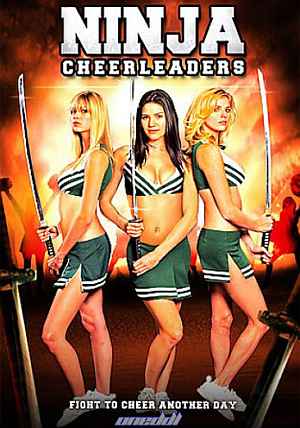 Probably half a star should be taken off if you’re not a fan of really bad movies like us, for this is a bad movie. Really. Let me begin with a straight-faced recap of the plot. Courtney, April and Monica are junior college students who are trying to earn the quarter-million bucks necessary for them to go to an Ivy League college. They earn this by go-go dancing at a strip-club, Their plans are thrown into disarray when the owner of the club (Takei), who has been looking after their savings, is kidnapped by the mob. Fortunately, he is also their martial arts sensei, and they just qualified as ninja. Can they rescue him, get their cash back
 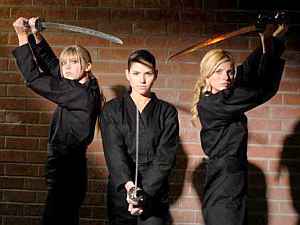 The action isn’t exactly breathtaking either, with the ninja costumes used to conceal body-doubling [save in Takei’s case, where it’s pretty damn obvious]. As a result, it’s never exactly convincing; while there are a couple of fights where the girls have to take on various low-level Mafia people, it’s only at the end, when they face Kinji, that things are interesting. And it’s kinda odd to have the bad girl outnumbered three-to-one by the heroines, which just doesn’t seem fair. Overall, it just about scrapes by if you find it as a freebie on cable. Spending any more than ninety minutes of your time on this is probably not recommended.
 ★★★★
★★★★
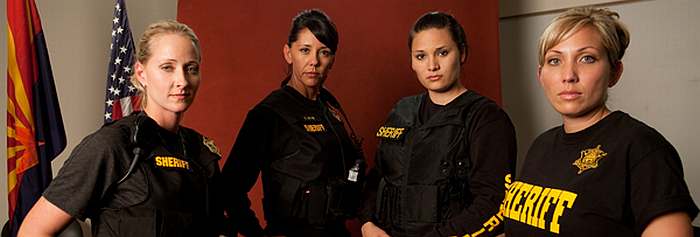
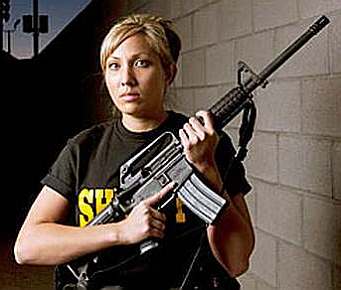 The second series of TLC’s “mommy cops” reality series struck close to home, centered as it was on Phoenix. It didn’t come as much surprise as our local sheriff, Joe Arpaio, is infamous locally as a media whore, who wastes no opportunity for self-promotion, and is a sharply-divisive figure locally, adored and loathed by about equal parts of the population. We wondered how long it would take before Joe slimed his way onto the screen: six minutes into the first episode, we had our answer. Fortunately, this was more of a blip, and our fears of an Arpaio-centered show proved largely unfounded [see the execrable Smile… You’re Under Arrest for how bad this could have been].
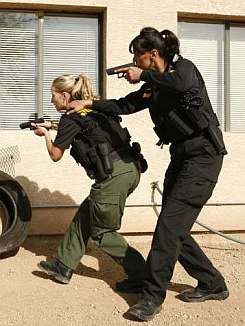 As notable as what is shown, is what was
 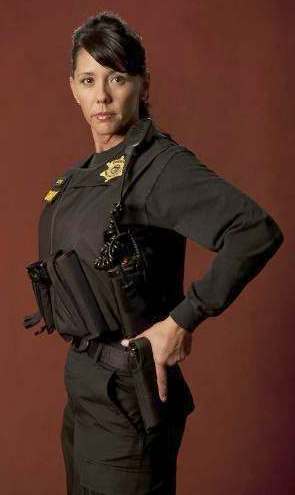 Finally, there’s Detective Deborah Moyer (right), who is completely marvellous, and the main reason to watch the show. A 19-year veteran, we’d be entirely happy if the show was 100% about her. While the other women occasionally seem very scripted when they are talking to the camera, that isn’t the case with Moyer: there’s a definite sense that what you see is what you get with her. While her policing style may not be “by the book” – in one episode, she basically arrests a teenage girl for failing to hug her father – her reactions are entirely natural and certainly had us nodding in approval more often than not. She just comes across as being very normal: when she encounters a young perpetrator, she tends to think about her own kids of the same age.
 This 8-woman tournament took place on October 2004 as part of All Pro Wrestling’s Halloween Hell weekend, in in Hayward, California and.was the first under the ‘Chickfight’ banner. If you’re used to the Diva “matches” [quotes used advisedly] put on by the WWE, this will come as a pleasant surprise – it’s closer to the Japanese style, where technical skill is more important than breast implants. Perhaps the most surprising thing is the length of the bouts: rather than being a five-minute distraction, 15 or 20 minutes being not uncommon. The wrestlers come from Mexico and Japan as well as the US, though they really deserve better than both the location, which appears to be a lock-up garage complete with a roll-up door on one side, and the crowd, the bouts taking place in front of an audience that hardly seems to number fifty.
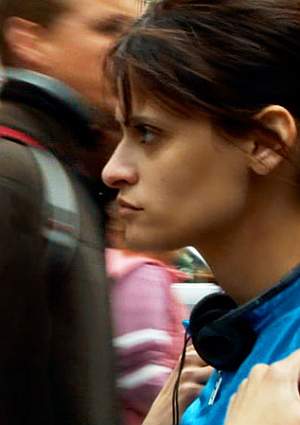 This is one of those which split the panel here. Chris was thoroughly unimpressed with its lack of a well-defined conclusion: “I
 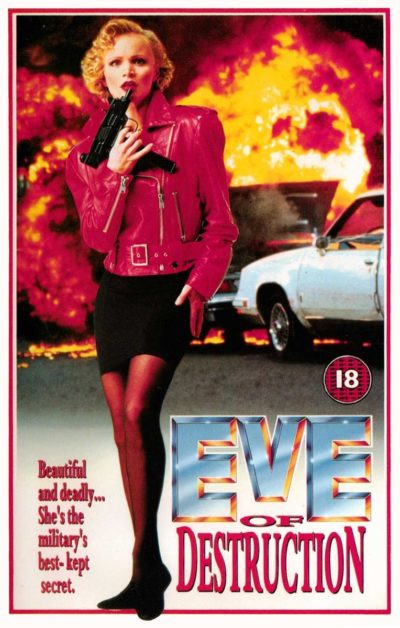 While undeniably a product of its time – which would be 1991 – this has stood the test of time very well, and remains a solid piece of action SF. Eve Simmons (Soutendijk) is a researcher working for the US government on creating life-like robots for surveillance missions, and her creation, Eve VIII, not only looks like her, but has her memories and psychology too. When on a test run in San Francisco, Eve VIII is caught up in a bank robbery and a bullet sends her off the grid, and on her own mission. Jim McQuade (Hines), something like a proto-Jack Bauer, is brought in to track down the lost little robot, who has all of her creator’s complexes, but none of the social restraints, leading to a fondness for automatic weapons, which she uses with abandon as she works out her psychiatric issues [cheaper than counselling, and a good deal more fun]. Oh, and Eve VIII also has a nasty little surprise package tucked away inside. It’s up to McQuade and Simmons to stop the killing machine before things
 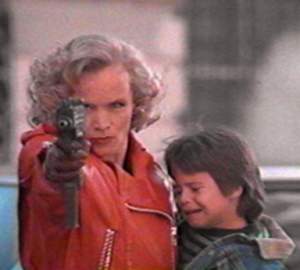 But as a straightforward B-movie, it works nicely, with Hines having a nicely sardonic wit: “A spinach lasagne, in a light tomato and basil sauce,” is the reply, when Simmons asks dubiously what is McQuade’s “specialty” as a government agent. I’m still trying to work out if the film is feminist or chauvinist: you could read it either way, with the ‘liberated’ (if robotic) woman a free spirit, though the ending firmly puts Even back in her place, to say the least. She also emasculates one man, somewhat familiar territory for Soutendijk, who previously wielded a scissors to leg-crossing effect in The Fourth Man. Gibbins, meanwhile, died in the 1993 Hollywood fires, while trying to rescue a cat. Guess there’s never an unstoppable robot around when you really need one.
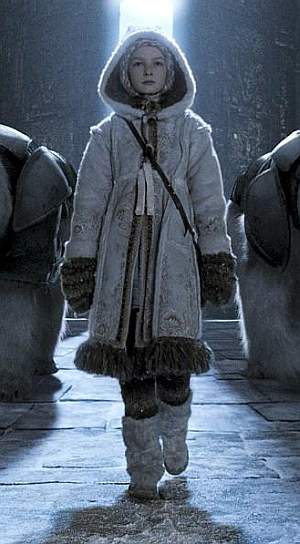 There aren’t that many decent action heroine films for kids: much as I love Bloody Mallory or Kill Bill, they aren’t really child-appropriate. At the other end, films like the Harry Potter or the Narnia series, while containing female characters of some importance, sideline them in favor of the boys. That makes this a refreshing breath of fresh air, in that the heroine is firmly front and center as she goes through her adventures. It’s set in an alternate universe where people’s souls take the form of animals that accompany them everywhere, known as daemons. Childrens’ daemons shapeshift, but adults’ ones are static in form. Things are run by an authoritative group called The Magisterium, but Lord Asriel (Craig) who has found “dust” in a far Northern land, that could challenge the established order – the Magisterium have been kidnapping children for use in human experiments to counter dust. Into this is dropped Asriel’s niece, Lyra Belacqua (Richards), who is given the last golden compass, a device able to answer any question in the right hands. she is about to head North with Mrs. Coulter (Kidman), only to find she has a central role in the kidnapping – as Lyra’s best friend has now vanished, she bravely heads off, initially on her own, to rescue him.
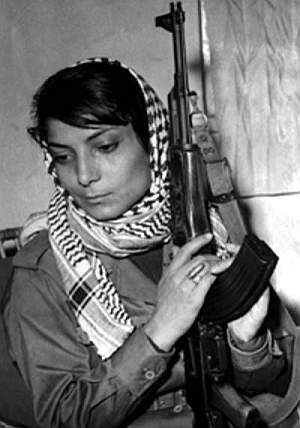 Khaled became internationally famous in 1969, for hijacking a TWA flight from Rome to Athens, diverting it to Damascus, where it was blown up – after everyone had been taken off [this was a kinder, gentler era of terrorism]. She then underwent plastic surgery to conceal her identity, and the following year tried to hijack another plane. However, air marshals shot her colleague and captured Khaled, who was taken into custody in London, only to be released soon afterwards as part of a prisoner exchange. She returned to the Middle East, her sky-piracy career at an end, but became an icon of the Palestinian movement, and remains active in it to this day, despite travel restrictions. The Guardian wrote of Khaled in 2001,
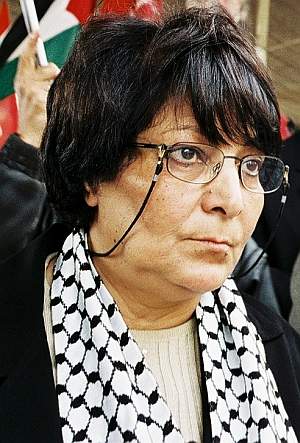 A fascinating and complex character, it can’t be said that much of the complexity – both hers, and the entire Middle East situation – comes across in this documentary, less than a hour long. You get a quick romp through her early history, her family’s departure from then-Palestine just after World War II, both hijackings, and then we leap forward to the present day, where she’s a mother and works for a political group. There are some interesting moments, such as where she draws a line between what she did, and the 9/11 hijackings: “I don’t agree with the murders of civilians, no matter where in the world”, and she’s been consistent in expressing that. More probing questions would have been welcome: instead, Makboul – brought up in Sweden by her Palestinian parents – admits to having been basically a fan. She interviews others involved in the hijacks, such as a stewardess and the crew, and follows Khaled on a trip to the Chatila refugee camp in the Lebanon, but the film ends abruptly, just as she asks Khaled about the negative image of Palestinians as terrorists that she helped create.