


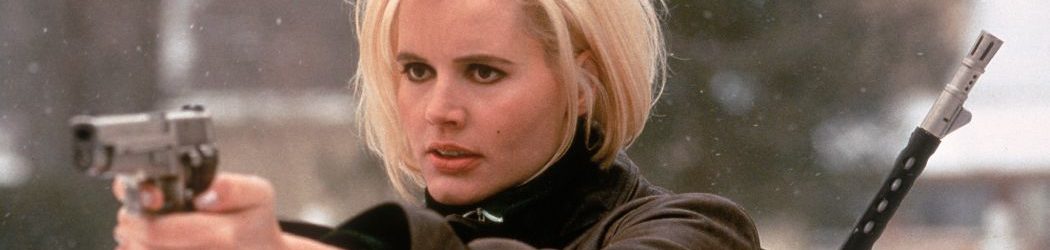

★★
“When you order À l’interieur on Wish…”
 The French film À l’interieur (a.k.a. Inside) is one of the most ferocious and intense of all action-heroine films. It’s the story of a pregnant woman who has to defend herself and her unborn child from an absolute psycho who turns up on the doorstep of her remote house one night. This film, more or less, has the same plot. It is, however, a pale imitation in just about every single way. Where À l’interieur was spare and taut, this is bloated and meandering. When it had nothing but excellent performances, the ones here are largely poor or worse. And while the French movie delivered on its hellish premise, this possesses almost no impact at all.
The targets here are Cord (Caillouet) and Mindy (Kavchak), an apparently happily married couple, who are having a weekend getaway at their family retreat, deep in the Rocky Mountains. Their vacation is interrupted by the arrival on their doorstep of a stranger, a woman who claims to need help. With the cabin having no phone, and ‐ this is my thoroughly unsurprised face – being out of cellphone range, Cord invites her to stay the night, without even consulting his wife. This is the first of many truly poor decisions the couple will make. For the woman is Martha (Cruz), who recently staged a brutal escape from the psychiatric facility in which she was incarcerated, and is now intent on making her unwitting hosts, Cord in particular, pay for the sins of the past.
Which is part of the issue: the resulting narrative is so convoluted it becomes ridiculous. Though especially in the final act, I actually found myself thoroughly amused by its excesses. The problem is, I think I was supposed to take it seriously. Yeah, that’s gonna be a “No” from me, dawg. The other big flaw are the performances of Kavchak and, especially, Caillouet. The former is flat and thoroughly unconvincing as a woman in peril of her life. She is still Oscar-worthy compared to the oak wardrobe which is her on-screen husband, delivering lines with all the energy of an airport departure announcement. A cord of wood might have made a better Cord.
The only thing which kept this watchable was Cruz (credited as Batya Haynes). Her bible-spouting religious fruitcake was a genuinely scary creature, truly devoted to her philosophy of life. If it may not be one with which you can agree, it is possible to see where she’s coming from. You certainly have to admire the commitment to her chosen purpose, even though such fanaticism is terrifying at the same time. It’s just a shame it’s not a performance in the service of a better movie. I’ve just realized I’m not even sure if Mindy actually was pregnant. If so, it never played much part in proceedings. I suspect I may simply have spliced that plot-point in from another, far superior one. No prizes for guessing where.
Dir: Matthew Ryan Anderson
Star: Batya Cruz, Maia Kavchak, Garret Caillouet, Phyllis Spielman
 This has a fair amount in common with the disaster which was
 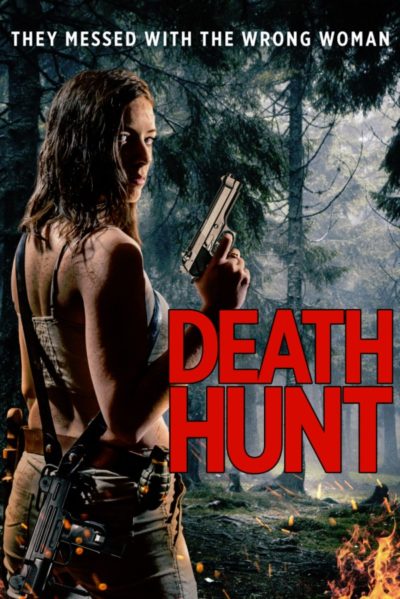 Despite a striking poster (well played, PR team), for the first hour, you’ll probably be wondering why this is included here. Corporate lawyer Ray Harper (Tucci) is on the road, trying to convince reluctant local farmers to sell their land for development. He’s also taking advantage of the away time to hook up with his bit on the side, Brooke Hamilton (Malcolm). Both these enterprises are rudely interrupted when the couple are pulled over by corrupt cop, Williams (Johnston), and abducted at gunpoint. They are the next “guests” on an island run by TJ (McDonald), where he and his pals can get together to hunt… The Most Dangerous Game. Except, they can’t find any of that, so have to make do with a middle-aged executive and his other woman.
 There is certainly room for reworking of the tale of Beowulf and Grendel, and making the heroines of this version female is what got me interested in it. However, the warning signs were out very quickly. Opening titles which said “Denmark… 500 AD… (-ish)” are a good sign of what to expect, for it’s clear that the makers were not happy to leave their changes at that. Indeed, they consciously embrace anachronism, especially in the dialogue, which is thoroughly modern, and could not be further from the epic poetry of the original if they tried. And I suspect they
  After her truck-driving husband is injured in an attempted hijack, Sweetiepie (Darby) finds herself in a bind. They’re way behind on payments for the truck, to the point that it’s about to be repossessed by C.W. Douglas (Stanton) of Vehicle Retrievals Incorporated. In desperation, she hires experienced driver Flatbed Annie (Potts) to partner with her, working the necessary delivery routes to pay off their debt. However, Douglas is not the only threat the pair face on the highway. The failed hijack was intended to recover a package which has surreptitiously been placed in the truck during a run to Mexico, and its owners remain very keen to recover their merchandise from the new operators,
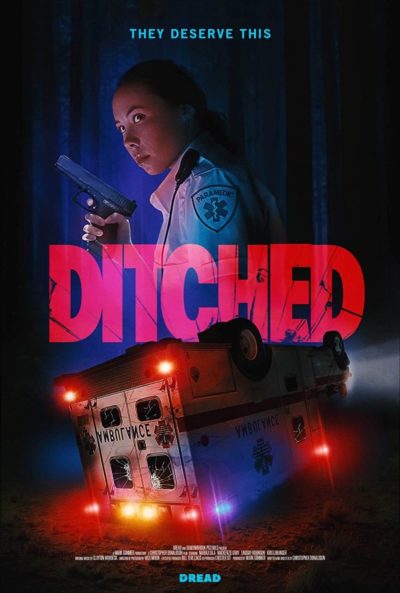 Paramedic Melina (Sila) regains consciousness to find herself in the back of her ambulance, along with her patient, Franson (Loranger), and the rest of the crew in various states of health. The vehicle had gone off the road and fallen into a ravine, along with the accompanying police car. It turns out they were transporting Franson and another prisoner to hospital when the crash took place – and it quickly becomes apparent that what happened was far from an accident. A posse of camo-clad hunters close in on them, led by Caine (Gray). Their mission to make all the vehicle’s occupants, both criminal and otherwise, pay for the sins of their pasts. They’ve brought with them the wronged parties in question, to exact bloody revenge.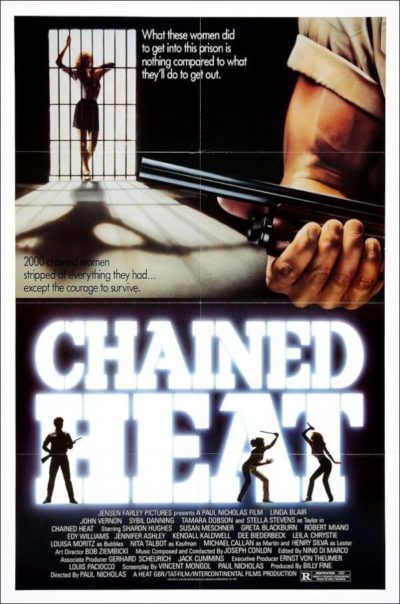
 If Ryan looks familiar, that’s because she is. She starred in
 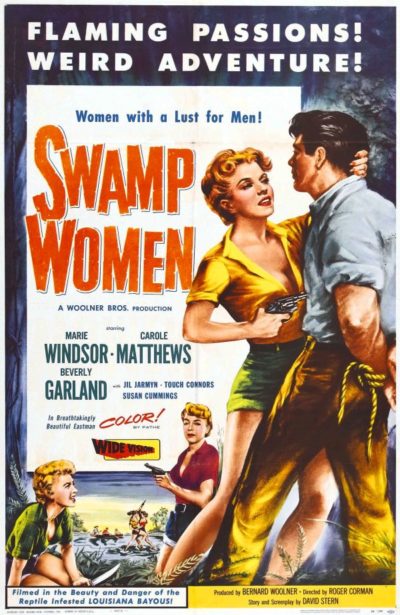 One of the earliest films directed by Roger Corman, it’d be a major stretch to call this a good film, yet I can’t deny I found it entertaining. It definitely has better female characters than most movies of the mid-fifties. Four women break out of jail and head into the swamps, in search of stolen diamonds which were previously hidden in the Louisiana swamps. Except, one of them is an undercover police officer, Lee Hampton (Mathews), who had been inserted into prison to join the gang and lead the escape, in the hope of recovering the loot. After the car breaks down, they hijack a boat owned by an oil prospector, Bob, and his girlfriend, taking them hostage as they head deeper into the bayou.
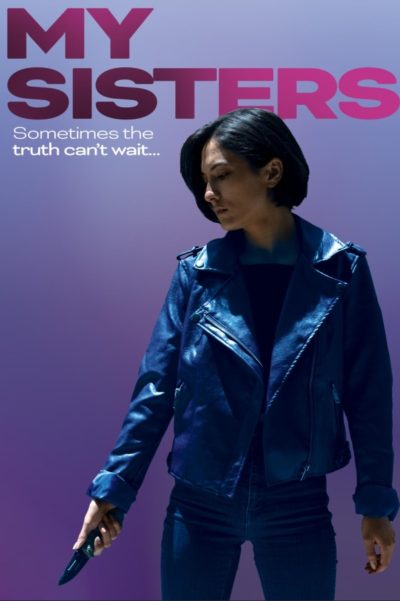 This felt oddly familiar, like I had watched it before. One scene in particular – a maintenance man comes to replace a light-bulb, only to become an apparent threat – had me