


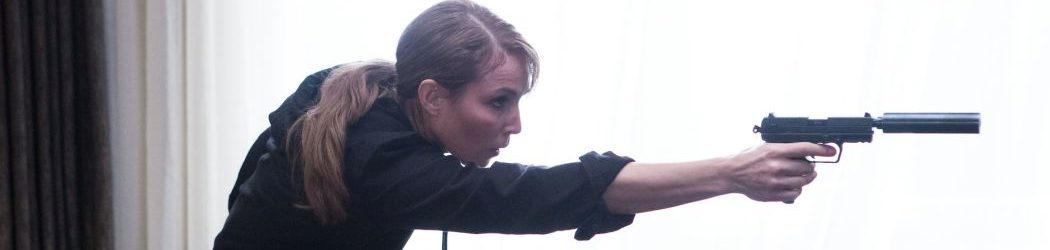

★★
“Cast better than the material, in female version of Robocop.”
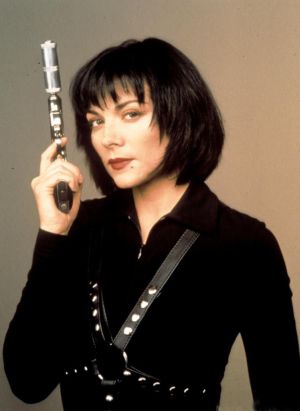 Agent Delilah (Cattrall) is undercover investigating arms dealer Alec Kasharian (Voyagis), and his connection to Palestinian terrorists [this was 1993, when people were concerned about such things]. At the behest of her handler Paul (Zane), she copies a floppy-disk containing vital information [I repeat, this was 1993, when an entire arms dealer’s business would apparently fit on a floppy!], but she’s discovered, shot multiple times, and left for dead. Paul drags her Swiss cheese-like body back to a secret government lab, where she is repaired, upgraded and generally enhanced in terms of speed, power and other abilities.
Initially, this is the subject of some emotional trauma, as she is understandably shocked to discover a Terminator arm where her own used to be. So she breaks out, roaming the streets, and proving to be a nasty surprise for sleazy low-lives. Though her creators probably need to work on the insulation thing, since her arm seems to short-circuit in the rain. That’s government work for you. Naturally, she eventually gets her act together, and the agency boss (Rigg) sends her and Paul out, to bring Kasharian to the justice he so richly deserves. This being a TV movie – or perhaps a pilot, it’s not clear – there are no prizes for guessing how this pans out.
And that’s the problem. No prizes, no surprises either, and precious little in the way of invention or inspired execution that could lift this up above the humdrum, with director Franklin (best known for Psycho II) unable to add enough impetus to proceedings. The only thing that redeems this are the decent performances from the leads, who manage to give this more impact than the material deserves – it was particularly cool to see Rigg, who played one of the prototypical action heroines. Emma Peel, in the mid-60’s. Any scenes that are memorable, such as Delilah shattering all the windows in a hotel, make absolutely no sense, and the parts that make sense, aren’t exactly memorable.
Dir: Richard Franklin
Star: Kim Cattrall, Billy Zane, Yorgo Voyagis, Diana Rigg
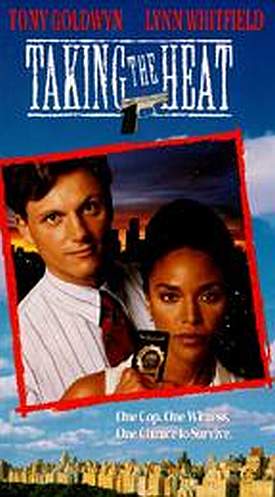 Michael Norell (Goldwyn) sees mob boss Tommy Canard (Arkin) whacking a debtor, but won’t admit it to the cops. However, when they look at the credit-card transactions, the truth comes out and Detective Hunter (Whitfield) is sent to retrieve the witness; Canard, thanks to a mole, also finds out and send his top hitman to ensure Norell never reaches the courthouse. A heatwave has simultaneously hit New York, leading to blackouts, gridlock and a breakdown in communications, so it’s down to Detective Hunter, back on her old stomping ground, to negotiate her way through the traffic jams and dodge the killers out to get Norell.
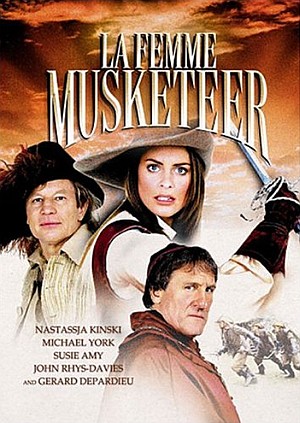 While not the first film to give D’Artagnan a daughter – the fairly self-explanatory D’Artagnan’s Daughter got there a decade before, with Sophie Marceau in the role – this is still entertaining enough, though at 171 minutes, probably too long. Valentine (Amy) heads to Paris to join the King’s guards, only to find herself framed for murder after coming into possession of a letter that could bring down the monarch. Fortunately, the other Musketeers also had children who followed in their father’s footsteps, so she has help as she tries to thwart the evil plans of Cardinal Mazarin (Depardieu) and his henchman Villeroi (Pirae).
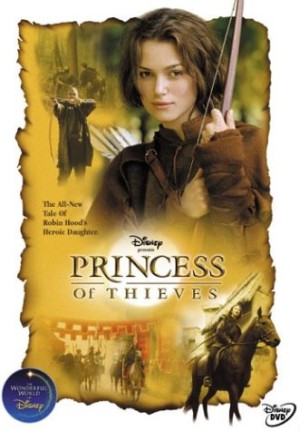 Back before Pirates of the Caribbean made Knightley a household name, and even before Bend It Like Beckham made her an
 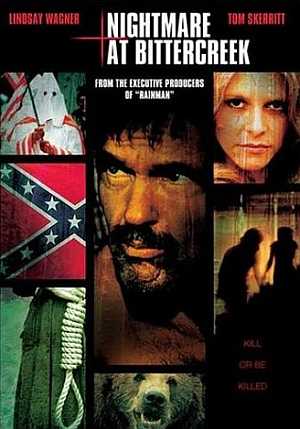 Nita Daniels (Wagner) and her three girlfriends take a horseback trip up the mountain, expecting to meet their husbands at the top. However, the trip becomes a nightmare, as four members of the ‘Aryan Survivalist Brigade’ are holed up there, and decide to take out the women and their alcoholic guide, Ding (Skerritt). Initially, Ding takes the fore, but when he is injured it’s up to Nita and her pals to fight back. This TVM struggles, largely because of the lack of justification for the white supremacists: the entire party they attack are about as Aryan as they come, so why, exactly, should they be targeted for elimination? It would have been far more plausible had the party been ethnically-mixed, or even their guide been black – or, heck, Jewish.
 It’s kinda sad to say, but the action in this Disney TV movie kicks the ass of, not only most TV shows, but a credible number of Hollywood films. Then again, behind the fights here is Koichi Sakamoto, who is also responsible for Drive, among the best American martial-arts films of all time. And while obviously “Disneyfied”, this is still sprightly and engaging, with a couple of very decent fight sequences. It is, however,
 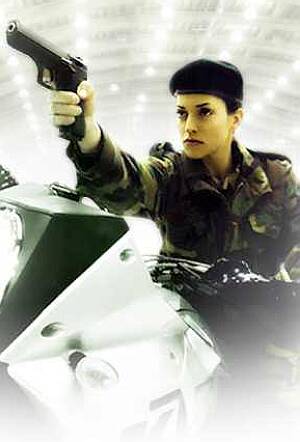 This SciFi Channel original movie is based on a comic-book series, but makes some radical changes to the storyline, though the basic idea is intact: a woman becomes immune to injury after the usual mysterious something happens to her [radioactive spider bite, barrel of toxic waste – the usual graphic novel contrivances, in other words]. In the comic, she was an undercover cop; here, she is a Special Forces soldier in Chechnya who is exposed to an experimental biological agent. Naturally, she subsequently finds herself much sought after, by both good and bad factions, since she’s the first to survive the treatment.
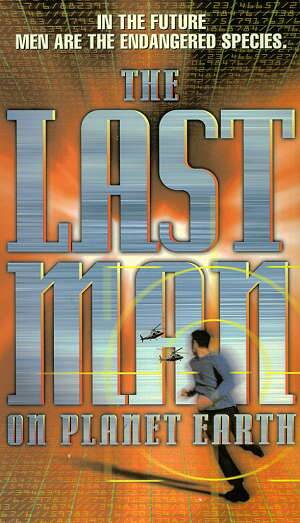 You’ve got to admire any film – particularly a TV movie – that provokes diverse reviews. This, then, not only “
 Do
Do 
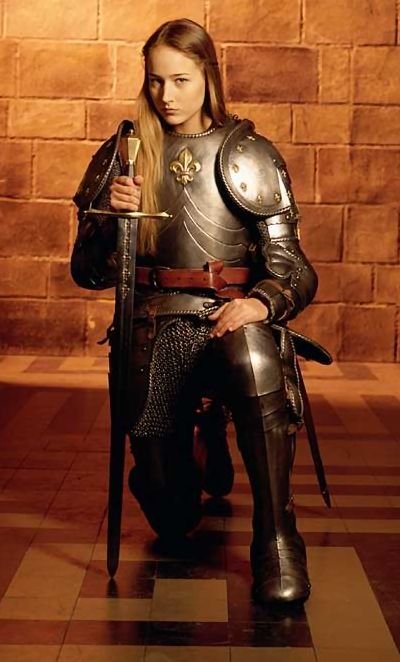
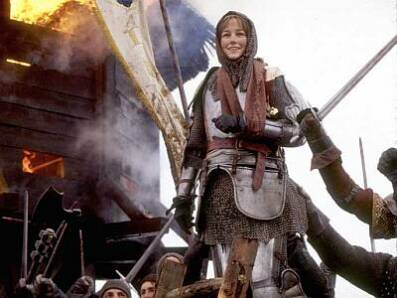 However, the main difference between this and The Messenger is that Joan of Arc is convincing. Perhaps with the advantage of having extra time (the DVD of the miniseries runs 189 minutes), they make the effort to show her interacting with other characters, and Sobieski’s calm, complete assurance is a striking contrast to Jovovich. The viewer can see why people would believe her, and it naturally follows they will too – Sobieski’s Emmy nomination was entirely well-deserved. Despite playing fast and loose with the facts (another example: Joan’s brother was not killed in battle, but lived to see her trial verdict overturned), this strong central performance holds the film together and, with the aid of the other fine actors, makes it eminently watchable. It may not be historically accurate, but it does a fine job of explaining why her myth is still honoured in the third millennium, without coming down in one camp or the other regarding the source of her visions. There are few TV miniseries worth watching, and fewer still worth owning, but this one comes highly recommended.