




★★½
“Somewhat more than pure junk.”
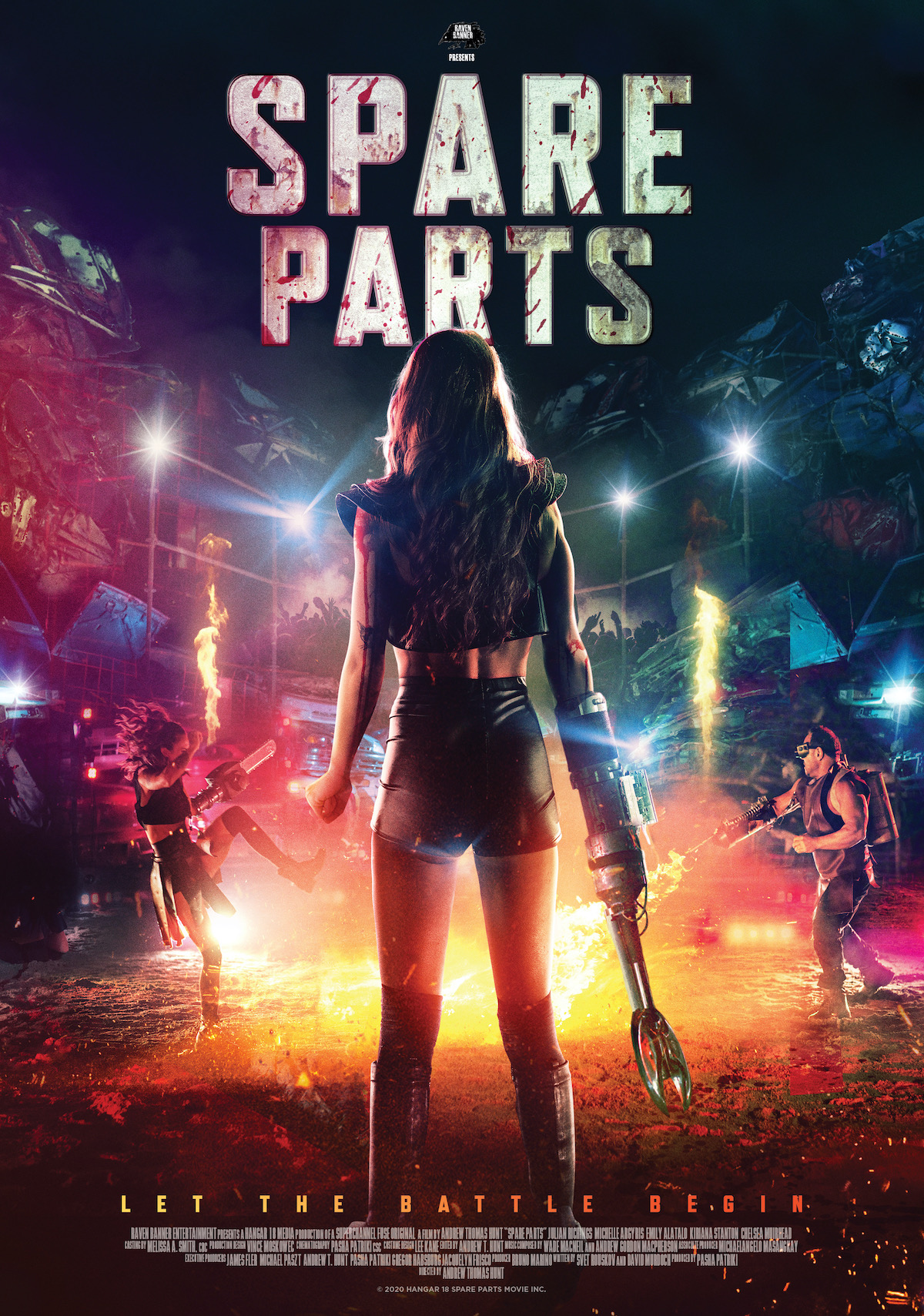 All-girl punk band “Ms. 45” – and I’m awarding half a star purely for that name – are on tour, though things threaten to fall apart due to the bitching between members Emma (Alatalo) and Amy (Argyris), despite them being sisters. Driving away from their latest show (which turned into a bit of a bar-room brawl), they are run off the road by stalker fan Sam (Rouse). The local cops are kind enough to arrange for a tow to a nearby scrapyard. Except, there, the four woman are drugged, and wake up to find themselves each missing an arm, and forced to fight in gladiatorial combats for the pleasure of the Emperor (Richings), Sam’s father and his devotees. But Sam has taken a shine to Emma, and has an eye on using her to replace his Dad, while Emma and her friends only want to escape.
It’s not a bad idea, though the contemporary American setting is poorly considered. Make it a Central American shithole, post-apocalyptic wilderness or something similar; as is, it’s ludicrously implausible, and outside the first five minutes the musical angle is completely irrelevant too, bar a couple of axe jokes. It’s more than similar to Kiss Kiss, which had four women, kidnapped and made to fight in a rural American setting. Admittedly, their count of functioning limbs passed three, though here, it’s never less than obvious that the makers just slapped a weaponized glove on top. There’s no Imperator Furiosa level effects here, and you wonder why they bothered, rather than just handing the women their tools. Though the arm-flamethrower was appealing. It’s not as if I use my right arm for much…
If you liked Gladiator, but felt that it needed more punk rock, this is perhaps for you. I was moderately amused, even though there are only about three actual fights over the ninety minutes, and while those are decent, much of what goes on between them isn’t particularly exciting. You’ve got Sam’s plotting against his father, and there’s a trainer type who seems to be quite an interesting character. Otherwise, it’s kinda meh, especially since the members of Ms. 45 got off on the wrong foot with me, by being cringeworthy stereotypes. I cared little or nothing for their fates thereafter.
In concept, this feels like something out of Japan, perhaps by the creators of The Machine Girl. It just doesn’t have the necessary sense of gonzo, go for broke-ness, save for a couple of nice uses of an arm-chainsaw. Richings seems to be the only one who is truly buying into it, giving the Emperor a sense of insane omnipotence that’s a lot of fun to watch. The other performances need to be equally larger than life, in order to sell what is, let’s be honest, a difficult concept – and in most cases, they weren’t enough to hold my interest. Never a good sign, when the ending seems to point to a better movie than the one you just watched.
Dir: Andrew Thomas Hunt
Star: Emily Alatalo, Michelle Argyris, Jason Rouse, Julian Richings
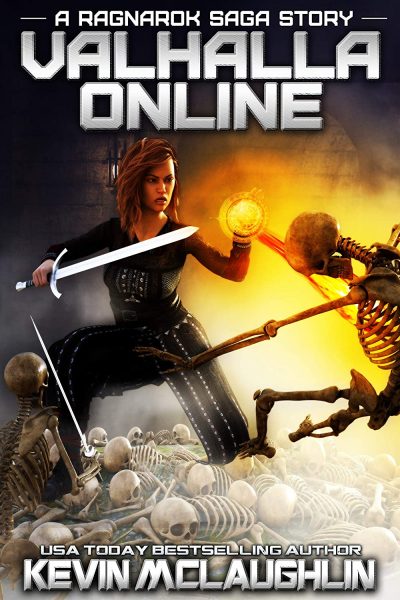 I could have sworn this isn’t the first entry in the LitRPG genre I’d reviewed, but I’m damned if I can find the previous one. So, just to be safe, I’m going to explain what LitRPG is: apologies if this is unnecessary! Basically, it takes the structure of role-playing games (RPGs) – things like character levels, ability scores, etc – and applies them onto a story structure. Obviously, the overlap between RPGs and books has been a long one: Dungeons & Dragons is heavily influenced by the work of Tolkein. But it has been mostly one-way traffic. The LitRPG genre sends things back the other way, producing novels that adopt the practices of the games.

 Is it possible for a film to try and cram in too much? This might be guilty of that, being simply too full of ideas. It begins with a serial killer mother and son pair, who are also cannibals, to boot. They think they’ve found their next victims, when they pick up a pair of young hitchhikers, Ursula (Steadman) and Rose (Brown). However, the psychos are in for a shock, because their targets are actually a pair of vampires, centuries old. But, wait! There’s more! Weird meteorites have landed on Earth containing alien creatures, that devour human souls. Those they infect turn into aggressive, zombie-like creatures, that can only be terminated by destroying their pineal glands. And I haven’t even touched on Father Cooper (Travis), and his “nun with a gun” associate, Sister Gigi (Smith, right).
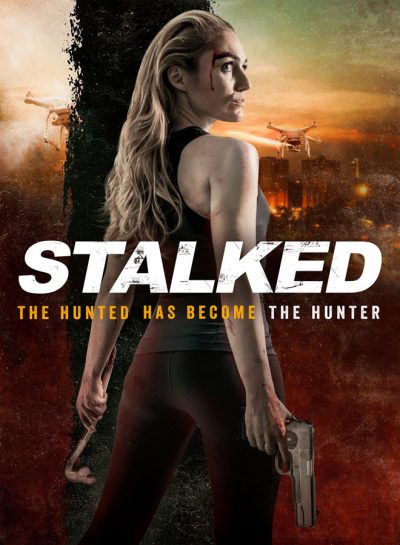 A promising idea has its concept snuffed out by shaky execution and even worse writing. Sam (Rogers) is a former solder and now single mother. When her child falls sick, Sam heads for the chemist’s for medicine. She never gets there, being abducted in a van and rendered unconscious. She wakes in a large warehouse-like facility in the middle of nowhere, which turns out to be a military production facility. She’s not the only woman there, and finds that an invisible adversary, using advanced tech to cloak his presence, is taking advantage of the weekend to turn the place into a stalker’s amusement park. However, Sam’s background perhaps gives her a very particular set of skills, unavailable to the other victims.
 This is the second book from Cooper here, after
  It has been twenty years since
 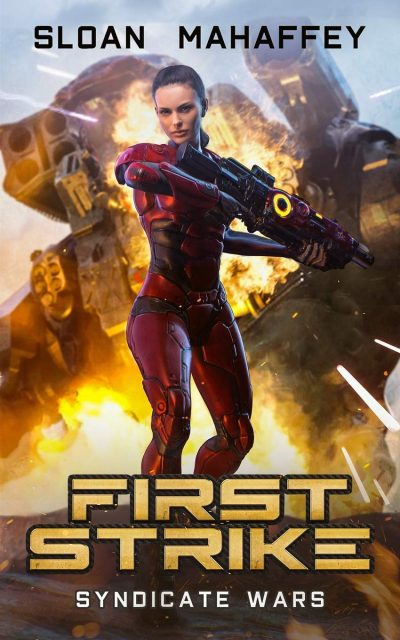 Not sure I’ve ever read a book with three authors before, though Amazon omit Noe from the list given on Goodreads. This “novel by committee” might explain some of the problems with this, and its failure to mesh the two strands in any effective way. It’s a pity, as it starts off in entirely blistering fashion, with the arrival on Earth of the Syndicate, an extra-terrestrial invading army. We knew they were coming, so humanity’s forces take them on, in a massive and spectacular battle at their landing site in Mexico. It doesn’t go well for us, thanks to the attacker’s vastly superior technology. Survivors are few, but include Marines Quinn and Giovanni.
 Or, perhaps: “What Blade Runner would have been like, if android Roy Batty was a good guy.” For this appears to be a mash-up of elements from that and Battle Angel Alita. While preceding the film version of the latter, it does seem to borrow elements of the manga, not least in its depiction of a future society where there is a strict, and basically vertical, division between the haves and the have-nots. After disease and pollution have pushed society to the brink, the rich and powerful live towards the top of a self-sufficient mega-city, under the control of ice queen Lady Jiru (Ishida) and her “Sodom” cyborg enforcers, leaving everyone else struggling for scraps down below. And leaving is a death sentence, due to the viruses infecting the outside world.
 In the late 22nd-century, Earth is pretty much screwed. The impact of a giant meteor killed a huge number of people, wiped out the everyday infrastructure, and sent the world into perpetual twilight. Thirty years ago, the wealthy upped and left, never to be seen again, abandoning the rest of the survivors to scramble in the ruins of civilization, simply trying to survive. Holly Danger is one of them, a salvager who lives by her wits in the labyrinth of a coastal city’s destruction. Which means dodging the seekers, addicts of the hyper-destructive drug, Plush, as well as the outskirts, those who come in to the city and raid it for supplies.