




★★½
“Get yer kits out…”
 With its combination of alternate reality sci-fi and stylized action, this feels like it could have come from the mind of Mamoru Oshii, creator of things such as Avalon and Assault Girls. It’s not. Instead, it was created by toy manufacturer Bandai – like most of their shows, it works largely as a 25-minute long advertisement for product, in this case specifically model kits. But there are some interesting ideas to be found here, though they are somewhat let down by action that clearly has no interest in being realistic, and a tendency towards maudlin emotion. I was left wondering who, exactly, it was aimed at, because the sentimentality feels at odds with the young men who are likely the target consumers.
It takes place in a high school where the favoured hobby of Koharu Tachibana (Shiraishi) is making plastic models. After buying kits of a gun and a figure called Alice, and assembling them, she wakes to find herself an unwilling participant in ‘Girl Gun Fight’. Four teams of three young women, are pitted against each other in battle, overseen by each team’s commander – hers being Alice (Ohara). Between rounds she’s returned to school, along with the other participants, but naturally, nobody believes this story. There’s an awkward twist, in that if you lose all three of your lives in the game, that’s it. You do not get back to the real world, with all trace of you, including other people’s memories, being wiped out.
That’s a wonderfully dark concept, which we see realized as members of the team’s try, and fail, to protect their last life. But it also possesses almost industrial levels of perkiness, particularly reflected in idol-like pop video inserts, and bumpers of enthusiastic model-making. Tonally, it’s all over the place. I suspect that might be the point, in the same way I don’t know at whom it’s aimed. I’m inclined to go for male wish fulfillment, with Koharu being about as far as possible from the typical model-building nerd. On the other hand, it has a lot in common with the “magical schoolgirl” trope, often found in anime, and it’s driven largely by the power of friendship.
That’s especially true in the final two episodes, when Koharu, Alice and the survivors meet the wizard behind the curtain. It all gets a bit too sentimental for my tastes, with the protagonists falling over themselves in a rush to self-sacrifice. The other weakness is action that, in the main, is nothing special – it’s very stagey, in a way at which Power Rangers might look askance. More hard-hitting fights would have added nicely to the contrast with the cheesier elements. Still, I burned through the ten episodes in three sittings, and was entertained, though the emotional impact I felt fell short of what the show was aiming to generate. I also do not feel any strong urge to take up kit-building as a hobby.
Dir: Yûsuke Taki
Star: Sei Shiraishi, Yuno Ohara, Anna Ishii, Natsuki Deguchi
 ★★½
★★½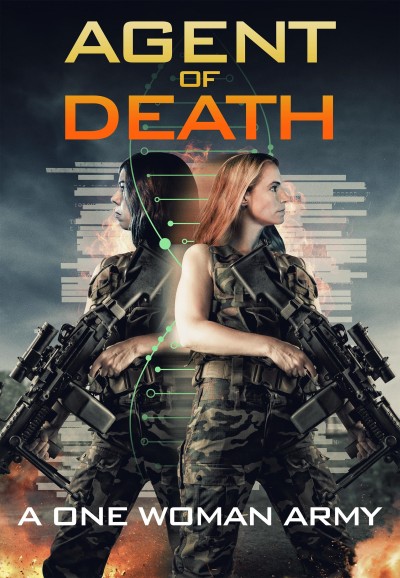 I quite liked the idea here, but the execution just wasn’t quite good enough to do justice to the concept. It feels like a matter of resources to some degree. But I also feel that a few tweaks to things would have paid significant dividends. The heroine is Tara Croydon (Fox), a CIA agent who experiences a crisis after an operation means she’s not around when her father passes away. In her depression, she signs up for a cutting-edge but rather dubious experimental project under the oversight of Hype (Medina). This involves her being given the ability to transform, physically, into one of fifteen different personas which have been implanted into her.
 The first volume is free on Amazon at time of writing, but all four are available for 99 cents, so you certainly can’t complain about value. It’s an interesting concept, too. Axira is a “spacer”, a member of an alien race feared to such an extent that they are almost legends. For centuries, she has been mentally chained up by a member of the Kore sects known only as “Master”, and compelled to do his bidding. Which usually involves copious amounts of violence, directed toward his enemies. Finally, Axira is able to break free and regain her independence, and vows to take revenge on Master.
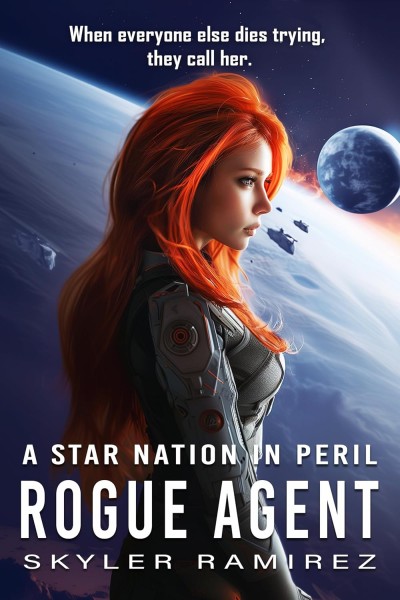 This is a solid, no-nonsense combination of spy and science-fiction. Though, to be honest, it is skewed towards the former genre, with the latter mostly window-dressing. It wouldn’t take much to change the setting from a solar system whose ownership is disputed by a couple of galactic empires, to a city whose ownership is disputed by a couple of countries. The planet is Hudson, claimed both by the Star Kingdom of Prometheus and the Koratan Confederacy. Heather Kilgore is among the best agents of the Promethean King’s Order, and is dispatched to Hudson after the suspicious death of a man who had betrayed the Kingdom, former commander Connor Monroe
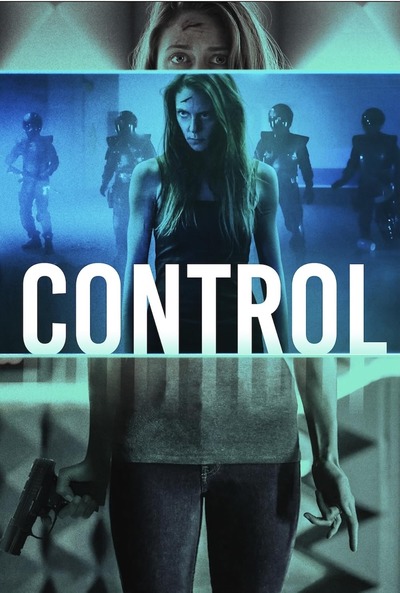 This is is a very small-scale bit of science fiction, with barely a handful of speaking parts, and mostly taking part in a single room. Despite this, and some qualms about the use of cinematically convenient amnesia, it works rather well. Eileen (Mitich) wakes to find herself in a room without windows or doors. A disembodied voice (LeBlanc) tells her to move a pencil on the table. She does and is knocked out. Regaining consciousness, the voice repeats the instruction. Except, Eileen is now chained to her chair. And if she doesn’t complete the test quickly enough, Eileen is informed her daugher, Eve (Loiselle) will be killed. OK, the movie has my attention.
 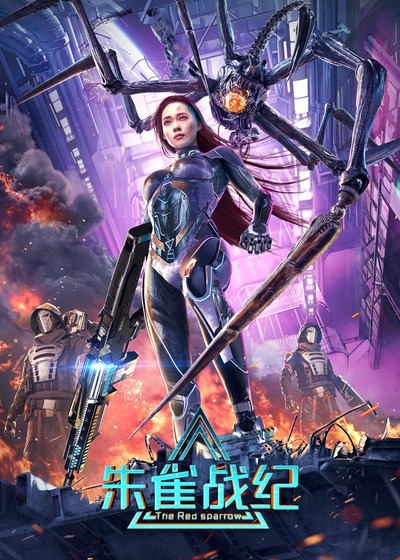 This is not to be confused, in any way, with the
  Fair play to Woollard and his team for making a feature movie with no resources to speak of. The problem is, watching this, it’s painfully obvious that they had no resources to speak of. Two space-suits and a fog machine are not enough for a film, especially in a genre like science-fiction, which tends to rely on spectacle. Oh, smaller scale works can still be remarkably successful: the night before this, I watched glorious and highly recommended time-travel film Beyond the Infinite Two Minutes. But if you’re not going to offer epic scale, you need to have something else to repay the audience. An hour and three-quarters of watching characters stumbling about in the gloom is not it.
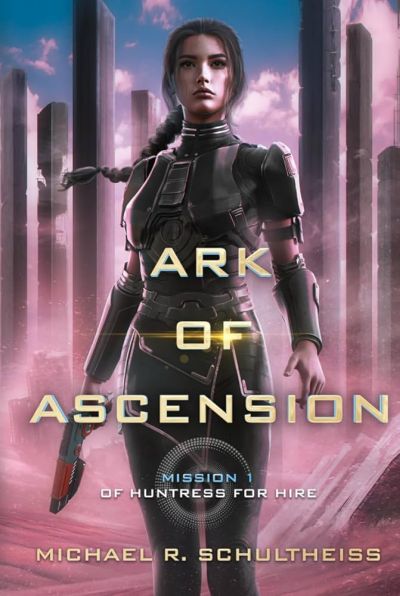 I don’t necessarily expect to understand a literary universe from the first page. These things take time: I get that. But I do expect that, as I go through the chapters, things will become clear. If I reach the end, and am still vague on a number of significant plot points, then something has gone wrong. Sadly, it’s the case here, and that largely hampered the effectiveness of the narrative. In this case, it had a cascading effect. Because I didn’t understand one situation, that rendered a character’s purpose uncertain, and this then meant the heroine’s motivation wasn’t clear.
 ★★★½
★★★½