




 ★★
★★
“The law of diminishing returns.”
And that rating is from someone who, unlike most critics, really didn’t mind the first part. I’m a fan of big, bombastic science-fiction, best exemplified by The Chronicles of Riddick. [Why nobody has ever thrown $150 million at Michael Bay for that kind of thing, I don’t know. And, no, the Transformers franchise does not count. And neither does Armageddon] I want to see square-jawed heroes or heroines, going toe-to-toe with irredeemably unpleasant villains, as burning spaceships fall from the sky behind them, onto the surface of an exotic planet. While Part One of this was heavy on the world-building and character development, at least we got all that out of the way, and could look forward to a second half of non-stop action.
Couldn’t we?
Um. Well. About that… All I can say is, combine the two, give them to a enthusiastic editor, who can merge them into a single, coherent movie of round about two hours, and you could well be onto something. Now, I like Snyder: or, rather, I used to. 300 is great, and I will honestly defend Sucker Punch as a genuinely good movie, especially in the director’s cut. But since then? Nothing has come up to the early work. You eventually reach this, the poster child for what happens when you give someone $166 million, and let them do whatever they want creatively, without apparent significant oversight. A visually impressive, but bloated and self-indulgent mess, lacking any significant heart.
Things follow quickly on from its predecessor, Kota (Boutella) returning to Veldt with the warriors accumulated in Part One, who will protect her settlement from the evil Admiral Noble (Skrein) and his forces. For Noble is not as dead as Kota hoped at the end of the first half, which is a nasty surprise to her. Inevitably, we get the “training the locals for battle” sequence, but we also get an extended “bringing in the harvest” sequence, and a very extended “why don’t we all sit around and reveal secrets about our dark past and what the hell is Snyder doing, can’t he hurry up and get to the fighting” sequence. My attention and interest dwindled steadily throughout the first hour and more.
Eventually – and I stress that, eventually – we get to the cool stuff, and it’s not bad. Snyder does undeniably retain an eye for spectacle, and this does deliver eye-candy for those fond of giant fireballs (hey, sue me). However, it’s all empty: sound and fury, signifying nothing, and you’re left to try and work around wonky plotting which has a few farmers taking down the galactic rulers after a couple of lessons, going little further than “Stick ’em with the pointy end.” It helps, I suppose that Noble’s craft have a tendency to explode so easily, I suspect a recall from the manufacturer’s is in order. I imagine this may end up taking Snyder’s plans for a Rebel Moon Universe with it.
Dir: Zack Snyder
Star: Sofia Boutella, Ed Skrein, Charlie Hunnam, Michiel Huisman
 This French film takes place a little way into the future, though society has undergone radical changes. Law enforcement is now privatized, with investigations contracted out to private investigators, who have to balance their costs in order to turn a profit on the cases they accept. One such PI is Blondie Maxwell (Langlart) – and to get the obvious out of the way first, no, she is
  The first
 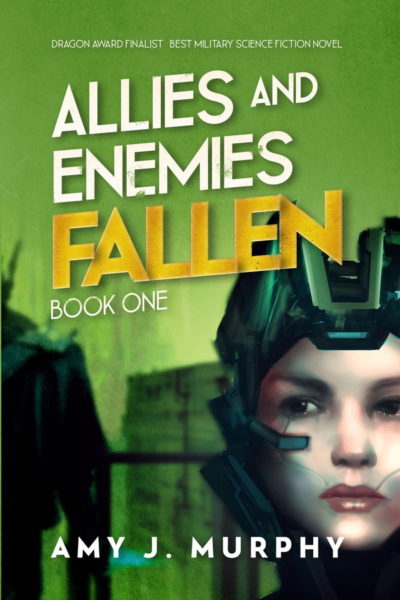 It’s a little hard to explain the universe in which this takes place. Humanity existed. However, their encounter with other races proved problematic for a variety of reasons, and led to them being exterminated, a genocide that was partly collateral damage in a war between the human-adjacent Eugenes and the definitely not Sceeloids. The former have a severely class-based society, where the lower-tiers are bred specifically to be soldiers, for example. One such “breeder” is Sela “Ty” Tyron, though she differs from the rest of her platoon in a couple of important ways. Firstly, her son is part of her group – though he doesn’t know it, having been removed from her care on his birth. His death (at the very beginning of the book, so not much of a spoiler) causes Ty to question everything she has believed about society, and her place in it.
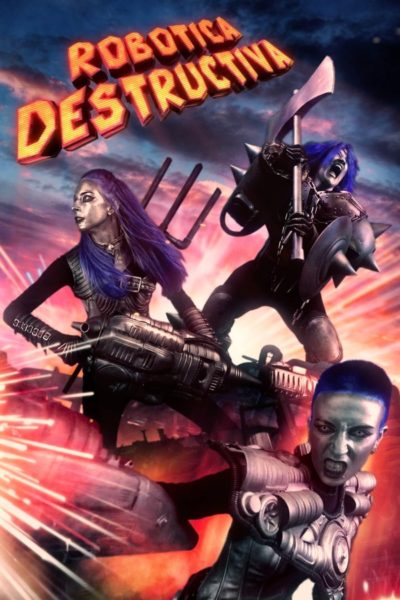 To bring out one of my go-to phrases, if I was eleven years old, and hopped up off my face on candy-floss, this would probably be one of my favorite movies. Instead, it’s the kind of film which apparently caused my brain to shut off as some kind of defense mechanism. I’m not kidding. Ten minutes into my first viewing attempt, I suddenly fell asleep. I think my mind may have experienced the cerebral equivalent of a blue screen of death and ran out of memory, forcing a shutdown. For this is just an insane overload of a movie, all the more so considering it was a labour of love, assembled over a period of multiple years.
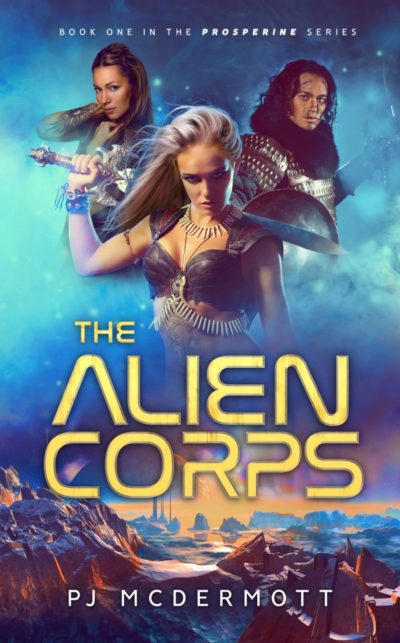 If you’re even slightly familiar with the Star Trek universe, you’ll be aware of the Prime Directive. While never explicitly stated, it’s the rule which prohibits interfering with the development of less technologically advanced civilization, in particular those that are not capable of space travel, or are unaware of the existence of life beyond their own planet. It’s a key concept in this book too, though is meshed together with a religious theme – not something often found in this kind of science fiction.
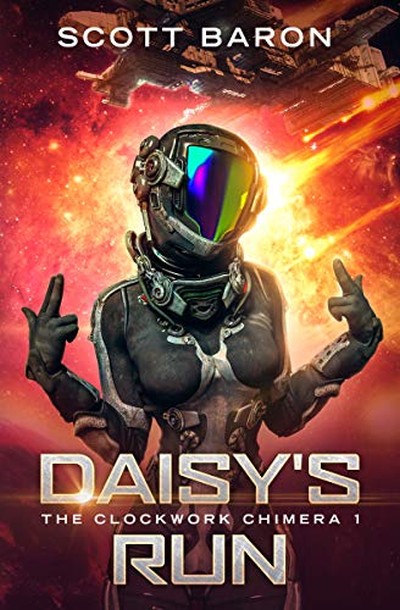 By the time I reached the end of this, what stood out most is how far we had come from the initial scenario. We start way out in deep space, where the crew of the Váli are awoken from their cryo stasis after the ship suffers significant damage as a result of a hull breach. By the end, everything has changed dramatically. The situation back on Earth, the mission of the Váli, and the very nature of the heroine, 25-year-old comms and electronics specialist, Daisy Swathmore, are are all radically different from what they initially seem to be. It’s basically a dramatic arc for the entire human race.
 Despite critical derision, this is actually perfectly serviceable pulp SF. Sure, it’s derivative as hell. But the critics getting all huffy about the similarities to Star Wars seem to have forgotten George Lucas only made his film, after failing to acquire the rights to Flash Gordon. This is Snyder’s equivalent to The Fifth Element, in that it’s a long-gestating SF idea, originally conceived well before he became a director. “The Dirty Dozen in space” was the high concept, although there is no denying the SW similarities, especially in the early going. I mean, young orphan on a backwater farming planet gets sucked in to galaxy-hopping adventures, joining a rebellion against an evil empire? Yeah, a little more originality would be welcome.
  A decade after the splattery joy which was
 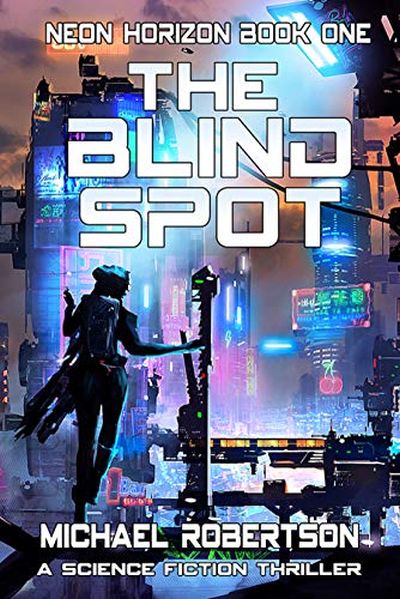 On the surface, Scala City is an idyllic, hi-tech world of prosperity, peace and morality, albeit at the cost of omnipresent surveillance of its residents. But there’s a dirty little secret. The Blind Spot is an area where surveillance is barred, and where the citizens of Scala City go to blow off their sordid steam. Its residents have cybernetically enhanced bodies, something rejected by Scala City, and a zero-tolerance policy for any kind of monitoring. It’s run by Wrench, who has kept his daughter Marcie Hugo under strict control since the death of her mother. However, like all teenagers, the 16-year-old Marcie is seeking to spread her wings, and has been making covert excursions into Scala City, with the aim of moving there some day soon.