
★★★★
“Six chicks with picks.”

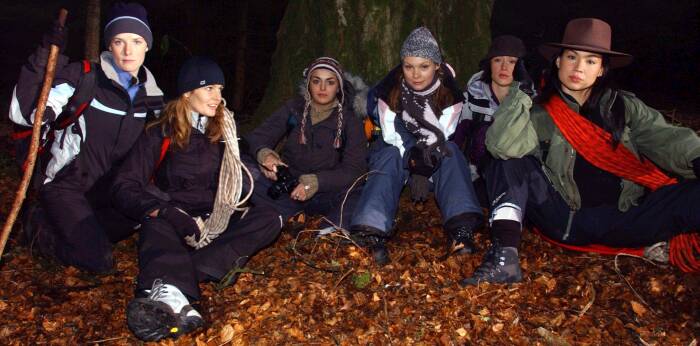
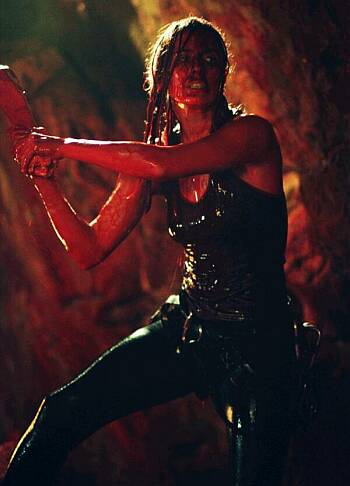 Simplicity is under-rated, especially when it comes to genre films. The simplest horror movies often work the best, because they prey on widely-held fears: monsters (Jaws), getting lost (The Blair Witch Project) or claustrophobia (Below). And now, we get The Descent, which combines all three into one ball of nerves, pitting six female cave-explorers against things below ground. This will do for speleology, what Touching the Void did for mountaineering or Open Water for scuba-diving – and I don’t care if the cave, as one character here disparagingly says, “has handrails and a gift-shop”.
This is an interesting reversal by Marshall from his first film, Dog Soldiers, though both did have a group of people in a small location, facing an outside menace. Dog centered on a group of soldiers in an isolated farmhouse, facing a pack of werewolves – as you can imagine, testosterone levels were set to eleven on that one. Here, save one brief, opening character, all the roles are filled by women, which adds a different dynamic to things. Central are friends Sarah (Macdonald), Juno (Mendoza), and Beth (Reid), whom we first encounter white-water rafting, though it seems Juno and Sarah’s husband have their own leisure activity…
However, a year later, a car accident has changed Sarah’s life, and the trio re-assemble, with three other women, for a little light caving. Unfortunately, rather than the scheduled, well-known cave, Juno opts to take them into a newly-discovered one. This is unfortunate when a rock fall shuts off the entrance, and it becomes clear no-one outside knows where they are, so the women have to press on, into the depths. Sarah is convinced she sees someone nearby: initially, no-one believes her, but eventually it’s clear that there are inhabitants of the system, who are none too pleased to see them – except in a “nourishment” kind of way.
There’s no doubt, this is not exactly new – you’ll spot references to (if you’re feeling kind – “bits stolen from”, if you’re not) other films throughout, from The Thing through Aliens to Pitch Black. The first half is also, to be honest, a little sluggish. Marshall throws in some cheap “Boo!” moments to keep the audience awake, of varying effectiveness, but it’s only when the movie goes underground that this the edge of your seat becomes familiar territory. And once it does, the film barely pauses for breath until the final frame [The American version had a different, slightly-less bleak ending, from the UK version – having had it described to me, I’m curious to see it, though can’t say that I felt the US cut was significantly deficient].
 The focus of the film is Juno and Sarah, with the rest of the cast largely reduced to cannon-fodder – though not badly-drawn cannon-fodder, I must admit. Juno is a near-Amazon, while Sarah has to become one, simply in order to survive, and that’s about the extent of the character development here. Demureness, beauty, the ability to bear babies, and all other typical “feminine” traits, are of absolutely no use whatsoever. The ability to drive your pick-axe, repeatedly, into the head of pissed-off Gollum wannabes, on the other hand… Yeah, that will help. But in another interesting contrast to Dog Soldiers, sisterly teamwork is notable by its absence. In the end, the women do almost as much damage on themselves, as the monsters.
The technical aspects are great, with set design and cinematography particularly worthy of praise. An uncomfortable feeling of being trapped in a dark, enclosed space has rarely been better captured; the only light present is what the explorers bring, and it gradually becomes less and less effective for their needs. It is occasionally chaotic, and a combination of limited illumination and the incidents that befall the characters often make it easy to lose track of who’s who. That aside, however, this is a seriously kick-ass film, and the prospect of The Descent 2 would be extremely welcome here (though particularly in the British cut, somewhat unlikely…). I’m thinking, in that one, our heroine could perhaps get talked into leading a team of marines back into the monsters’ lair… Stop me if you’ve heard that one before. :-)
Dir: Neil Marshall
Star: Shauna Macdonald, Natalie Mendoza, Alex Reid, Saskia Mulder
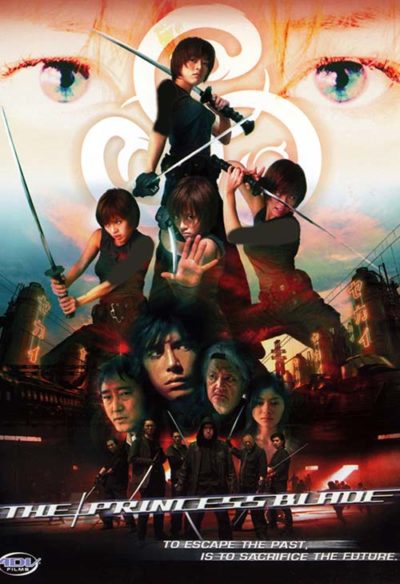 The same source comic inspired Lady Snowblood, but plenty of original thought has also been put into this, set in an interesting alternate present, after 500 years of imposed isolation. A band of fighters, the Takemikazuchi, have been thrown out of work and now roam the country, killing for pay. One of their number, Yuki (Shaku), discovers their leader (Shimoda) killed her mother, and after confronting him, leaves. Except the group’s motto seems to be, “No one here gets out alive”… She finds shelter with Takashi (Ito) – except he is part of a rebel group with a similar philosophy, so a quiet, peaceful life is not on the cards for either of them.
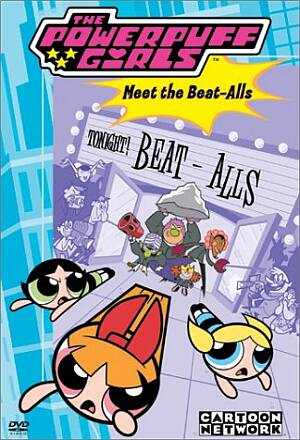 This sprang virtually fully-formed from the twisted mind of McCracken back in 1992, as a student film: even then, he intended it as a series, with most the characters, both heroines and villains, already present. The main change was to the title, the Cartoon Network balking at presenting a show called The Whoop-Ass Girls, and so the “can of whoop-ass” which was originally part of their make-up, was replaced by Chemical X.
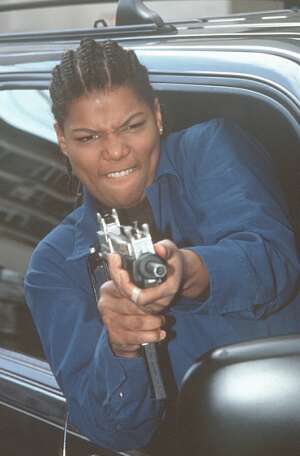 After a couple of less-than-perfect entries in the ‘robbery girls’ subgenre, this came as a refreshing blast, with decent characterisation and a storyline that goes past the painfully obvious. Mind you, the moral remains the same – crime doesn’t pay – but at least the road taken to get there is interesting and complex. These women all have their own reasons for wanting to rob banks: getting back at society for perceived injustice, supporting a child, or simply for kicks. Interestingly, you can see both their point of view and society’s, the latter most clearly in a surprisingly sympathetic cop, Strode (John C. McGinley). The results are more a product of tragic circumstance than anything else.
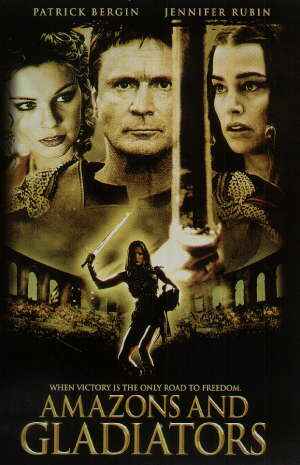 Benefiting from a slew of decent performances, A&G manages to surpass most of the competition and become a worthy entry in the “gladiatrix” sub-genre. This is perhaps because the cast have been hired either because they can act or because they can fight, while simultaneously not embarrassing themselves in the other department. Pity poor Hiltz, who is in virtually every scene, yet doesn’t even get her name on the cover.
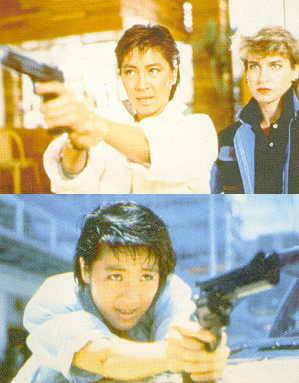 Purely on a historical level, this 1985 film merits attention since it started the whole action-heroine genre in Hong Kong cinema, which thrived for the next decade, producing some of the finest entries ever made. It also was, effectively, the start of the careers of Michelle Yeoh and Cynthia Rothrock. Interesting to see how they’ve since headed in opposite directions: Rothrock to low-budget erotic thrillers, Yeoh to the Academy Awards.
 Women-in-prison is not a genre greatly within our remit, since they’re often just an excuse for a bit of soft-core masochism. There are occasional exceptions, however, and this is one, with its origins as a network TV show forcing restraint of the more exploitative aspects, as well as permitting the characters to develop more fully than in a movie.
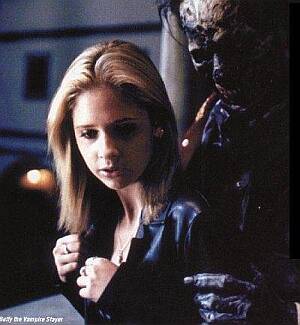 While there have been stand-out Buffy episodes since, season two perhaps ranks as the most consistently high in quality. There’s hardly an episode that ranks as less than excellent, and the writing is sparklingly witty, with more eminently quotable lines than you can shake a stake at.
 Right from the opening credits, a debt to the Brothers Grimm is clear. In this modern-day version, Red’s stepfather is a sleazebag crackhead, and her mother a street hooker; when both get carted off to jail, Vanessa Lutz (Witherspoon) heads, with basket, up Interstate 5 towards Grandma’s house. Except that on the way, she meets Bob Wolverton (Sutherland), the notorious I-5 killer. And what big teeth he has!