




Literary rating: ★★★
Kick-butt quotient: ☆½
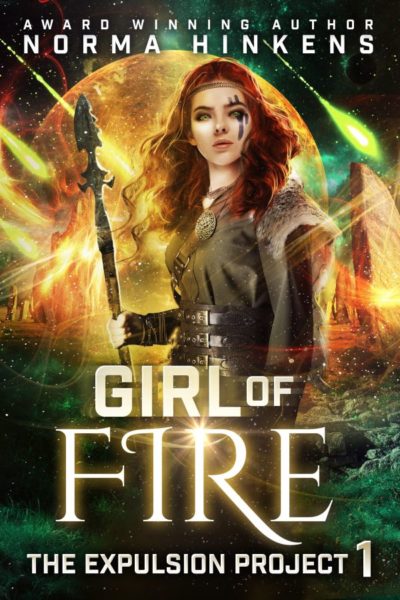 You might be forgiven for expecting something Hunger Games-like, given Katniss was referred to frequently as the “girl on fire,” only one letter different from the title here. That really isn’t the case at all: though both are, broadly speaking, science-fiction, instead of an urban dystopia, this is sprawling space opera. The heroine, 17-year-old Trattora, lives on Cwelt, a fringe planet largely overlooked and bypassed by the rest of the galaxy. She’s a chieftain’s daughter there, but was adopted, and is clearly different from the rest of her people; she yearns to find the truth about her ancestry.
Her chance comes in the form of a trade-ship, captained by the untrustworthy Sarth. For it’s discovered that Cwelt is a source for dargonite, a mineral now in high demand for its use in cloaking technology. Before this can be announced, the planet comes under threat from the raiding Maulers, and Trattora strikes an uneasy bargain with the visiting captain, to sell dargonite in order to buy ships which can defend Cwelt. However, after an apparent double-cross, Trattora steals Sarth’s ship from under her nose, and strikes out on her own, to take care of business – and also locate her biological parents.
The latter thread doesn’t occupy much of this, the first volume in a trilogy called ‘The Expulsion Project’. That title is explained at the beginning: proceedings open with her parents on Mhakerta, sending Trattora into space, in a last-ditch effort to escape the clutches of an all-powerful AI who has taken over their planet. The only thing Trattora has left as a link with her parents is a bracelet – when she finds a similar item belonging to Velkan, an indentured serf in Serth’s crew, she realizes there are apparently others like her. But this book is more concerned with her attempting to sell the valuable minerals, and adapting to life in a universe very different from the one to which she is used.
The cover is rather misleading, since as soon as Trattora gets off the surface of Cwelt, she more or less abandons the “barbarian chic” aesthetic, as far as I can tell. Probably wise: carrying a spear around would likely attract undue attention in any space-faring civilization. Indeed, she largely avoids violence, hence the low kick-butt quotient. She still qualifies here, due to what would probably be described on her resume as “a pro-active approach to problem-solving, demonstrated ability at adapting to new situations, and proven leadership skills.” She’s certainly brave, prepared to risk everything to save her adopted home planet, loyal to her friends, and resourceful – all-round, she has the qualities of a good heroine.
I’m less convinced with the writing when it comes to the universe building, beginning with planet names which feel like the author made them up by pulling tiles from a Scrabble bag. You don’t get much sense of a structured universe, despite the apparently overwhelming presence of “The Syndicate”, a group whose power is vaguely ineffectual, except when necessary to the plot. This is where the “space opera” label becomes something of a double-edged sword. While I appreciated the brisk pace, Trattora and her pals whizzing from one incident to the next, the idea of a teenage girl hijacking a spaceship on her first trip off-world, from its far more world-wise captain, with most of the crew supporting her, was only one of a number of moments which stretched my credulity. It was just far too easy.
This probably falls into the category of a fun read rather than a good one, and is thoroughly disposable fluff. While there’s nothing wrong with that per se, this likely panders a little too much in the direction of the young adult audience, to be entirely acceptable for anyone who has grown out of that group.
Author: Norma Hinkens
Publisher: Dunecadia Publishing, available through Amazon in both printed and e-book versions.
 There are elements here which reminded me of Children of Men, though this is set further down the road, when civilization has decayed a good deal further. The issue here is slightly different: specifically, a lack of female children, which has triggered a rapid collapse into anarchy for the United States. 25 years later, the
 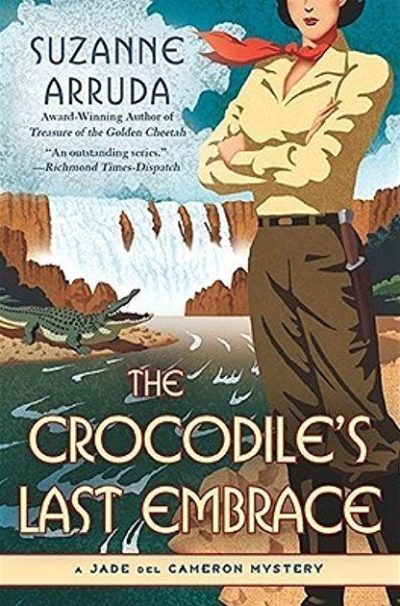 This sixth installment in Arruda’s outstanding series has much in common, in terms of style and other characteristics, with the preceding five. We pick up here in February 1921, and our setting is the familiar one of Nairobi and its environs; all or most of the supporting cast we’ve come to like are here, as well as Jade herself.
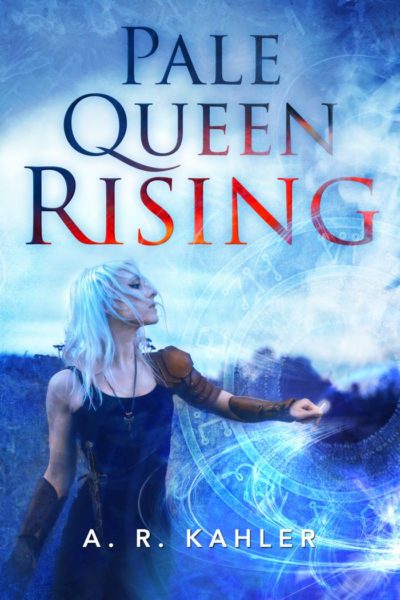 Claire is the official “court assassin” to Mab, who is the Winter Faerie Queen. Her realm lies in a world parallel to ours, but separate from it, and inhabited by a slew of creatures we humans know only from myth, who can travel back and forth to the mortal world. Mab traffics in “Dream”, which is somewhere between a food, a drug and currency for her citizens, and the product of human emotions, particularly in group settings such as concerts or other shows. However, someone is muscling in on her turf, with the intent of controlling the Dream, and she unleashes Claire to track down the culprit, who turns out to be the ‘Pale Queen’ of the title.
 Lance Charnes and I are Goodreads friends, having “met” (electronically) a few years ago through the Action Heroine Fans group. Some time ago, I bought a copy of his outstanding debut novel, Doha 12, and it got five stars from me. This new novel, the opener for a projected series, didn’t come to me as an official review copy –instead, Lance generously donated a print copy to the library where I work– but he knew I would read and review it, and knew my tastes well enough to be pretty sure I’d like it. Of course, we both understood that he might be wrong –but he wasn’t! For much of my reading experience, I expected to rate the book four stars –a denouement and conclusion that blew me to pieces and then knit me back together easily pushed it up to five stars.
 This is likely the kind of book you enjoy rather than appreciate. While no-one will ever mistake this for great literature – you could go with “ludicrous nonsense,” and I’d not argue much – it’s a fun enough bit of pulp fiction that I kept turning the pages.
  This self-published novel was recently donated by the author to the library where I work, a kindness that we appreciate. The author and I are both members of the Action Heroine Fans group here on Goodreads, and I was intrigued by his posts there about the book. Understanding (from experience!) the frustrations of waiting for reviews in today’s glutted book market, and being a fan of kick-butt female protagonists myself, I’d hoped to help him out with a good review, though he didn’t donate the book with any such expectation. As my rating indicates, my reaction wasn’t as positive as I’d hoped, so I would have refrained from writing a review at all; but Tom graciously indicated that he didn’t have a problem with a less than stellar review.
 Shanti is a bad-ass. Not that you’d know it when we first encounter her, staggering through the wilderness on the edge of death, after an ill-considered choice of route as she escapes from… Something. We’ll get back to that. Fortunately, she is found by Sanders, a career soldier from a nearby city, out on a training mission with a band of raw recruits. They take her back to their town, where she’s nursed back to health – then the awkward questions begin, concerning where she was going and precisely why she was carrying weapons. But the key turns out to be Captain Cayan, who possesses the same psionic warfare capabilities as Shanti; except, he’s all but unaware of it, a sharp contrast to her finely-honed and practiced expertise.
 I think it’s the “poorly written” aspect which I find most offensive. For I’m entirely down for some good ol’ entertainment in the form of justified violence, from Dirty Harry through Ms. 45 to Starship Troopers. But this… Oh, dear. The most stunning thing was discovering that this was the first in a series of twenty-seven novels in the “Sisterhood” series. Twenty-seven. I guess this proves there’s a market for this kind of thing, though I am completely at a loss as to who it might be. It certainly isn’t me.
 I initially thought I had a fairly good handle on where the first book in the Immortal Vegas series (currently at six entries, plus a prequel) was going, with a Lara Croft-esque lead, who specializes in locating and recovering ancient artifacts. You can also throw in fragments of The Da Vinci Code, since she is hired to retrieve a relic from the secret basement beneath the Vatican, and is going up against a cult of religious, Catholic fanatics. But it somehow ends up taking a sharp right-turn, ending up in a version of Las Vegas where, just out of phase with the casinos and hotels, lurks a hidden dimension of other venues, populated by…