
★½
“Neither sexy nor battle-y. They are, however, girls. So, one out of three then.”
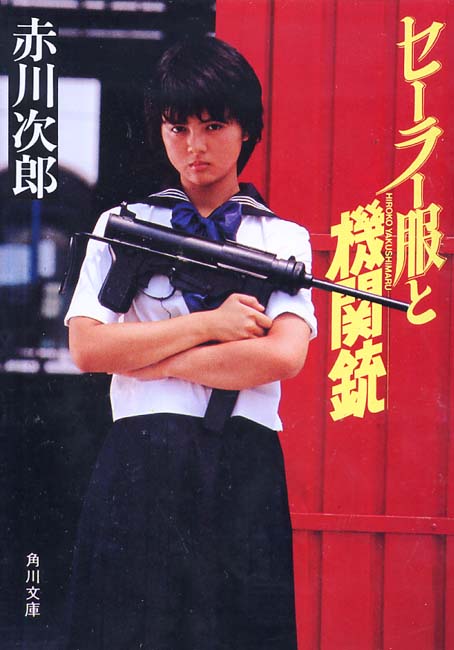
 It takes real effort for a film that’s barely an hour long, significantly to overstay its welcome, but SBG manages to do exactly that, thanks to its woeful combination of shoddy action and tedious sex scenes. The heroine is teenager Mirai Asamiya (Hashimoto, about as much an actual teenager as I am), who has been transferred to a new school at the behest of her father. Little does she know, at least initially, that she is simply a tool for his revenge, headmaster Bush (Hotaru) having seduced Mirai’s mother away from her husband, and run off with her. To this end, Mirai has been brought up with what we should call, a very particular set of skills: we’ll spare you the details of exactly what the “Venus Crush” involves, but it does lead to the classic line, “He doesn’t know how dangerous your vagina is!” Before she can reach her target, she has to get close by dethroning and replacing his current enforcer of discipline, Susan (Taguchi), and also get past Bush’s lesbian daughter (Kiyokawa).
It’s clearly intended as a spoof of the Sukeban Deka genre, with the heroine wielding another Japanese toy, a kendama, rather than a yo-yo – in this case, her weapon also has a little phallus, and no prizes for guessing where it’s aimed. The resulting moaning and thrashing around, only slows the pace of this down even further. There are also subplots involving schoolgirls being prostituted off to Japanese politicians, and a truancy officer who looks the other way in exchange for sex. Maybe the former was of particular cultural significance in its native land at the time this was released in 1986; here, it’s just a dangling cinematic preposition, hard to put up with. The film does occasionally show some berserk invention: let’s just say, you don’t need to worry about slicing apples when Mirai around. However, I’d estimate a good half of its running time is tedious soft-core sex scenes of one form or another, and the action, when it appears, makes the original Sukeban Deka fights look like Bruce Lee at the peak of his career.
I guess it’s kind of churlish to complain about a pinku movie containing sex. But there are ways and means by which it can be used, and combined with the other plot elements in a manner that enhances them. The makers of this are apparently unaware of all such techniques, and prefer an approach which feels like a crap action movie crashed headlong into a crap soft-porn film, with the floor sweepings used to assemble the finished product. Never mind “uncut” and “unrated,” the finished product here is damn near unwatchable.
Dir: Mototsugu Watanabe
Star: Kyôko Hashimoto, Yukijirô Hotaru, Ayumi Taguchi, Ayu Kiyokawa
a.k.a. Target Campus: Attack the Uniform
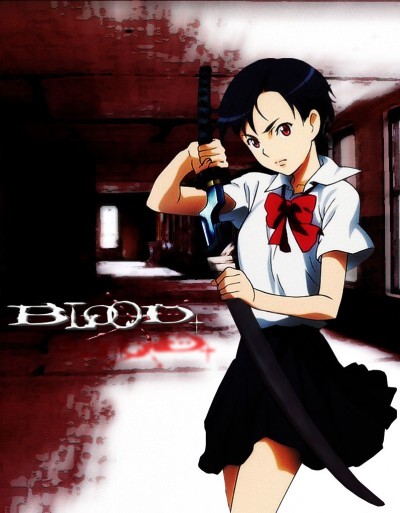
 I might have enjoyed this more, if I hadn’t recently sat through 25 episodes of basically the same plot, in Blood+. Generic anime storyline, #7: supernatural entity, trying to bring about the end of the world because… That’s what they do? In this case, there are sages and witches, who balance good and evil. 500 years ago, however, one from each side united, and the offspring was Bayonetta (Tanaka). She is now taking out angels, but there’s also a religious cult preparing for the rebirth of their saviour, a journalist who blames Bayonetta for the death of his father, and a mysterious, very whiny little girl, who keeps calling her “Mommy”. Who that turns out to be will surprise no one.
 I’m on the fence with regard to the Japanese uber-gore films, most notably, by the Sushi Typhoon studio, which have achieved renown (or infamy) of late. While some (
 This is definitely a case where less would have been more, and with a more enthusiastic hand on the editor’s knife, this could have become a decent eighty-minute feature – and possibly an even better 50-minute one. Kamikura does often demonstrate an awareness and acceptance of exactly how ludicrous the entire scenario is, and the film is at its best when wholeheartedly embracing its own insanity. For instance, each of the cyborg athletes’ talents is influenced by their sport: Hitomi Oka is a tennis-player, so whacks people with an over-sized, pneumatic racket, and lobs exploding tennis-balls at them. Additional helpings of that kind of imaginative lunacy – and considerably less tied-up schoolgirls being prodded or whipped – would certainly have made for a more entertaining end product.
 After the genuinely impressive bleakness of Assassin Lovers, the series comes crashing back to earth with a splat like a rotten tomato for this entry, which fizzles out early on, and then manages to lumber on for another 45 minutes. Rei (Tachihara) spends her time between missions hanging out at a gay bar, and rescues one of the rent boys, Mitsusu (Kitagawa), who ply their trade there after a vicious assault – accompanied, it has to be said, by the least appropriate music in the history of cinematic homosexual rape. He ends up moving in with her, to the latest in a series of unfurnished apartments provided by Section Zero, and the two damaged individuals start creating a life, of sorts, for themselves. However, there’s a serial killer, apparently with a deep hatred of men, operating in the area, and Rei is given the mission of tracking down and eliminating the psycho.
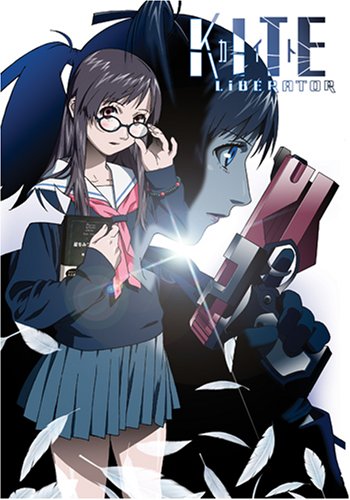 And not a very good movie at that, suffering from such multiple personality disorder, it sometimes feels that two completely different anime were spliced together in some mad scientist’s laboratory. If so, he clearly got bored and drifted off while the project was half complete, because this ends in a way which doesn’t so much suggest another part, as demand it unconditionally. Six years on, that still hasn’t materialized, making this about as appetizing as a half-cooked chicken. Oh, and speaking of mad scientists, there’s one of those in here too.
 This is the third version of the same concept I’ve seen, following some years after the
 This doesn’t so much hit the ground running, as plummet into it at top speed, to such an extent I genuinely stopped the film, to check if this was perhaps part two of an ongoing series. It isn’t: it’s just that unconcerned about explanations. What seems to be going on, is a universe where the different dimensions are now connected. Hence, there’s Retro World, Fairy World, Lost World, etc. This offers new criminal possibilities; to counter these, a trans-dimensional police force is also created. One such officer is Ai (Nagasawa), but her mission, to protect a psychic (Takayama) against the terrorist group Doubt is thrown into… Well, doubt after she meets her former partner Yui (Kinoshita), who appears to have thrown her lot in on the side of the villains.