




★★★★
“Imaginative and well-executed modern samurai tale.”

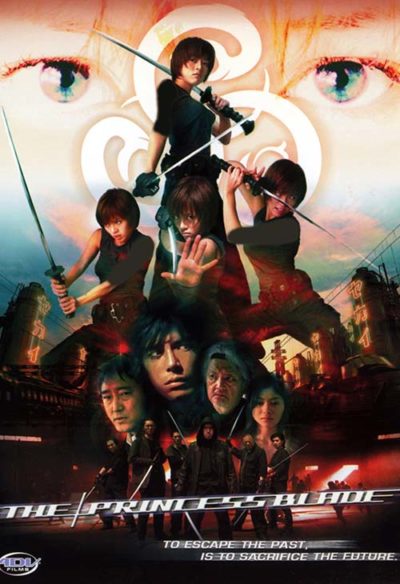 The same source comic inspired Lady Snowblood, but plenty of original thought has also been put into this, set in an interesting alternate present, after 500 years of imposed isolation. A band of fighters, the Takemikazuchi, have been thrown out of work and now roam the country, killing for pay. One of their number, Yuki (Shaku), discovers their leader (Shimoda) killed her mother, and after confronting him, leaves. Except the group’s motto seems to be, “No one here gets out alive”… She finds shelter with Takashi (Ito) – except he is part of a rebel group with a similar philosophy, so a quiet, peaceful life is not on the cards for either of them.
The action, choreographed by Hong Kong’s Donnie Yen, is excellent, combining swordplay with martial arts to great effect. This is so good as to leave the bits between fights feeling dull in comparison, and as a result the film seems a little uneven and choppy. Also, Yuki’s lack of emotion makes her a somewhat unengaging heroine, though it’s both plausible, and reminiscent of Clint Eastwood’s Man With No Name. The use of CGI for backgrounds is very effective in creating this parallel world, and it’s interesting to see how Yuki and Takashi deal with their similar situations. Credit also to Sano as the rebel leader, for creating a villain nasty enough to have us hoping earnestly for his death. Very cool overall, and definitely recommended.
Dir: Shinsuke Sato
Star: Yumiko Shaku, Hideaki Ito, Kyusaka Shimoda, Shiro Sano
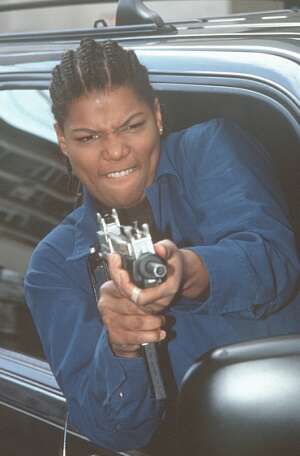 After a couple of less-than-perfect entries in the ‘robbery girls’ subgenre, this came as a refreshing blast, with decent characterisation and a storyline that goes past the painfully obvious. Mind you, the moral remains the same – crime doesn’t pay – but at least the road taken to get there is interesting and complex. These women all have their own reasons for wanting to rob banks: getting back at society for perceived injustice, supporting a child, or simply for kicks. Interestingly, you can see both their point of view and society’s, the latter most clearly in a surprisingly sympathetic cop, Strode (John C. McGinley). The results are more a product of tragic circumstance than anything else.
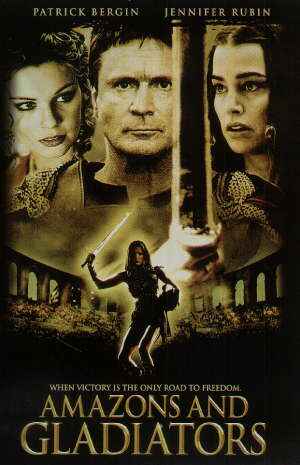 Benefiting from a slew of decent performances, A&G manages to surpass most of the competition and become a worthy entry in the “gladiatrix” sub-genre. This is perhaps because the cast have been hired either because they can act or because they can fight, while simultaneously not embarrassing themselves in the other department. Pity poor Hiltz, who is in virtually every scene, yet doesn’t even get her name on the cover.
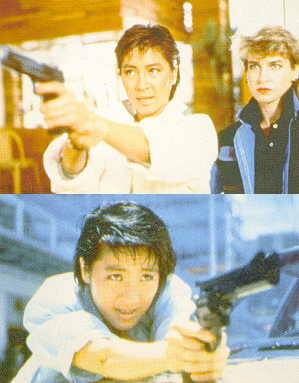 Purely on a historical level, this 1985 film merits attention since it started the whole action-heroine genre in Hong Kong cinema, which thrived for the next decade, producing some of the finest entries ever made. It also was, effectively, the start of the careers of Michelle Yeoh and Cynthia Rothrock. Interesting to see how they’ve since headed in opposite directions: Rothrock to low-budget erotic thrillers, Yeoh to the Academy Awards.
 Women-in-prison is not a genre greatly within our remit, since they’re often just an excuse for a bit of soft-core masochism. There are occasional exceptions, however, and this is one, with its origins as a network TV show forcing restraint of the more exploitative aspects, as well as permitting the characters to develop more fully than in a movie.
 While there have been stand-out Buffy episodes since, season two perhaps ranks as the most consistently high in quality. There’s hardly an episode that ranks as less than excellent, and the writing is sparklingly witty, with more eminently quotable lines than you can shake a stake at.
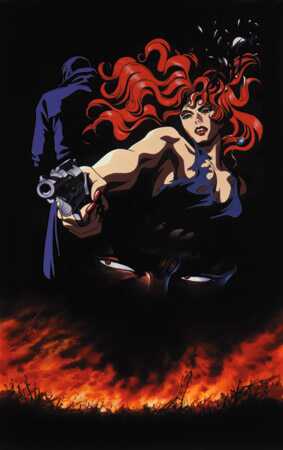 Four stars but no seal of approval? That’s because this is about the most wildly variable animated film I’ve seen. The story and characters are great, but the frequent sex scenes are incredibly tedious and clearly put in solely for the teenage male fan (all pneumatic breasts and moaning). It’s rare for me to say this, but they are genuinely gratuitous, and the film could have coped fine without them.
 Right from the opening credits, a debt to the Brothers Grimm is clear. In this modern-day version, Red’s stepfather is a sleazebag crackhead, and her mother a street hooker; when both get carted off to jail, Vanessa Lutz (Witherspoon) heads, with basket, up Interstate 5 towards Grandma’s house. Except that on the way, she meets Bob Wolverton (Sutherland), the notorious I-5 killer. And what big teeth he has!
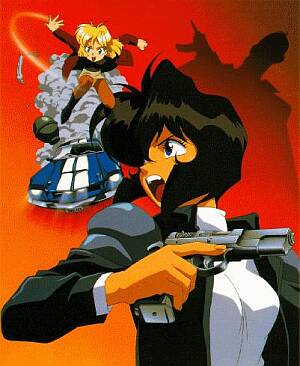
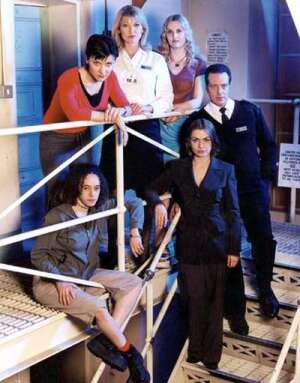 Somewhere around the middle of the series, I realised that this is soap-opera, pure and simple. As someone who’d never be seen dead watching a soap, this was disturbing. Fortunately, moments later, Jim Fenner did something else truly rotten to the core, and my attention went back to H.M. Prison Larkhall. Such is the joy of the show: it defies categorization.