



★★★★
“State of flux”
 Difficult though it may be to credit, especially for younger readers, there was a time when watching MTV could actually be interesting occasionally, back in the days when the station had its own animation division. The best-known product to seep out was Beavis and Butthead, but more interesting was Aeon Flux, perhaps the most dense and impenetrable animated series to reach a wide audience – even if the general reaction was “Eh?”
It debuted as part of Liquid Television, and right from the start, makes an impression with its lack of dialogue, weird design and astonishingly high body-count. The first series of mini-eps depicted the mission of an apparent secret agent, Aeon Flux, who comes within moments of solving the case of a mysterious epidemic, only to meet an untimely death. Undaunted, the second series had a variety of cases, whose only real linking theme was the repeated untimely death of Aeon.
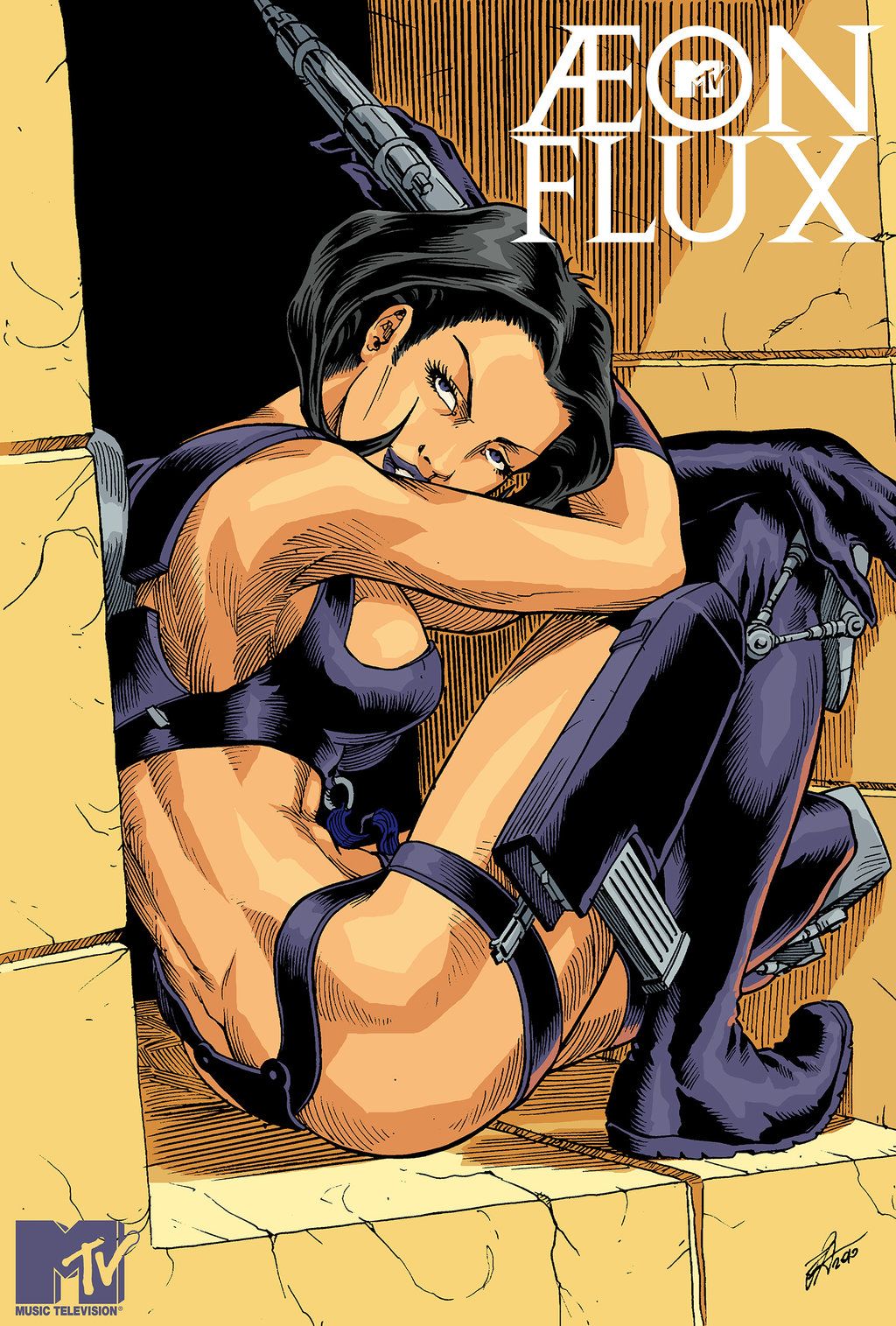 Then MTV commissioned some 25-minute episodes, and things inevitably started to mutate. The characters started to speak (gasp!), but anyone who thought this meant it would become easy to understand was in for a shock – if anything, it added an extra new dimension of complexity. More of the setting was exposed: two countries, Monica and Bregna, of opposite character and once united, but now in perpetual tension. Extra characters were added, most notably Trevor Goodchild, the Breen leader, whose relationship with Aeon (a Monican “agent”?) is perhaps the central focus of the series.
“What I was trying to go for was a kind of ambivalence.” So said creator Peter Chung, and as ambivalence goes, there’s little doubt he succeeded – rarely has a show hidden its light quite as effectively. Very little is laid out for easy consumption, and each episode repays, and indeed demands, repeat viewings. Every action and line of dialogue sometimes seems to have multiple meanings.
If it has a weakness, it is perhaps too obscurist, and you wonder whether the show is quite as deep as it wants you to think. In addition, there are parts which, however stylish, just don’t seem to make sense. But Aeon is a fabulous character, who in the words of Chung, “is not someone who reacts to things. She makes things happen…she’s a force for change as opposed to the status quo”, and the combination of intelligence and malevolent brute force is immensely appealing. Chung again: “I think it’s undeniable that there’s a certain glamour or a certain seductive power of violence on film. Her whole design and the way she looks, the way she moves is engineered purely to evoke that attraction.”
A feature version of Aeon Flux has occasionally been hinted at (Liz Hurley would seem a leading candidate for any live-action version!), but at the moment seems somewhat unlikely, especially with MTV having now folded their Animation Division. Chung has moved on too, first to work on Phantom 2040, whose characters are clearly cut from the same cloth, in their spidery style, and then off to the Far East, for an animated series based on the life of, I kid you not, Alexander the Great. Whether anything created in his future will be as memorable, intense and downright impenetrable as Aeon Flux is surely in doubt.
Creator: Peter Chung
Star: (voice) Denise Poirier, John Rafter Lee


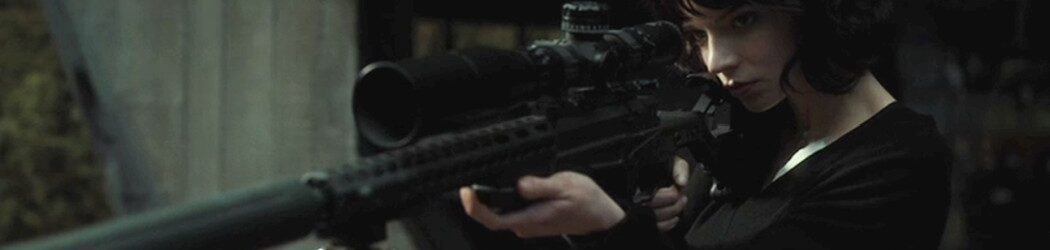
 While one might question Pam’s acting talents, she is backed by a sterling cast of character actors: Steve Railsback, Xander Berkeley, Clint Howard, Udo Kier and Temuera Morrison. Each one hits the mark in their role, delivering lines with the correct level of enthusiasm. Kier, as usual, steals the show (his presence definitely helped soothe Chris’s eye-rolling), though Berkeley’s sleazy cop is perhaps the biggest surprise, especially if you’re only familiar with him as Jack Bauer’s boss in the first two seasons of 24.
 I admit, you could argue the entire story is irrelevant, and this is nothing more than an indefensible cocktail of eroticized violence. But those who live in such a moral vacuum as to require Hollywood to fill in the gaps, have got much bigger problems than Pamela Anderson’s breasts. If you can get past the first five minutes (which even I will say seem a lot longer), there’s no denying the effort expended here – albeit mostly on sex and violence, aimed at the lizard section of the viewer’s brain.
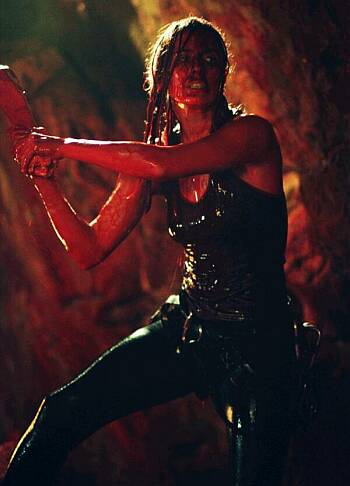 Simplicity is under-rated, especially when it comes to genre films. The simplest horror movies often work the best, because they prey on widely-held fears: monsters (Jaws), getting lost (The Blair Witch Project) or claustrophobia (Below). And now, we get The Descent, which combines all three into one ball of nerves, pitting six female cave-explorers against
  The focus of the film is Juno and Sarah, with the rest of the cast largely reduced to cannon-fodder – though not badly-drawn cannon-fodder, I must admit. Juno is a near-Amazon, while Sarah has to become one, simply in order to survive, and that’s about the extent of the character development here. Demureness, beauty, the ability to bear babies, and all other typical “feminine” traits, are of absolutely no use whatsoever. The ability to drive your pick-axe, repeatedly, into the head of pissed-off Gollum wannabes, on the other hand… Yeah, that
 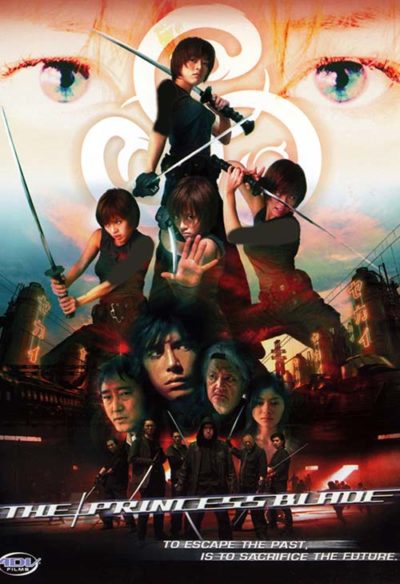 The same source comic inspired Lady Snowblood, but plenty of original thought has also been put into this, set in an interesting alternate present, after 500 years of imposed isolation. A band of fighters, the Takemikazuchi, have been thrown out of work and now roam the country, killing for pay. One of their number, Yuki (Shaku), discovers their leader (Shimoda) killed her mother, and after confronting him, leaves. Except the group’s motto seems to be, “No one here gets out alive”… She finds shelter with Takashi (Ito) – except he is part of a rebel group with a similar philosophy, so a quiet, peaceful life is not on the cards for either of them.
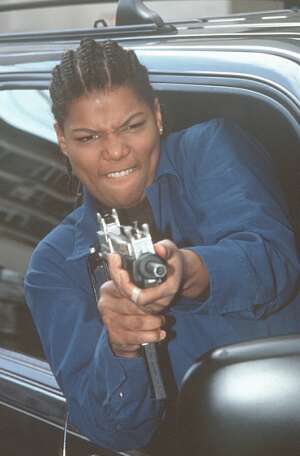 After a couple of less-than-perfect entries in the ‘robbery girls’ subgenre, this came as a refreshing blast, with decent characterisation and a storyline that goes past the painfully obvious. Mind you, the moral remains the same – crime doesn’t pay – but at least the road taken to get there is interesting and complex. These women all have their own reasons for wanting to rob banks: getting back at society for perceived injustice, supporting a child, or simply for kicks. Interestingly, you can see both their point of view and society’s, the latter most clearly in a surprisingly sympathetic cop, Strode (John C. McGinley). The results are more a product of tragic circumstance than anything else.
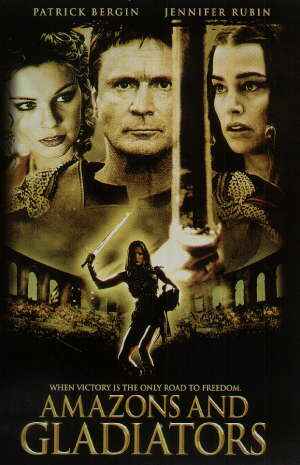 Benefiting from a slew of decent performances, A&G manages to surpass most of the competition and become a worthy entry in the “gladiatrix” sub-genre. This is perhaps because the cast have been hired either because they can act or because they can fight, while simultaneously not embarrassing themselves in the other department. Pity poor Hiltz, who is in virtually every scene, yet doesn’t even get her name on the cover.
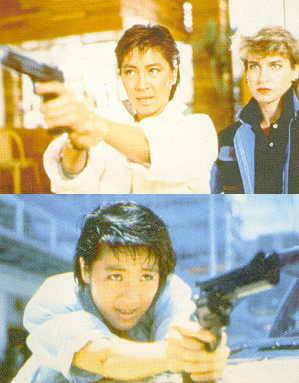 Purely on a historical level, this 1985 film merits attention since it started the whole action-heroine genre in Hong Kong cinema, which thrived for the next decade, producing some of the finest entries ever made. It also was, effectively, the start of the careers of Michelle Yeoh and Cynthia Rothrock. Interesting to see how they’ve since headed in opposite directions: Rothrock to low-budget erotic thrillers, Yeoh to the Academy Awards.
 Women-in-prison is not a genre greatly within our remit, since they’re often just an excuse for a bit of soft-core masochism. There are occasional exceptions, however, and this is one, with its origins as a network TV show forcing restraint of the more exploitative aspects, as well as permitting the characters to develop more fully than in a movie.
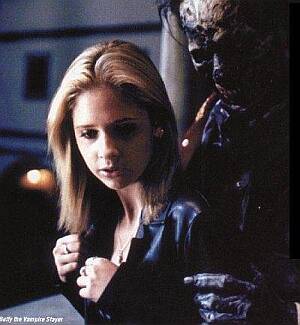 While there have been stand-out Buffy episodes since, season two perhaps ranks as the most consistently high in quality. There’s hardly an episode that ranks as less than excellent, and the writing is sparklingly witty, with more eminently quotable lines than you can shake a stake at.
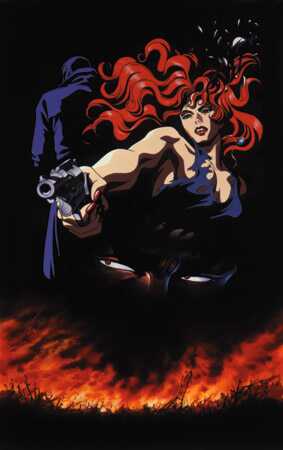 Four stars but no seal of approval? That’s because this is about the most wildly variable animated film I’ve seen. The story and characters are great, but the frequent sex scenes are incredibly tedious and clearly put in solely for the teenage male fan (all pneumatic breasts and moaning). It’s rare for me to say this, but they are genuinely gratuitous, and the film could have coped fine without them.