




★★★★
“One of the all-time classics of the women-in-prison genre.”
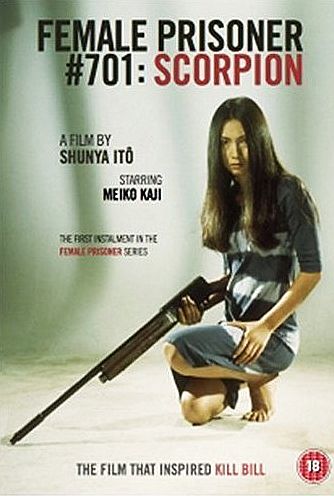
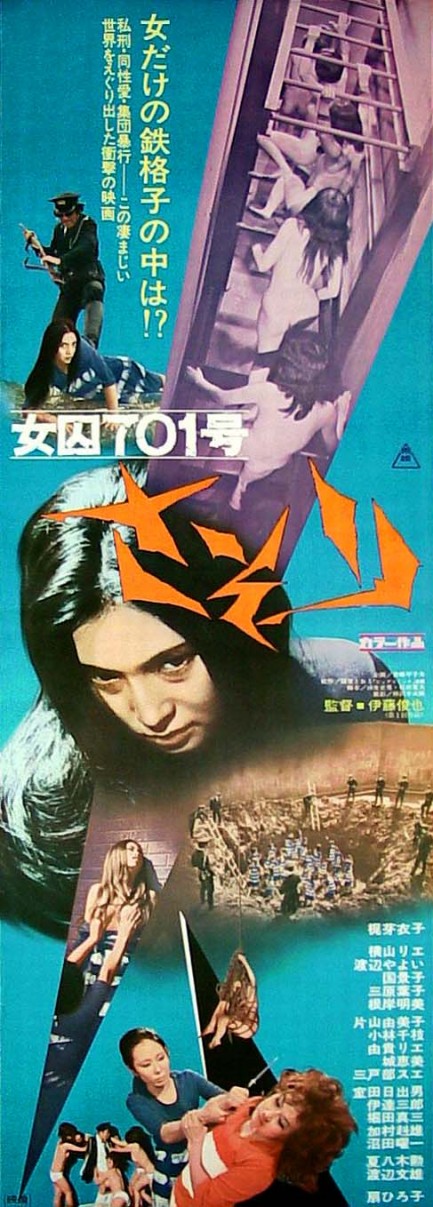
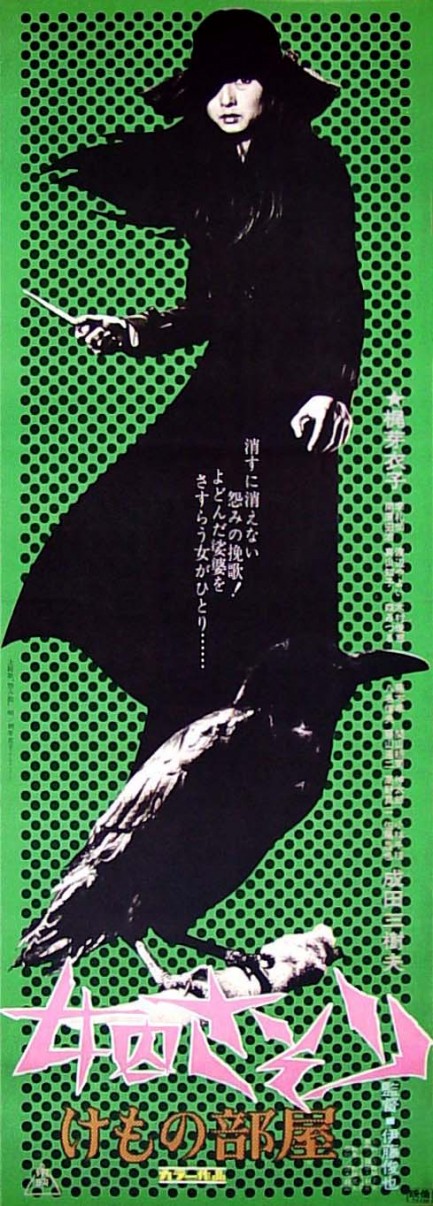
 This archetypal “women in prison” film is lifted above its colleagues in the genre, most of which are little more than crude exploitation, by being pretty damn sophisticated exploitation. The two main factors are Ito’s great sense of visual style, and Kaji’s almost-silent performance as Nami Matsushima. She ends up in jail after being betrayed by her cop boyfriend Sugimi (Isao), who turns out to be in league with the Yakuza he was investigating. Nami vows to escape, and the film starts with her doing so, but she is quickly recaptured, thrown back into jail, and her fellow inmates are punished for her actions, causing them to turn against her. While not her fault, she’s involved in an incident which costs the warden (Watanabe) his eye, and he vows to break her at any cost. That’s an awful lot easier said then done, and what happens as a result might be what Nami wanted all along. Meanwhile, Sugimi, seeking to tie up the loose end she represents, promises another inmate, Katagiri (Yokoyama) parole, if she takes care of Nami.
I’m not quite sure how the DVD sleeve on the right reaches the conclusion that this “inspired” Kill Bill: maybe nodded to it in an elevator once, because “female revenge” is really about all they have in common. However, it stands perfectly well on its own merits, powered by Kaji, who has one goal in mind – escaping and taking revenge – and anything else just washes off her back. If you can imagine her as a female, darker version of Cool Hand Luke (without the hard-boiled eggs!), refusing to bow to the sadistic guards, when it would be far easier to do so, you’ll be in the right ballpark. She has no “superpowers,” just an extraordinary persistent resilience and inner strength that makes her a remarkable heroine. Particularly considering this was his feature debut, Ito’s use of colour and Dutch angles to enhance the action are quite remarkable in its lack of restraint. The screen glows green as Nami takes her revenge, for example, and there’s another shot which looks like a Hieronymus Bosch vision of hell, for its lurid shades, while the camera will till 90 or even 180 degrees to make its point.
There’s no shortage of the exploitative aspects, however, with copious amounts of toplessness and arterial spurting, as well as an amusing chunk of lesbian lust, where five minutes with Nami proves sufficient to turn a stool-pigeon into a devoted admirer. So this is not exactly family viewing, let’s be clear on that front. However, it’s quality is difficult to deny, and as sex ‘n’ violence goes, this is definitely from the top-shelf of the liquor cabinet.
Dir: Shunya Ito
Star: Meiko Kaji, Rie Yokoyama, Natsuyagi Isao, Fumio Watanabe
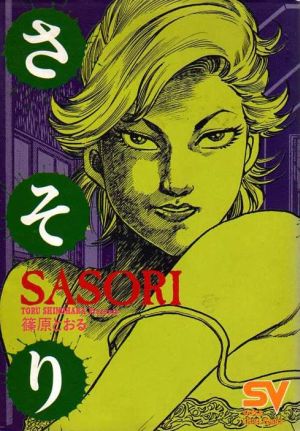 In the first half of the 1970’s, Meiko Kaji was to the slightly-disreputable end of Japanese cinema, much what Pam Grier was to the same end of Hollywood movies. Both made a career out of playing strong female characters, often operating on or beyond the boundaries of the law, and with no compunction about using violence to achieve their ends – which often involved taking revenge on those (almost alwayx men) who had wronged them. The Sasori [Japanese for “scorpion”] was not Kaji’s first foray into the genre, having cut her teeth on the Noraneko Rokku [Straycat or Alleycat Rock] films, a couple of years previously.
 Right from the start, Nami (Kaji) established her utterly hardcore credentials, as she’s trying to dig her way out of the dungeon where she has been for the past year. With a spoon. Held in her teeth. She’s let out for the day because a bigwig is visiting, but takes the opportunity to attack warden Goda (Watanabe), almost depriving him of the sight of his other eye. As punishment for the resulting riot, Goda sends four guards to gang-rape Nami, and all the inmates are sent to a hard-labour camp. On the way back, they beat Nami as punishment, leaving her near-dead but it turns out that was just her ruse to get the guards to open the back of the van and escape. She leads the women across a blasted landscape, revenge once more on her mind, with Goda’s men in hot pursuit.
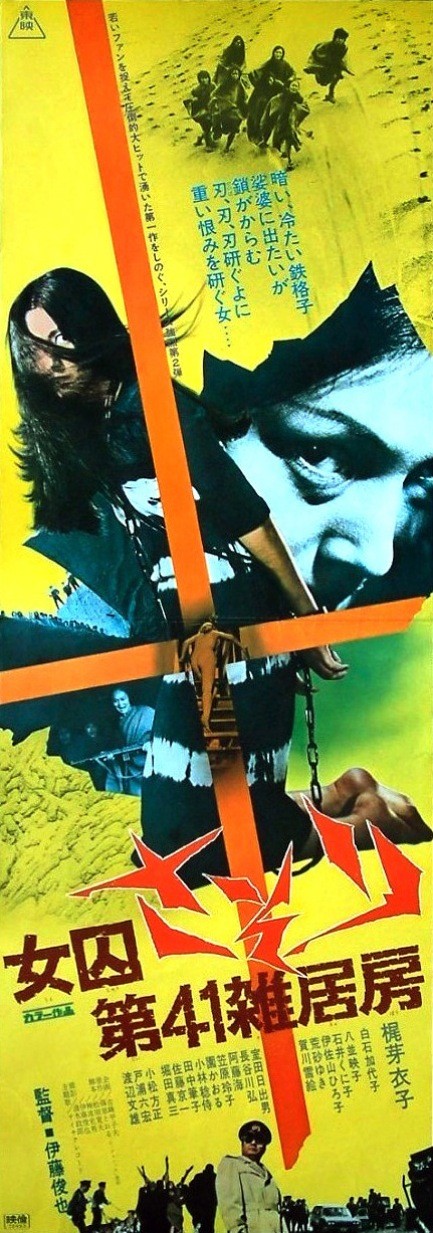
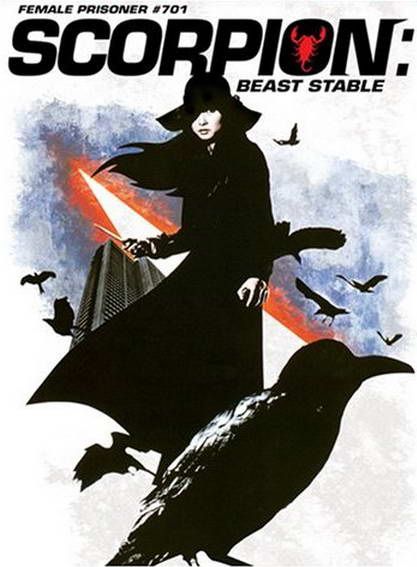 When this begins, Nami (Kaji) is on the run, and slices the arm off Detective Kondo (Narita) after he handcuffs himself to her. She befriends street hooker Yuki (Watanabe), who runs foul of the locak Yakuza gang by turning tricks on their turn, while trying to care for her brain-damaged brother, whom she also services sexually, to stop him from raping women(!). After Nami is involved in the death of a gang member who was blackmailing her, the gang’s madam Katsu (Lee), who knew the Scorpion from her own prison days, captures her, locking our heroine up in a literal big bird-cage. But after the true horror of the Yakuza’s treatment of their women is revealed (it starts with a golf-club going where no golf-club should ever go), Nami escapes and carves a bloody path of revenge on those responsible. When Katsu realizes what’s going on, she turns herself in to the police, figuring jail will be safe from Sasori’s wrath. Take a wild stab in the dark… Which, by coincidence is exactly what Katsu deserves.
 Nami (Kaji) is about to get married, but her wedding day is rudely interrupted by the arrival of the cops, who arrest her. On the way to prison (and, unsurprisingly, death row, given the body count left behind in the previous three movies), she takes out the driver, causing a crash. The injured Scorpion staggers away, and is rescued by Kudo (Tamura), a former political radical who was brutalized by the police for his actions, and so has a massive load of resentment against them. After being informed of Kudo’s harbouring of Nami by a worked at the sex-club where he works, the cops take him in: and use both physical and psychological torture to try and make him give up her location. Eventually arrested, Nami is sentenced to death, but the cops intend to make sure the time leading up to her execution is as unpleasant and possible, and the detective in charge, Hirose (Tsukata), is intent on making even Nami’s death as lonely an experience as possible.
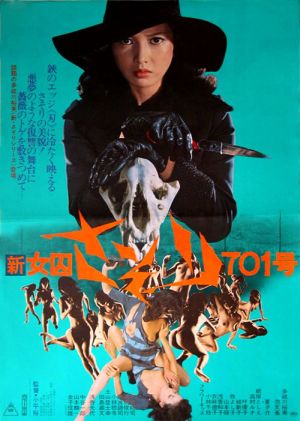 Just goes to show that the “cinematic reboot” is not a 21st-century invention, e.g. Batman or James Bond. For a mere three years after Meiko Kaji showed her sting as Nami, the studio reset the series, giving it a new director, new (and much more talkative) lead actress, and returning Nami Matsushima to a happy, criminal record-free young women, with a loving boyfriend. Except, of course, he turns out not to love her quite as much. Things start to collapse after her sister uncovers evidence of major government corruption, and passes it to Nami, shortly before being kidnapped. After Nami uncovers the truth – her sister is killed and she is framed for the murder, with the help of her boyfriend, and sentenced to 15 years in prison. Initially an easy mark for the tough girls in her cell, Nami soon develops her mean streak. And she’s going to need it, because the politician behind it all is looking to tidy up the loose end she represents, by killing her and making the death look like a suicide. Name turns the tables, in incendiary fashion, and it’s clear that she’s one loose end that won’t be quietly disposed of.
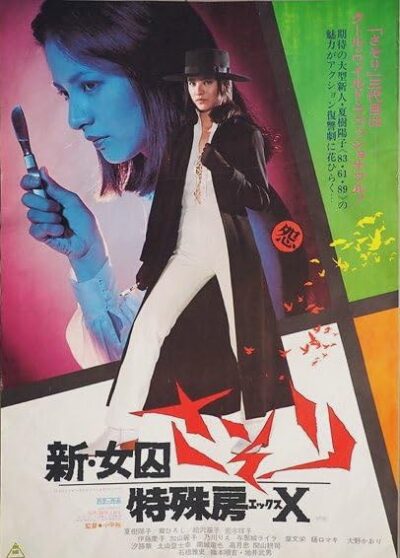 The comparisons of Takigawa to Lazenby above proved appropriate in another way, both being canned after one entry playing the iconic title character, which is probably just as symptomatic of something. The replacement here as Nami Matsushima is Natsuki, who seems to go back toward a more taciturn heroine, closer to the original. But it’s, effectively, another reboot, with not even a nod to the previous entry. In this case, the heroine is a nurse, framed for her involvement in the hospital murder of a politician who was threatening to expose corrupt practices.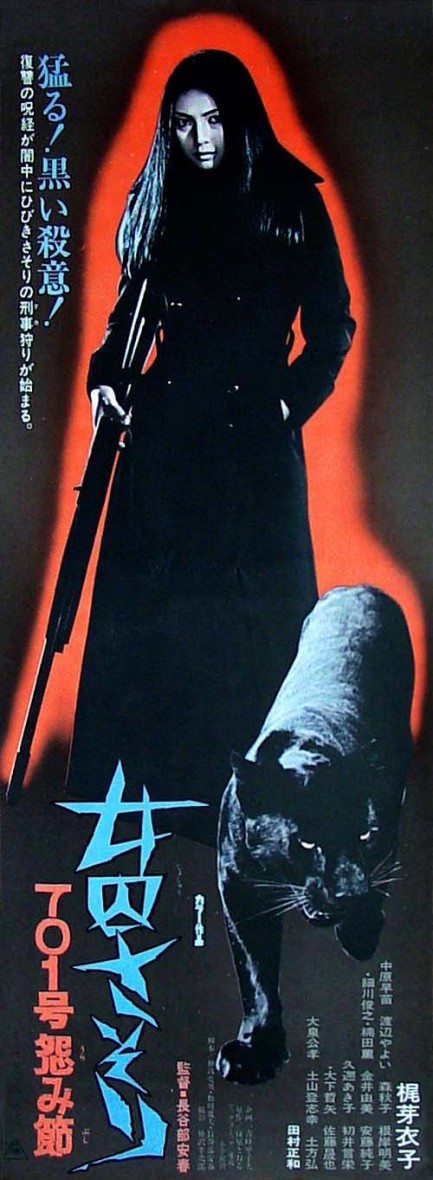
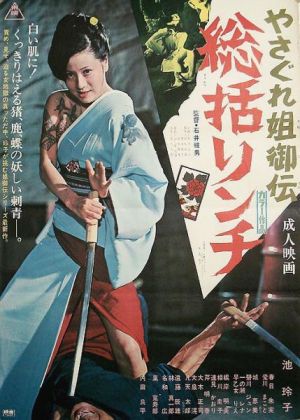 This starts with a memorable sequence in which Inoshika Ocho (Ike) fights off a number of attackers, armed only with her umbrella; albeit, an umbrella that is rather more heavily-armed than most. While she succeeds, she ends up losing all of her clothes in the process, leading to some artful staging in which the discarded umbrella is used to hide her naughties bits. Unfortunately, the rest of the film, while occasionally reaching the same levels of unsanity is largely crude and unpleasant. Even the central concept – a gang smuggling drugs in the vaginas of junkies – falls firmly into that category.
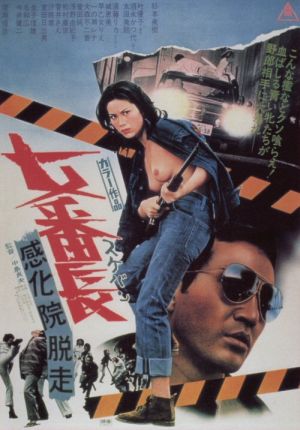 Serial escaper Ruriko (Sugimoto) is more persistent than good, and is dragged back to reform school after her seventh escape attempt ends the same way as her previous six. After whizzing through most of the standards of the women-in-prison genre in about 30 minutes or so e.g. corrupt staff, gratuitous nudity, solitary confinement, etc. she and a few of her colleagues (supposedly teenagers, but that clearly ain’t the case) break out as a group. Splitting up to avoid detection, they arrange a rendezvous at a deserted building by the sea, from where they plan to hijack a ship and escape Japan for good. Truth be told, a sense of urgency isn’t exactly top of the their skill-set, and as they meander their way there, various escapades happen, of which the only significant one is Ruriko meeting, by chance, a male criminal (Watase), who is also trying to out-run the law. But the police are also keen to ensure that they run their record in terms of Ruriko to a perfect 8-for-8…
 After her brother is severely beaten by a drug dealer, Las Vegas lounge singer (!) Michelle Wilson (Kiger, Miss January 1977) is visited by his teacher (Cole), who knows the location of the cartel’s drug warehouse. Wilson puts together a team of women who have reason to want to take the dealers down, including a stuntwoman (Anderson) and an undercover cop (Grant). There’s also a martial-arts instructress, a model and, tagging along, one of the teacher’s pupils. They build a heavily-armed van, train in the ways of war, and rip off a bunch of militia types for weaponry, before staging a successful raid that destroys the warehouse. However, the mob (led by veteran actors Peter Lawford and Jack Palance) are not prepared to let them get away with it.
 A loose remake of a somewhat infamous 1980 horror movie [rejected by the BBFC and as yet unreleased in the UK], this is a nastily brutal and effective home-invasion story, with a maternal angle that’s both surprising and well done. On the run after a botched bank robbery, the three Koffin brothers end up in the wrong home, and end up with a houseful of hostages, who were visiting Beth Sohapi (King) and her husband. The criminals call on the rest of their family for help, led by their mother (De Mornay), who is 50% June Cleaver – even providing cake and ice-cream for the residents – and 50% Lizzie Borden, showing absolutely no restraint against anyone she perceives as threatening her brood. As the night progresses, a lot of skeletons come out and we discover the Sohapis definitely do not live up to their name…
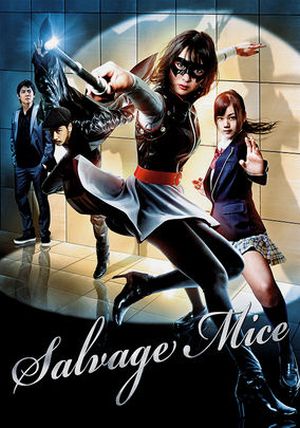 Mai (Tanimura) and her partner (Sato) form a team – the titular rodents – who recover art and artifacts, and return them to their “rightful” owners – quotes used advisedly, it’s vague on the details. However, Mai is betrayed, and framed for the robberies actually being committed by the gang operating under the Evil Western Dude (Heselton, who was also the main villain in Karate Girl). Mai encounters Mio (Nagano), part of ‘Hiroshima Cleans’, a group of volunteers who help keep the city tidy. Initially, Mio thinks Mai is the villain, but is eventually convinced that the real bad guy is elsewhere, and the pair team up to take on the villains, including both Mai’s ex and Evil Western Dude.
 Two gangsters are having a discussion in a sauna, when they are brutally attacked by Raina (Katic), the former girlfriend of one. The Mexican is almost decapitated; the other, Greek mob boss Virgil Vadalos (Berenger) is gutted, but survives. He vows to track down his ex-squeeze and unleashes his forces to do so. They include the near-psychotic Lee (Biehn), who has just returend from London with an even more insane sidekick, plus dirty cop Beck (Sloan), who owes Vadalos a favour, and is involved in the investigation from the inside. Keeping those aspects separate becomes more difficult, as the waters become increasingly muddied as more bodies show up, murdered with the titular weapon, the Mexican’s colleagues plot their own revenge, and there’s also the tricky matter of several million dollars in cash which has gone missing.
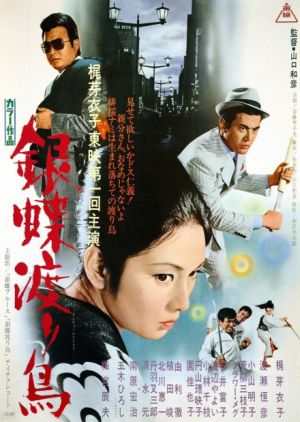 Nami is sent to jail for killing a Yakuza boss, and when she is released, returns to the Ginza district of Tokyo to live with her uncle, who runs a pool hall. She gets a job as a hostess in a bar, with the help of her new friend Ryuji (Watase), but the quiet life doesn’t last for long, even as she tries to help the widow of the man she killed – whose petition on behalf of Nami is what helped lead to her early release. For the local mob, in the shape of Okada (Nanbara) and his gang, are sniffing around the bar, seeking to take it over. To settle things, Nami offers to take on Okada’s champion at billiards, a challenge the gangster readily accepts, not realizing he has just been hustled, and that Nami is no mean player herself. Can she win – and even if she does, will Okada live up to his side of the bet?
 Galia is a sex-slave, kept in captivity in an Israeli brothel. After a failed escape-bid, she is told she has one chance to get back to Russia and be reunited with her daughter: kill an enemy of the man holding her hostage. This she does, but one murder becomes another, with the lure of getting her passport returned and freedom being used to keep her working, just as when she was a prostitute. But at least she has some freedom, and moves into an apartment opposite Elinor (Tayeb), who has problems of her own, in the shape of an abusive husband. The two women bond, both sharing dreams of escaping their violence-plagued lives. However, acting on those dreams is unlikely to be easy, with the men in their lives unlikely just to let them walk.