★★★
“For Flux’s sake…”
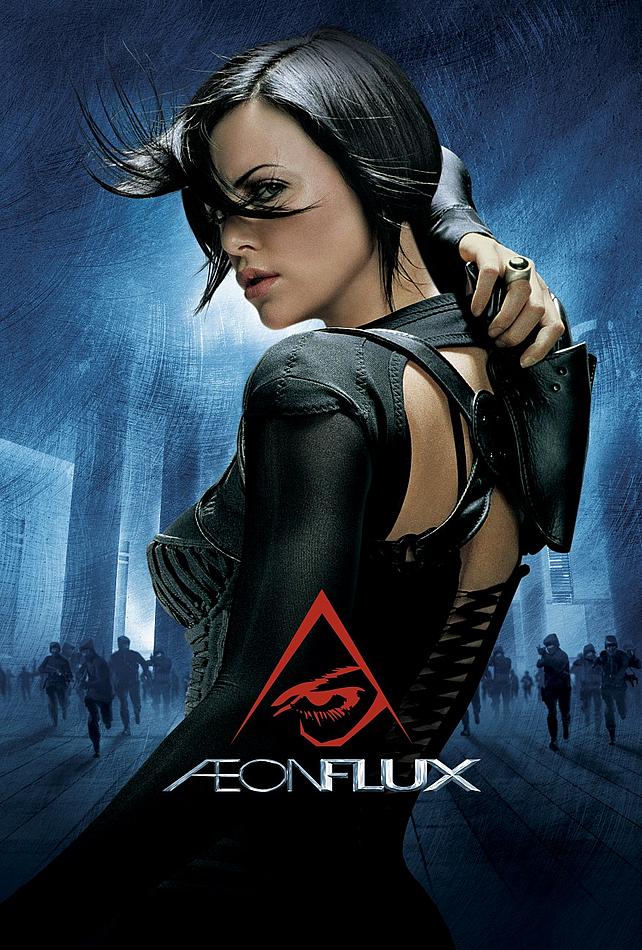 It is too early to start speculating about a girlswithguns.org curse? I mean, we’ve only ever put two banners for movies on our home-page: the first was Catwoman which ended up getting Razzie nominations across the board, and now we have Æon Flux, a film deemed so bad by its studio, they decided not to show it to critics. And given some of the other dreck put out by Paramount this year, with a full promotional push…the results were probably inevitable.
For, y’see, many “proper” critics do not like being deprived of their free screenings with reserved seating, and being made to pay $9 to see the movies with (ugh!) a proper audience. I strongly suspect a significant number phoned in their review without bothering to see see – or, at least, pay attention to – the film, under oh-so-“witty” titles like “Flux Sux”. If the studio basically tells you a movie blows, why argue? [It takes phenomenal guts to go against the tide, but Flux did get some good reviews]
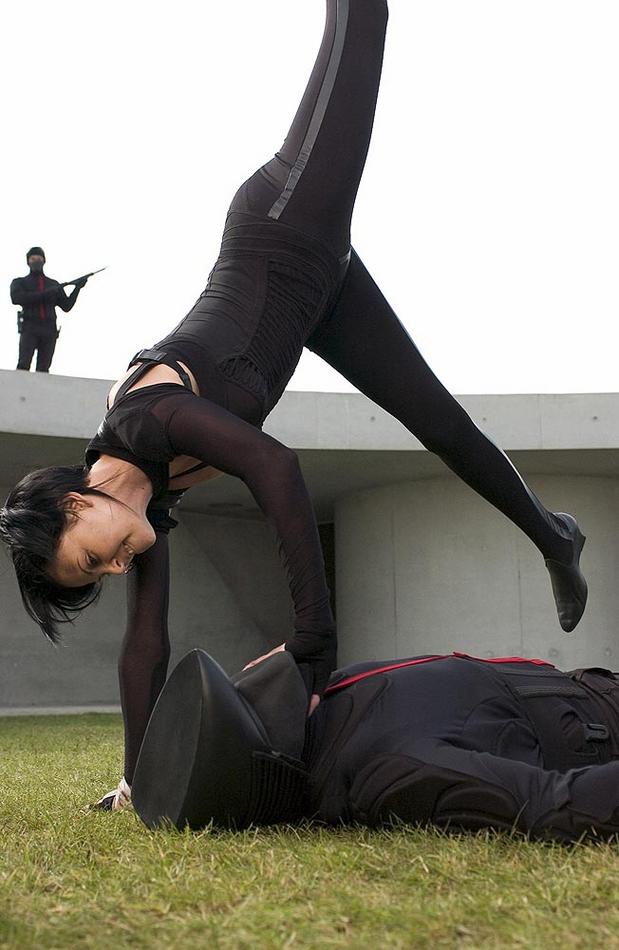
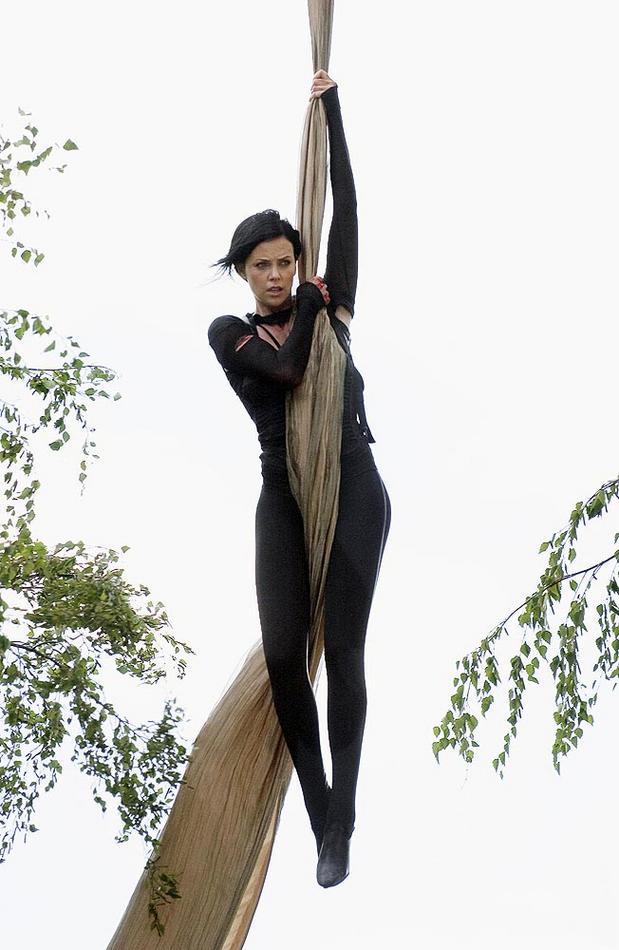
Truth is, of course, it’s not as bad as they’d have you imagine. Not brilliant, sure, but worse films come out, almost any weekend. I’m always happy to see a nicely-detailed take on the shape of things to come, and Flux certainly delivers there, with a Brave New World-like utopia, where everyone is happy…at least on the surface. Of course, if you’re familiar with the excellent Equilibrium, you’ve seen this kind of thing before – but say what you like about the Nazis, they had some great architects, and the same is true here. Particular kudos also to costume designer Beatrix Aruna Pasztor, who deserves an Oscar nomination for her efforts, which have a sleek, futuristic style to them that’s undeniably impressive.
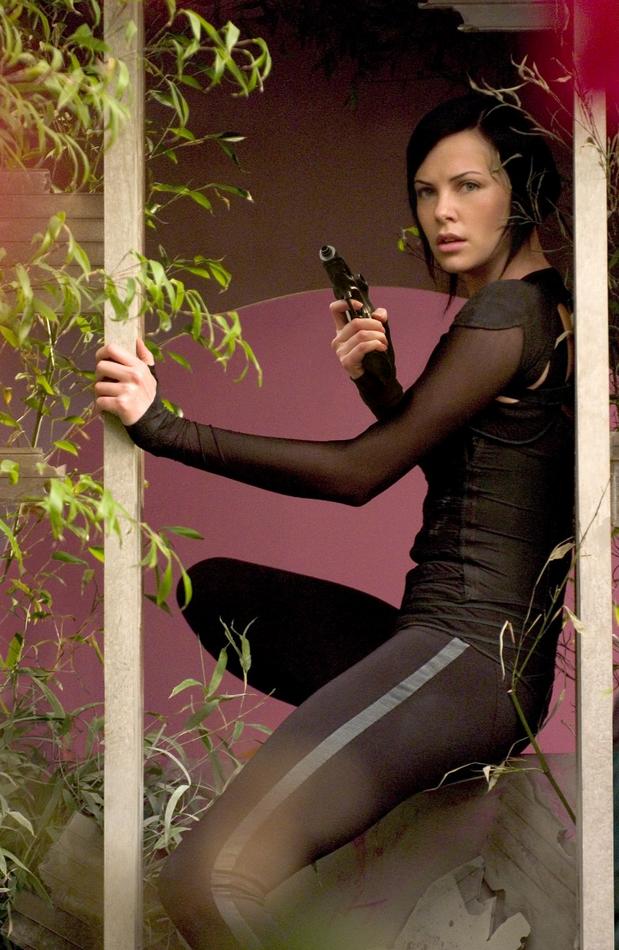
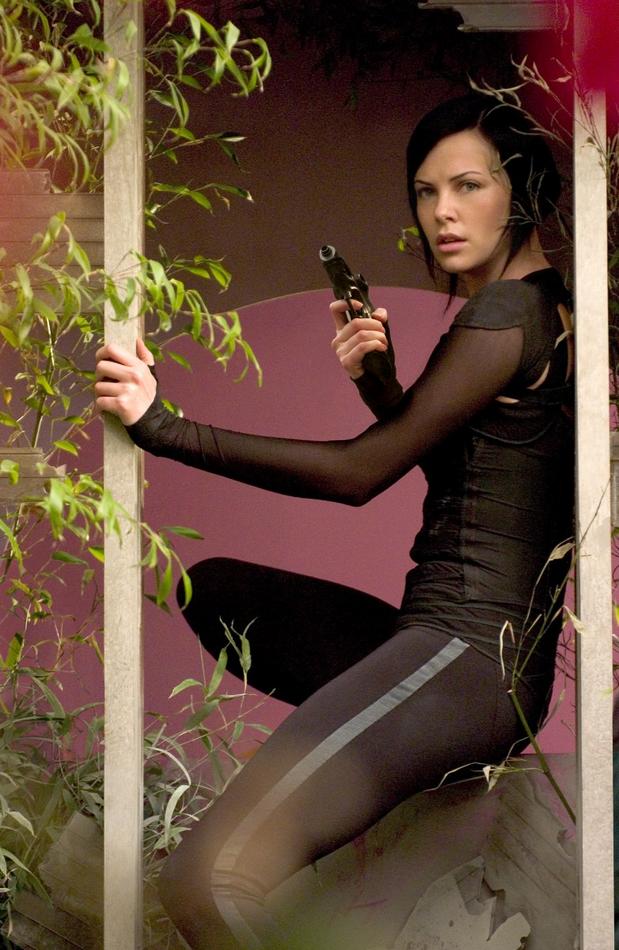
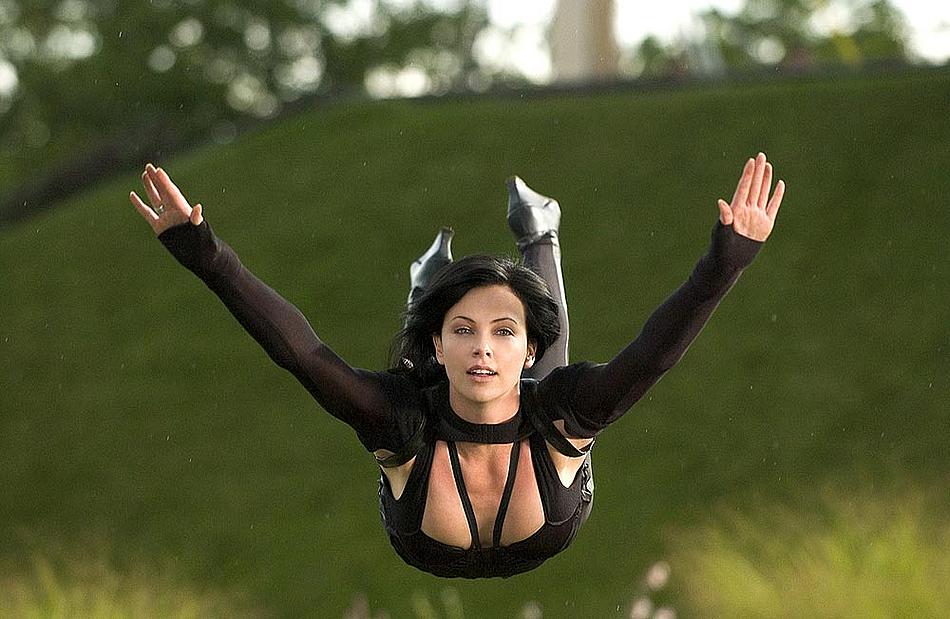
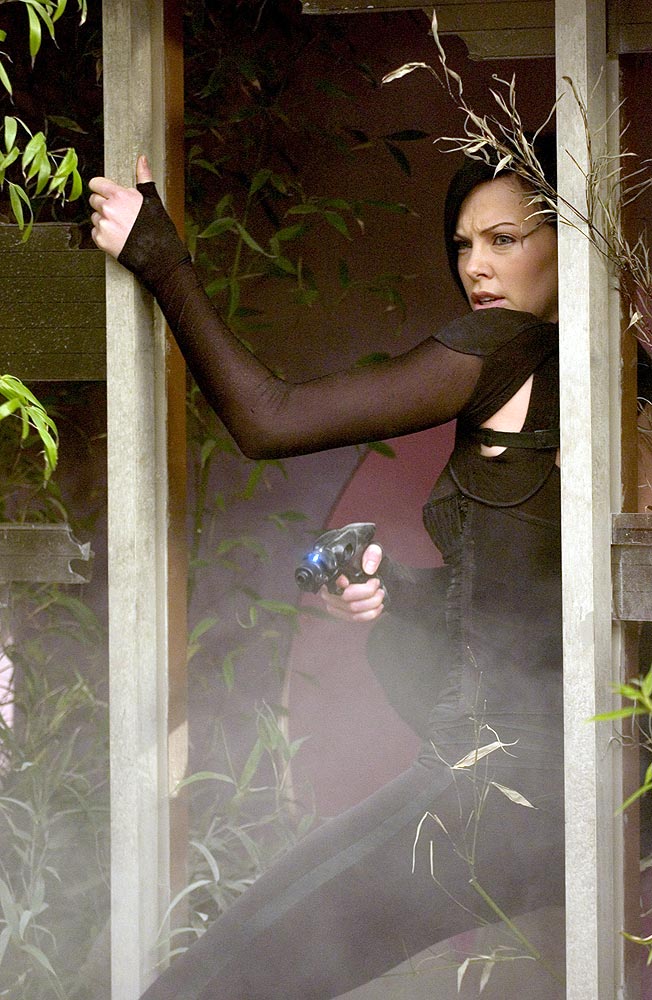
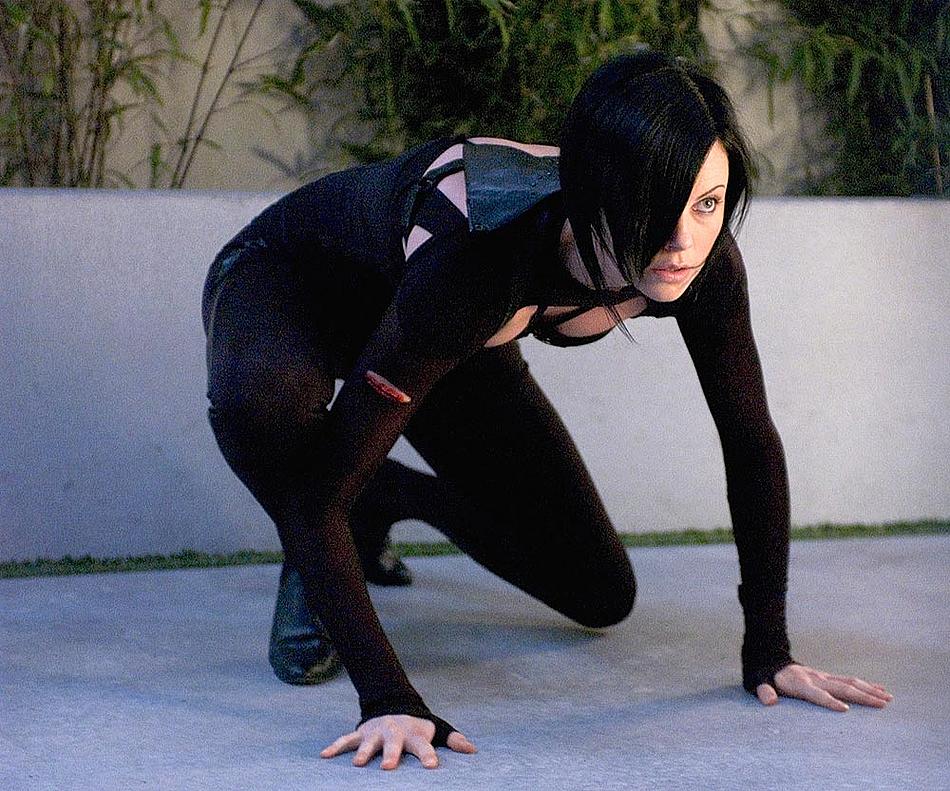
Theron also has the necessary gravitas for the role, and to my ears, even sounded like the character did. She has the tall, spindly appearance too, though the hair is definitely well wide of the mark, and her clothes are – inevitably – toned down from the “fetish wear on amphetamines” depicted in the series. That’s probably a necessity for the PG-13 rating, which also hampers the film in other ways – I’ll say more on that later. But as an adaptation in general, it’s so wide of the mark, you’d be better off ignoring this aspect entirely.
However, it would probably have been foolish to expect otherwise. Given the dense, impenetrable nature of the series, there’s no way a studio was going to spend $60m to make something like that, to open on 2,000+ screens across America. The storyline here is much more linear, logical…and, well, probably less interesting. 400 years after a virus wipes out 99% of the world’s population, Æon is a Monican rebel, fighting the powers-that-be in Bregna, the only city left. However, when her sister is killed by the authorities, it becomes personal, and she takes on a mission to kill Trevor Goodchild (Csokas). However, when she faces him, she finds herself unable to complete her task, and from there she discovers that life is not quite what it seems. Though the revelations are more likely to provoke a shrug than any actual surprise.
 The main problem, however, is Karyn Kusama, whose previous work, Girlfight was very good, but was an up-close and personal character study, about as far from the sprawling SF sensibility require here as imaginable. This, I think, summarizes part of the problem with Hollywood and “girls with guns”: they appear to think all action heroines are the same. Hey, you did a film about an inner-city schoolgirl who uses boxing as an escape valve? You’d be perfect to helm an effects-packed, post-apocalyptic, science-fiction movie starring a supermodel gone berserk! No. No. A thousand times no. They should perhaps have gone with producer Gale Anne Hurd, who does at least have an action/SF background, from her work on the Terminator series, Aliens, Hulk, etc. Kusuma seems out of her depth, sad to say.
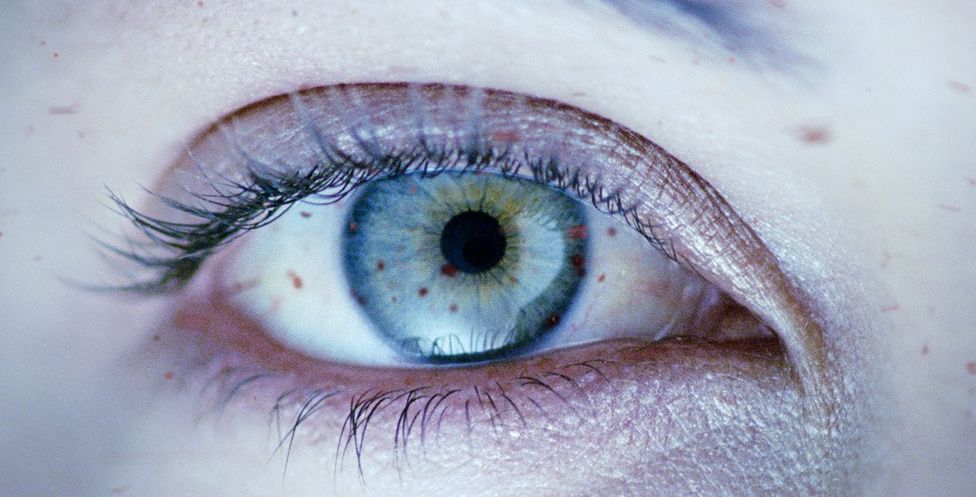
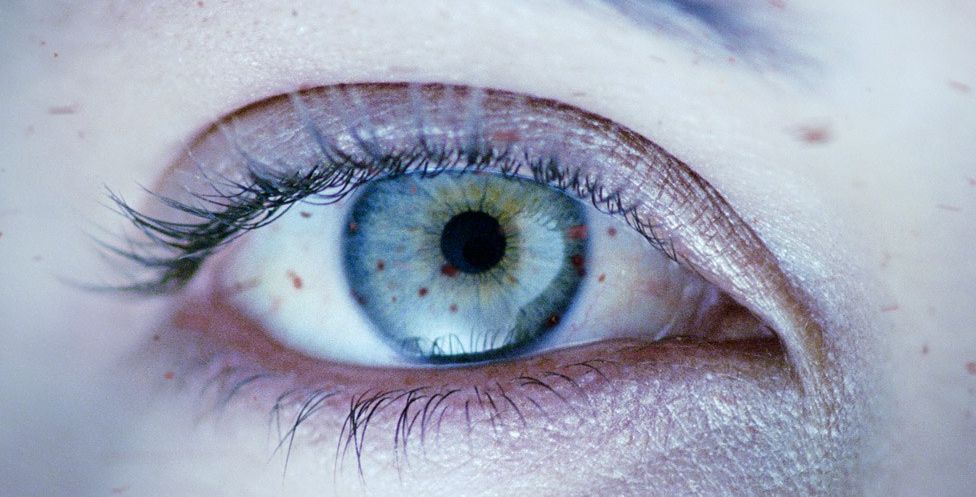
 There is some inspired gadgetry, such as Æon’s little explosive balls, which do tricks on command, and her eye, which can see chemical additives in a glass of water. There is also what is presumably a VR implant, letting her enter the 25th century version of a chat-room to get orders from McDormand. The hair-do on Æon’s boss is from the “through a hedge backwards” school of hairdressing, so it appears that customizable avatars were also wiped out by the pandemic. But like most of the costumes and set design, the futuristic infrastructure is generally well-realised.
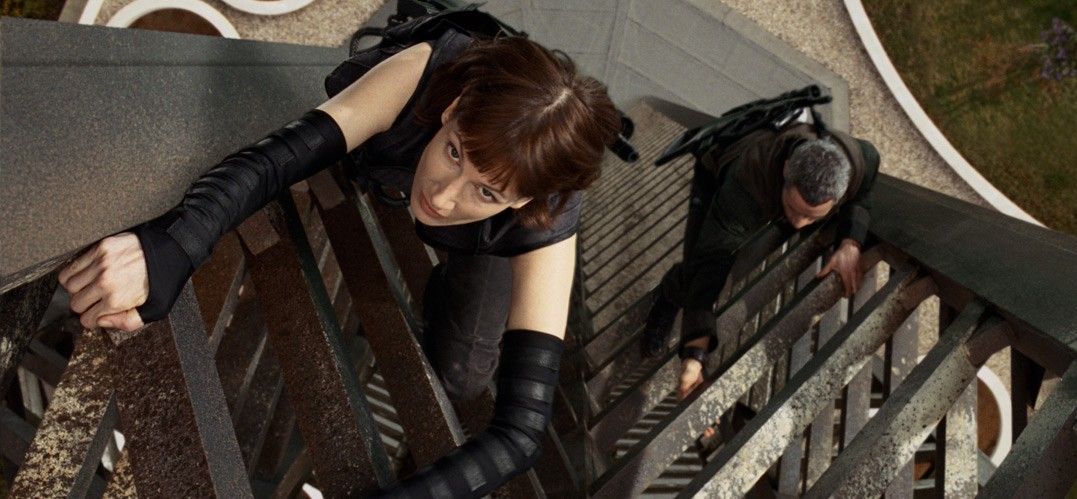
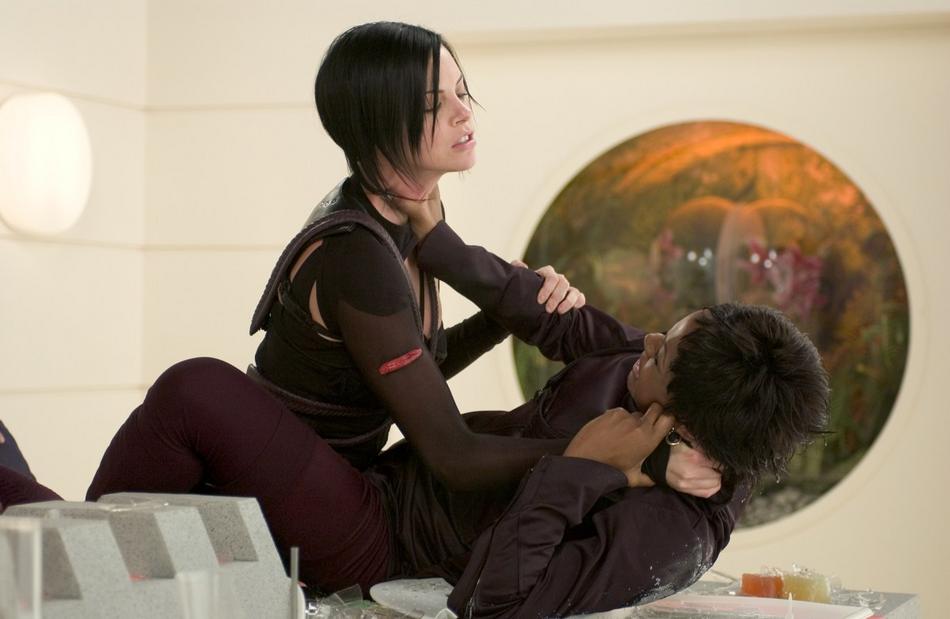
The supporting cast come off variably well. Okenodo (left) plays another rebel, with hands in place of her feet, a nice touch that deserved better exploration. “I like my shoes” is Æon’s response when asked why she doesn’t get the same surgery – that’s the kind of perfect, cool, cast-off line the film needs more of. Csokas, and Miller as his ambitious brother who will do anything to keep the status-quo, are solid; but McDormand and Pete Postlethwaite are both badly wasted in throwaway roles, the latter dressed to look embarrassingly like, as one review put it, a Hot Pocket.
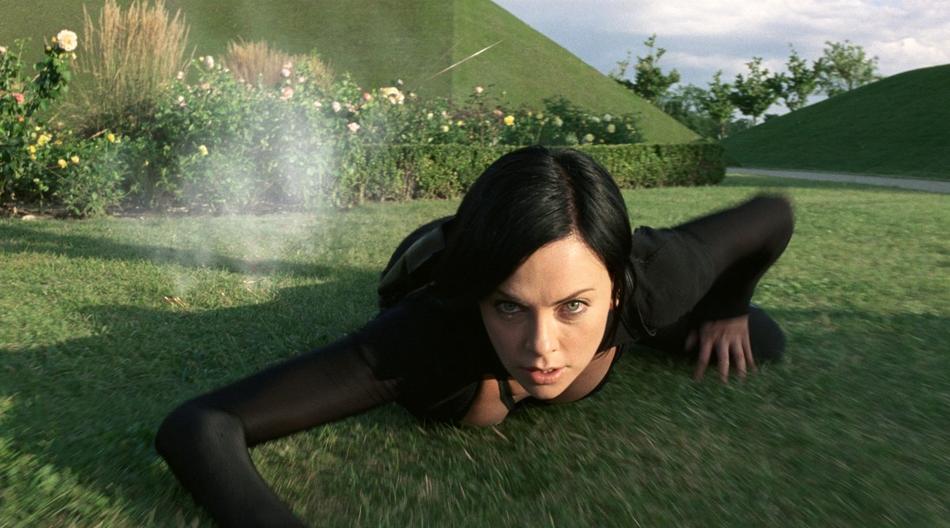
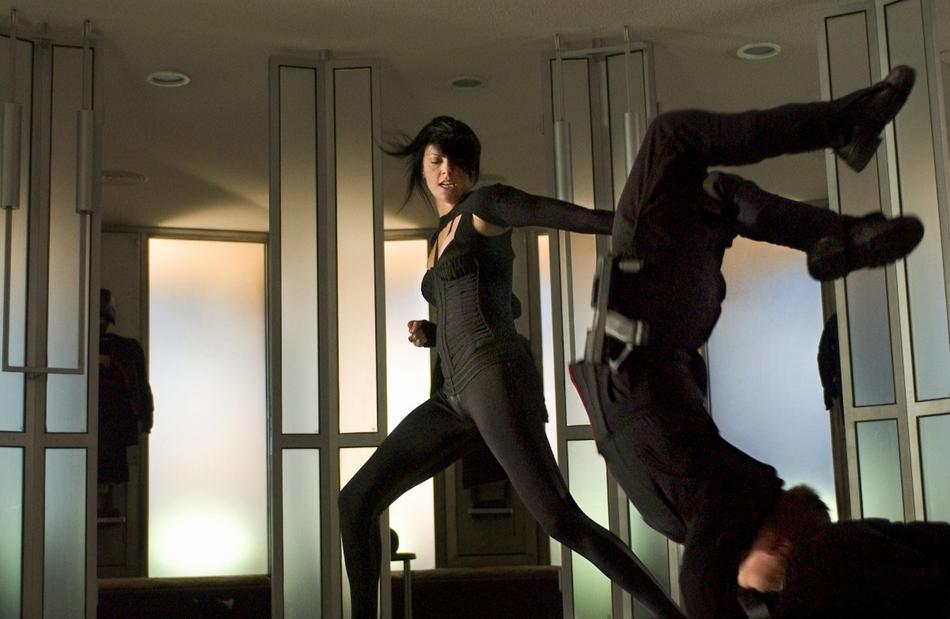
Then there’s the action. Save the final battle, which actually reaches the giddy body-count levels beloved of the animated series, they’re poorly-edited – second-unit director Alexander Witt helmed Resident Evil: Apocalypse, which has exactly the same problem. You’ve got a heroine to whom calm, athletic poise is apparently second nature: why not show her for longer than two frames, without cutting somewhere else? Hell, Theron got injured making this – not that you could tell by the time this went through the MTV blender. As a result, the fights pose no threat to the heroine, since you haven’t got a clue what’s going on: your average video-game causes more concern for the participants.
This brings me back to that PG13-rating, which means the violence doesn’t have any edge to it – at one point, Trevor Goodchild takes two bullets to the torso, and it barely slows him down. In the animated series, death was an ever-present occupational hazard for Æon, and the result had a dark, tough feel that is very much missing here. Instead, the tone is indistinguishable from any other heroic SF. The sexual tension is also much reduced – though keep an eye out for Theron’s real-life squeeze, Stuart Townsend, who cameos in the opening scene, passing a message with his tongue to our heroine. That, and Æon trapping a fly with her eyelash, are about the only moments truly recognisable from the series – and, truth be told, largely prove only that some things work better in animation.
That’s a fitting summary for the film as a whole. This is not the disaster you might expect from some reviews (hell, it’s a million times better than what we watched the next night, the woeful and inept National Treasure, which somehow managed to become a smash-hit). However, there’s no denying that this is a disappointing conversion of a classic series. Its failure at the box-office puts the final nail in a very mediocre year for the action heroine at the box-office, that staggered from bad to worse: Elektra. Domino. Æon Flux. Shudder. We’ll move rapidly on, and raise a glass of Christmas cheer, in the hope that our favourite genre finds some better success in 2006. When’s Underworld: Evolution out?
Dir: Karyn Kusama
Stars: Charlise Theron, Marton Csokas, Johnny Lee Miller, Sophie Okonedo
a.k.a. Aeon Flux




 Our once-favourite TV show walks off into the sunset – literally – and we are confirmed in our belief that it is very, very hard to keep interest in a series going past the third season. Especially if you’re creator JJ Abrams, who was missing, presumably making the very Alias-like Mission Impossible III; he didn’t even return to write or direct the season finale. It was, on the whole, a credible stab at trying up loose ends: Rambaldi, the question of whether Sloan was good or evil, Syd’s relationship with her mother, and the real identity of Vaughan, about to be revealed at the end of season four, when he and Sidney were in a car-wreck. This led into the main arc of the series, a hunt for ‘Prophet 5’, a shadowy organization intent on the usual things shadowy organizations want. As opposed to, say, the Alliance, the Covenant, K-Directorate, SD-6, etc…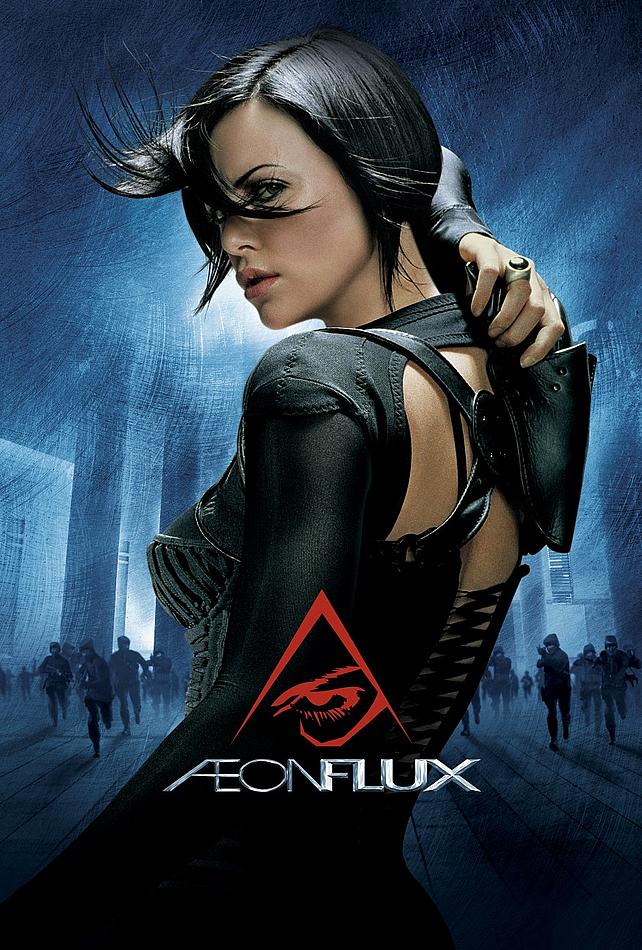

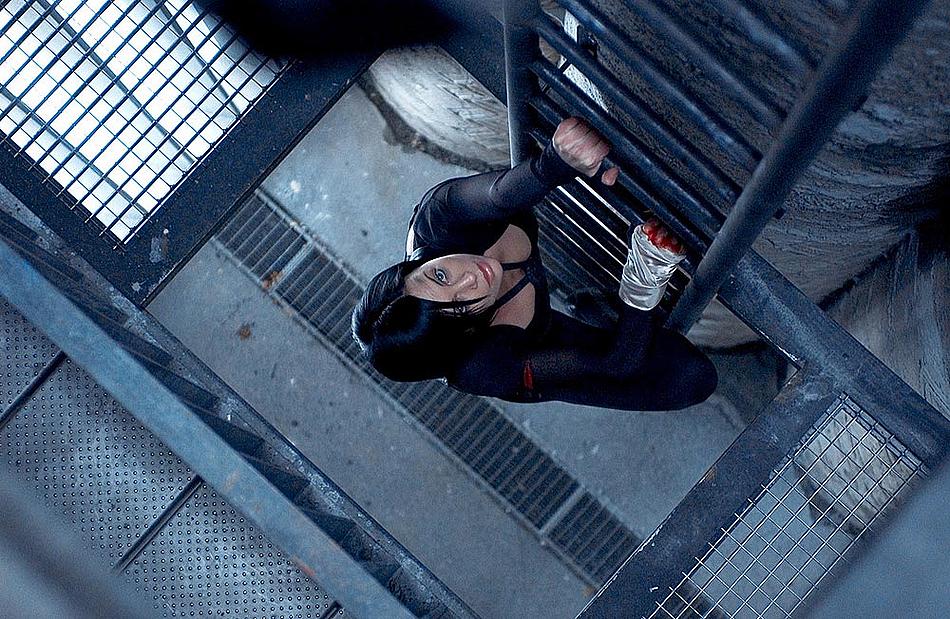

 I went into this with low expectations, based on some scathing reviews and the lack of Ryuhei Kitamura, whose directorial style made the first such a joy. I’m pleased to report then, that this surpassed expectations, with some nice imagination and a bevy of action heroines (including Kuriyama, whom you’ll know as Gogo Yubari from Kill Bill, Volume 1), as well as the expected high body-count. It follows on loosely from the original, but heads in a slightly different direction; our heroine is still intent on her mission, but is diverted by a wandering samurai, part of a rogue gang, who reminds her of Nachi, her childhood friend she had to kill at the opening of the original film.
 It’d probably be best to watch the original film, Poly Matrix, immediately before this, as otherwise, you’ll be kinda hitting the ground running. After those events, Ross Syllabus and “Third” [a model of android which can reproduce] Armitage have set up home with their daughter, who doesn’t know her mother is anything by human; meanwhile Ross operates under an assumed name as a security guard. However, an incident turns him into an unwilling spokesman for robot rights once again, and when he is sent to Earth as a Martian delegate, his daughter Yoko is kidnapped by a faction seeking to reverse his vote. It’s time for Armitage to put aside her chores and kick butt.
 This TV series was Gene Autry’s idea; he wanted to give little girls a western star of their own, and created a show based on the character of Oakley, the most famous sharpshooter of all time. In his version, she lives in Diablo with her brother Tagg (Hawkins) and keeps the town safe along with deputy Lofty Craig (Johnson) – the sheriff, Annie’s uncle Luke, was somehow very rarely around… It ran for 81 episodes from January 1954 to February 1957; two DVDs, with five first season stories on each, have been released by Platinum – you can get the box set of both for $5.99, which is a steal.
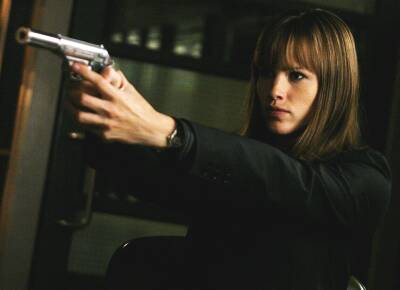 Where is Sydney, and what have you done with her? We might have been forgiven for uttering this cry at the end of season three, which exited not with a bang, but a whimper. “We need to talk.” That’s pretty much what Jack said to Sydney after she discovered, apparently, that her entire life had been a CIA operation. This was hardly a surprise, if you remembered Project Christmas from earlier on, Jack’s plan which tested first-graders – including his own daughter – for spyworthy attributes. The news that the show wouldn’t restart until January 2005 thus provoked little more than mild disappointment.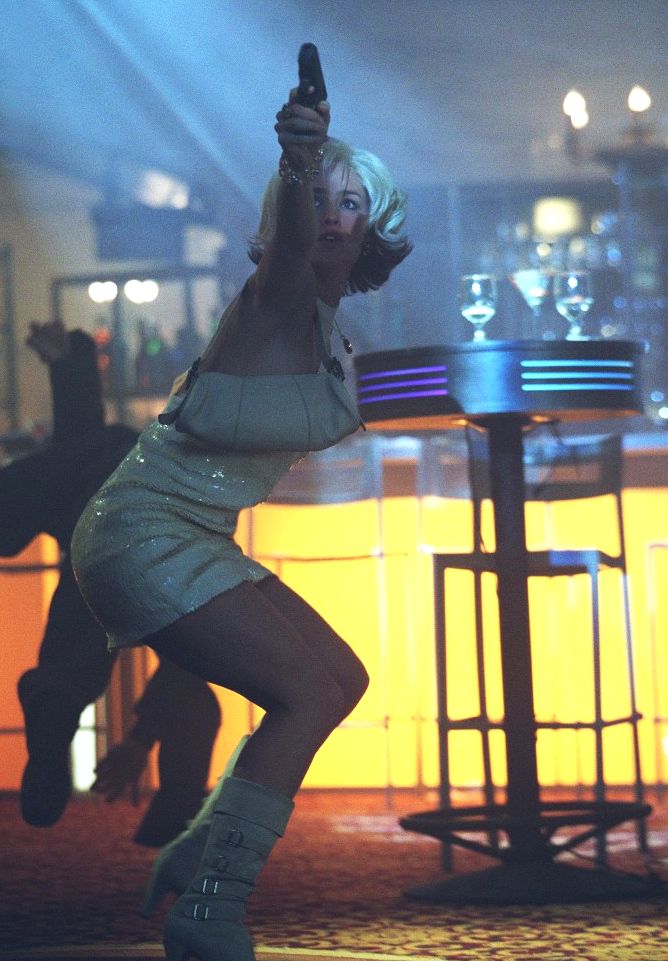
 I’m still trying to work out what the title actually means; it certainly bears no relevance to the film. More generaly, the biggest point of interest is its similarity to Blade 2, which took the basic concept (hunt for the carrier of a virus that turns its victim into bald, psychotic bloodsuckers) and did a lot more with its Eastern European setting. Henstridge is Delon, a policewoman who has her partner dismembered while they search a house, and Lambert leads the backup team – they follow their target into some vents which connect to an old prison, and where they rapidly become the prey. All this is set just outside a post-apocalyptic (plague, specifically) Boston – though the cop cars have ‘POLICIA’ on them. There’s also a subplot about Delon’s son, and a black-market passport she bought for him, which is of no significance whatsoever, and is probably there only to get the running time up to feature length (and at 76 minutes, only barely!).
 Shot in what looks like four rooms, it’s up to director Pyun to make the most of a higher-profile cast than he usually manages – unfortunately, he fails, though I liked the snap-zoom technique applied to bullet hits. This is straightforward ‘spam in a tunnel’ cinema, with little tension, character, or anything else that might elevate this above the mundane. Henstridge, bless her, does what she can, and comes over like a grubby version of Lara Croft; her undeniable action heroine potential has so far been wasted in stuff like this or the lame She Spies. Partly shot in the capital of Herzegovina, Mostar, the “just-bombed” look is likely genuine, from a conflict that only ended the previous year; it may be exploitative, but at least Pyun brought employment to the locals. I imagine he’s now scouting locations in Kabul and Baghdad.
 Cutting to the chase; the action is excellent, with several sequences which would be fitting climaxes to any other movie. When you see this one’s finale, you’ll realise why they’re not: Azumi’s master is captured, and an entire town of sword-wielding rogues and assorted scum is in her way, plus villain #1, a rose-wielding psychopath who dresses in white (Odagiri). Settle back, and pass the popcorn. While the swordplay itself is mostly nothing special (save one Very Special decapitation), Kitamura captures it beautifully, the visual highlight being a full circle around two characters – vertically. The sound is also fabulous; you could close your eyes and just listen to the battles.
 As a rule, we don’t watch dubbed anime, finding it a painful experience; unfortunately, this version, which compacts four OAVs into a feature, is
  Supermodel-thief Mimi (Melanie Marquez) steals an artifact from a Chinese temple, then heads to the Philippines, via Hong Kong. HK and Chinese cops (Khan & Yeung) are on her tail, as is former partner Ko. This is, frankly, a mess. Yeung apparently does no detective work; Khan goes on a date to an illegal street fight; they’re supposedly partners, but only share one scene; and what