




★½
“So glad to have missed the seventies.”
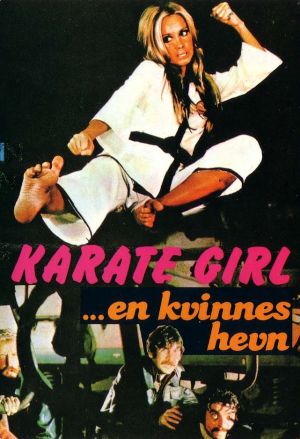
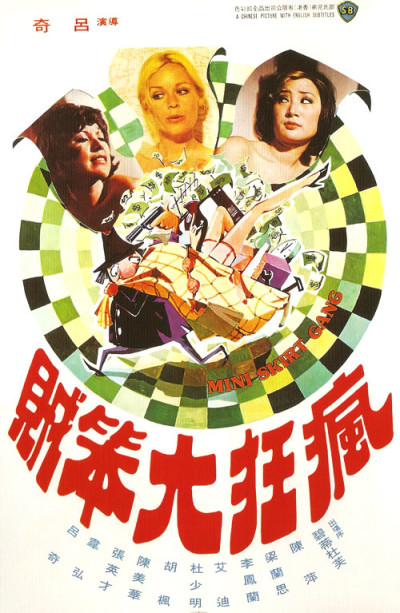 Dear god, this is awful. The only reason this 1974 film manages the dizzy heights of 1 1/2 stars, is the finale, which is actually a pretty decent burst of comedy action, highlighted by the heroine receiving inspiration from a poster advertising a Peking Opera production of the Mulan legend. Up until then, it’s a rancid piece of film-making, wasting the talents of those involved. Well, the actresses anyway, since Lui Kei provides no evidence, in either his direction or script, that there was any talent present to begin with.
The gang in question are five female pickpockets, led by Ra Liao Liu (Danish actress Tove, whose presence in Hong Kong at the head of these thieves is never explained). When engaged on a job, they cross swords with a pair of bumbling male pickpockets, and inexplicably decide to join forces, even though the men are incompetent perverts. Cue the kind of behavior which would get you arrested these days, played by the movie in attempts at comedy which fall utterly flat. Man, if this is really what the decade was like, it must have been hell to be a woman. The rest of the film is filled with similarly “amusing” high-jinks, along with other scenes which serve little or no dramatic purpose, like the one where the good heart of Ra gets her deceived by a pair of con women, or an extended sequence where the whole gang pretend to be hookers. Oh, hold my aching sides, for I fear they may split.
Eventually, what passes for a meaningful plot finally shows up, as the gang rescue a woman from being forced into prostitution. Of course, the morality on view is a bit dubious, when their rescuee is then made pregnant by one of the men, who refuses to ‘fess up until he is made to believe he had sex with a leper. Yes, the laughs just never stop start in this Shaw Brothers production. Subsequently, her pimps come after them, and that’s what leads to the inadequate redemption of the big final battle, as well as an ending which offers no resolution, consisting entirely of the gang yelling out “We are the weird and crazy thieves!” Maybe that line lost something in translation from Chinese.
I thought my loathing might be strictly personal, but the first review I found called it, “The worst Shaw Brothers film I’ve ever seen, and I’ve seen over 200 of them.” So, not just me, then. Any screen presence Tove and her co-heroines possess, is almost entirely countered by the crude and largely incompetent approach, resulting in a mix of comedy and sexploitation that is neither funny nor sexy. Maybe times have changed, but if this ever seemed other than creepy, change can only be a good thing.
Dir: Lui Kei
Star: Birte Tove, Chen Ping, Nancy Leung, Lee Fung-Laan
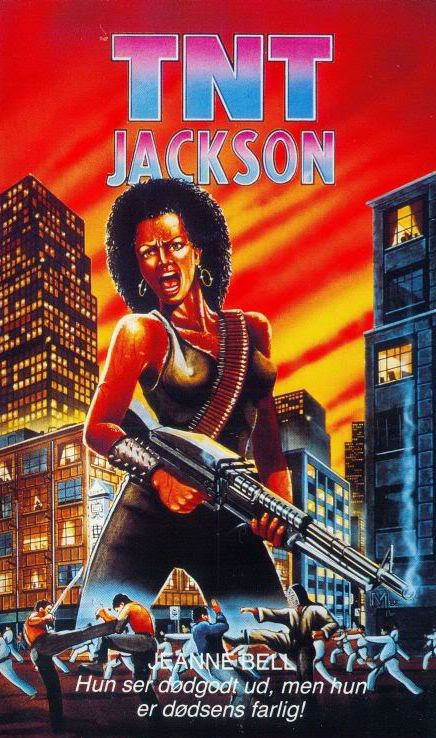

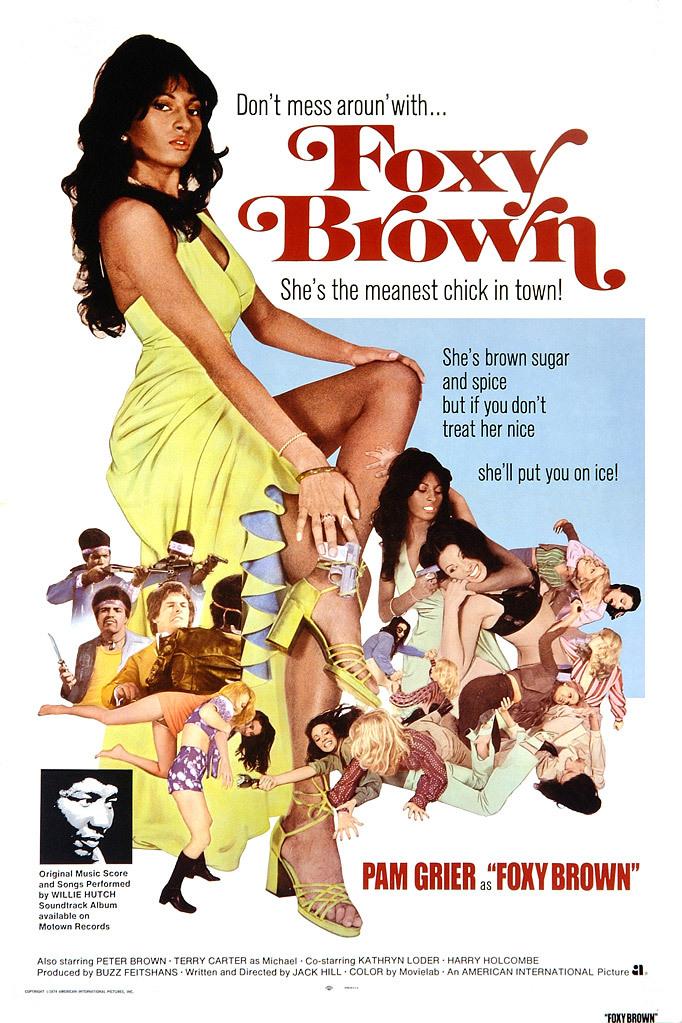
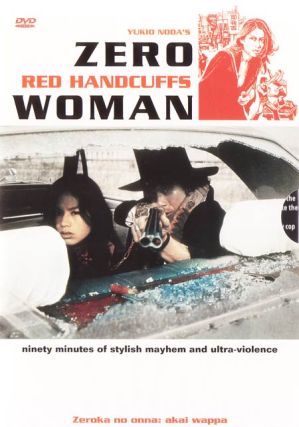 When the series started in 1974, it originally appeared to be trying to take on the Female Convict Scorpion series at its own game – both were inspired by Toru Shinohara manga series. However, going by the fact it took more than two decades for a second entry in the series, I can only presume the commercial returns weren’t anywhere near as strong. This starts off well, with policewoman Rei (Sugimoto) luring in, and then blowing away, the man responsible for torturing and killing another woman. Turns out the perpetrator was a diplomat and in the resulting scandal, Rie is sent to jail. Her chance at redemption comes when a gang of thugs stumble into the kidnapping of the daughter of a politician (Tamba): to avoid a scandal, Rie is offered a pardon if she infiltrates the kidnappers and kills them all. Initially, all goes to plan, with the first member taken out quickly, but it soon becomes clear the other members are rampaging psychos, and the situation rapidly spirals out of control, to the point where the politician yanks his support and orders the deaths of everyone, in the name of damage limitation – including both his daughter and Rie.
 This movie acquired some notoriety last year when a clip of a villain’s death went viral as “Worst death scene ever”, even though it had been edited and had extra audio added for “humourous” effect. Certainly, there’s plenty to mock in this 1974 Turkish revenge flick, which plays like someone heard second-hand descriptions of Thriller: A Cruel Picture and decided the world needed a PG remake. However, while aspects of the execution are without a question shoddy and laughable, it has an interesting story, briskly told, and with a good central character.
 This was also released in a hardcore version as Black Lolita, but I’m not sure if that was 3D or not. Certainly, the DVD delivers about the worst such attempt I’ve ever seen. It’s in color, but also attempts the red/green method (glasses very early, and the only thing to be said for them is, they stop you seeing the film, which on the whole, is probably no bad thing. Lolita (Love) decides to team up with an air-stewardess and a yoga instructress to take down the local Mr. Big, who goes by the name Buddha – even though about all he shares with the Enlightened One is being Asian, since he’s neither fat nor pacifist.
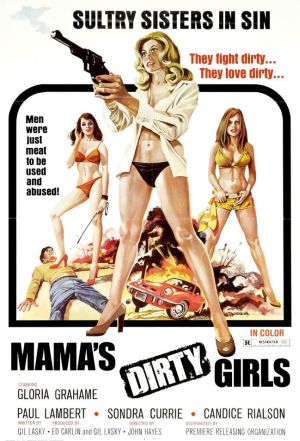 While the title suggests something inspired by Corman’s Big Bad Mama, this is a contemporary tale which, in some ways, is actually closer to Faster Pussycat. It has a great deal more nudity, right from the opening scene in which Becky (Rialson) stares into a mirror, and puts on her bikini-top… very… slowly… However, the titular Mama (Grahame) is nowhere near the level of Varla, and the movie feels more like a pale imitation, despite the additional breasts.
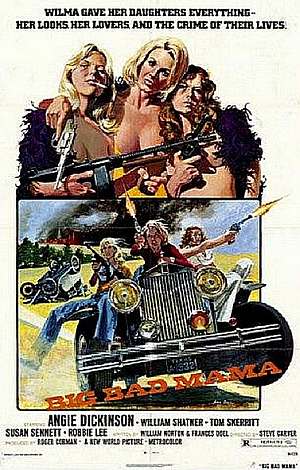 With B-movie entrepreneur Roger Corman getting honoured at the Oscars earlier this month, it seems appropriate to pop on one of his classic productions, starring Dickinson, who was just about to become a star in one of the first shows with a female law-enforcement lead, Police Woman. The truth is, however, that this doesn’t have much more to offer beyond Dickinson: while she holds the film together with her steely resolve, and proves that sexy doesn’t stop at 40, the rest of it offers nothing as substantial. It’s a basic enough plot: she plays Wilma McClatchie, a single mom bringing up her two teenage daughters in Depression-era rural America. They fall into a life of crime, in part because they happen to be trying to cash a fraudulent check in a bank when it gets robbed by Fred Diller (Skerritt). They also team up with gentleman con-artist William Baxter (Shatner), but things go awry when they pull of their last big heist, kidnapping the daughter of a millionaire.
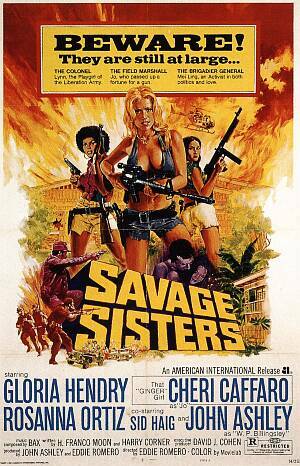 This Philippino phlick doesn’t quite have the courage of its convictions, and is never quite sure whether it wants to be sexploitation or serious drama. The poster promises a lot more than the film actually delivers, which is a shame, as the performances from the three leading ladies are nicely judged – as well as refreshingly multicultural. Two of them (Caffaro and Ortiz, one Caucasian, the other “Oriental”) are sent to prison, but when their torturer (ex-Bond girl Hendry, who initially comes over almost like a Black Ilsa) discovers they may know the whereabouts of a million bucks in cash, she helps spring them, and the trio head off, along with a local hustler (Ashley).