




★★
“The hole story”
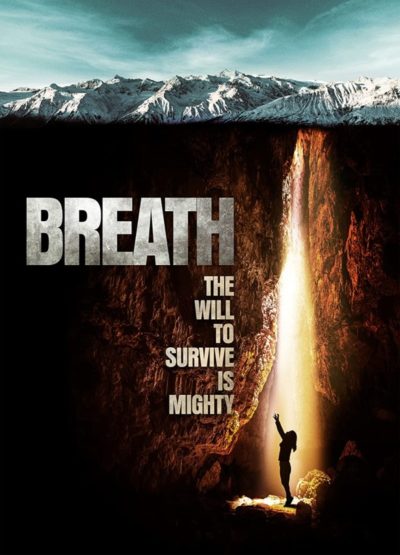 Lara Winslet (Daigh) is a vulcanologist, who is on the side of a mountain in Italy, taking samples, when the ground gives way beneath her, and she falls into an underground pit, damaging her leg in the process. Help isn’t going to come, so with limited resources (not to mention a count of functioning limbs that stops at three), she is going to need to cope with the situation on its own, and figure a way out of what could easily become a fatal scenario. Meanwhile, on the outside, her father (Cosmo) is becoming increasingly frantic. This is erhaps because if Lara doesn’t come back, he’s going to be stuck permanently with her kid (Di Mauro). That would be my reaction, anyway…
There may be ways to make this kind of thing exciting. I imagine 127 Hours must have been able to manage it, though not having seen it, I can’t be specific on the techniques it used. Breath could have used some help, as there isn’t a great deal of adrenaline pumping through the veins of this situation. To try and generate some, it keeps flashing back to sequences set earlier and off the mountain, covering things like Lara’s affair with fellow scientist Adam (Chupin), or her more or less abandoning her daughter for the sake of career advancement in the name of scientific discovery. While this does provide some fill-in colour for her character, we eventually go back to her sobbing in a literal pit of despair.
I can’t really complain about the performances, and the photography does generate a decent sense of claustrophobia. I get the message that there are times when you can’t rely on anybody else, and have (again, more or less literally) to pull yourself up. Though I tend to feel that most life-threatening situations like this require more than a stern self-talking to, in order to get out of them: that is, however, what we get here. Lara’s leg seems injured only when necessary to the plot, and while being buried underground does bypass the usual cellphone issue, I can’t help wondering why she didn’t lob it (and its GPS) out of the pit – the hole wasn’t that deep. Or eat the nutritious, if not delicious, snake sharing it with her.
In the end, it’s just too simplistic a story: it’s almost binary, with the heroine either being in the pit or out of it. A more stepped approach, e.g. overcome the issue of her leg; figure out the water situation; try and attract attention, etc. would perhaps have done a better job of sustaining interest. Hell, even her background as a geologist never comes in useful, and it could have been anyone ambling around that mountainside. There’s a near-complete lack of ingenuity needed. In the end, it purely comes down to brute strength, as to whether or not Lara can make it out. Dare I say it, this was hole-y unremarkable.
Dir: John Real
Star: Rachel Daigh, James Cosmo, Neb Chupin, Alba Di Mauro
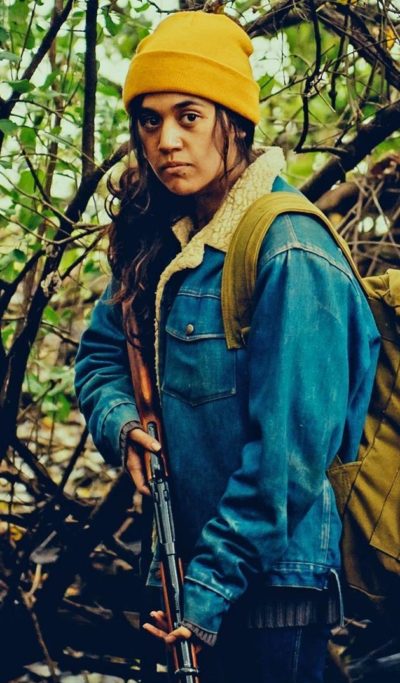 Margo Crane (DelaCerna) has been brought up by her native American father, since her mother walked out on them several years ago. Under his guidance, they have become self-sufficient, and Margo has become a crack shot. However, her creepy uncle ends up having sex with the teenager, an incident for which she gets blamed, ruining her life. She resolves to apply her shooting skills on him, only for the resulting incident to become a tragedy. Margo strikes out on her own up the Stark river, in search of her absent mother. Doing so, she meets a variety of people, then has to try and reconnect with a woman who now has her own life, one not necessarily helped by the unexpected arrival of a teenager.
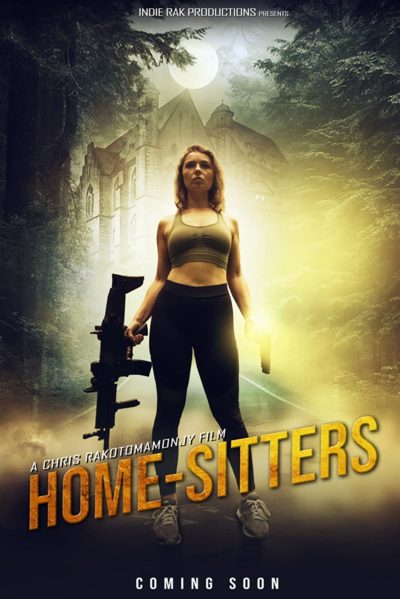 June Williamson (Guillot) is an out-of-work actress, who just broke up with her boyfriend, Oliver (Vernet), and is behind on the rent to her creepy landlord. An unexpected lifeline arrives in the shape of a very well paid gig, house-sitting a large house, deep in the countryside. Things get annoying when Oliver and his asshole pal Marcel (Thevenoud) show up. They get worse when Oliver admits they had an accident on the way, and there’s a body in the car boot. A stare of “terrible” is reached when the body vanishes. And we reach peak awful, when the house comes under siege from Wolfströeme (Bary) and his heavily-armed gang of mercy, who are looking for…
 This is another entry in the sprawling Kurtherian Gambit universe, which must have well over a hundred books in it, by a slew of different authors. I’m gradually coming to a couple of conclusions: a) it’s a very loosely-tied series, and b) the quality varies. When you give your book a title like this, evoking the spirit of Judge Dredd, you are setting certain expectations. Unfortunately, this is a book which fails to meet them, with a heroine who never achieves the level of intensity necessary to live up to the series title: Judge, Jury, Executioner. It has reached 16 volumes, which suggests either there’s a market for it, or the author has too much time on their hands. No prizes for guessing my opinion.
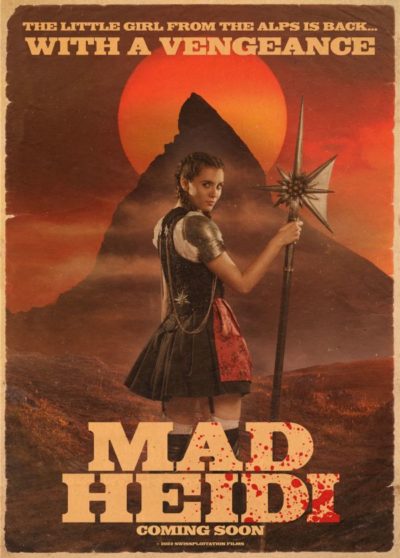 I’d been aware of this movie for some time, through its innovative crowd-funding approach, which raised $3 million to cover the cost of production. After COVID hit, there were doubts it’d ever see the light of day, but here it is: the first “Swissploitation” film [If not quite the case, it’s certainly the first one with a seven-figure budget, as well as the first Swiss movie covered on this site] And it’s not bad: if you’re familiar with similarly crowd-funded spoof, Iron Sky, this is along similar lines of broad parody. It covers almost every genre of cult from kung-fu films through Starship Troopers to women-in-prison films, e.g. there’s an Asian prisoner
 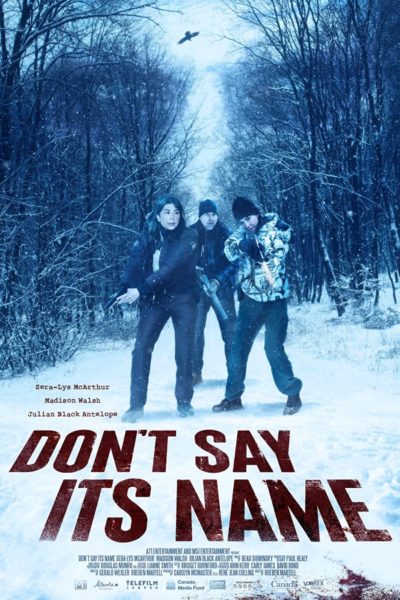 I was going to start this with a warning to try and avoid reading other reviews of this before watching it, because it felt as if, without exception, they all included spoilers for a significant plot-point, that wasn’t actually revealed until deep into the movie. Heck, the IMDb synopsis does it too. However, having sat through the entirety of this bland piece of indigenous folk pseudo-horror, all I can say is “Meh.” You do you: it’s probably not as if it’s going to have much impact, because it’s hard to spoil something which already smells past its best before date.
 This is briskly entertaining, and feels like a female version of Blade, with an extra good-girl vampire as a bonus. Yet it’s definitely best not to pause and think about some aspects, because the story will likely fall apart under close scrutiny. Matters are complicated by a flashback-heavy structure, on occasion multiple levels deep, and an apparent desire to overstuff proceedings, at the expense of some elements. That said, it hangs together and is entertaining, mostly thanks to a likeable pair of lead performances. There is a decent quantity of hand-to-hand action, even if some of it does leave a little bit to be desired on the quality front.
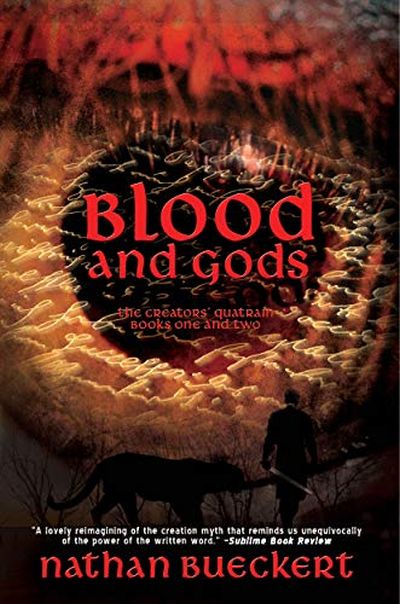 What I’ll remember about this one is the arc. Not so much of any character, more as to whether or not this would qualify for the site. The story began on solid enough ground, but around the end of the first volume (this omnibus contains parts 1+2), it plummeted well below the threshold needed. I almost gave up reading at that point, but persisted, and the book did rebound with an extended, gory finale in which the heroine and her ally took on what felt like an entire city. Okay, it’s back in. But I’m not happy about it, for reasons I’ll get to in a bit.
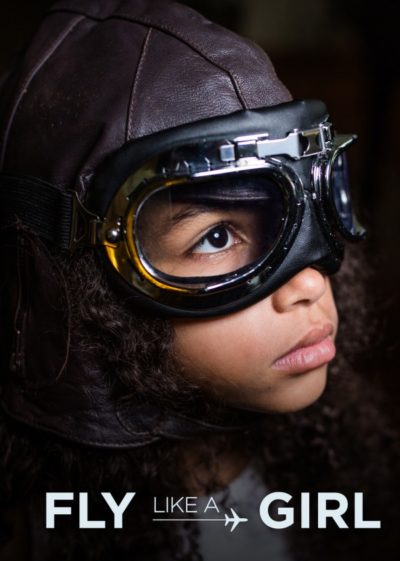 This documentary is about the field of women in aviation, combining archive footage with interviews, covering the range from those who aspire to fly (giving their Lego aircraft lady pilots!) to those who have been into space, fought combat missions in the Middle East or dodged death in aerobatic displays. There’s not any particular structure to proceedings, choosing instead to bounce around between its topics and subjects. This helps keep things fresh, yet at the cost of any narrative beyond, I guess, “Women can do anything men can”? Which, to be fair, deserves saying in the aviation field particularly: how much strength is needed to handle a joystick?