



Literary rating: ★★★½
Kick-butt quotient: ☆☆
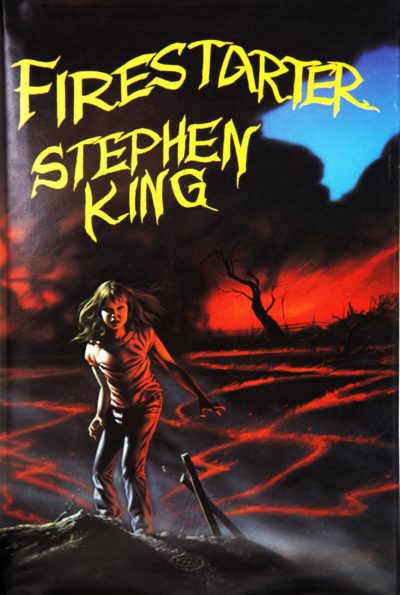 Having watched both versions of the film, I followed up by reading the book on which they were based. Despite my general fondness for horror, I haven’t read very much Stephen King: this is only the second novel of his, after Salem’s Lot. First thought: at 576 pages in the mass paperback edition, it’s quite a door-stopper, and you can see the problems in adapting a work of that size into a movie. Inevitably, a lot of the detail and nuance is going to be excised. There’s no doubt, the 1984 version is more faithful; the 2022 adaptation takes the basic concept of a young girl with pyrokinetic powers, on the run from the government with her father, and does its own thing, more or less.
How you feel about those different approaches, probably depends on how you feel about the original book. Despite the length, it wasn’t a chore; I was typically reading 25-30 minutes a night, and never felt like it was a burden. King had a relatively straightforward style, that’s generally easy to read. The novel does, like the 1984 film, move back and forth in the time-line. It begins with Charlie and her dad trying to escape the experimental government program which spawned them, only later filling in how they got to this point – both the events of that program, and the subsequent surveillance, leading to the death of her mother. This, to me, worked better on the page than the screen, where it ended up becoming too convoluted.
You get a good deal more background on “The Shop”, the murky federal group behind everything, and its employees. In particular, a good portion is told from the perspective of near-insane operative, John Rainbird, Here, he’s very badly disfigured, the result of a friendly-fire incident in the Vietnam War, which seems to have helped push him over the edge. His madness is considerably more apparent in the book, along with the dubious nature of his psychological attachment to – almost dependence on – Charlie. The novel also delves deeper into Charlies’ internal struggle for self-control, fighting to keep hold of her talent, rather than letting it rule her.
While both film versions end with her fiery escape from the shop, albeit in radically different ways, the book has a fairly lengthy coda. [spoilers follow]. This covers Charlie’s return to the Manders farm, where she finds sanctuary once more. Inevitably, however, word seeps out and the Shop pay a visit, only to find their target already left. The novel finishes with Charlie arriving at the offices of Rolling Stone magazine, ready to tell her story. From a 2022 viewpoint, this had not aged well, with that publication now a de facto mouthpiece for the establishment, with as much counter-culture credibility as Teen Vogue or Buzzfeed. However, this remains an entertaining read, and if such a talent ever existed, you sense the events it depicts are quite plausibly how things could go down. Here’s hoping we never find out.
Author: Stephen King
Publisher: Pocket Books, available through Amazon, both as a paperback and an e-book
Standalone novel.
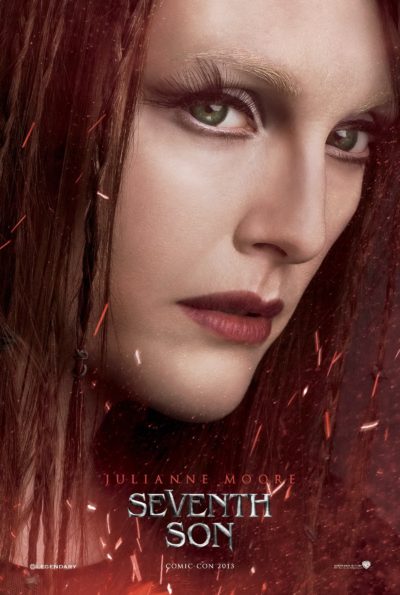 Despite generally terrible reviews, this is definitely not, by any means, a terrible movie. It is, admittedly, a fairly generic sword-and-sorcery flick, in which a hero must rise from a common background to save the world from a terrible magical threat. But it looks spiffy – the hundred million dollar budget is on the screen. If the central performance has its issues, there’s enough around the fringes to make both for an adequately entertaining experience, and also merit the existence of a review here. In particular, the main antagonist is the evil witch Mother Malkin (Moore). She escapes from the prison to which she had been confined years ago by Gregory (Bridges), now the last survivor of his order of witch-hunters.
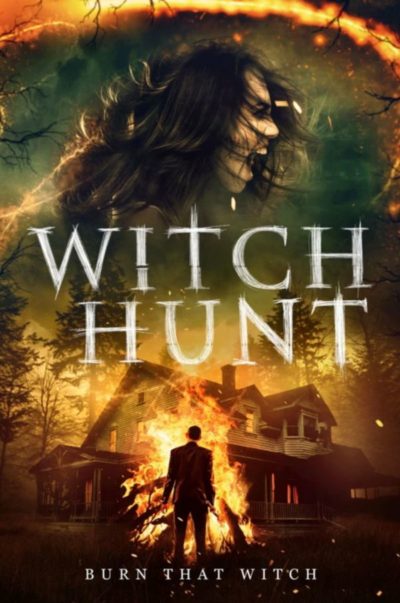 This is set in the everyday world – but with one major tweak. Witchcraft exists, and has been outlawed in the United States by the 11th amendment. Now, government agents from the BWI seek out witches, using tried and true methods from the middle ages (the “sink test” is exactly what it sounds like), and punish those found or suspected to be practicing witchcraft. But those opposed to this have set up an “underground railroad” to smuggle the targets over the boarder to Mexico. Teenage girl Claire (Adlon) is part of one such family, courtesy of her mom Martha (Elizabeth Mitchell); Dad is out of the picture. Claire is rather ambivalent about their activism, since she just wants to fit in at school. But the arrival of Fiona (Cowen) and her little sister, siblings whose mother was burned at the stake, forces Claire out of her professed neutrality,. Especially as the investigation of the unrelenting BWI Agent Hawthorne (Camargo) gets closer to home.
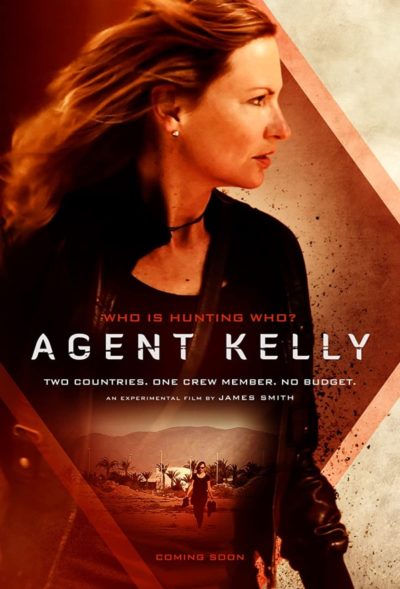 Seeing this described as “an experimental thriller,” set my alarm bells ringing. I’ve seen enough “experimental” film in my time, to realize it’s typically a code-word meaning “incoherent rubbish.” The above rating is thus partially a reflection of my relief that this did not fall into that category. You still, very definitely, have to manage your expectations here. If you go in expecting a slick, Jason Bourne style adventure, you will be sorely disappointed. For this is a no-budget entity, largely guerilla filmed by a one-man crew, and with a lead actress who has no real experience. It has already significantly surpassed all my expectations, simply through not being a total disaster.
 This is likely an admirable effort in terms of its budget. The IMDb estimates it costs $100,000 and it looks like Price squeezed every cent – or, since it’s British, penny – out of that. To give you some idea, also per the IMDb, “Sections of the film were shot during the Covid-19 United Kingdom lockdown with just the occupants of the director’s flat. The director’s girlfriend doubled for any actors and WhatsApp voice notes from cast members were used for any extra lines of dialogue.” This is the kind of thing that can only be respected. Which is why I feel a little bad about having to give this an underwhelming review, because… truth be told, it’s kinda boring.
 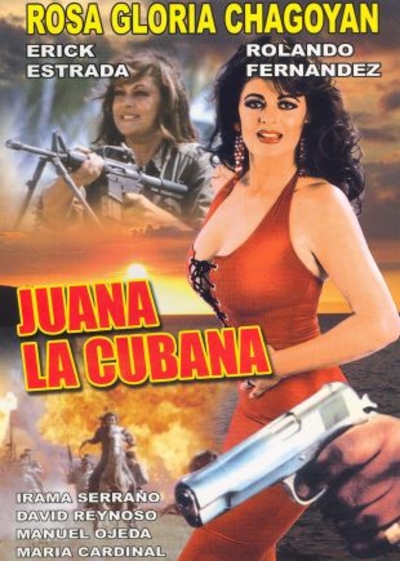 A long time ago – 17 years or thereabouts! – we reviewed another Chagoyan/Fernandez production,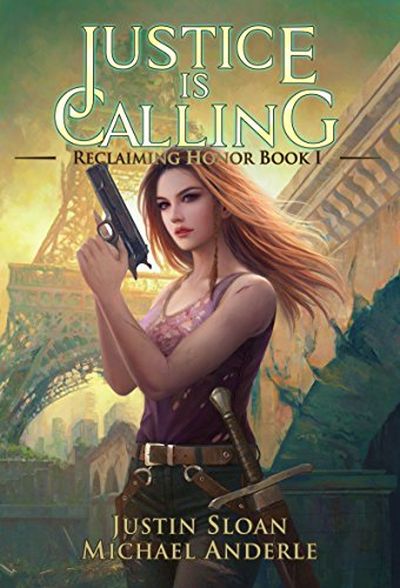
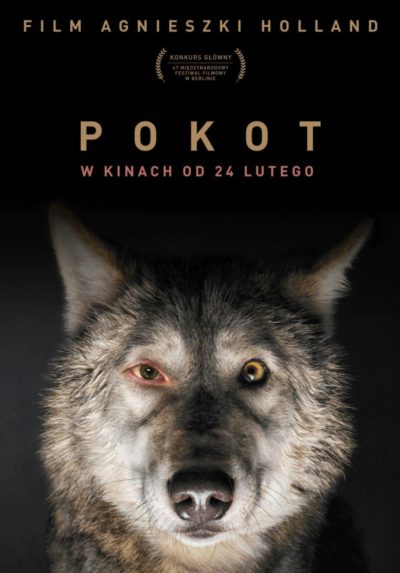 Janina Duszejko (Mandat) is a former engineer, who now lives in a small rural Polish town. She has a deep love of nature and animals. This is a belief not shared by many of the local population, who treat animals as a resource, put there for their benefit – an attitude which brings them into conflict with Duszejko. After her two dogs disappear, she goes to the authorities, but they blow her off. However, the man she suspects most, turns up dead – just the first in a series of mysterious deaths, that may be related to Jaroslav Wnetzak, a local businessman with a finger in a number of shady pies. Subsequent corpses include the police chief, who owes Wnetzak money.
 To my surprise, when I begin researching this film, it appears actually to be based – at least, somewhat – in reality. I give you
 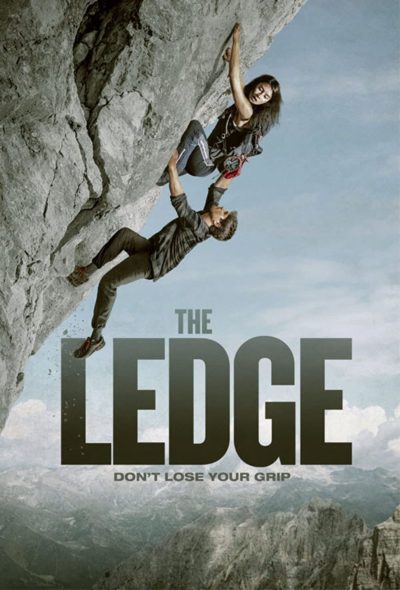 Despite the above, there are some strong positives to be found here. First off, the Serbian mountain landscapes are beautiful, and the cinematography does them justice. Free climbing, the focus here, is an innately tense pastime, with the risk of serious injury or death present at any second. Again, the photography gets this over well, with some of the shots capturing the heights involved, to the point of almost inducing vertigo in the viewer. Finally, Ashworth is entirely convincing in her portrayal of free climber Kelly. She has the right, well-defined physique, muscled particularly around the shoulders, and exudes a quiet confidence in her own abilities, which is what you would expect. That’s the good news.