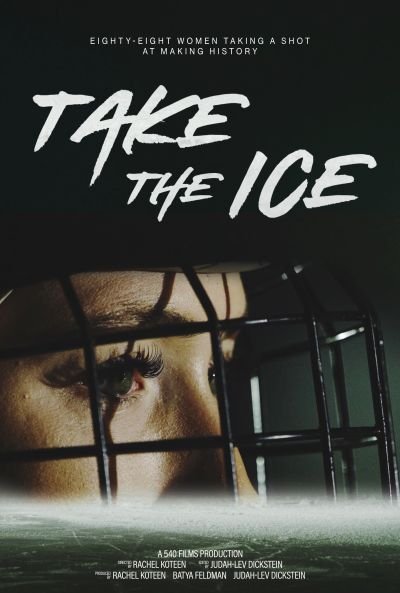
There’s no doubt that women’s sports very much plays second fiddle to their male equivalent, though the gap varies from sport to sport. The WNBA is experiencing a surge of popularity, though the NBA is still a financial behemoth. This documentary focuses on ice-hockey, and the debut season in 2015 of the first professional women’s competition in the US, the National Women’s Hockey League. Though semi-professional is closer to the truth: the league could only afford to pay its players around $15,000 a year, meaning almost all of them had to have day jobs, from teachers to paralegals to engineers, to cover the expenses. Commissioner and founder Dani Rylan spends most of her time seeking sources of finance, though finds the men’s league less than thoroughly supportive.
To be honest, I can’t blame them. There’s a vague sense of entitlement coming off the NWHL, not realizing they are largely competing with the NHL for the same fans and money. Why should the NHL help a rival start-up, just because they have women players? That’s the harsh reality here. I respect Rylan for putting in the work and starting the league, but this is capitalist equality in action. There were points at which I wanted to reach into the TV set and remind the NWHL, nobody has a “right” to funding in the world of professional sports. You have to earn it, whether you are male or female, and doing so starts with the quality of your product.
It may have been a mistake to start with just four teams, because with all of them making the playoffs, the entire regular season felt kinda pointless. And how did Boston end up with eight members of the US national team, while none of the other franchises had more than a couple? Wasn’t there some kind of a draft to balance the teams? Unsurpisingly, the Boston Pride won the inaugural championship – without, it seems, too much trouble. The film does make some effort to make this less of a procession, by telling the story of Denna Laing, a player on the Boston team who suffered a spinal injury during a game, which left her paralyzed.
I felt these elements, concentrating on the players and their stories rather than the business, worked better, but were frustratingly brief, except for Laing. There’s not enough of a narrative in the game-play to sustain things, and I suspect I’m an outlier, in that most other people watching the documentary probably will already be well aware how the first season ended. The league is still going, albeit under different ownership, although it’s interesting the film didn’t come out for more than six years after the season covered by it. I’ve been to ice hockey games, both here and back in the UK, and at various levels. But I’d have to say, in contrast to, say, Perfect, there is not much here likely to make a fan, if you weren’t one already.
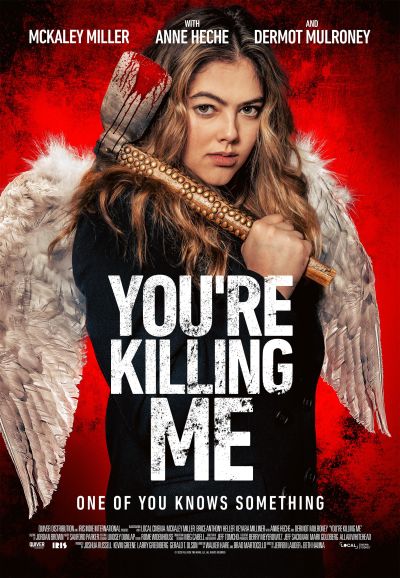
Eden Murphy (Miller) has a problem. She desperately wants to get into Pembroke College, but is currently on the wait list. However, classmate Barrett Schroder (Heller) has a congressman for a father, a letter from whom would surely push her application forward. Barrett isn’t exactly helpful, so along with friend Zara (Milliner), she crashes his party, hoping to press her case. A series of events ensue, resulting in Eden being trapped in a bedroom with a passed-out drunk Zara, and a phone belonging to one of Barrett’s friends, Gooch (Deusner). This has some incriminating video footage on it, apparently linking Barrett to the recent disappearance of another classmate. He is very keen to get it back, by any means necessary.
The first two acts here are fairly straightforward siege horror, with Eden trying to figure out how she and Zara can escape a situation that’s increasingly untenable. Their own phones were collected on the way into the venue, and Zara’s current state makes running for it a poor strategy. Instead, Eden has to fight a rearguard action, trying to bargain with the increasingly aggressive Barrett and his henchmen, while barricading their current location and repel attacks. It may helps that she is able to capture Gooch when he tries to climb in through a window, giving them a bargaining chip – and potentially a first-reported sighting of Chekhov’s Hair-dryer… That depends: Barrett might not care all that much about his “friend,” considering he caused the problem to begin with.
This is likely when the film is at its best, because neither Eden nor Barrett are idiots, and both know what’s at stake. This dynamic changes sharply when his parents (played by Dermot Mulroney and the late Anne Heche, to whom the film is dedicated) come home unexpectedly. You thought Bennett was willing to stop at nothing? Mrs. Schroder, in particular, cares not one whit how many bodies will need to be buried by the end of the night. To be honest, I felt this is where the film slipped over the edge of plausibility, quickly descending into carnage which teetered on the edge of ridiculous, and with some questionable pharmacology.
There were times where it almost felt there was a reel missing too, one escape teetering on the edge of “With one bound, she was free” territory. However, we still get a satisfactory final confrontation (remember that hair-dryer?), and I found myself rooting for Eden more than I thought I might at the beginning. There’s a sense of social commentary here, based around the concept of the rich and powerful being able to get away with anything. But it’s handled lightly enough not to get in the way, and despite problems in the final reel, I was adequately entertained. If it does feel that Miller may have been trying too hard to be an alternate to Samara Weaving, there are certainly much worse things to be!
Interesting the title dropped the “Special Ops” prefix from the title for this series, necessitating a bit of a retro-fix on our season one review for consistency. The sophomore run is another solid television show. Between this and Yellowstone, it feels like Sheridan is the macho version of Shonda Rimes, creating television series that have a recognizable auteur feel to them. In Sheridan’s case, that means two-fisted tales,cbest enjoyed with a cigar and a glass of whiskey. That, in this case, it’s largely focused on female characters, does not make proceedings any less macho or two-fisted. This season certainly left me with a new, deeply held respect for attack helicopters. M134 Minigun go brrrrrr…
It’s the pilot of one such, Josie Carrillo (Rodriguez) who is recruited as this season’s Lioness. The reason is her family are deeply embedded in one of the Mexican cartels; in particular, her father is the chief accountant to the Los Tigres cartel, and her uncle is its leader. A dishonourable discharge is fabricated, and she’s sent back to her family. However, in a sharp change from season one, this is only a minor thread. Indeed, it’s only a few hours after her return that her father figures out what’s going on, and the surveillance team have to go in, guns blazing, to rescue Carrillo. It’s all painfully messy, and if there’s an overall theme in season 2, it’s that anything which can go wrong, will.
As a result, Joe McNamara (Saldaña), the CIA officer in charge of the Lioness program, and her boss Kaitlyn Meade (Kidman), spend much of the series trying to fight the resulting fires. The instigating event is the kidnapping of an American congresswoman by Los Tigres, whom Joe and her team have to rescue from over the border in Mexico. Though Meade and her ultimate boss, Secretary of State Edwin Mullins (Freeman), detect the hand of foreign powers behind the cartel’s actions. Which is why, eight episodes later, Joe and her team are sent to Iran, to stop two Chinese nuclear scientists from joining their weapons program. The message is clear. You think you can cross our border with impunity? That belief operates in both directions.
In between though, a lot of stuff goes bad, as Los Tigres are targeted. Not all the opposition is external either, with inter-agency cooperation notable by its absence, and a shady DEA agent whose loyalties are seriously in question. There’s bad intel thrown in too: what is supposed to be a cartel drug stash house ends up containing children, and a well-meaning attempt to rescue them fails spectacularly. The action scenes may be among the best on TV, especially the sequences book-ending this season. However, I felt there was rather too much political intrigue. I wouldn’t mind it in another show: you get a real sense of how different government departments fight each other, rather than working together. But it’s all time when we should be watching M134 Miniguns go brrrrrr.
Creator: Taylor Sheridan Star: Zoe Saldaña, Nicole Kidman, Genesis Rodriguez, Morgan Freeman
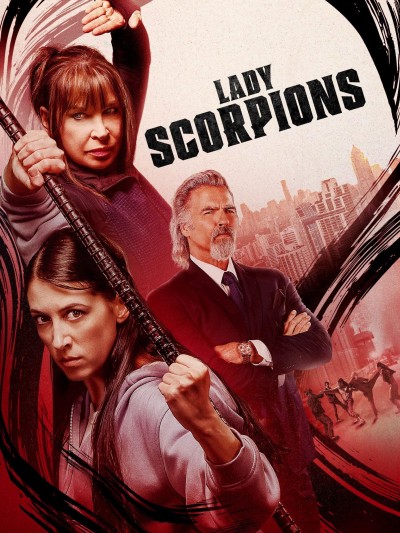
Cynthia Rothrock is 67 years old. That is considerably older than I am, and I consider it a victory if I manage to get out of bed in under ten minutes. I am certainly not kicking and punching my way through a slew of bad guys, in moderately convincing fashion. While this certainly has its flaws, it’s hard not to be impressed, especially for anyone familiar with Rothrock’s long career in action movies. Personally, I’m just glad she has moved on from the “erotic thriller” period of her career. Sixty-seven is too old for some things. But there’s also a passing of the torch here, introducing us to a potentially promising action actress in Caitlin Dechelle.
She was Gal Gadot’s main stunt double in Wonder Woman, and also doubled for Betty Gilpin in The Hunt. While still a little rough around the acting edges, you could certainly say the same about Rothrock’s early work, such as Yes, Madam. Here, she plays martial arts teacher Lacy Moore, who is estranged from her workaholic mother Alena (Rothrock). For several decades, Alena has been chasing after drug kingpin Lucien (Fahey), to no avail. He’s now ready to pass on the crown to his loose cannon offspring, Sonny (Manuel), After Alena interferes with Sonny’s activities, he decides to sideline her by kidnapping Lacy’s daughter, Ariel. Very poor judgment on his part I’d say. I suspect I need hardly bother outlining the rest of the film.
Though just in case there is someone who has never seen a film in this genre: Lacy reunites with Alena, and they team up to go after Sonny and rescue their mutual descendant. This involves them working their way through minor henchmen, until they extract Ariel’s location. There’s a rescue attempt, the duo get captured, we learn why Alena is so obsessed, they escape thanks to the help of a bad guy with a conscience, and the expected large fight ensues. There’s not much new here, and what there is, tends to be irritating. Del Castillo worked as a grip on a number of Tarantino films and it seems to have rubbed off, in the shape of inappropriate needle drops and villains who love the sound of their own voice.
In between the rolling of eyes these provoked, however, this has its moments. While it’s clear Rothrock won’t be scorpion kicking anyone, she has a grace and fluidity that’s inspiring. Or, would be, if only I could get up off this damn couch. Wisely, it’s left to Dechelle to do the heavy lifting in the action scenes, and she delivers, especially in a fight against fellow stuntwoman Mamyi Ithou, which I wanted to see go longer. I’ll admit to being a bit disappointed in the ending, since this goes from sixty to zero – more specifically, sixty to a “Six months later” caption – far too quickly. But it remains the best Rothrock vehicle I’ve seen in a while. If this is the way she chooses to go out, I’m fine with it.
Dir: Bruce Del Castillo Star: Cynthia Rothrock, Caitlin Dechelle, Jeff Fahey, Jose Manuel
★★★
“Everything that goes up, must come down again.”
Note: Watching season 1 or at least reading Jim’s review of it is highly recommended. Spoilers will follow!
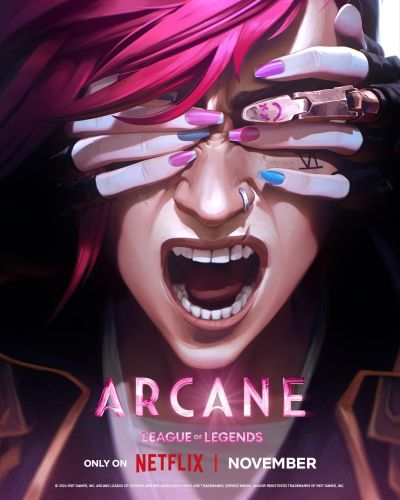
I never played the MOBA (multiplayer online battle arena) video game League of Legends. But I guess this was the case for many people, when they discovered the first season of the animated series based on it in 2021 on Netflix, and were surprised by its great quality. For Arcane – League of Legends was a show long in the making. That it finally came to fruition is probably mainly due to the persistence of producers Christian Linke and Alex Yee. The whole project had many creative problems to overcome, not least the indifference of Hollywood, where Riot first tried, unsuccessfully, to find a partner for a possible translation of their stories into a film version. It would probably never have seen the light of day if they hadn’t employed producer and writer Amanda Overton. She was able to see the dramatic potential of Riot’s fictive world Runeterra and take the needed steps for this to become a story.
The whole project was something absolutely new for all involved, because animated clips for games are not the same as an animated series. It spent a long time in development – production for the first season took seven years. Success could not be guaranteed, therefore needing another three for the second season to go into production without finished scripts for every episode, according to Variety. This resulted in a total budget of $250 million for the entire series. The first season cost $80m to produce; the second, $100m; the rest went into marketing the first season. This means every episode cost $13.9 million, the highest budget per episode of any animated series ever.
Given that, it’s no surprise to hear the rumoured three further seasons are not happening. However, the producers say that was just an inside joke: it was always intended for the story of the twin cities Piltover and Zaun to be finished with the second season. At least, it’s what they claim. Watching the rushed events play out in season 2, with new, underdeveloped characters being introduced and old characters sometimes behaving inconsistently, and not necessarily in line with the way they were presented in season 1, make doubts about such statements absolutely justified.
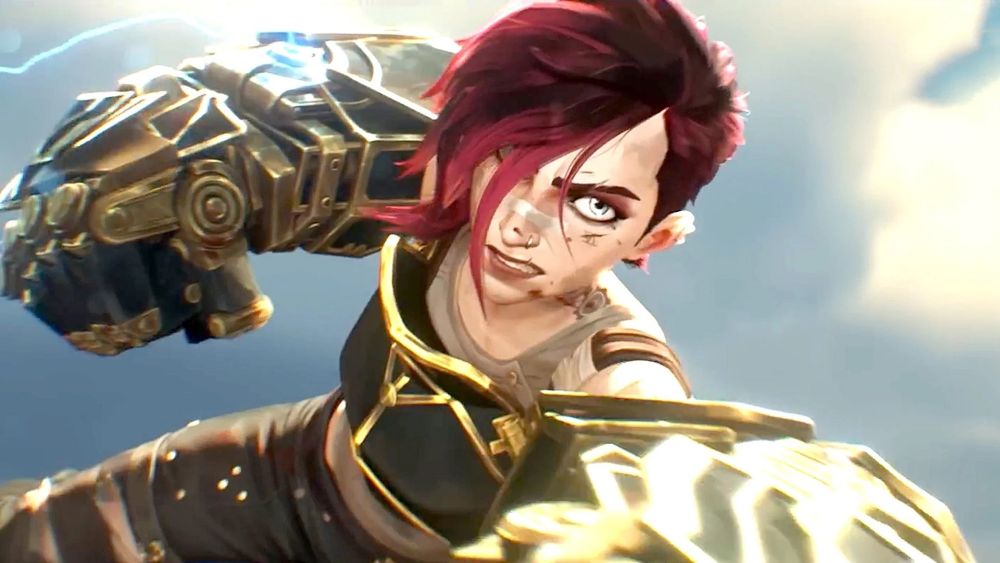
In any case, here we go again! While normal watchers and fans had to wait 3 years for Arcane‘s second part. Season 2 continues its story immediately after the big bang, which we don’t get to see here, caused by Zaunite and gangster protégée Jinx, previously known as Powder. We get to discover which council members died and survived. That question seemed the most important one for many people, maybe only topped by the unresolved relationship issue between Jinx’s sister Vi and Piltoverian enforcer Caitlyn. Surprisingly, only half perished but Caitlyn’s mother, Cassandra, bit the dust, a potential catalyst for a revenge arc. But then, from the very beginning on, Arcane has followed much more complex storylines than your average Hollywood blockbuster.
For this show, it means what would be enough for your average action movie or TV series, is just the beginning. It’s what I think makes the series above average in general. It always gives more than you asked for, and at the same time surprises you with sudden twists, unexpected developments, plus nuanced characterizations and relationships that escape standard black-and-white. Well, at least the first season did.
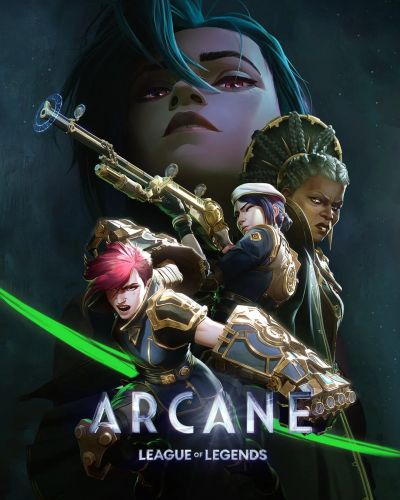
Characters are flawed, not just good or evil. They try their best, or at least react in a way that is human and understandable. Yes, the road to hell is paved with good intentions. Sometimes your effort to do good is exactly what leads to society’s downfall. That theme was prominent in season 1; for season 2, it’s also about how the actions and intentions of different people can clash with each other. Also, Riot and its creative team seek to put things on their head, with unforeseen developments for their characters. Viktor becomes a kind of helpful messiah in Zaun; Jinx teams up with her former gangster-stepfather’s loyal lieutenant Sevika, with whom she was at odds before, and young girl, Isha; Jinx becoming the poster girl for what seems to be Arcane’s prepared re-enactment of the French revolution; and Caitlyn is de facto declared sole ruler by Ambessa Medarda. A fallout between Caitlyn and Vi puts their developing love story on ice and drives Vi into nasty underground fights. There’s a lot happening here and a lot to unpack, too; no review can cover it all, so I won’t even try.
The dreamlike quality of the animation is still overwhelmingly beautiful. Though in some scenes and moments, you may feel you already know French animation studio Fortiche’s shtick. Anything repeated can hardly retain a feeling of originality, though it still may look beautiful. Once again, the musical score is fine and offers something for everyone. When music and visuals come together, they very often make a fine combination, reminding me of MTV music videos of my youth.
Unfortunately, the songs are usually at the beginning of each episode. I preferred it the way season 1 did it – we didn’t know when a song would pop up. It could be the beginning, middle or the end of an episode, so it was a nice surprise. Also, while the previous season had around eleven songs, here there might be twice as many. After a while, the constant interruptions of the story for another music sequence can start to feel quite a bit distracting if not outright annoying.
Is this season better or worse than season 1? It depends on what is important for you. What I liked very much of the first season, was it being character-focused and psychologically deeper than you would normally expect from your average entertainment product. Also, the realistic depiction of characters and their conflicts with each other made me buy into the more fantastic elements of the story. I got the strong impression that, in contrast to many Hollywood creators today, those in charge had actually read books on screenwriting and building dramatic conflicts, as well as believable characters.
Season 2 is different: focus appears to be elsewhere. It seems there is so much the writers feel the need to tell, and by wanting to introduce more of the game’s lore, it sometimes becomes too much for its own good. There are many new developments, arcs, characters, etc. Don’t get me wrong: characters are still likable, but they and their developing relationships had much more time to breath in the previous season. Here, things seemed to go a bit too quickly, and I couldn’t escape the impression characters were sometimes turning 180° within minutes. Very often events or explanations are kind of summarized in montages with music put underneath. Of course, you can do that. But you shouldn’t do it all the time.
A clear minus point in my book: things that felt logically had to happen based on season 1, are discarded in favor of other story decisions out of nowhere. You can say while the first season was character-orientated, the second wants to bring in boatloads of lore. Didn’t Jinx kill Sevika’s boss Silco just a day ago? And now they are teaming up? Really? A kiss finally confirms the love between Caitlyn and Vi, which can be probably counted as pure fan service for the lesbian community. But then there is a breakup a few minutes later, and Caitlyn, who was introduced as a shy and sexually unaware person in season 1, is shown in bed with fellow officer, Maddie Nolan. That’s a new character, and we don’t get any explanation why and how they became a couple. Where did that come from? How convenient it happened between episode 3 and 4, which saw another time-skip of unknown length.
The same is true for the revolution of Zaun against Piltover. It seemed to be just about to break out but is skipped over, too. Suddenly we have a Zaun held in check by Ambessa’s Noxian troops. I guess it relieved the animators from the burden of drawing extensive large battle scenes here between Enforcers, Zaunites and Noxian soldiers. All we get is a small demonstration led by Sevika, that’s immediately put down. Nor are we given an explanation why Jayce thinks that the Hexcore could save Viktor – how badly was he injured? While we can assume why Viktor leaves his friendship with Jayce behind, he never really states a specific reason.
Why should the council accept Caitlyn as a new member, given she is only the daughter of Cassandra? Are political positions inherited in Piltover? If so, I’m not astonished the twin cities are having so many problems. Ambessa makes Caitlyn de facto commanding officer of the city and Caitlyn takes that position, only to backpedal an episode later. Why? If you want to tell an Emperor Anakin story, do so. But then go the full mile and show me her devastating actions, as well as the resulting impact. What is a story decision worth when you have no intention to make something out of it, and reverse it a couple of episodes later? It’s like starting to tell a story, then suddenly deciding against it.
Other things didn’t make sense, as if the writers lost track of their own story. How come Ambessa knows Vi? She is virtually a total stranger to her. How does she know Vi and Caitlyn were close? And why should she be glad when Caitlyn fakes the capture of Vi, since she has little or no meaning for her? I do get that Linke & co. are in favor of “show don’t tell”, and prefer visuals and the intelligence of the audience to deduce things, instead of showering them in spoken info-dumps. But these things don’t appear logical anymore and demand explanations that are not given here. As someone who doesn’t know the game, I also had quite some problems understanding what was happening with the Hexcore, especially at the end.
Caitlyn in particular has a lot to answer for: she changes so often this season, that she could be called the poster child for inconsistent character writing. It’s as if the makers were preparing certain things, then didn’t want to follow through or got scared of their own boldness. Where is the bloody revolution, the big civil war that loomed all over season one, and whose ending seemed to be so unavoidable? I have to shake my head in disbelief at the storytellers, obviously preparing a love story between two main characters, only to chicken out for want of not having them come together too early, meaning they bond physically just shortly before the finale. Unfortunately, when said scene finally happens, it feels very much “too little, too late”. [Did they really do it on the floor of a dirty prison cell, while the climactic battle was simultaneously brewing outside?]
It should be noted that the series is not a Netflix product; Netflix was just offered the show as a distributor. Riot Games, its creator, financed the series themselves and had French animation studio Fortiche produce it. It might explain why the usual “propaganda” we see in a lot of Netflix-productions is less obviously present in this. This show mainly abandons lectures in favour of its narrative. Though it’s fair to stress the story is focused on strong, powerful women. Male characters appear either as weak and emasculated (Viktor, Salo, Heimerdinger, Caitlyn’s father), negatively portrayed (Silco, Singed, Marcus, Finn, Smeech), non-intimidating boyfriend material (Jayce, Ekko) or – and this becomes almost a dead horse – dead/absent father figures (Silco, Vander and Marcus).
If you are an imposing strong man, here it is usually as a supporting character without any agency of his own (such as “The Scowler”, Loris or Riktus, Ambessa’s muscular right-hand man). If you had told this story a few years ago, Jayce and Caitlyn would have become an adored couple – an idea the first season seemed to toy with for a moment, then quickly discarded. But as we live in ‘enlightened times’, the show sees the sensitive Jayce being seduced by powerful black leader Mel Medarda, and Caitlyn is revealed as a lesbian.
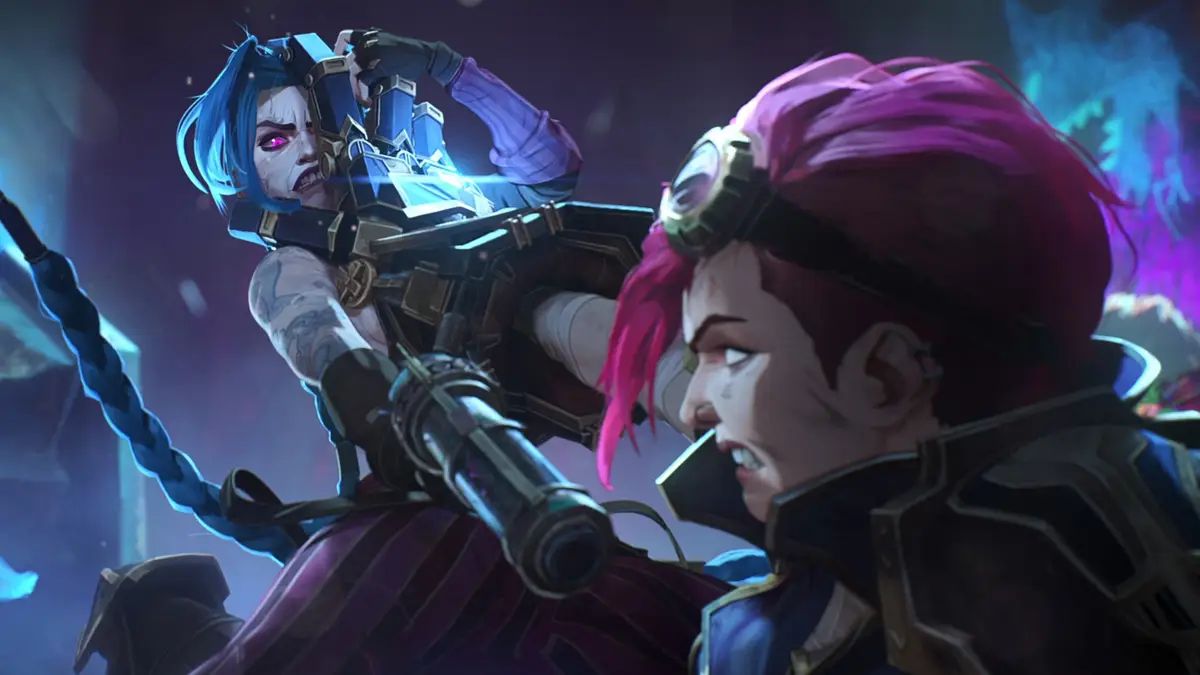
Disappointingly, the expected big final fight between Vi and Jinx is not to be found here: instead, they get along again after a bit of a brawl. Jinx the psycho? She seems quite normal again, after playing surrogate mother to the mute Isha for a couple of episodes. That’s far from any normal psychological reality. The screenwriters aren’t even above shamelessly milking nostalgia by giving us a flashback to Vander, Silco and the mother of Vi and Jinx sitting in “The Last Draw” – in a way it’s even repeated later again. Cheap, cheap, cheap!
Certain developments feel hasty, rushed and insufficiently explained. If I didn’t look it up, I’d have no idea about the meaning of the Black Rose. Maybe the Ambessa novel coming out next year might make things clearer? Fans may know what this is about; but it’s not how you present a story to people who have no prior knowledge of the game’s lore. By doing things like this you essentially exclude them from the show. I will say, it becomes better in later episodes. Episode 7 function as some kind of alternative universe story, that works as a stand-alone. Episode 8 finally gives us information we could have used earlier, when the characters have some much needed discussions with each other. Unfortunately, the last episode opts for a finale akin to a typical Tolkien adaptation by Peter Jackson, with what appears to be the villain from Avengers 2: The Age of Ultron, and partly falls prey to esoteric mumbo-jumbo.
Also, newly introduced characters such as Isha, Loris or Mattie are never developed. What can we really say about them? What is the sense of introducing an admittedly cute little girl into the story, having her do or say little of significance, only to kill her off a few episodes later? Yeah, I know, it has shock value when a child dies. But “kill the cutie” is one of the cheapest cliches. I did not expect the makers would fall to the level of George R. R. Martin, after the screenwriting skills they demonstrated in season one. [But there might be a simple explanation: I read that four of the screenwriters in season one were not part of the writing committee for season two.] For me these things indicate a rushed, not thought through screenwriting process. Obviously having “only” three years for the second season, compared to seven for the first, led to a tangible loss of quality in the careful construction of scripts and characters.
The first season’s story built up, with logical progression, and you could quickly identify with the characters’ psyches and what drove them. Don’t get me wrong, the show is still very good and entertaining, but would have been much better served if this edition had more time to breath and been spread over two or maybe even three seasons, instead of just one. Too often you feel that there are scenes or needed explanatory dialogues missing, as if they had to be cut or were never written. Consequently, while I would easily have given season one 4 stars, season two lands with only 3.
Also, there is a slight change in style. While it’s still a drama, this season seems to skew a bit more horror-orientated. Body modification (see Viktor) plays a role here, as well as the frightening abilities of the “Hexcore”, which seems to develop like a living organism. We get enforcers hunting Jinx with gas into the deep mines, and unscrupulous scientist Singed creating Warwick, a kind of werewolf-ian monster, predicted by some LoL fans after seeing the last scene of season 1. The show as a whole gets more fantastic, compared to the more retro-SF leanings of the first season.
That said, the story arcs started three years ago are brought to an end, and that doesn’t necessarily mean a happy end for all. You have to deal with the new developments, regardless if you might have wished the show to develop in a different direction. The series is still the best in its specific genre – I guess that would be animated steampunk fantasy? – and market segment, though potential new competitors like Blue Eye Samurai are lurking around the corner.
Piltover looks very much Art Deco to me while Zaun is influenced by the style of Art Nouveau. I sometimes feel the twin cities remind me of a fantastic, retro-version of Paris at the beginning of the 20th century. Or maybe a bit earlier, around 1870 and the Belle Epoque – which makes sense, considering animation studio Fortiche has its headquarters in Paris. There is a clear commitment of Fortiche to artistry; there is hardly a frame that is not incredibly beautiful or fascinating. You could easily cover your whole living room wall with pictures of the show. Any complaints I have, are not about them: they did their work. They already are working on animated movie Penelope of Sparta (about Odysseus’ wife in Greek mythology). If it has half of the technical quality of Arcane, consider my ticket bought!
I liked season 2 but I didn’t love it. The action is still great, as are the visuals, in combination with a captivating soundtrack. You still care for the characters – though sometimes you just want to slap them right and left in the face, to get them to their senses or make up their minds. The show is complex and deals with modern but also timeless themes underneath its entertaining facade such as social injustice, the advantages and dangers of new technologies (if you want you can read “Hextech” as a metaphor for nuclear energy, environment endangering industrial processes in general, weapons of mass destruction, body modification or politics that are lead by economical interests only), and the corruption and ignorance that power creates.
But there are also psychological and social themes of conflict: emotion versus intellect, safety versus liberty, preservation of the status quo versus progress by destruction of the existing system. These are best represented in sisters, Jinx and Vi, whose already shaky patchwork family has been torn into pieces by these battles. Yet it also shaped them, and put them on a collision course against each other. Or so it seemed, since the final confrontation is between Jayce and Viktor, while Jinx is given an unnecessarily bland, sacrificial death to save her sister – although the creators hint at the end that she may have survived. You could argue the character’s potential has been entirely wasted in the attempt to reshape her into a more positive protagonist in season two. I repeat: it feels absolutely weird. Looking at the titles of the first season I always expected the final fight to be between Jinx and Vi, and it feels like another broken storytelling promise.
A minor complaint I have is, all these problems are shown, but a real solution isn’t offered for them. Yes, there are many good-hearted people here. who want the best for everyone, all fighting on different fronts, But in the end these eternal conflicts that mankind has suffered from since its existence are not really solvable. It’s kind of a downer when it comes to this original, very ambitious story. So, is season 2 what The Last Jedi was to The Force Awakens? Naah. It’s more what The Matrix sequels were to the first Matrix. Less a major disappointment than an unnecessary continuation of a perfect original. Honestly, I could have done without all the new fantastic elements and story arcs. I just wanted to see the resolution of the story the first season promised me.
Expectations set by the first season were maybe too high, but could have been at least partly fulfilled. The first gave us some kind of Greek tragedy in a fashionable modern dress, this feels more like just another fantasy show, with added modern “diversity”. The end of season one, though an open one, felt logical and justified. In a way, we could imagine the results of the final action and it didn’t really demand a sequel. The ending here feels kind of average and is unsatisfying as storytelling, perhaps partly due to already preparing another new show, probably set in Noxus. While still an entertaining series, the sad thing is that might be it for the time being.
While further TV and movie projects are planned, it appears the TV and film department of Riot has been disbanded and the team members moved to other departments in the studio, according to media reports. With a $3 million license fee per episode from Netflix and another $3 million from a Chinese distributor, do the math yourself. The show will not really be profitable, despite its popularity, though it may try to recover some costs from merchandise, the release of season one on Blu-Ray this year, selling skins for their game. But it has been reported, the best they can hope for is to break even, which is not a recommendable business model, understandably. Therefore, I’m quite astonished to hear producer Christian Linke talking about another project already in preparation since last year.
Personally speaking, it would be a shame if this is the last story we see from the League of Legends universe outside of the game. The screenwriters and producers would just have to be given enough time to develop something of a similar dramatic quality to season one. Focus on characters, not so much on lore. One story at a time is enough; we don’t have to know them all immediately. But who knows? Maybe one day it might come back due to popular demand, and because someone puts enough money on the table. Films of yesteryear (like right now: Gladiator) get sequels decades later, and TV shows I last saw when I was a hopeful 30-something return all the time. Why shouldn’t that be possible for this series, too?
Creators: Christian Linke and Alex Yee Star (voice):Hailee Steinfeld, Ella Purnell, Kevin Alejandro, Katie Leung
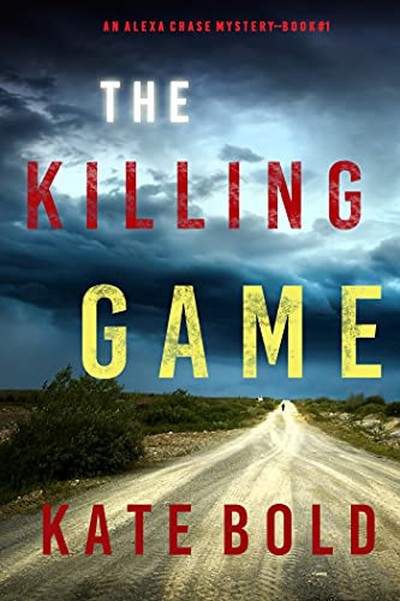
Bold is an incredibly prolific author, whose site lists eight separate series of novels, with a total of sixty-four books between them. The series are mostly named in the format, “<PROTAGONIST NAME> FBI thriller”, which does suggest a certain production-line quality to them. I wonder if, perhaps, they are each set in a different part of the country, in order to get the local market. By chance, this one is set around Arizona, where I live – I think it’s the first such action heroine novel I’ve read, and this did add a certain level of interest. “A Tempe reference! I’ve been there!” Hey, I’m easily pleased, what can I say?
The heroine here is Alexa Chase, a former member of the FBI Behavioral Analysis Unit, who quit her job after spending too long staring into the abyss, in favour of a position with the US Marshals in Arizona (I’ve been there!). However, she’s dragged back in to the worst case of her time there, when notorious serial killer Drake Logan escapes from custody during a prison transport. With the aid of his cult-like acolytes, he begins a spree of death and destruction across the state, but with a sinister agenda. He wants to tap into the bleakest parts of Alexa’s psyche and make her embrace his twisted philosophy, with the aim of bringing her across onto the dark side.
There’s an obvious Silence of the Lambs influence here, in the story of a female detective hunting a charismatic serial killer, with whom her relationship goes a bit too close. The most obvious difference is, Logan is not a lone wolf, instead having disciples willing to do his bidding – which is, basically, to get in the way of Alexa’s investigation. It’s an interesting concept, though largely relegated to a side-issue here. Bold instead rolls out some of the usual tropes, like Alexa being given a new partner, FBI special agent Stuart Barrett. Give yourself two points if you immediately guess she initially hates him, but grows to respect his talents over the course of the book. I’d not be surprised if there’s sexual tension in future volumes.
Otherwise, it’s mostly straightforward stuff, and falls into the category of consistently competent, but equally consistently unremarkable. There are a couple of elements which feel like they’re set up to be more important than they are – at least here – such as Alexa’s relationship with the daughter of her neighbours. I was expecting Drake to kidnap her or something: nope. Maybe down the road this matters. This certainly wasn’t a chore to read, but despite being the first book to have scenes set in Sedona (I’ve been there!) and Bumble Bee (I’ve… driven past the turn-off to it), there just was not enough impact to make me enthusiastic about the series. If I was told a well-trained AI wrote this, I wouldn’t be surprised.
Author: Kate Bold Publisher: Self-published, available through Amazon, both as a paperback and an e-book Book 1 of 6 in the Alexa Chase suspense thriller series.
We’ve been keeping an eye on the career of writer-director Ojeda since Savaged, more than a decade ago. We last saw his work with The Russian Bride, which shares the same star in Orlan, but I do feel the pieces have finally come together. Sure, this is imperfect. However, the positives are pretty damn impressive, and as a throwback to the action golden era of the eighties, this is close to spot-on. It begins with a plane crash, as the aircraft piloted by Dominique (Orlan) is shot down in rural Columbia by the local cartel. Their effort to loot the wreckage goes wrong, because Dominique is not dead, and quickly demonstrates the skills she had in a previous life as a Ukrainian assassin.
She was badly injured in the crash, and ends up taking shelter in the small town of San Lucas, at the home of police officer Julio (Carvajal) and his family. He’s gathering evidence against his corrupt boss, Chief Santiago (Compte), who’s working with the cartel. When Julio is exposed, Santiago decides an example must be made of the informant, wiping out not just his employee, but his entire family. The only thing standing between them and annihilation is Dominique. After she successfully repels the initial assault, she has to fortify the family home, and prepare to fend off everything Santiago can throw at her. Which is a lot of cannon fodder. Most of it tactically inept, I must say.
The character work in this is strong, on both sides. Santiago is spectacularly evil, to the point he could have been a caricature. Yet Compte’s performance keeps it just human enough to be truly scary, due to his complete disregard for life. On the other side, Orlan keeps things very subdued, to the point of seeming dead inside, due to past trauma. Is this limited acting range? Or a very subtle performance? Could be either. In any case, it works, tiding the viewer over until the extended eruption of violence, which occupies most of the movie’s second half. As noted, it does rely on the attacking forces underestimating their opponents, to put it mildly. But Ojeda mixes the combat up nicely, and it’s a blast to watch.
The ending. Hoo-boy. It does one thing right, both brilliant and terrible at the same time. But it then bails out, what should have been the climax, is literally run underneath its end-credits. This is a brave choice by Ojeda. It didn’t work for me, and I’d rather have seen one final spasm of ultraviolence from the heroine. That it still was good enough to get our Seal of Approval says something. If it had sealed the deal, the movie could have ended up making my top ten for the year. It remains a film I enjoyed watching, and would definitely not mind seeing Dominique in action again in future. Or whatever Ojeda comes up with: I’m down for that too.
Dir: Michael S. Ojeda Star: Oksana Orlan, Maurice Compte, Sebastian Carvajal, Alanna De La Rossa
★★
“Interesting premise, incredibly bland execution.”
I liked the idea of this. A gang of five thieves, four women and Liev, give up the game after a robbery goes wrong and Liev gets arrested. He doesn’t give up his accomplices, who include his pregnant girlfriend Willa (Banus), and goes to jail. Six years later their daughter falls ill, and desperately needs matching tissue to repair her heart valve. The bad news: it has to be her father, who’s still in prison. Worse news: he’s in a coma, having been beaten up on the orders of the governor. Willa decides to put the band back together, along with an unlicensed surgeon, to break into prison, and extract the necessary tissue to save her daughter.
That’s not something I’ve seen in a film before. It’s certainly a twist on the usual “women in prison” subgenre, and the scope for a tense thriller, as the reverse heist unfolds, is obvious. Unfortunately, it’s the best part of an hour before we get to the execution, and there’s not enough to retain interest. It doesn’t help that the plot has so many holes through which you could drive an oil tanker. For example, Flynn (Ma) gets a job in the prison library, becoming the gang’s inside woman. She’s gaily snapping cellphone photos inside the jail, when two minutes of Googling confirms exactly what I suspected – that every prison I could find, has an almost zero tolerance policy for mobile devices.
Though in general, this correctional facility has security roughly comparable to your local electronics store, and you will be left with little confidence in just about anyone involved in the penal industry. Not that Willa and her team can really claim the moral high ground here, if you think about it. They are the “good girls” only because the film tells us they are. Given the first thing we see them do is robbing an armoured truck by threatening the driver with an explosive device, I’m not sure that’s truly the case in any court of morality. I’d rather have seen them embrace this ambiguity in some way, rather than dropping in a cliche straight from a Lifetime movie, a desperately ill child. Who can possibly root against Willa now?
Indeed, in tone, a lot of this feels like it could have straight in from a TV movie. Things do pick up somewhat down the stretch, not least with some unexpectedly graphic open-heart surgery, and when Willa is forced to make an unexpectedly difficult choice. However, it likely counts as a minimal spoiler to say that all ends well – at least, for the majority of the cast – with justice served on the bad people. [Robbery, it appears, does not count…] From a technical point of view, it’s reasonably well-assembled: “competent” would be the word, though it’s equally lacking in flair. The highest praise I can give this, is to say that I did not fall asleep. Might have been close in the first hour.
Well, after taking ten years to get from the third film to the first, the gap between first and second is considerably shorter. I think this probably works the best of the trilogy, not least because there are a few good GWG to be found here, not just Secret Service Agent Alex McGregor. This time, she’s played by Hannah – allegedly, seeing her here got Tarantino to cast her in Kill Bill – rather than Hemingway. The latter supposedly declined due to a combination of scheduling conflicts and script concerns. Frankly, I think this is a bit more solid than the original film. It begins with a nice nod back to First Daughter, opening again with an attack on President Jonathan Hayes (Harrison) – except, this time it’s just a training exercise.
McGregor is now the head of the Secret Service, and is coming down hard on new agent Kelsey Innes, for much the same reason McGregor suffered the same treatment. But more pressing matters are at hand, because the Vice President has a plot to kill his boss and take over. To that end, he has hired international assassin Nina Stahl (Grauer) and her hacker brother, who plan to assassinate Harrison during a ceremony in Seattle, with the help of a mole inside the local Secret Service office. Returning from the first picture is wilderness guide Grant Coleman (Savant), whose attempts to propose to Alex keep getting interrupted, and who is impressively unfazed by the fact his girlfriend now looks radically different from last movie.
The concept here is still a little silly, but at least the threat here is genuine, with Stahl a decent adversary who poses a real threat to McGregor, Innes, etc. She additionally brings a nice line in femme fatale to her line of work, and I was surprised to see a not-exactly subtly incestuous vibe with her brother. It feels like Stahl has wandered in from a different franchise entirely. Again, it is a little disappointing that Grant ends up doing so much, in this case going toe-to-toe with Nina, while Alex is making her way up the mountain towards the assassin. However, the heroine still gets her licks in, and puts the pieces of the puzzle together before anyone else.
Unlike First Daughter, there’s a sense that most of the people involved here are relatively smart; or, at least, behave as if they are. The absence of the annoying teenage Presidential daughter – never seen or heard, but apparently now getting tattoos – feels like a positive development too. It still remains limited by being a TV movie, and the pauses for advert breaks are often painfully obvious (not helped by them not lining up with the Tubi advert breaks). However, I was definitely entertained, and if I had seen this when it came out in TBS at the turn of the millennium, I would likely not have changed the channel. It almost makes me want to re-review First Shot, and see if I was unnecessarily harsh to it. Almost…
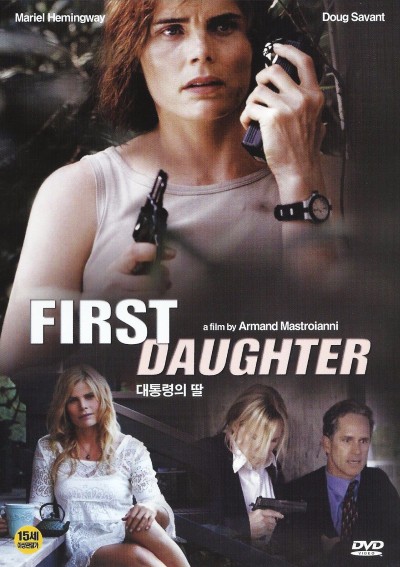
El Jardinero isn’t the only long-delayed review of a franchise opener. I saw First Shot, the third movie in this series about Secret Service Agent Alex McGregor (Hemingway), back in 2014, and at the time it was the only entry present on Netflix. A decade later, I now get the chance to catch up with the first entry and… it is pretty much what you’d expect. Competent enough for a TV movie, but the limitations of that medium are always going to knee-cap the material. This does begin well enough, with an energetic terrorist attack on a fundraiser for President Jonathan Hayes (Harrison) by members of the American Freedom Fighters – this clearly dates outside the 2001-16 window when domestic terrorism was ignored.
His life is saved by Alex, but only after she disobeys orders from her boss, which gets her into hot water. Still, a few months later, she is selected to accompany Hayes’s teenage daughter, Jess (Keena), on a wilderness adventure trip. Unfortunately, this drops them right into the Colorado terrain (actually Australia, but who can tell the difference?) where the AFF militia are hiding out. They get the bright idea of kidnapping Jess, so they can exchange her for their leader, captured during the attack mentioned above. Jess is the only agent to survive the initial assault, and so it’s up to her and tour guide Grant Coleman (Savant) to track the terrorists through the forest, and free Jess from their clutches
This is spottily entertaining, and you can probably tell most of the story beats in advance. Jess resents Alex’s presence on the trip, while Alex and Grant get off on the wrong foot – but you just know everyone is going to grow to respect each other by the end of the film. However, it holds together well enough, with decent performances from Hemingway and Savant, who make for a likeable pair. It is front-loaded, with the original attack a nifty piece of bullet-ridden carnage, before the film then goes to sleep on that front. It’s instead busy introducing characters, establishing relationships and making Alex do rock-climbing to prove she’s not a lesbian. Or something like that. My notes are a bit unclear on the point.
It has to be said, despite the presence of WWE’s Diamond Dallas Page among them, the AFF members are very much low-grade terrorists. There’s only three of the left, and I would not say smarts are their strong suit. As threats go, they’re lightweights. It was also a little disappointing how McGregor ends up needing to be rescued in the climax. While it’s an acceptable conclusion, tying up a dangling loose end, it does weaken her as a protagonist. There is some impressive bits of white-water action, and in generally, it feels more like a low-budget theatrical feature than a made for television one: its budget of $5 million certainly feels more than the typical nineties TVM. If my review of the third entry was scathing, I suspect it won’t take another ten years before I review the second.



 There’s no doubt that women’s sports very much plays second fiddle to their male equivalent, though the gap varies from sport to sport. The WNBA is experiencing a surge of popularity, though the NBA is still a financial behemoth. This documentary focuses on ice-hockey, and the debut season in 2015 of the first professional women’s competition in the US, the National Women’s Hockey League. Though semi-professional is closer to the truth: the league could only afford to pay its players around $15,000 a year, meaning almost all of them had to have day jobs, from teachers to paralegals to engineers, to cover the expenses. Commissioner and founder Dani Rylan spends most of her time seeking sources of finance, though finds the men’s league less than thoroughly supportive.
 Eden Murphy (Miller) has a problem. She desperately wants to get into Pembroke College, but is currently on the wait list. However, classmate Barrett Schroder (Heller) has a congressman for a father, a letter from whom would surely push her application forward. Barrett isn’t exactly helpful, so along with friend Zara (Milliner), she crashes his party, hoping to press her case. A series of events ensue, resulting in Eden being trapped in a bedroom with a passed-out drunk Zara, and a phone belonging to one of Barrett’s friends, Gooch (Deusner). This has some incriminating video footage on it, apparently linking Barrett to the recent disappearance of another classmate. He is
  Interesting the title dropped the “Special Ops” prefix from the title for this series, necessitating a bit of a retro-fix on
  Cynthia Rothrock is 67 years old. That is considerably older than I am, and I consider it a victory if I manage to get out of bed in under ten minutes. I am certainly not kicking and punching my way through a slew of bad guys, in moderately convincing fashion. While this certainly has its flaws, it’s hard not to be impressed, especially for anyone familiar with Rothrock’s long career in action movies. Personally, I’m just glad she has moved on from the “erotic thriller” period of her career. Sixty-seven
  ★★★
★★★ For this show, it means what would be enough for your average action movie or TV series, is just the beginning. It’s what I think makes the series above average in general. It always gives more than you asked for, and at the same time surprises you with sudden twists, unexpected developments, plus nuanced characterizations and relationships that escape standard black-and-white. Well, at least the
  Why should the council accept Caitlyn as a new member, given she is only the daughter of Cassandra? Are political positions inherited in Piltover? If so, I’m not astonished the twin cities are having so many problems. Ambessa makes Caitlyn de facto commanding officer of the city and Caitlyn takes that position, only to backpedal an episode later. Why? If you want to tell an Emperor Anakin story, do so. But then go the full mile and
  Disappointingly, the expected big final fight between Vi and Jinx is not to be found here: instead, they get along again after a bit of a brawl. Jinx the psycho? She seems quite normal again, after playing surrogate mother to the mute Isha for a couple of episodes. That’s far from any normal psychological reality. The screenwriters aren’t even above shamelessly milking nostalgia by giving us a flashback to Vander, Silco and the mother of Vi and Jinx sitting in “The Last Draw” – in a way it’s even repeated later again. Cheap, cheap, cheap!
 But there are also psychological and social themes of conflict: emotion versus intellect, safety versus liberty, preservation of the status quo versus progress by destruction of the existing system. These are best represented in sisters, Jinx and Vi, whose already shaky patchwork family has been torn into pieces by these battles. Yet it also shaped them, and put them on a collision course against each other. Or so it seemed, since the final confrontation is between Jayce and Viktor, while Jinx is given an unnecessarily bland, sacrificial death to save her sister – although the creators hint at the end that she may have survived. You could argue the character’s potential has been entirely wasted in the attempt to reshape her into a more positive protagonist in season two. I repeat: it feels absolutely weird. Looking at the titles of the first season I always expected the final fight to be between Jinx and Vi, and it feels like another broken storytelling promise.
 Bold is an incredibly prolific author, whose site lists eight separate series of novels, with a total of
  We’ve been keeping an eye on the career of writer-director Ojeda since
  She was badly injured in the crash, and ends up taking shelter in the small town of San Lucas, at the home of police officer Julio (Carvajal) and his family. He’s gathering evidence against his corrupt boss, Chief Santiago (Compte), who’s working with the cartel. When Julio is exposed, Santiago decides an example must be made of the informant, wiping out not just his employee, but his entire family. The only thing standing between them and annihilation is Dominique. After she successfully repels the initial assault, she has to fortify the family home, and prepare to fend off everything Santiago can throw at her. Which is a lot of cannon fodder. Most of it tactically inept, I must say.
 I liked the idea of this. A gang of five thieves, four women and Liev, give up the game after a robbery goes wrong and Liev gets arrested. He doesn’t give up his accomplices, who include his pregnant girlfriend Willa (Banus), and goes to jail. Six years later their daughter falls ill, and desperately needs matching tissue to repair her heart valve. The bad news: it has to be her father, who’s still in prison. Worse news: he’s in a coma, having been beaten up on the orders of the governor. Willa decides to put the band back together, along with an unlicensed surgeon, to break
  Well, after taking ten years to get from the third film to the first, the gap between first and second is
  El Jardinero