



★★½
“Into each generation a rubber-suited monster slayer is born…”
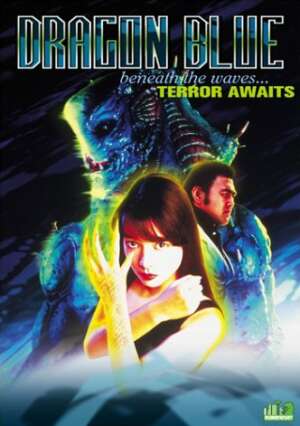 When the island site of a proposed resort starts seeing mutilated bodies turn up, they call in Feng Shui specialist Mayuko (Tanaka) to investigate. However, as she herself discovers, she’s no ordinary psychic, but the next in a line of guardians dedicated to stopping demons from entering the human world. With the aid of some conveniently informative dreams, a down-to-earth cop (pro-wrestler Mutoh, known in the West as The Great Muta) and a sword she finds underwater, it’s up to Mayuko to stop the Hellmouth from openi…er, save the world.
Despite careful thought clearly having gone into the back-story and related folk legends, this wastes time meandering around before its climax, where Mayuko finally gets her powers by snapping her rock crystal power bracelets [incidentally, available at Trash City :-)] It probably doesn’t help that the monster is…well, let’s say that despite the involvement of Steve Wang, it’s no coincidence that this was released in the US by ‘Rubbersuit Pictures’. Though its relentless interest in human women – particularly topless ones – is amusingly reminiscent of B-pics like Humanoids from the Deep, that sound you hear is the Creature from the Black Lagoon sniggering.
This lacks the necessary enthusiasm which would counter the obvious budgetary restrictions. While possessing a smattering of sex and violence, the film as a whole is overly restrained, well-mannered and simply too damn polite to be of much interest.
Dir: Takuya Wada
Star: Hiroko Tanaka, Keiji Mutoh, Tomoroh Taguchi, Ryo Hayami
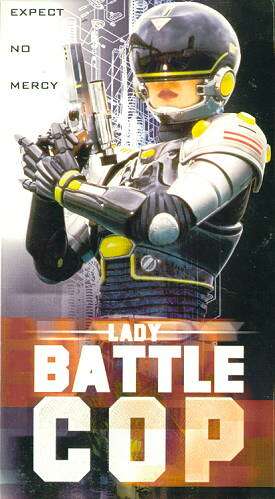 At least, so claims one of the songs in this largely ineffective movie, about professional tennis starlet Kaoru – Anna Kournikova will be in the Hollywood remake, no doubt – who is transformed into a crime-fighting machine. This takes place after she is killed by the Cartel, a crime syndicate bent on taking over Japan, despite apparently having about seven members. They do, however, have a “psychic robot” called Amadeus, which is probably the sole original thought in the entire film, and the whole thing gets kicked up a notch during his battles. The interesting question of where he came from (apparently a NASA creation), is never explored. This is a shame, since it’d be rather more interesting than almost anything the film actually offers.
 If you
 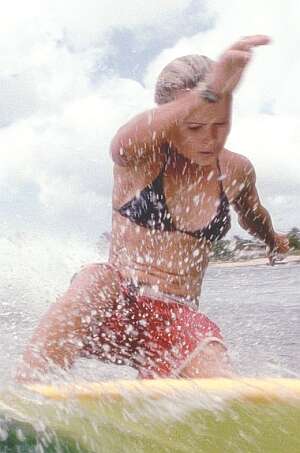 The marketeers screwed up: aimed at teenage girls, our daughter refused to see it, on the grounds – Hollywood, please note – that their bikini tops and bottoms didn’t match in the poster… Anyway: Anne Marie (Bosworth) sees her ticket to stardom in a surf competition on Hawaii’s North Shore. But she has to come to terms with waves bigger than she’s ever faced before; a rebellious kid sister (Boorem); a dreadful job as a hotel maid; and, inevitably, the guy who wants to spend quality time with her on dry land (Davis), while her friend Eden (Rodriguez) tries to keep her focussed on surfing.
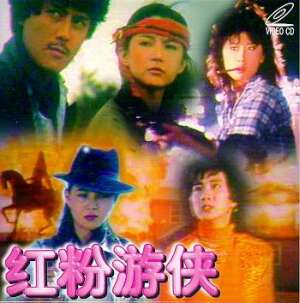 Pretty much the same cast and crew
 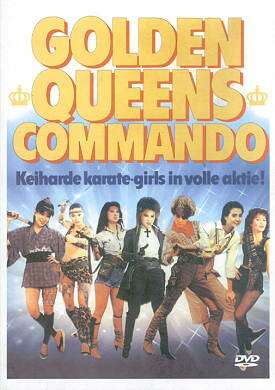 I’m going with the title on the print – your opinion may differ. As it likely will for this insane distillation of The Magnificent Seven and The Dirty Dozen, complete with music lifted from both Western and War genres. It certainly isn’t dull: incoherent and dumb, maybe, but you expect that in an early work from the director of Flying Dagger, one of the maddest Asian movies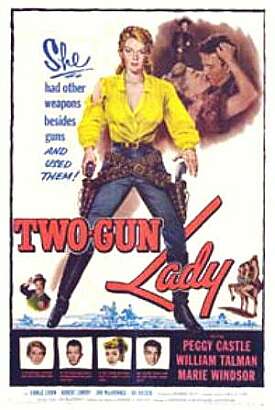
 Trick-shot artist Kate Masters (Castle) comes to a remote town with her show, raising suspicions among locals, who suspect she’s more than she seems. They are led by Jud Ivers (McDonald) and his family, who rule the area with an iron grip. This 1955 B-movie (in the original sense – it’s only 71 minutes long) crams plenty in, with almost everyone having secrets, good or bad. Castle makes a fine heroine, exuding strength but ultimately vulnerable, and is matched by the rest of the cast. Particular credit to McDonald, and Jennifer Jason Leigh’s mother, Barbara Turner, in her movie debut as Jenny Ivers; both bring depth to what could be one-dimensional characters.
 Bandits started as a hugely popular short – confusingly, titled Episode 7 – on Atomfilms.com. Its success led Grasse to churn out a number of extremely loosely-connected ‘sequels’ (also on this DVD), as well as 50-minute feature (sold separately) The Bikini Bandits Experience, featuring the late Dee Dee Ramone and Corey Feldman. The basic idea is grand, and is established in the original short, where bikini-clad, gun-toting babes rob a convenience store (which stocks some beautifully surreal imaginary products, not the least of which is ‘Beef Flaps’), kidnap a clerk, and lasciviously kill him. It is politically incorrect on almost every conceivable level, and on its own, is an undeniable guilty pleasure of the highest level.
 It’s ironic that this runs some 90 pages shorter than Chyna’s bio, given that Moolah had almost 50 years of experience before Chyna ever stepped into a ring, and also outlasted the Ninth Wonder, fighting a bout in 2002, on her eightieth birthday. Indeed, Moolah’s upbringing alone – the sole girl among 13 children, whose first marriage was at age fourteen – likely has enough material for a thick volume. Yet, despite wrestling in seven different decades, and multiple reigns as women’s champion over